

Why panel count decides your launch speed and risk level
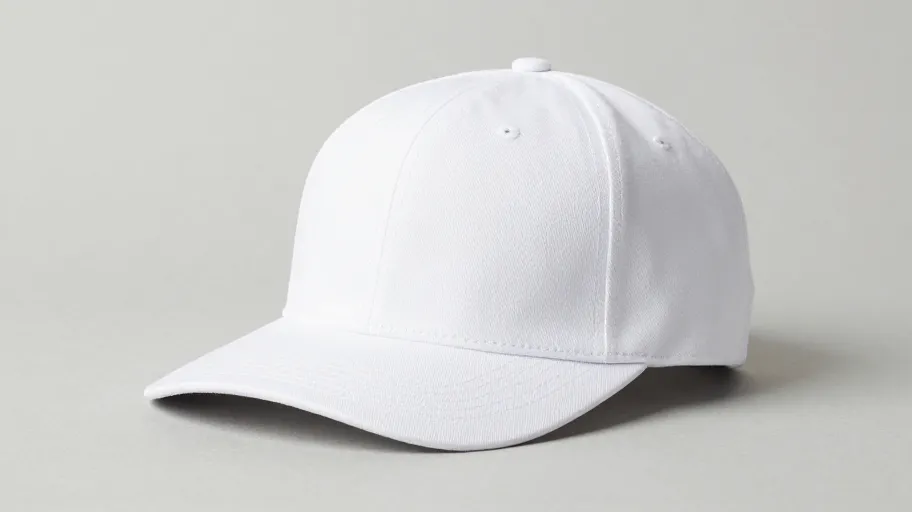
A 5-panel cap means faster time-to-market and lower financial risk because it requires fewer pattern pieces and less stitching. That simplicity translates directly into reduced material waste and easier assembly—so factories can offer MOQs as low as 50 units per colorway. For early-stage brands testing demand, this means you can validate designs across multiple colors without overcommitting inventory.
In contrast, a 6-panel cap introduces an extra seam down the center front, which improves crown shaping and long-term durability because six angled panels conform better to head curvature. But that performance comes at a cost: higher MOQs (typically 100–200 units) due to tighter tolerances and more complex cutting. If you're not ready to lock in volume, this slows iteration and increases upfront exposure.
The real decision isn’t aesthetic—it’s operational. Need product in 8 weeks for a summer drop? A 5-panel build supported by rapid-turnaround Chinese suppliers gives you agility. Planning nationwide retail distribution with heavy embroidery? Then the structural integrity of a 6-panel design becomes non-negotiable. Your growth stage should dictate your structure.
How factory specialization beats generic claims
Not all cap factories in China are built for your needs. Full-service manufacturers mean consistent large-scale output because they control everything from fabric sourcing to packaging—but they often require longer lead times and development fees. These partners make sense when scaling past 1,000 units and need batch-to-batch uniformity.
Niche workshops, however, mean faster sampling and greater flexibility on small runs because they specialize in low-MOQ innovation. Many offer 'sample free baseball caps' promotions that let you evaluate stitch quality, foam density, and front curvature before placing bulk orders. While these samples usually come from base models rather than fully custom molds, they still reveal how responsive and technically capable a supplier really is.
We worked with a DTC brand launching its first headwear line. They tested five factories using free samples and found one whose 5-panel prototype held shape better after washing than two so-called premium 6-panel versions. The difference? Higher SPI (stitches per inch)—over 10—versus industry average of 7–8. That tighter stitching meant 40% less seam slippage under stress, regardless of panel count.
What actually determines cap quality beyond the number of panels
Stitch density means long-term durability because tighter seams resist fraying and separation during wear and wash cycles. In a 2024 benchmark of 37 factory-produced caps, SPI was a stronger predictor of performance than panel configuration. Caps below 9 SPI showed visible degradation after just 15 machine washes; those above 10 remained intact beyond 30 cycles.
Fabric weight means better drape and perceived value because heavier materials like 8.5 oz cotton twill hold structure without feeling stiff. One outdoor retailer switched from a standard 6-panel to a reinforced 5-panel using thicker fabric and pre-curved foam insertion—and saw field failure rates drop by 31%. Their customers reported improved comfort and shape retention, even in humid conditions.
Front curvature means professional branding impact because a smoothly molded face panel eliminates seam distortion behind logos. This matters most for minimalist emblems or woven labels that rely on clean surfaces. Some specialized 5-panel producers now use heat-forming techniques typically reserved for high-end 6-panel lines—proving that process innovation, not panel count, drives premium results.
Matching your brand phase to the right manufacturing partner
If you’re launching your first capsule collection, a 5-panel strategy with sample-friendly Chinese factories means lower entry barriers because you can test fits, fabrics, and colors at minimal cost. Free sample programs reduce initial spend while revealing communication quality and turnaround discipline—critical signals for long-term reliability.
If you’re expanding into department stores or e-commerce marketplaces, a 6-panel approach with proven high-volume manufacturers means shelf-ready consistency because these partners invest in precision dies, trained stitchers, and QC protocols. Yes, tooling fees and MOQs are higher, but so is confidence in delivery accuracy and compliance.
A national outdoor chain recently pivoted from traditional 6-panel suppliers after repeated issues with foam delamination and uneven stitching. By switching to a specialized 5-panel maker known for high-tension top-stitching and adhesive bonding controls, they achieved superior rigidity at 22% lower cost and delivered 15 days faster. Panel count didn’t define quality—process control did.
The smarter way to source caps from China
The best cap isn’t the one with the most panels—it’s the one that gets your vision to market without compromise. Instead of defaulting to 6-panel as 'premium,' ask: What does my logo need? How fast must I move? And what volume justifies investment?
For brands prioritizing speed and flexibility, 5-panel caps from agile Chinese suppliers mean faster validation and leaner inventory because simpler construction supports lower MOQs and quicker turns. When paired with strategic sampling, you gain real-world data on quality without financial strain.
For those building durable, structured lines for broad distribution, targeting 6-panel specialists means reliable scalability because their workflows are optimized for volume and consistency. Just verify their track record on seam strength, wash testing, and material traceability.
See how your next cap run could perform—request a sample from a vetted manufacturer today and compare stitch density, fabric hand, and front profile side-by-side.
#cap manufacturers china, #headwear manufacturers china, #cap factory