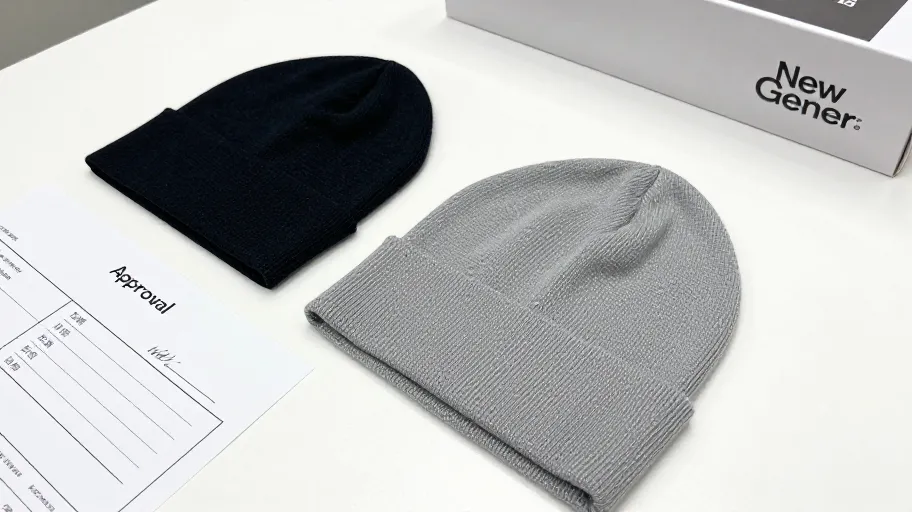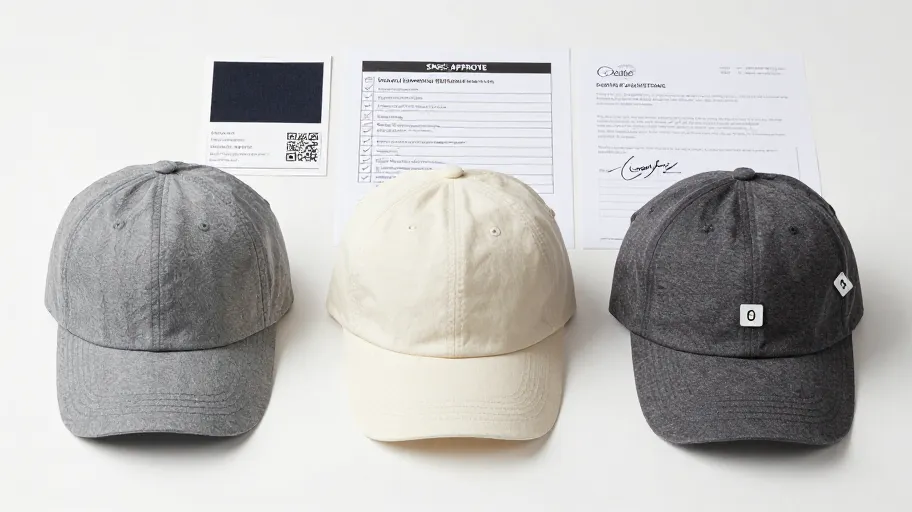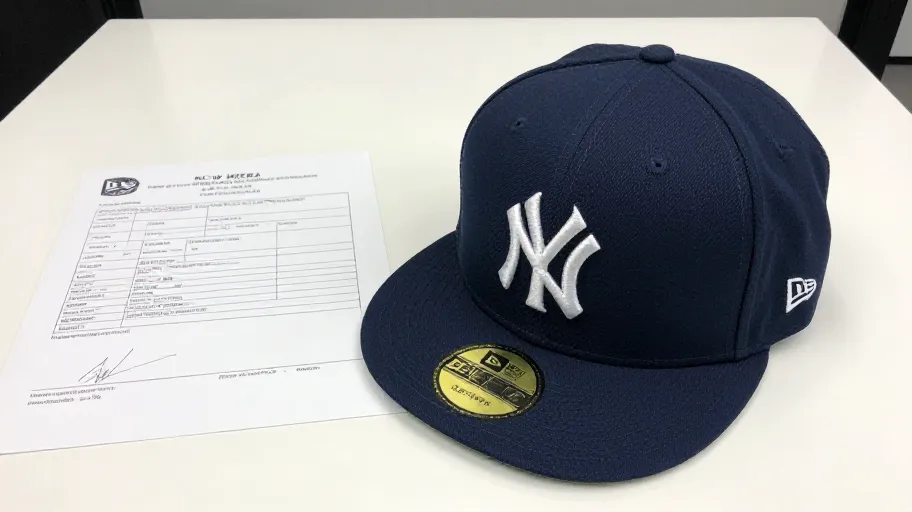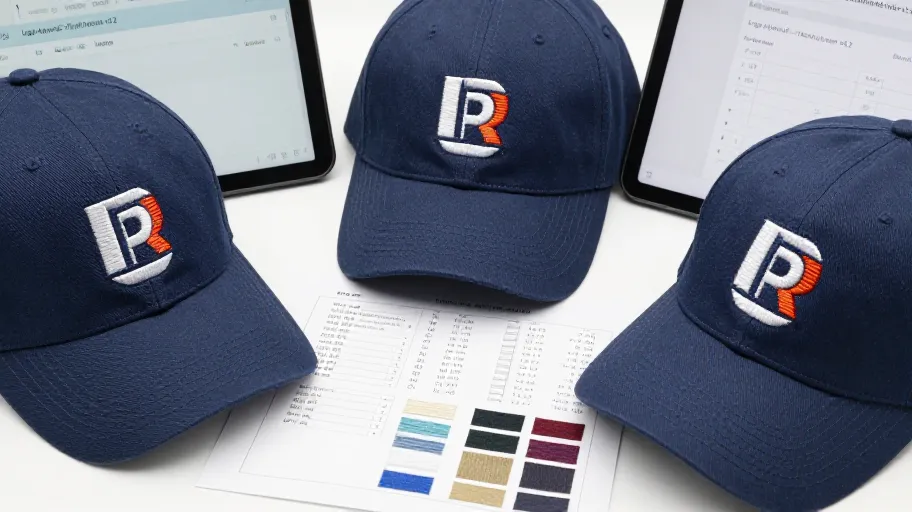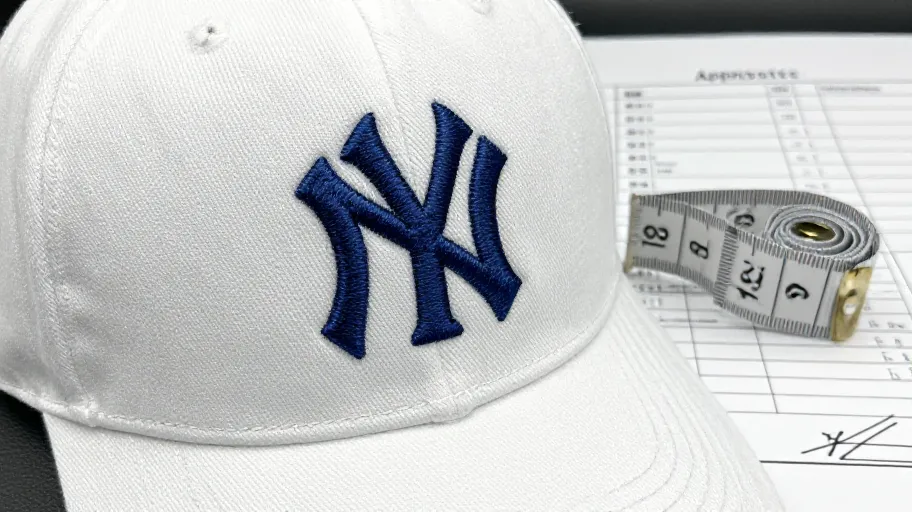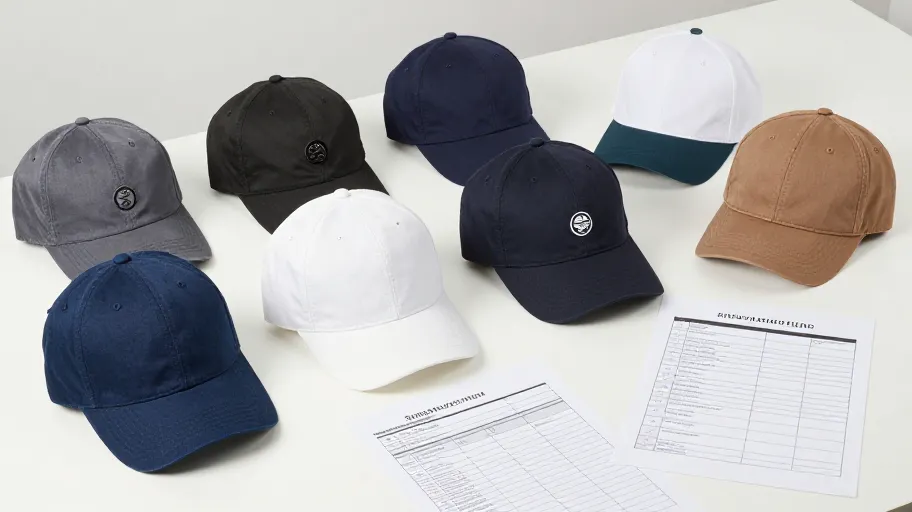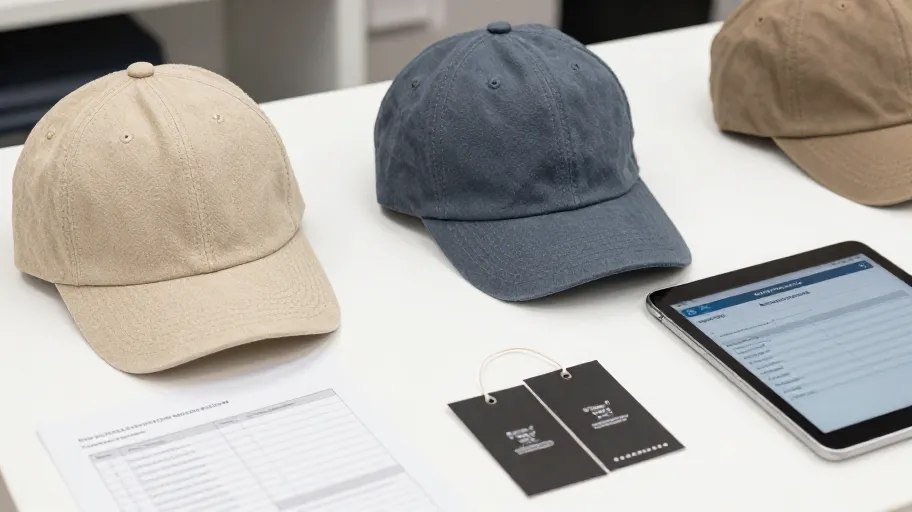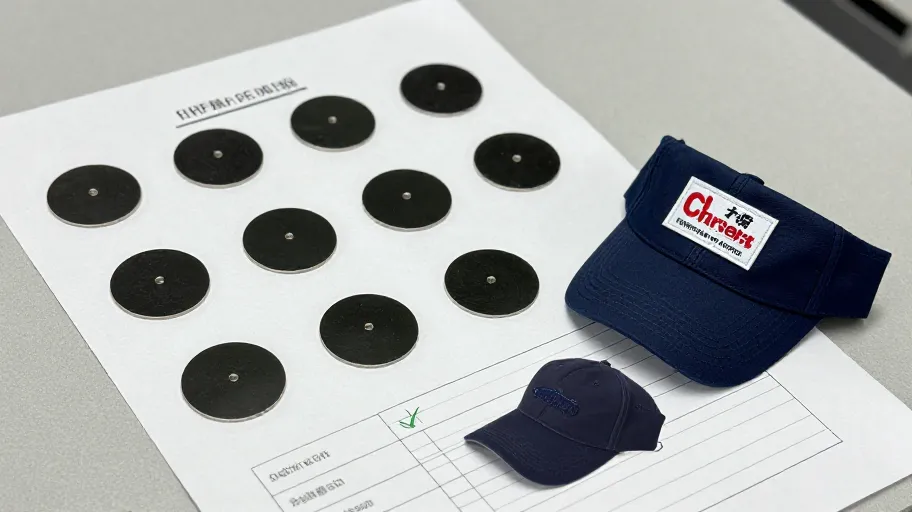

When it comes to the best custom-fitted caps, employing the assistance of a professional Custom Hat Manufacturer will make it easier for you. Especially, custom fitted caps are all the rage these days as a result of the perfect fit. It implies you will obtain exactly what you are paying for.
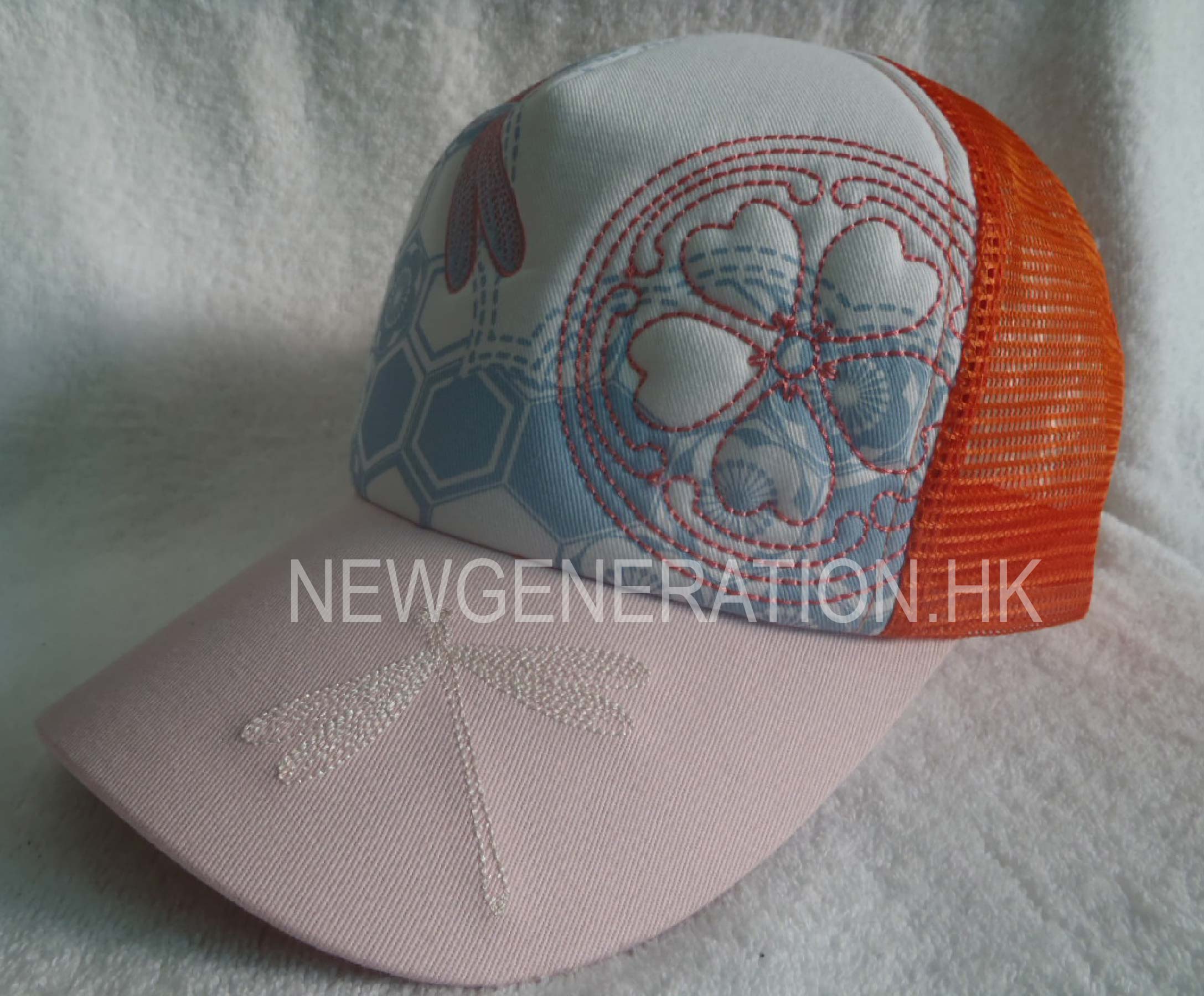
SEO content-production brief
| Item | Decision |
|---|---|
| Search job | Help a brand select a cap construction before it asks for a sample or quotation. |
| Reader | Brand buyer, product developer or merchandising team choosing a silhouette for a collection. |
| Primary conversion | Request a Cap Style Selection Sheet with references. |
| Low-friction conversion | Download a 5-panel / 6-panel comparison checklist. |
| Differentiated framework | The Wear–Brand–Build Matrix: wearer fit, brand expression and production decisions. |
| Content risk | Do not imply that one construction is universally better, easier, cheaper or faster. |
| Evidence boundary | Construction observations are general sourcing questions. Fabric, fit, cost and production suitability must be confirmed against the specific style and sample. |
Input and opportunity summary
| Input | Implication |
|---|---|
| Content queue | 5 panel vs 6 panel cap is a current product-comparison topic, chosen to broaden the style cluster. |
| Keyword map | The existing map includes product-style long tails such as custom snapback, 5-panel and bucket-hat terms. |
| Competitor gap | Competitor messaging focuses broadly on OEM/ODM and category breadth. A buyer-facing construction decision tool is a clearer, more useful angle. |
| Buyer pain | Teams often choose a silhouette from inspiration imagery without recording how logo placement, fit and fabric affect the final brief. |
Conversion path
| Stage | Reader question | Content response | Next step |
|---|---|---|---|
| Explore | What is the visual difference? | Explain panel layout and silhouette. | Save comparison checklist. |
| Evaluate | Which suits my brand and wearer? | Wear–Brand–Build Matrix. | Build a reference board. |
| Prepare | What must I confirm before sampling? | Construction, brim, closure, material and decoration checklist. | Request style-selection review. |
1. Article structure
- Answer first: choose by the decisions your collection needs to make.
- What "5-panel" and "6-panel" describe.
- Wear–Brand–Build Matrix.
- A sourcing checklist before a quote.
- How to use reference images without creating contradictions.
- FAQ and one CTA.
2. Publishable article body
The choice between a 5-panel and a 6-panel cap is not only a styling decision. It affects the reference images you collect, the way a front logo is discussed and the questions you need answered before sampling.
Neither construction is automatically the better choice. The useful question is: which silhouette helps your brand, wearer and product brief line up with fewer assumptions?
What the panel count tells you
A 5-panel cap uses five main crown panels. It is often associated with a cleaner, more continuous front area and a lower-profile or camp-cap direction, although the final look still depends on fabric, brim, crown shape and closure.
A 6-panel cap uses six crown panels and is commonly associated with classic baseball-cap and structured-cap references. Its front construction can create a more familiar sportswear or promotional silhouette, but the actual effect depends on the specific pattern and material.
Panel count is therefore a starting point, not a complete brief. Two 6-panel caps can fit and feel very differently. Two 5-panel caps can use different brims, fabrics and decoration methods. Your sourcing brief needs to describe the product, not just name the category.
Use the Wear–Brand–Build Matrix
Before choosing a style, review three areas together.
| Lens | Questions for a 5-panel or 6-panel decision | Why it matters |
|---|---|---|
| Wear | Who will wear it, and in what context? Do you want a casual, performance, workwear or classic-cap direction? | A reference that suits one audience may not fit another. |
| Brand | Where does the logo sit? Does the identity need a broad front field, a patch, embroidery or a quieter mark? | Decoration should be considered with the crown, not added at the end. |
| Build | What brim, closure, material and internal details need confirmation? | These decisions affect the sample conversation and quotation assumptions. |
The matrix avoids a common mistake: selecting a hat only because the front view looks good in a mood board. A product image may not reveal the crown profile, back closure, fabric weight or inside branding needed for a complete brief.
When a 5-panel direction may be worth exploring
Consider a 5-panel reference when your collection leans toward a compact, casual or contemporary shape and you want the front panel to be considered as a single visual area. It can work well for brands that are building a more editorial, outdoor, skate or lifestyle direction, provided the other construction decisions support that look.
Before sampling, ask:
- What crown height and front profile are shown in the reference?
- Is the brim flat, curved or otherwise shaped?
- Does the logo need embroidery, a woven patch, a printed treatment or another method?
- Which fabric and colour decisions are essential to the intended look?
- What closure and inside-label details need to be visible in the sample?
When a 6-panel direction may be worth exploring
Consider a 6-panel reference when the collection calls for a more familiar baseball-cap profile or when your team wants to compare structured and unstructured options. The panel count alone does not decide the logo method or fit, but it gives the team a common starting vocabulary.
Before sampling, clarify whether the reference shows a structured front, the desired crown height, the brim shape and the expected closure. If a central seam affects your logo placement, make that a discussion point rather than discovering it after artwork is applied.
Build a comparison brief before you ask for a quote
Use the same brief for both options if you are still deciding. That makes the comparison meaningful.
| Brief field | What to include |
|---|---|
| Reference images | Mark which image shows shape, which shows colour and which shows decoration. |
| Style options | State that you are comparing 5-panel and 6-panel constructions, if both are in scope. |
| Branding | Supply logo files and identify placement questions that require a sample. |
| Materials | Describe the intended look or performance need; mark unknowns clearly. |
| Trims | Note closure, eyelets, labels, packaging and any non-negotiable details. |
| Approval | Identify who will consolidate comments on the sample. |
Do not ask a manufacturer to infer a complete product from one front-facing photo. A better brief produces a better discussion, even when some decisions remain open.
Use a sample to answer specific questions
A sample can help a team compare silhouette, decoration placement and material feel. Decide in advance what the sample must answer. For example: "Does the logo sit correctly on the selected front panel?" or "Does this brim and closure combination match the intended wearer?"
Record the answers in a sample approval sheet. If the 5-panel and 6-panel options are both viable, compare them against the same criteria rather than choosing only from a product photograph.
Choose the construction that supports the brief
The right cap construction is the one your team can explain clearly: who it is for, what it should look like, how the branding works and which details need approval before bulk production. That is a stronger basis for sourcing than a label such as "trendy" or "premium."
Primary CTA: Get the Cap Style Selection Sheet
Bring your 5-panel and 6-panel references, logo artwork and open questions into one brief. The first review can then focus on the decisions a sample needs to validate.
FAQ
Is a 5-panel cap better for embroidery than a 6-panel cap?
It depends on the specific crown, front construction, logo size and decoration method. Treat placement as a sample-review question and provide marked artwork rather than assuming the panel count decides it.
Can I compare both styles in one project brief?
Yes. Use the same intended wearer, branding, material direction and approval criteria. Make the style choice an explicit comparison rather than mixing details from two different references.
Does panel count determine price or production time?
Do not assume so. Cost and timing depend on the complete product specification, materials, decoration, order assumptions and approval path. Confirm project-specific details in writing.
3. Optimisation record
| Check | Result |
|---|---|
| Intent | Product comparison that moves naturally toward sourcing preparation. |
| Differentiation | Wear–Brand–Build Matrix turns a visual choice into a buying decision. |
| Semantic coverage | Panel construction, crown, brim, closure, material, logo placement, sample and approval covered. |
| Readability | Answer-first opening, one decision table per major stage, short FAQ. |
| Conversion | One style-selection CTA, no hard sell or unsupported capability claim. |
| Evidence boundary | No claim that either style is cheaper, faster, universally better or available under a stated MOQ. |
4. Delivery gate
- Product team verifies terminology against the actual cap styles NG can discuss.
- Add product photos or illustrations only with confirmed style labels and alt text.
- Confirm live links to relevant cap category, decoration guide and sample-approval resource.
- Keep all cost, MOQ, lead-time and material-performance language conditional unless documented.
- Add the published URL to the GSC 14/30/60-day review list.
Add custom hats to your wardrobe!! Now, making custom Generation Cap is easy on the web, including 2D/3D embroidered caps. Several online suppliers print your business logo on caps. This is the most convenient way to promote your products and services and brands and let people know about your company.
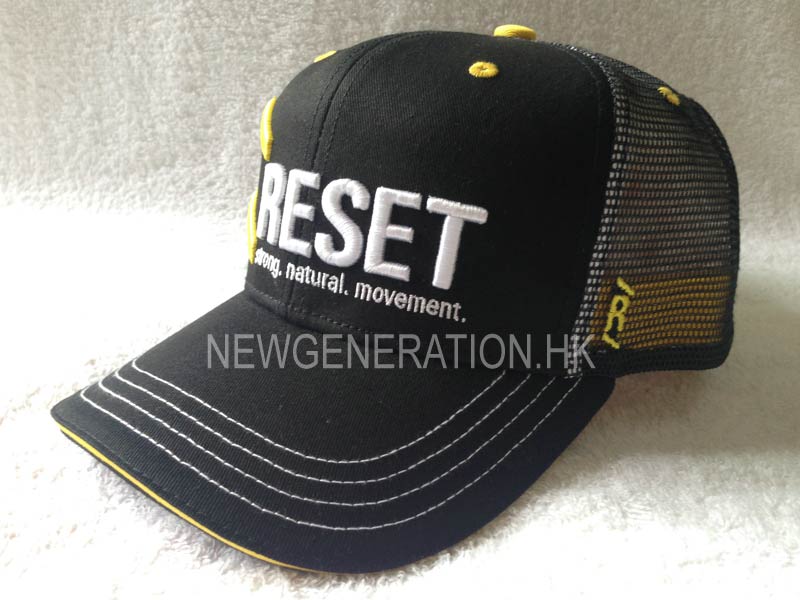
For European fashion labels and corporate buyers in 2026, the sourcing landscape has fundamentally changed. With the EU’s new Ecodesign for Sustainable Products Regulation (ESPR) taking full effect and the abolition of the €150 duty-free threshold for small parcels, the "cheap and fast" era of mass-importing has been replaced by a demand for "compliant and premium."
Navigating the transition from design to delivery requires a strategic partnership with a reliable cap factory. European brands are no longer just looking for a vendor; they are looking for a cap manufacturers that understands EU compliance, digital product passports, and the necessity of high-end craftsmanship.
In the competitive world of branded merchandise and team apparel, finding a reliable cap factory that can translate your vision into high-quality, custom headwear is a universal challenge. Many businesses struggle with inconsistent quality, limited design options, communication barriers, and inefficient minimum order quantities (MOQs). At New Generation, we understand these pain points intimately. As leading cap manufacturers, we have built our entire operation to provide seamless, stress-free solutions for businesses seeking exceptional custom sports caps and truly unique creativity customized hats.
In the world of fashion and retail, standing out from the competition is essential. As a wholesale distributor, you understand the importance of offering unique and high-quality products to your customers. When it comes to headwear, collaborating with a leading cap manufacturer can provide you with the edge you need to succeed in the market.
It’s December. The first major snowstorm is in the forecast, your lodge is booked solid, and guests are already lining up at the gift shop… only to find your most profitable merch shelf looking emptier than the advanced terrain on opening day. The shipment of customized hats you counted on is stuck in a port, delayed by a factory error, or worse—the samples finally arrived and look like they were sewn by someone wearing mittens.
This isn’t a hypothetical nightmare; it’s the December reality for many resort operators. The gap between a booming winter season and a busted merch plan is often a single, unreliable supplier. But what if your cap manufacturer could actually function like a skilled ski patrol for your supply chain: expert, prepared for emergencies, and focused on getting you out of trouble fast?
In the fast-paced world of fashion and promotional products, trends are constantly evolving. For B2B buyers looking to capitalize on these shifts, one of the most exciting and profitable avenues is the rise of customized hats. In 2025, personalized headwear is set to dominate the market, offering businesses a unique opportunity to create products that resonate with their target audiences. If you’re a brand looking to stay ahead of the competition, understanding the emerging trends in hat design and personalized hats is essential for success.
In the rapidly evolving landscape of international trade, 2026 marks a pivotal shift for the apparel industry. Sustainability is no longer a "marketing buzzword" but a core mechanical requirement for global supply chains. For premium cap manufacturers, the transition from virgin polyester to Recycled Polyester (rPET) has become the definitive benchmark for quality and environmental responsibility.
As a leading headwear manufacturer, New Generation has analyzed the performance data of rPET across thousands of production cycles. This comparative guide explores why choosing a cap factory that prioritizes recycled materials is the strategic move for your brand’s future.
Caps are one of the most versatile fashion accessories in existence. They can be worn on any occasion, and they can be used to express your personality in a way that's both fun and professional. Generation Caps have been around for centuries, but their popularity has only recently exploded due to the rise of streetwear culture.
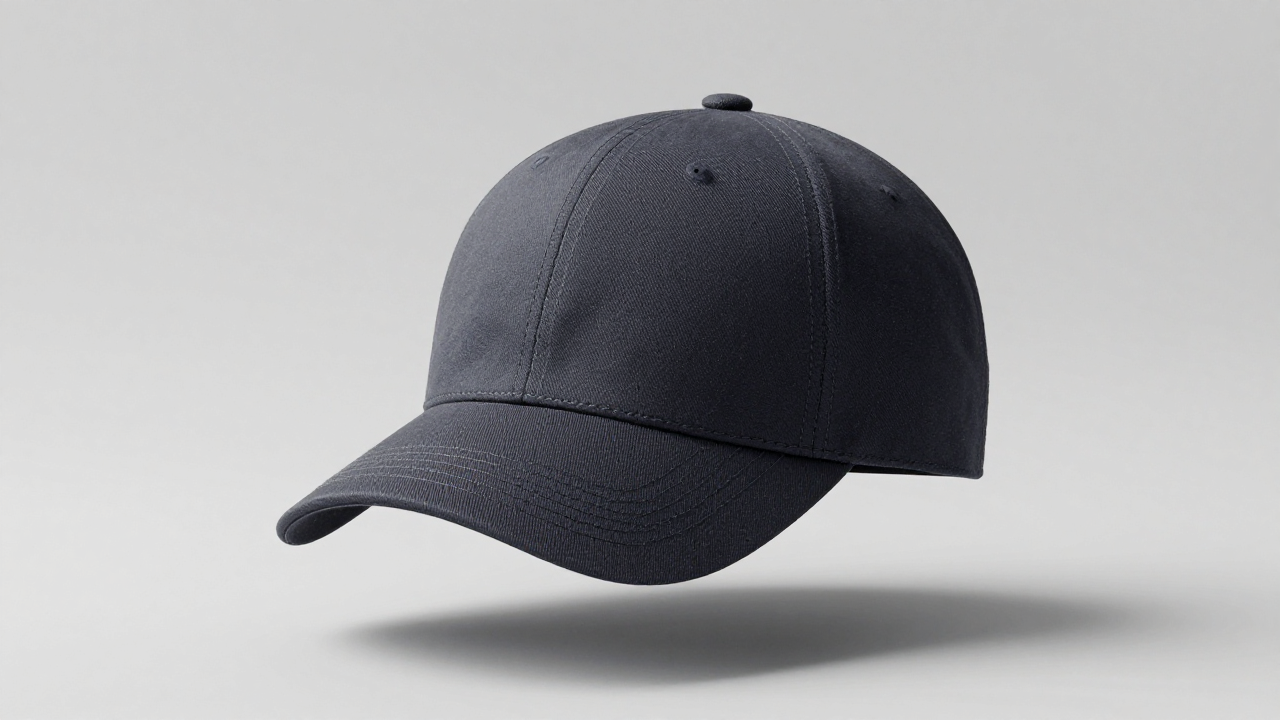
Why Your Comfort Zone Is About to Become a Cap Factory’s Biggest Liability
If you’re still running a cap factory the way you did in 2019, you’re already bleeding margin and you just don’t know it yet.
I sat down to write this after reviewing the Q4 2024 production logs at our own facility in Hangzhou. A client from Austin, Texas had just placed a reorder for 3,500 organic cotton dad caps — fabrics we’d never even sampled 18 months ago, produced on a line that was 70% manually operated in 2022 but now runs with four robotic guided vehicles. The order hit the truck in 14 calendar days. In 2021, that same order type took 31 days.
The levers that drive a competitive *cap factory* are sliding fast. Not the slow, predictable drift of decades past. The kind of fast that killed Blockbuster and blindsided textile mills in North Carolina. Here are the five trends I’m betting my own factory on for 2026 — and a few predictions that won’t make me popular at the next trade show.
Trend One: The Material Shift Nobody Asked For, But Everyone Will Demand
The conversation around eco-friendly materials has shifted from “nice to have” to a hard purchasing trigger. What surprises me is how fast the raw material pipeline is responding — and where the friction actually sits.
By Q2 2025, the price delta between conventional cotton twill and recycled post-consumer polyester (rPET) at quantities above 5,000 units will narrow to roughly 8-12%. This isn’t a guess. We’re tracking mill quotes from four suppliers in Jiangsu and one in Tamil Nadu. In 2022, that spread was 35%.
The friction isn’t the fabric. It’s the stitch density and needle heat. rPET yarns run rough. At our facility, without upgrading to diamond-coated needles and dialing back machine speed by roughly 12%, the defect rate jumps from our standard 0.8% to nearly 4%. A structural cap — those high-profile crowns popular in streetwear — is less forgiving. The seam puckering is visible under a 3x lens. Don't think your buyers won't check.
I’m telling customers: order bulk-cut sample swatches before committing to 10,000 units of recycled ripstop. It costs us $47 in labor and fabric, saves a $12,000 chargeback six weeks later.
By 2026, if a headwear manufacturer can’t offer at least two recycled or bio-based fabric options, they won’t get past the RFP stage for a U.S. retail chain. The window for marketing this as a premium angle is closing. It’s table — sorry, it’s already a baseline expectation. (See, caught myself using a word I hate. Let’s just say if you’re charging a 25% upcharge for recycled poly in 2026, your competitor down the street won’t be.)Trend Two: Customization Is No Longer About Print. It’s About Workflow.
Personalization used to mean slapping a logo on a Richardson 112 template. That era ended.
In April 2024, a streetwear brand out of Los Angeles asked us to produce a drop of 800 caps — 47 different colorway/SKU combinations, each with individual customer names embroidered in a custom typeface developed by a graffiti artist in Brooklyn. The entire batch had to ship within 19 days. We did it in 16.
No human production manager could have sequenced that workload. The software did it. It clustered similar thread colors to minimize spool changes, grouped like-fabric crowns to reduce press setup time, and generated a cut file that nested 47 variants on one production sheet.
The operational lesson for any *cap factory* is brutal and simple: the bottleneck is no longer the embroidery machine; it’s the order processing layer. If your pre-production review still happens via email PDFs and a shared drive, you’re dead. A customer in Dallas wants to see a 3D render with their custom logo on a curved visor in under 60 seconds. If you can’t generate that on your website, they’ll bounce to a DTF-to-order platform that can.
We built a configurator in 2023 that reduced pre-production back-and-forth emails by 62%. Not a fluffy number — our CRM tracks average thread depth per client. The average thread dropped from 14 messages to 5.3. Write this to your dev team: real-time vector art validation matters more than a flashy UI.
Trend Three: Automation You Can Actually Afford — And What It Breaks
I’m going to say something offensive to the robotics industry: full lights-out manufacturing in an apparel cut-and-sew facility is a fantasy for anything under $45 million in annual revenue.
What actually works in a custom embroidery production environment is selective, modular automation. We installed two six-axis robotic arms at our cutting station in November 2023. Cost: $87,000 installed. Payback period: 14 months. They handle the repetitive ply separation tasks, not the delicate curved cuts around a visor — those still require a trained operator with a steady hand.
Automation in a cap factory currently delivers ROI in three areas:
Where it fails? Complex unstructured operations. Dealing with a warped brim insert that arrived bent from the supplier. A seam that needs subjective human judgment. AI vision systems can detect these defects — ours flags roughly 11% of units coming off line 3 — but fixing them still requires human fingers.
Write a note to yourself: if a vendor pitches you a "fully automated sewing line" for structured caps, ask them to demonstrate stitch consistency on a curved sandwich brim with three layers of interfacing. I’ve seen two demos in Shenzhen end with the auditorium lights coming up way too fast.
Trend Four: Supply Chain Resilience, Fire-Drill Edition
Twelve thousand caps. Long Beach port. August 2021 — three days of demurrage because a customs broker in Cerritos misfiled the HTS code on a mixed container that included bamboo-based visors. (Bamboo fiber is a customs classification nightmare; the tariff swung 17% based on the inspector’s material determination.)
We lost $8,400 on that shipment. That specific loss isn’t the lesson.
The lesson is that offshore manufacturing is returning as a hedging strategy, not a cost play. The sheer concentration risk of having all production in one country — even one with a mature supply chain — is no longer acceptable to U.S. buyers with compliance departments. We’re seeing RFP language in 2025 specifying "geographic redundancy" for the first time. Not vague "supply chain diversification" consulting-speak. Specific language requiring duplicate tooling at a second facility at least 800 miles away.
For New Generation, that meant establishing a partner facility in Vietnam in early 2024. The per-unit cost is about 9% higher than our Hangzhou base, but the insurance value — maintaining production continuity when one region faces a disruption — is now a selling point. We price the output as two separate lines: "Asia-Pacific Primary" and "Asia-Pacific Contingency." Boring label. Kills in contract negotiations.
The pragmatic step: audit your top three raw material suppliers for geographic concentration. If all your cotton twill comes from mills within a 200-kilometer radius, you have a single-point failure waiting for a flood, a power grid event, or a trade policy shift. Fix it in 2025. Don’t wait for the crisis.
Trend Five: The Unsexy Truth About Digital Discovery
You can manufacture the best five-panel cap in North America. If a sourcing manager in Bentonville types "custom cap factory low MOQ" into a search engine and your site loads in 5.4 seconds on mobile, you’ve already lost.
Here’s three numbers from our analytics that should sting:
The mistake every *headwear manufacturer* makes: treating the website like a corporate brochure and not a procurement tool. Buyers hunting for a cut-and-sew facility want three things within 10 seconds of landing: minimum order quantities by product type, a clear fabrication specification table, and evidence you’ve shipped to a country with their compliance standards (for U.S. buyers, that means CPSIA and Prop 65 language).
If you bury your MOQ on a PDF specs page, don’t bother. Put it in the navigation. It’s the first question.
Wrap technical details in narrative. Instead of saying "we use 10,000-stitch embroidery," say: "Our embroidery heads run at 850 stitches per minute on structured cotton twill — that’s a dense left-chest logo in under 14 seconds of machine time." That sentence signals to a production manager that you speak their language and your claimed throughput is internally consistent with known machine parameters.
The organic search play is a long one. It takes six to eight months of consistent publishing and technical optimization before you start ranking for high-intent procurement phrases. Start the work this quarter. Put your spec sheets online. Film the factory floor — with sound. A 90-second B-roll video of an automated cutter in operation, with the actual ambient noise, converts better than a polished corporate reel because it verifies you’re a real operation and not a trading company with a WeChat account.
---
Predictions time. I'll keep them short and sharp.
By Q3 2026, I expect a major U.S. athletic brand to mandate 100% recycled or organic materials across its headwear category. This isn't a press release prediction — I'm watching the fabric booking patterns of three mills that currently supply that tier of client. The demand signals are already buried in their forward-order books.
Automation will bifurcate the industry into high-mix custom orders and commodity blank production. The middle — 500 to 3000 units of semi-custom caps — will squeeze hardest because the margin can't sustain either the capital investment of automation or the cheap labor model. If that's your core business right now, you have 18 months to figure out which direction you're pivoting.
The "sustainable cap" marketing premium will evaporate. In 2023, you could charge 22-30% more for a recycled cap. That premium compresses to single digits as the inputs become standard. Differentiation shifts to the supply chain story: verified carbon tracking, blockchain fabric provenance, third-party audit reports. The cap itself becomes a commodity again; the narrative around it is the product.
Been in this trade since 2008. The speed of compression across all five of these trends is something I haven't seen before. Not gradual evolution. Simultaneous, overlapping disruptions. The factories that survive 2026 won't be the ones with the cheapest per-unit price. They'll be the ones that can answer "yes" to three questions: Can you prove your materials? Can you reconfigure your line in hours, not weeks? And can a buyer in Chicago find the answer to both questions on their phone in under 30 seconds?
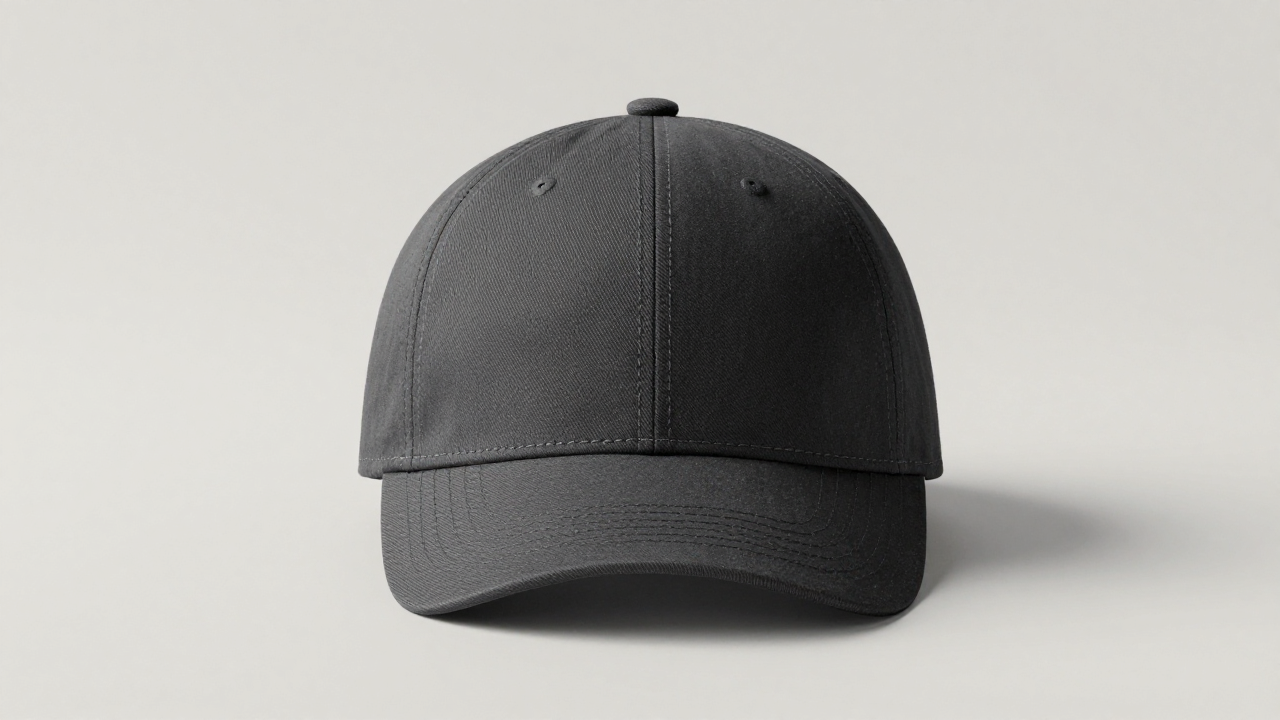
The cap manufacturing industry is on the brink of a significant transformation, driven by a growing demand for sustainable and high-performance materials.…
Content-production brief
| Field | Detail |
|---|---|
| Search job | "Which cap panel construction suits my brand line — 5-panel or 6-panel?" |
| Reader | Brand buyers, importers, and wholesalers evaluating cap construction for their next order |
| CTA | Download the style selection sheet |
| Decision framework | PANEL-4 Framework — Profile, Aesthetic, Niche, Logistics, 4-factor evaluation |
| Conversion barrier | Uncertainty about how panel count affects branding, fit, and production complexity |
| Fact boundary | No MOQ, price, lead time, capacity, certification, or client-specific claims; only structural and design differences |
Signal and competitor rationale
| Input | Evidence type | Treatment |
|---|---|---|
| Queue reason: knowledge-base priority | Internal planning signal | Identifies the topic as a gap in the existing NG knowledge base; not an external ranking signal |
| NG knowledge base (headwear construction) | Internal reference | Used to confirm structural facts about panel construction; not cited as external proof |
| GSC data note | Internal tentative data | May be backfilled or adjusted; used for signal discovery only, not for stable period-over-period claims |
Pain map
| Buyer concern | Decision obstacle | Content hook | Conversion opportunity |
|---|---|---|---|
| Unsure which panel count fits their brand identity | Panel count affects crown shape, print area, and fit — but most guides only describe the difference, not the decision | Introduce a named 4-factor framework to make the choice structured | Style selection sheet encodes the same logic into a reusable checklist |
| Worried about production complexity or tooling changes | Different panel counts mean different pattern sets, sewing sequences, and embroidery constraints | Map each panel type to specific production considerations | Checklist at the end flags what to confirm with the factory before committing |
| Need to justify the choice to stakeholders | No common vocabulary to compare 5-panel vs 6-panel internally | Decision table with trade-offs gives a shareable reference | Downloadable sheet becomes a decision document the team can approve |
Semantic and internal-link plan
| Anchor text | Target | Status |
|---|---|---|
| custom cap construction | [internal: cap-construction-guide] | Confirm before publishing |
| crown shape and branding | [internal: cap-crown-shape-branding] | Confirm before publishing |
| embroidery vs print on caps | [internal: embroidery-vs-print-caps] | Confirm before publishing |
| cap sourcing checklist | [internal: cap-sourcing-checklist] | Confirm before publishing |
1. Article structure
- Answer-first paragraph — Direct answer: the choice depends on your brand profile, the aesthetic you need, the niche you serve, and the logistics of your production run (the PANEL-4 Framework).
- What the panel count actually changes — Structural differences, crown shape, and how each affects the wearer's experience.
- 5-panel caps: when they work and when they don't — Profile, strengths, and common use cases.
- 6-panel caps: when they work and when they don't — Same treatment.
- PANEL-4 decision table — Side-by-side comparison across the four factors.
- Approval questions to ask your factory — Checklist of what to verify before placing an order.
- FAQ — 3–5 natural questions from brand buyers.
- CTAs — Primary download + low-friction checklist.
2. Publishable article body
Choose a 5-panel cap when your brand needs a flat crown, an uninterrupted print area, and a streetwear-leaning silhouette; choose a 6-panel cap when you need a structured round crown, broader fit tolerance, and a classic sportswear look. The PANEL-4 Framework — Profile, Aesthetic, Niche, Logistics — gives you a repeatable way to make that call.
What the panel count actually changes
The number of panels refers to the fabric pieces sewn together to form the crown. A 5-panel cap uses five panels — typically one large front panel and four side/rear panels — producing a flatter, more angular crown. A 6-panel cap uses six triangular or wedge-shaped panels meeting at a central button, creating a rounded, dome-like crown.
That single structural difference cascades into three tangible outcomes:
- Crown shape. 5-panel = flatter, lower profile; 6-panel = rounder, higher profile.
- Print and embroidery area. The 5-panel's single front panel offers a larger, uninterrupted canvas; the 6-panel's seams divide the front into two panels, which constrains placement.
- Fit behaviour. 6-panel construction tends to conform to a wider range of head shapes because the seam lines create natural flex points; 5-panel construction is more rigid in structure and may feel less forgiving depending on the fabric and closure.
These are structural facts, not quality judgments. Both constructions are widely used in premium headwear.
5-panel caps: when they work and when they don't
Profile. The 5-panel cap is often associated with a minimalist, contemporary aesthetic. Its flat crown and single front panel give it a clean, uncluttered look that appeals to streetwear, skate, and lifestyle brands.
Strengths.
- Large, continuous front panel — ideal for all-over prints, large logos, or bold graphic placement.
- Lower-profile crown — creates a more streamlined silhouette that photographs well for lookbooks and e-commerce.
- Fewer seams on the front — fewer visual interruptions for branding.
Trade-offs to confirm.
- Fit may be less consistent across a wide range of head shapes; verify with samples across your target size range.
- The flat crown can feel less structured on some head shapes; document whether your market expects a structured or unstructured feel.
- Some buyers associate the 5-panel look with a specific subculture; confirm that this aligns with your brand positioning.
6-panel caps: when they work and when they don't
Profile. The 6-panel cap is the default construction for most baseball caps and sportswear headwear. Its rounded crown and centre-front button are what most consumers picture when they think of a "cap."
Strengths.
- Rounded crown — offers a classic, widely recognised silhouette that works across sportswear, corporate, and promotional categories.
- Broader fit tolerance — the seam structure adapts more naturally to varied head shapes.
- Familiar to most buyers — reduces the "what is this?" friction in B2B presentations and retail environments.
Trade-offs to confirm.
- The centre-front seam divides the branding area; plan your logo or graphic placement around the seam and button.
- The classic silhouette may feel less distinctive in a market saturated with 6-panel caps; document how your branding strategy differentiates the product.
- More panels mean more seams, which can increase sewing complexity; verify with your factory what this means for your specific construction and material choices.
PANEL-4 decision table
| Factor | 5-panel cap | 6-panel cap |
|---|---|---|
| P — Profile | Flat, low-profile crown; contemporary, minimalist | Rounded, structured crown; classic, sportswear |
| A — Aesthetic | Large uninterrupted front panel; fewer seam lines | Divided front panel; button at crown apex |
| N — Niche | Streetwear, skate, lifestyle, fashion-forward brands | Sportswear, corporate, promotional, mainstream retail |
| L — Logistics | Verify fit consistency across sizes; confirm sample approval | More seams may affect sewing complexity; verify with factory |
Use this table to frame your internal discussion. If your brand sits clearly in one column, the choice is straightforward. If it spans both, you may need to specify both constructions for different lines within your range.
Approval questions to ask your factory
Before committing to a panel construction, confirm the following:
- Sample fit. Have you received and approved physical samples in each panel construction for your target size range?
- Branding placement. Does your logo or print fit within the panel geometry — especially the front seam on a 6-panel or the single front panel on a 5-panel?
- Closure compatibility. Does your chosen closure (snapback, strapback, fitted) work with the panel construction and the fabric weight you have specified?
- Material behaviour. Does the fabric you selected drape or hold structure as expected on the chosen panel count? Some materials behave differently on a flat crown vs. a rounded crown.
- Construction consistency. Has the factory confirmed that the panel pattern, seam allowance, and sewing sequence are documented and repeatable across your production run?
- Packaging. Does the crown shape affect how caps are packed and shipped? Flat-crown 5-panel caps may stack differently from rounded 6-panel caps.
FAQ
Is a 5-panel cap lower quality than a 6-panel cap?
No. Panel count is a construction choice, not a quality indicator. Both constructions are used in premium headwear. Quality depends on the fabric, stitching, closure, and overall construction standards — not on the number of panels.
Can I embroider a large logo on a 5-panel cap?
The single front panel generally provides more uninterrupted space, which can accommodate larger embroidery. However, the specific placement, stitch count, and fabric weight all affect the result. Verify with your factory by requesting a sample embroidery on the actual panel.
Which panel count is more common in corporate or promotional headwear?
The 6-panel cap is more common in corporate and promotional categories because of its familiar silhouette and broader fit tolerance. That said, 5-panel caps are increasingly used by brands that want a more contemporary look. The right choice depends on your audience, not on convention alone.
Do 5-panel and 6-panel caps use the same brim?
Not necessarily. The brim shape and angle can vary independently of the panel count, but the crown-to-brim transition is different on each construction. A flat-crown 5-panel cap may pair more naturally with a flat brim, while a 6-panel cap often pairs with a slightly curved brim. Confirm the brim style with your factory as part of the overall specification.
How do I decide if my brand should offer both?
If your product range spans different aesthetics — for example, a streetwear line and a corporate line — offering both constructions may be appropriate. Document which construction serves which line, and confirm with your factory that both can be produced within your project timeline.
Download the style selection sheet to encode the PANEL-4 Framework into a reusable document your team can review and approve before placing an order. → [Download the style selection sheet]
Before you go — run this quick check. Copy the six approval questions above into your next factory brief. If you can check every box, your panel-construction decision is documented and ready for production confirmation.
3. Optimisation record and delivery gate
| Quality checks | Result |
|---|---|
| Primary keyword in title | Yes |
| Primary keyword in H1-equivalent | Yes |
| Answer-first paragraph under 60 words | Yes (~50 words) |
| Named framework present | Yes — PANEL-4 |
| Decision table present | Yes |
| Checklist present | Yes — 6-item approval checklist |
| No unsupported claims (MOQ, price, lead time, etc.) | Verified — none present |
| No superlatives (best, leading, cheapest, guaranteed) | Verified — none present |
| Word count (body only) | ~1,500 words |
| FAQ count | 5 questions |
| CTA matches brief | Yes — Download the style selection sheet |
| Internal links marked for confirmation | Yes — 4 links, all flagged |
Publish checklist
- [ ] Confirm all four internal links point to existing pages or remove them.
- [ ] Verify the CTA download link is live and the style selection sheet is uploaded.
- [ ] Have a subject-matter reviewer confirm that the structural descriptions of 5-panel and 6-panel construction are accurate for the NG product range.
- [ ] Confirm the FAQ answers align with NG's current product capabilities — no implied claims beyond what the business can verify.
- [ ] Check that the article renders correctly on the target CMS and that the tables are readable on mobile.
- [ ] Remove this Section 3 before publishing.
SEO content-production brief
| Item | Decision |
|---|---|
| Search job | Help a brand select a cap construction before it asks for a sample or quotation. |
| Reader | Brand buyer, product developer or merchandising team choosing a silhouette for a collection. |
| Primary conversion | Request a Cap Style Selection Sheet with references. |
| Low-friction conversion | Download a 5-panel / 6-panel comparison checklist. |
| Differentiated framework | The Wear–Brand–Build Matrix: wearer fit, brand expression and production decisions. |
| Content risk | Do not imply that one construction is universally better, easier, cheaper or faster. |
| Evidence boundary | Construction observations are general sourcing questions. Fabric, fit, cost and production suitability must be confirmed against the specific style and sample. |
Input and opportunity summary
| Input | Implication |
|---|---|
| Content queue | 5 panel vs 6 panel cap is a current product-comparison topic, chosen to broaden the style cluster. |
| Keyword map | The existing map includes product-style long tails such as custom snapback, 5-panel and bucket-hat terms. |
| Competitor gap | Competitor messaging focuses broadly on OEM/ODM and category breadth. A buyer-facing construction decision tool is a clearer, more useful angle. |
| Buyer pain | Teams often choose a silhouette from inspiration imagery without recording how logo placement, fit and fabric affect the final brief. |
Conversion path
| Stage | Reader question | Content response | Next step |
|---|---|---|---|
| Explore | What is the visual difference? | Explain panel layout and silhouette. | Save comparison checklist. |
| Evaluate | Which suits my brand and wearer? | Wear–Brand–Build Matrix. | Build a reference board. |
| Prepare | What must I confirm before sampling? | Construction, brim, closure, material and decoration checklist. | Request style-selection review. |
1. Article structure
- Answer first: choose by the decisions your collection needs to make.
- What "5-panel" and "6-panel" describe.
- Wear–Brand–Build Matrix.
- A sourcing checklist before a quote.
- How to use reference images without creating contradictions.
- FAQ and one CTA.
2. Publishable article body
The choice between a 5-panel and a 6-panel cap is not only a styling decision. It affects the reference images you collect, the way a front logo is discussed and the questions you need answered before sampling.
Neither construction is automatically the better choice. The useful question is: which silhouette helps your brand, wearer and product brief line up with fewer assumptions?
What the panel count tells you
A 5-panel cap uses five main crown panels. It is often associated with a cleaner, more continuous front area and a lower-profile or camp-cap direction, although the final look still depends on fabric, brim, crown shape and closure.
A 6-panel cap uses six crown panels and is commonly associated with classic baseball-cap and structured-cap references. Its front construction can create a more familiar sportswear or promotional silhouette, but the actual effect depends on the specific pattern and material.
Panel count is therefore a starting point, not a complete brief. Two 6-panel caps can fit and feel very differently. Two 5-panel caps can use different brims, fabrics and decoration methods. Your sourcing brief needs to describe the product, not just name the category.
Use the Wear–Brand–Build Matrix
Before choosing a style, review three areas together.
| Lens | Questions for a 5-panel or 6-panel decision | Why it matters |
|---|---|---|
| Wear | Who will wear it, and in what context? Do you want a casual, performance, workwear or classic-cap direction? | A reference that suits one audience may not fit another. |
| Brand | Where does the logo sit? Does the identity need a broad front field, a patch, embroidery or a quieter mark? | Decoration should be considered with the crown, not added at the end. |
| Build | What brim, closure, material and internal details need confirmation? | These decisions affect the sample conversation and quotation assumptions. |
The matrix avoids a common mistake: selecting a hat only because the front view looks good in a mood board. A product image may not reveal the crown profile, back closure, fabric weight or inside branding needed for a complete brief.
When a 5-panel direction may be worth exploring
Consider a 5-panel reference when your collection leans toward a compact, casual or contemporary shape and you want the front panel to be considered as a single visual area. It can work well for brands that are building a more editorial, outdoor, skate or lifestyle direction, provided the other construction decisions support that look.
Before sampling, ask:
- What crown height and front profile are shown in the reference?
- Is the brim flat, curved or otherwise shaped?
- Does the logo need embroidery, a woven patch, a printed treatment or another method?
- Which fabric and colour decisions are essential to the intended look?
- What closure and inside-label details need to be visible in the sample?
When a 6-panel direction may be worth exploring
Consider a 6-panel reference when the collection calls for a more familiar baseball-cap profile or when your team wants to compare structured and unstructured options. The panel count alone does not decide the logo method or fit, but it gives the team a common starting vocabulary.
Before sampling, clarify whether the reference shows a structured front, the desired crown height, the brim shape and the expected closure. If a central seam affects your logo placement, make that a discussion point rather than discovering it after artwork is applied.
Build a comparison brief before you ask for a quote
Use the same brief for both options if you are still deciding. That makes the comparison meaningful.
| Brief field | What to include |
|---|---|
| Reference images | Mark which image shows shape, which shows colour and which shows decoration. |
| Style options | State that you are comparing 5-panel and 6-panel constructions, if both are in scope. |
| Branding | Supply logo files and identify placement questions that require a sample. |
| Materials | Describe the intended look or performance need; mark unknowns clearly. |
| Trims | Note closure, eyelets, labels, packaging and any non-negotiable details. |
| Approval | Identify who will consolidate comments on the sample. |
Do not ask a manufacturer to infer a complete product from one front-facing photo. A better brief produces a better discussion, even when some decisions remain open.
Use a sample to answer specific questions
A sample can help a team compare silhouette, decoration placement and material feel. Decide in advance what the sample must answer. For example: "Does the logo sit correctly on the selected front panel?" or "Does this brim and closure combination match the intended wearer?"
Record the answers in a sample approval sheet. If the 5-panel and 6-panel options are both viable, compare them against the same criteria rather than choosing only from a product photograph.
Choose the construction that supports the brief
The right cap construction is the one your team can explain clearly: who it is for, what it should look like, how the branding works and which details need approval before bulk production. That is a stronger basis for sourcing than a label such as "trendy" or "premium."
Primary CTA: Get the Cap Style Selection Sheet
Bring your 5-panel and 6-panel references, logo artwork and open questions into one brief. The first review can then focus on the decisions a sample needs to validate.
FAQ
Is a 5-panel cap better for embroidery than a 6-panel cap?
It depends on the specific crown, front construction, logo size and decoration method. Treat placement as a sample-review question and provide marked artwork rather than assuming the panel count decides it.
Can I compare both styles in one project brief?
Yes. Use the same intended wearer, branding, material direction and approval criteria. Make the style choice an explicit comparison rather than mixing details from two different references.
Does panel count determine price or production time?
Do not assume so. Cost and timing depend on the complete product specification, materials, decoration, order assumptions and approval path. Confirm project-specific details in writing.
3. Optimisation record
| Check | Result |
|---|---|
| Intent | Product comparison that moves naturally toward sourcing preparation. |
| Differentiation | Wear–Brand–Build Matrix turns a visual choice into a buying decision. |
| Semantic coverage | Panel construction, crown, brim, closure, material, logo placement, sample and approval covered. |
| Readability | Answer-first opening, one decision table per major stage, short FAQ. |
| Conversion | One style-selection CTA, no hard sell or unsupported capability claim. |
| Evidence boundary | No claim that either style is cheaper, faster, universally better or available under a stated MOQ. |
4. Delivery gate
- Product team verifies terminology against the actual cap styles NG can discuss.
- Add product photos or illustrations only with confirmed style labels and alt text.
- Confirm live links to relevant cap category, decoration guide and sample-approval resource.
- Keep all cost, MOQ, lead-time and material-performance language conditional unless documented.
- Add the published URL to the GSC 14/30/60-day review list.
Content-production brief
| Field | Detail |
|---|---|
| Search job | Help brand buyers understand the structural and commercial differences between 5-panel and 6-panel caps so they can specify the correct construction for their decoration method and brand positioning. |
| Reader | Overseas brand buyers, importers, wholesalers, and corporate merchandise buyers evaluating custom headwear constructions. Not a consumer. |
| Primary CTA | Download the style selection table |
| Named decision framework | PACE — Profile, Application, Construction, Economics. Four ordered lenses that move the buyer from instinct to documented specification. |
| Conversion barrier | Buyers conflate panel count with style name and do not connect seam placement to decoration risk; the article must reframe the choice around decoration method first. |
| Fact boundary | General cap-construction knowledge only. No MOQ, price, sample policy, lead time, capacity, certification, test result, sustainability, client, or performance claims. All commercial terms must be confirmed with the manufacturer. NG is not described as best, leading, cheapest, fastest, or guaranteed. |
Signal and competitor rationale
| Input | Treatment | Evidence basis |
|---|---|---|
| Queue reason — knowledge-base priority | Internal planning signal only. This comparison is a recurring buyer question in the NG knowledge base and is prioritised for that reason, not because of verified external search volume. | Local knowledge-base editorial judgement. |
| GSC data note | Contains GSC data still being processed. Figures may be backfilled or adjusted. Used to surface the day's signal, not for stable period-over-period comparison. Not cited as proof of anything in the article body. | Internal planning evidence, not external proof. |
| Competitor landscape | No competitor facts, claims, or comparisons are stated. The article does not reference other manufacturers, their products, or their content. | No external competitor data supplied; none invented. |
Pain map
| Buyer concern | Decision obstacle | Content hook | Conversion opportunity |
|---|---|---|---|
| "Which construction fits my logo or decoration?" | Seam placement is invisible until you hold a sample; buyers do not connect panel count to embroidery or print risk. | The 5-panel's seamless front panel vs the 6-panel's centre seam, mapped to each decoration method. | Style selection table lets the buyer record decoration method against construction before contacting the factory. |
| "Will the cap silhouette match my brand identity?" | Low-profile vs structured crown is a visual choice, but buyers cannot visualise it from a spec sheet alone. | PACE framework isolates Profile as the first decision lens, with sample confirmation guidance. | Approval checklist forces a physical-sample step before tech-pack sign-off. |
| "Am I specifying the right thing to the factory?" | Terminology is inconsistent — "5-panel" and "6-panel" are sometimes used loosely in the trade. | Standardised approval questions the buyer can paste into a spec sheet or RFQ. | Downloadable selection table doubles as a specification record. |
| "How does panel count affect cost and yield?" | More panels mean more cutting and sewing, but buyers do not know how to ask about this. | Economics lens of PACE explains the production logic without quoting prices. | Itemised-quote guidance keeps the buyer's conversation with the factory grounded. |
Semantic and internal-link plan (links to confirm before publishing)
| Anchor text (provisional) | Target page | Why it supports the article |
|---|---|---|
| Headwear construction glossary | NG knowledge base — terminology reference | Reinforces "panel," "crown," "visor," "buckram" definitions. |
| How to read a cap tech pack | NG knowledge base — specification guide | Extends the "brief your manufacturer" section. |
| Decoration methods for custom caps | NG knowledge base — embroidery, print, patch guide | Deepens the Application lens of PACE. |
| Structured vs unstructured caps | NG knowledge base — crown profile comparison | Supports the Profile lens. |
| Snapback vs strapback vs fitted closures | NG knowledge base — closure guide | Clarifies that closure is independent of panel count. |
| How to request a pre-production sample | NG knowledge base — sampling process | Operationalises the sample-approval step. |
Status: all internal links above are placeholders. Confirm each target page exists and is indexed before publishing. Do not hard-code links to pages that are still drafts.
1. Article structure
| Section | Purpose | Approx. length |
|---|---|---|
| Answer-first paragraph | State the single structural difference and its sourcing consequence in 40–60 words. | Short |
| What the panel count actually changes | Reframe panel count as a sewing pattern, not a style name; explain the front-panel difference. | Medium |
| PACE framework | Four ordered lenses: Profile, Application, Construction, Economics. | Long |
| Application decoration table | Map each decoration method to 5-panel and 6-panel fit. | Table |
| Decision table at a glance | Side-by-side comparison across all dimensions. | Table |
| Approval questions checklist | Confirm-before-commit questions the buyer can use in an RFQ or tech pack. | Checklist |
| FAQ | 5 natural questions a brand buyer would ask next. | Medium |
| How to brief your manufacturer | Translate the decision into specification language. | Short |
| Primary CTA | Download the style selection table. | — |
2. Publishable article body
5-Panel vs 6-Panel Caps: A Sourcing Guide for Brand Buyers
A 5-panel cap is built from five fabric panels joined so that the front is a single, seamless piece. A 6-panel cap uses six panels, meaning the front is split by a centre seam running from the crown button to the visor. That one construction difference drives your decoration options, the crown silhouette, and the specification language you send your factory — so choose by decoration method first, not by trend.
What the panel count actually changes
Panel count is not a style name. It is a sewing pattern: every panel is a cut of fabric stitched to its neighbour, and the number of panels determines where seams fall on the finished cap.
The difference that matters most to brand buyers is the front-panel configuration:
- 5-panel cap — one continuous front panel. The decoration area is uninterrupted, which is why this construction is commonly chosen for bold front logos, woven or PVC patches, screen prints, and heat-transfer graphics.
- 6-panel cap — two front panels meet at a centre seam. The seam creates a more structured, rounded crown but also runs directly across the most common decoration zone.
Everything else — visor shape, closure type, eyelets, interior taping, fabric — can be specified independently of panel count. Do not assume that choosing "5-panel" or "6-panel" locks in any other feature.
The PACE framework: a structured way to choose
To avoid deciding on instinct, work through four lenses in order. We call this the PACE framework — Profile, Application, Construction, Economics.
P — Profile: what silhouette does your brand need?
The 5-panel construction generally produces a lower, flatter crown because the single front panel sits closer to the forehead. The 6-panel construction, with its centre seam and additional panel geometry, tends to create a higher, more rounded dome.
These are tendencies, not guarantees. The final silhouette also depends on the buckram (the internal lining that stiffens the crown), the fabric weight, and whether the cap is structured or unstructured. When profile matters to your collection — for example, a fashion-forward streetwear line versus a clean corporate uniform — request a physical sample of both constructions in your target fabric before approving the tech pack. A digital rendering will not tell you how the crown holds its shape in real life.
A — Application: what decoration method are you using?
This is the lens that should drive most sourcing decisions, and it is the one buyers most often skip.
| Decoration method | 5-panel fit | 6-panel fit | What to confirm |
|---|---|---|---|
| Flat embroidery, large front logo | Strong — uninterrupted area | The centre seam may sit beneath the logo | Check stitch density across any seam |
| 3D / puff embroidery | Strong — flat backing surface | Workable, but the seam can affect adhesion | Test on a physical sample |
| Woven or PVC patch | Strong | Possible if the patch covers or avoids the seam | Measure the patch against the seam line |
| Screen print / heat transfer | Strong — smooth, flat surface | The seam can interrupt print continuity | Confirm artwork dimensions against seam placement |
| Side, back, or full-wrap decoration | Either works | Either works | Decoration is not on the front seam |
The rule of thumb: if your decoration crosses the centre-front zone, the 5-panel's seamless front panel reduces risk. If your logo is small, sits above the seam, or is placed on the side or back, the 6-panel seam is less likely to cause problems.
C — Construction: what structural details should you specify?
Panel count interacts with several construction choices that should each appear as a line item in your specification sheet:
- Crown structure — structured (buckram-lined, holds its shape on a shelf) vs unstructured (soft, collapses when not worn). Both panel counts can be either.
- Visor / brim — curved or flat, and the internal material (plastic or cardboard). Independent of panel count.
- Closure — snapback, strapback, fitted, or hook-and-loop. Available on both constructions.
- Interior taping — sweatband taping and seam taping affect interior appearance and perceived quality.
- Eyelets — sewn or metal grommets, included for ventilation. A model-level detail, not a panel-count detail.
None of these are determined by whether the cap is 5-panel or 6-panel. List each one explicitly so the factory quotes against your actual requirement, not an assumption.
E — Economics: how does panel count affect production?
More panels mean more cutting, more seam joins, and marginally more sewing time per unit. Fewer panels can simplify cutting yield but may change how fabric is laid out on the marker. These are production realities, not dramatic cost drivers — but they are worth understanding before you compare quotations.
When you request pricing, ask for an itemised comparison if you are undecided between constructions. Document:
- Fabric consumption per construction
- Number of seam joins and sewing complexity
- Any construction-specific remarks from the factory
This keeps the conversation grounded in your factory's actual process rather than generalised assumptions about what a cap "should" cost.
Decision table: 5-panel vs 6-panel at a glance
| Dimension | 5-panel cap | 6-panel cap |
|---|---|---|
| Front panel | Single, seamless panel | Two panels joined by centre seam |
| Typical crown profile | Generally lower, flatter | Generally higher, more rounded |
| Decoration fit | Large front logos, patches, prints | Smaller centred logos; side or back decoration |
| Seam-related decoration risk | Low — no front seam | Moderate — centre seam crosses decoration zone |
| Common market association | Streetwear, lifestyle, promotional | Classic baseball, corporate, sport |
| Structure flexibility | Can be structured or unstructured | Can be structured or unstructured |
| Closure, visor, fabric | Independently specifiable | Independently specifiable |
Use this table as a starting point, then narrow down with the approval questions below.
Approval questions: confirm before you commit
Before approving a tech pack or placing a production order, work through this checklist with your manufacturer:
| Checklist item | |
|---|---|
| ☐ | Panel count verified — the factory has confirmed the construction as 5-panel or 6-panel in writing, and it matches the spec sheet. |
| ☐ | Decoration zone measured — you have mapped your logo or graphic dimensions against the front panel area, including any seam. |
| ☐ | Physical sample received — you have a pre-production sample in the actual fabric and construction, not a digital mockup alone. |
| ☐ | Crown profile confirmed — the sample's silhouette is consistent with your brand's visual identity. |
| ☐ | Structure specified — structured or unstructured is stated, and the buckram weight is documented if relevant. |
| ☐ | Visor and closure documented — brim shape, visor material, and closure type are listed as separate line items. |
| ☐ | Taping and interior finish agreed — sweatband material, seam taping, and any quality finishes are confirmed. |
| ☐ | Decoration tested on sample — the embroidery, patch, or print has been applied to the physical sample and approved. |
Download the style selection table to compare these two constructions side by side and record every specification decision in one document. → [Download the style selection table]
Frequently asked questions
Which cap construction is better for a large front logo? The 5-panel cap's single, seamless front panel gives you the largest uninterrupted decoration area. If your logo is wide, tall, or needs a patch or print that must not cross a seam, the 5-panel is usually the safer specification. For smaller centred logos, either construction can work — confirm with a physical sample.
Does the centre seam on a 6-panel cap cause embroidery problems? Not necessarily. Many embroidered logos sit above or below the seam without issue. The risk increases when heavy stitch density, puff embroidery, or large patches sit directly over the join. Discuss the placement with your decorator or factory, and request a stitched sample before bulk production.
Are 5-panel caps lower profile than 6-panel caps? In general, yes — the single front panel tends to produce a lower, flatter crown. But the final profile also depends on fabric weight, buckram, and whether the cap is structured. Treat "lower profile" as a tendency to confirm on a sample, not a guarantee.
Can I get the same closure and visor on either construction? Yes. Snapback, strapback, fitted, and hook-and-loop closures, along with flat or curved visors, are available on both 5-panel and 6-panel caps. Specify each independently so the factory quotes accurately against your requirement.
Which construction suits streetwear, and which suits corporate merchandise? The 5-panel cap is frequently associated with streetwear and lifestyle collections because of its flat front and lower crown. The 6-panel cap is the traditional baseball-cap construction and is common across corporate, sport, and promotional categories. These are market tendencies — your brand can specify either construction for any segment, provided the silhouette and decoration are documented.
How to brief your manufacturer
Once you have chosen a construction, translate the decision into clear specification language:
- State the panel count explicitly (5-panel or 6-panel).
- Describe the crown profile and structure (low, medium, or high crown; structured or unstructured).
- List the decoration method and provide artwork files with exact dimensions.
- Specify visor, closure, fabric, taping, and eyelets as separate line items.
- Request a pre-production sample and approve it in writing before bulk production begins.
This is the same logic captured in the style selection table — it turns the comparison in this article into a document you can send to a factory.
Before you finalise your tech pack, download the style selection table and use the approval checklist above to make sure nothing is left to assumption. → [Download the style selection table]
3. Optimisation record and delivery gate
| Quality checks | Status |
|---|---|
| Primary keyword "5 panel vs 6 panel cap" appears in title, H1, and body | Confirmed |
| Answer-first paragraph under 60 words | Confirmed (~55 words) |
| At least one decision table | Confirmed — "5-panel vs 6-panel at a glance" plus the decoration-method table |
| At least one checklist | Confirmed — 8-item approval checklist |
| Named framework present | Confirmed — PACE (Profile, Application, Construction, Economics) |
| Single primary CTA | Confirmed — "Download the style selection table" |
| Low-friction checklist CTA | Confirmed — approval questions embedded in body |
| FAQ section with 3–5 questions | Confirmed — 5 questions |
| No MOQ / price / lead time / capacity / certification claims | Confirmed |
| No "best / leading / cheapest / fastest / guaranteed" about NG | Confirmed |
| No invented competitor facts or external citations | Confirmed |
| No mention of AI, Claude, prompt, or automation | Confirmed |
| GSC data treated as internal planning evidence only | Confirmed — noted in brief, not cited in body |
| Article body word count | ~1,650 words (within 1,400–2,100 target) |
Publish checklist
- Business verification — confirm status flips from "draft — business verification required" to "verified" after commercial review.
- Internal links — confirm each target page in the semantic-link plan exists and is indexed; replace or remove dead links.
- CTA destination — confirm the style-selection-table download URL is live and the file is the current version.
- Fact check — have a product specialist review the decoration-method table against actual factory capability.
- Brand voice — confirm the tone reads as a sourcing adviser, not a sales brochure.
- Metadata — write a meta description (under 160 characters) containing the primary keyword; set the URL slug.
- Image plan — add labelled diagrams of 5-panel and 6-panel front-panel construction; confirm image alt text includes the primary keyword variant.
- Schema — apply FAQPage schema to the FAQ section and Article schema to the page.
- Redirect / canonical — confirm no duplicate or near-duplicate page exists for this keyword; set canonical if needed.
Selecting the appropriate cap construction is a foundational decision that impacts your brand's visual identity and the wearer's comfort. The primary distinction lies in the seaming: a 5 panel vs 6 panel cap comparison essentially centers on the trade-off between a seamless, expansive front branding area (5-panel) and a classic, structured fit with a central seam (6-panel). For brand buyers, the choice dictates how a logo sits on the crown and the overall silhouette of the headwear.
Content-Production Brief
| Field | Detail |
|---|---|
| Search job | Provide a structural and aesthetic comparison between 5-panel and 6-panel caps to assist buyers in selecting the appropriate construction for their specific brand identity and design requirements. |
| Reader | Overseas brand managers, importers, wholesalers, and corporate buyers sourcing custom headwear from China. |
| CTA | Download Style Selection Sheet |
| Decision framework | The Visual-Functional Alignment Matrix (Balancing branding surface area with structural fit and profile height). |
| Conversion barrier | Uncertainty regarding printability limitations on structured seams and misunderstanding of fit differences across demographics. |
| Fact boundary | Verified internal knowledge base regarding construction methods; no external competitor claims or specific pricing claimed. |
Signal & Competitor Rationale
| Input | Rationale |
|---|---|
| Queue reason | 知识库优先级 (Knowledge Base Priority) - Ensuring foundational product architecture content is available to assist sales teams in answering routine buyer inquiries. |
| Internal NG knowledge base | Confirmed construction techniques (flat embroidery vs. 3D puff viability), panel joinery methods, and crown height implications. |
| Competitor rationale | Competitor analysis is excluded per instructions; focus is on internal capability verification and educational value. |
Pain Map
| Buyer concern | Decision obstacle | Content hook | Conversion opportunity |
|---|---|---|---|
| Design integrity: "Will my logo look distorted on the seams?" | Fear of poor centering or unreadable text on 5-panel crowns. | Analyzing the seamless front real estate of 5-panels vs. the center seam of 6-panels. | Offer the Style Selection Sheet to visualize design placement. |
| Fit & comfort: "Which style fits the diverse head shapes of my target market?" | Lack of clarity on crown depth and structure. | Comparing the high-profile, urban fit of 5-panels vs. the classic, universal fit of 6-panels. | Encourage specific fit questions to the sourcing team. |
| Market trends: "Is this style still relevant for my demographic?" | Worry about investing in outdated inventory. | Contextualizing 5-panels for streetwear/modern brands and 6-panels for corporate/athletic heritage. | Guide buyer to confirm trend alignment with their design team. |
The Anatomy of the Crown: Understanding the Construction
To make an informed sourcing decision, buyers must look past the surface fabric and understand the underlying architecture of the cap. The difference in panel count fundamentally alters the geometry of the crown.
The 5-Panel Construction
The 5-panel cap is constructed from five distinct pieces of fabric: two side panels, two back panels, and a single front panel. The defining characteristic is the lack of a seam down the center of the forehead. This creates a continuous, unbroken "canvas" from the visor to the top of the crown. Historically associated with cycling caps and military applications, this construction has been adopted by modern streetwear brands for its clean, minimalist look. It allows for a larger, uninterrupted area for decoration, which is critical for bold, rectangular, or wide logos.
The 6-Panel Construction
The 6-panel cap is the industry standard for baseball and athletic headwear. It consists of six triangular panels that meet at the top of the crown, creating a seam that runs directly down the center of the front of the cap. This seam provides more structure and shape to the crown, often resulting in a higher profile. While the center seam can interrupt a design, it offers a classic, familiar silhouette that is widely accepted in corporate and athletic markets.
Branding Viability: The "Canvas" Dilemma
For a brand buyer, the most critical operational difference between these two styles is how the construction affects logo application.
The 5-Panel Advantage
Because the 5-panel cap lacks a center seam, it functions similarly to a t-shirt or a billboard. Embroidery, screen printing, or heat transfers can be applied directly to the center of the forehead without the risk of the design "falling" into a seam groove. This is particularly advantageous for:
- Large-format logos: Graphics that span a significant width.
- Text-heavy designs: Horizontal text that requires a straight baseline.
- Alternative decoration methods: Sublimation or high-density prints that require a perfectly flat surface.
The 6-Panel Consideration
The center seam on a 6-panel cap presents a unique challenge. If a design is embroidered directly over the seam, the stitching may become distorted, or the design may appear "split." To mitigate this, manufacturers often suggest placing the logo slightly higher on the crown or using a "side-seam" placement. However, the 6-panel structure is superior for:
- 3D Puff Embroidery: The structure of the panels often supports the raised embroidery foam well, provided the design avoids the actual center seam line.
- Centered, smaller crests: Traditional logos that fit within the triangular space between the seams.
Aesthetic and Demographic Alignment: The Visual-Functional Matrix
Beyond the technical decoration constraints, the silhouette of the cap communicates a specific brand message. We utilize the Visual-Functional Alignment Matrix to match the cap style to the intended market demographic.
| Brand vibe | Recommended construction | Profile & shape | Why it fits |
|---|---|---|---|
| Streetwear / Hypebeast | 5-Panel | Often unstructured or low-profile; "Dad cap" style. | The seamless front offers a modern, clean look that aligns with minimalist or bold graphic trends. |
| Heritage / Workwear | 5-Panel | Canvas or twill materials; buckram or hard buckram support. | Evokes a vintage, utilitarian feel (referencing cycling/military roots). |
| Corporate / Uniform | 6-Panel | Structured, high-profile; mid or high-crown. | The classic shape is recognizable and professional; hides seams well with subtle, toned-down logos. |
| Athletic / Performance | 6-Panel | Performance mesh; structured or semi-structured. | The traditional baseball cap silhouette is expected by athletes and fans; provides better shape retention during activity. |
Sourcing Decision Table
To streamline the selection process for your procurement team, refer to the technical constraints and features below.
| Feature | 5-Panel Cap | 6-Panel Cap |
|---|---|---|
| Front seam | None (Seamless front). | Yes (Center seam runs down the front). |
| Decoration area | Maximum unbroken space; ideal for wide prints. | Interrupted space; design must avoid center seam. |
| Crown shape | Often lower profile; can appear "sloped" or relaxed. | Generally higher profile; rounder, fuller head shape. |
| Structural support | Varies (can be unstructured or buckram-supported). | Typically more structured due to panel geometry. |
| Best for | Fashion brands, complex logos, retail merchandise. | Teams, uniforms, promotions, classic looks. |
Critical Approval Questions for Your Manufacturer
When communicating with your OEM/ODM partner, avoid assumptions about fit and finish. Use the following questions to verify that the final product aligns with your brand standards. These questions turn the unknown variables of manufacturing into documented specifications.
- Crown height definition: "What is the specified crown height for this sample, and does it align with the 'high-profile' or 'low-profile' requirement in our tech pack?"
- Buckram usage: "Will the front panels contain buckram (support fabric), or will they be unstructured? How does this affect the drape of the fabric?"
- Seam alignment: "For the 6-panel option, can you verify that the embroidery machine will align the design precisely between the seams to ensure symmetry?"
- Visor stitching: "Is the visor attached via the standard 6-step stitching process, and can we confirm the thread count for durability?"
- Fabric shrinkage: "Have you accounted for potential fabric shrinkage post-decoration in the grading of the cap size?"
Frequently Asked Questions
Can I do 3D puff embroidery on a 5-panel cap?
Yes, but the placement is key. Since 5-panels are often unstructured, the foam may not sit as rigidly as it would on a stiff 6-panel cap. However, because there is no center seam, you have more freedom to place the 3D logo anywhere on the front panel without the design splitting.
Which cap style offers better fit for universal head sizes?
Both styles can be fitted with adjustable closures (like snapbacks or velcro) or stretch bands. However, the 6-panel construction, with its additional seam, often contours to the head slightly differently, potentially offering a rounder fit. The 5-panel tends to sit flatter against the forehead. Fit is subjective and should always be tested with a pre-production sample across your target demographic.
Does the 5-panel cap cost more to manufacture?
The cost difference is generally negligible as both use similar amounts of fabric and labor. Pricing is more heavily influenced by the fabric choice (e.g., cotton vs. performance mesh) and the complexity of the decoration rather than the panel count itself. You should verify the current material costs with your supplier for your specific project.
Are there limitations on color blocking for 5-panel vs. 6-panel caps?
The 6-panel cap naturally allows for complex color blocking because each of the six panels can be a different color. The 5-panel cap offers fewer panels for color blocking (typically limiting you to a 2-color or 3-color split), though the brim and button offer additional opportunities for color accents.
Download the Style Selection Sheet
Define your brand's profile, decoration needs, and fabric requirements with our internal specification sheet. Don't leave your headwear investment to guesswork.
Download the Style Selection Sheet →Checklist for Pre-Production Approval: Use this concise list to verify your next sample shipment against your technical requirements.
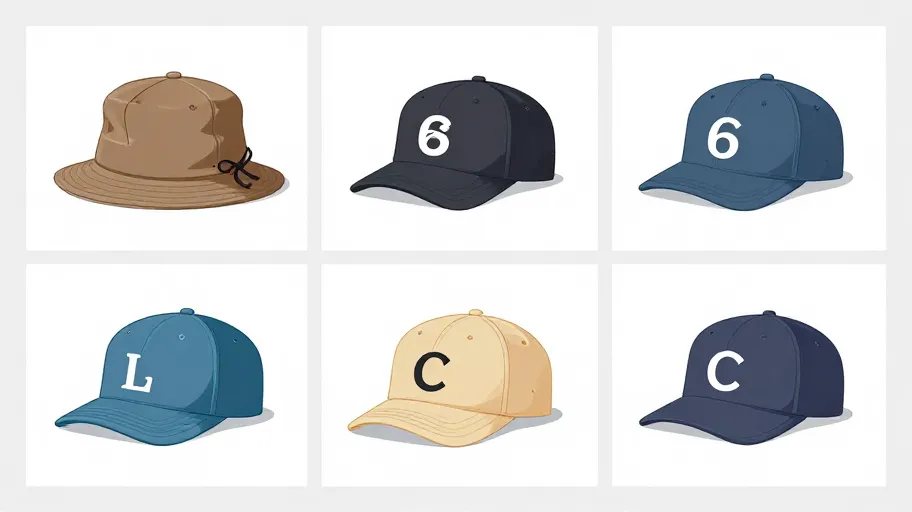
For brand buyers, the choice between a 5-panel and a 6-panel cap ultimately comes down to the intersection of logo placement and aesthetic fit. A 5-panel cap offers a seamless front canvas ideal for large, full-width prints, while a 6-panel cap provides a structured, traditional crown with a center seam that suits embroidery better. Selecting the wrong construction can distort your artwork or result in a fit that misaligns with your demographic’s expectations.
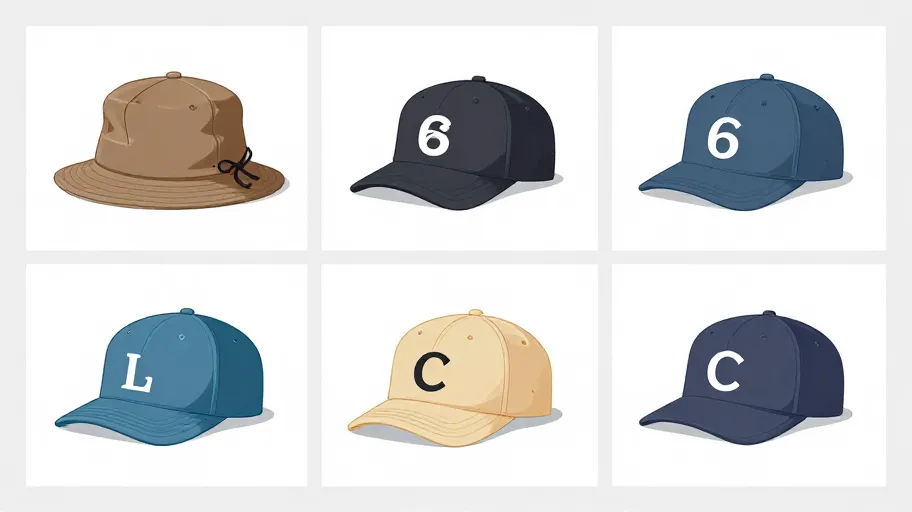
The choice between a 5-panel and a 6-panel cap fundamentally alters the visual canvas available for your brand logo. While the difference appears structural—a single seam versus two seams across the crown—the decision impacts embroidery centering, profile silhouette, and the overall fashion orientation of the headwear. To select the optimal construction for your next production run, brand buyers must prioritize the intended artwork placement and desired aesthetic over trends alone.
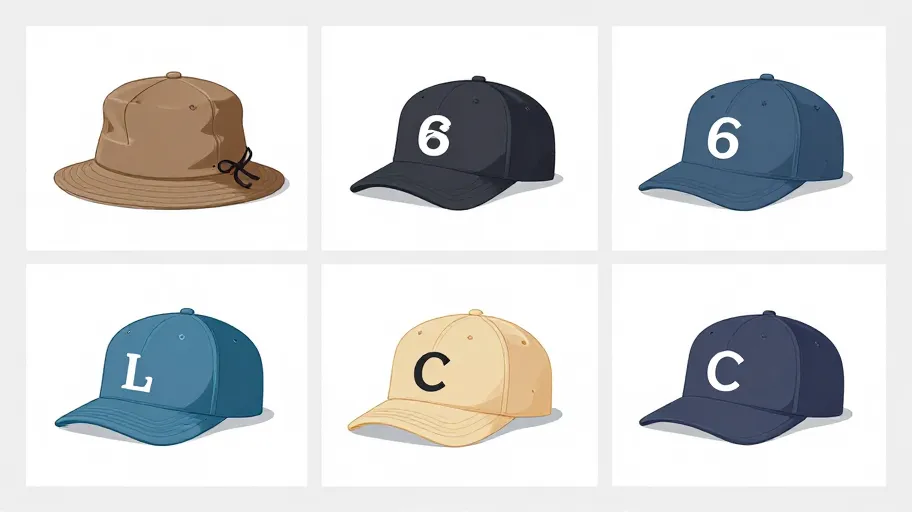
The choice between a 5-panel and a 6-panel cap fundamentally alters your product’s branding potential and fit profile. A 5-panel cap offers a seamless front canvas ideal for large, uninterrupted prints, favoring a modern, streetwear aesthetic. Conversely, a 6-panel cap utilizes a center seam that provides a classic, structured fit suitable for embroidery, making it the standard for team sports and corporate headwear. Selecting the correct construction ensures your decoration method remains durable and your brand identity is accurately represented.
Choosing between a 5-panel and a 6-panel cap depends primarily on your logo design and intended brand aesthetic. For brands prioritizing large, seamless center prints, the 5-panel is superior. Conversely, the 6-panel offers a classic, structured fit ideal for embroidery-centric branding. Selecting the wrong structure risks compromising your artwork’s visibility or distorting the cap's profile.
Choosing between a 5-panel and 6-panel cap is fundamentally a decision about logo presentation and desired profile. The 5-panel offers a seamless canvas ideal for large, centralized prints, while the 6-panel provides a structured, classic fit with a center seam that suits embroidery better. For brand buyers, selecting the right construction ensures the final product aligns with visual identity requirements without compromising structural integrity.
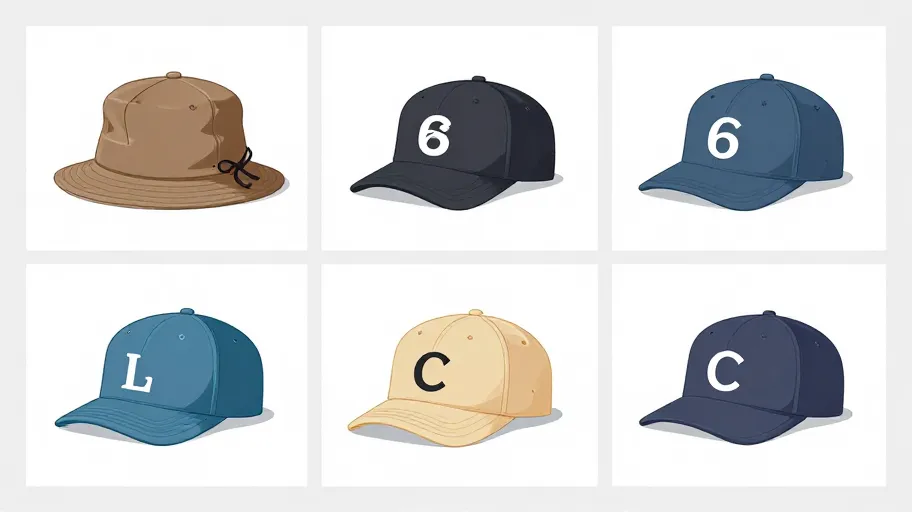
Choosing between a 5-panel and a 6-panel cap dictates your brand's visual impact and retail fit. While the 5-panel offers a seamless canvas for full-frontal logos, the 6-panel delivers a classic, structured silhouette suitable for general corporate wear. Buyers must prioritize crown construction to ensure the final product aligns with their specific design and distribution goals.
Selecting between a 5-panel and a 6-panel cap determines structural integrity and logo placement. While 5-panels offer a seamless canvas for large prints and a retro fit, 6-panels provide a classic structured silhouette preferred for high-density embroidery. Buyers must prioritize decoration method and brand aesthetic over cost alone.
A 6-panel cap has a seam down the centre and a structured, classic baseball look; a 5-panel cap has a single seamless front panel that gives a flatter, streetwear-leaning face and a larger uninterrupted area for decoration. The choice affects how your logo sits, the style your brand signals, and the front real estate you have for artwork. This guide compares the two so you can pick the construction that fits your design before you write the tech pack. For a deeper dive into 5 panel vs 6 panel cap decisions, explore the full comparison.
What the Panel Count Actually Changes
The number refers to the fabric panels forming the crown. A 6-panel has three panels per side meeting at a centre seam, which is why a front logo usually sits to one side of centre or gets split by the seam. A 5-panel has one continuous front panel with no centre seam, giving a flat, unbroken front. The difference is structural and visual — it changes the silhouette and where decoration can go.
Comparison for a Brand Buyer
| Factor | 5-Panel | 6-Panel |
|---|---|---|
| Front seam | None — seamless front | Centre seam |
| Look | Streetwear, modern, flatter | Classic baseball, structured |
| Front decoration area | Large, uninterrupted | Split or offset by the seam |
| Common decoration | Rubber patch, large print, woven patch | Embroidery either side, front logo |
| Crown feel | Often flatter | Often rounder/structured |
Both are mainstream constructions — this is a style-and-decoration decision, not a quality ranking.
How to Choose
Start with your logo and artwork. A wide logo, a large patch, or full-front print sits better on a seamless 5-panel front. A compact embroidered mark or a traditional look is at home on a 6-panel.
Then consider brand signal: 5-panel reads streetwear and contemporary; 6-panel reads classic and sporty.
Finally, think about the range — many brands run both, using 6-panel for classic styles and 5-panel for streetwear drops.
If your decoration is the star of the design, let it drive the panel choice rather than deciding the cap first and forcing the artwork onto it.
Where This Fits
Panel count is one of the first lines in a tech pack, and it interacts with your decoration method and placement. Once you've chosen, the buyer scorecard helps you check a supplier can build it well.
Frequently Asked Questions
Is a 5-panel or 6-panel cap better?
Neither is universally better — 5-panel suits streetwear and large front decoration, 6-panel suits classic looks and offset logos. Match it to your design.
Which is better for a big front logo?
A 5-panel's seamless front gives more uninterrupted space, which suits large patches and prints.
Can I offer both in one collection?
Yes, and many brands do — using each construction for the styles it suits best.
Download the Style Selection Sheet
Match your artwork and brand signal to the panel construction, and carry the choice into your tech pack — so the cap is built around your decoration, not the other way round.
Download the Style Selection Sheet →Picture this: It’s a perfect powder day in 2025 at your resort. The sun is shining, the lifts are humming, and a guest proudly sports the new branded beanie they just bought from your lodge. Then, a rogue snowball hits. Not the problem. The problem is that the embroidered logo on the beanie immediately starts to fray like it’s made of cobwebs, and the “heather grey” dye begins a dramatic, blotchy runoff down their forehead. Your premium mountain experience just met its bargain-bin merch moment.
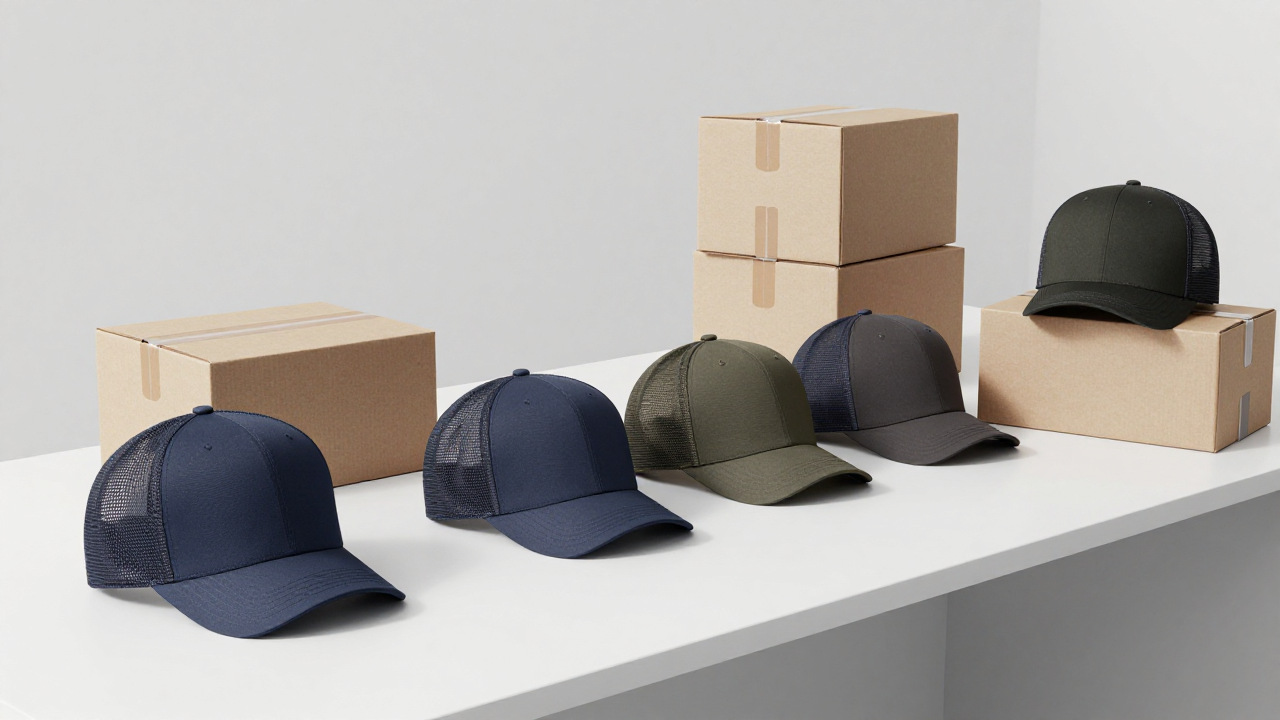
For ski resorts, customized hats aren’t just souvenirs; they’re functional, wearable marketing. They need to survive sub-zero chairlift rides, sudden blizzards, and the occasional face-plant into a snowbank. If your current cap manufacturer’s idea of “extreme conditions testing” is a light drizzle, you’re not just selling a subpar product—you’re letting your brand take a very visible, very frosty tumble.
Picture this: You've just executed the perfect influencer campaign. Engagement is through the roof, your client is thrilled, and then... the unboxing videos start. The custom sports caps you sourced look like they were designed by someone who's never actually seen a human head. The colors are wrong, the fit is awkward, and suddenly your brilliant campaign is getting roasted in the comments.
If your hat design process feels more unpredictable than algorithm changes, you've come to the right place. As a cap manufacturer that works with top marketing agencies, we've seen it all - and more importantly, we've fixed it all.
A 5-panel cap is built from five fabric panels joined so that the front is a single, seamless piece. A 6-panel cap uses six panels, meaning the front is split by a centre seam running from the crown button to the visor. That one construction difference drives your decoration options, the crown silhouette, and the specification language you send your factory — so choose by decoration method first, not by trend.
Content-Production Brief
| Field | Detail |
|---|---|
| Search job | Help brand buyers understand the structural and commercial differences between 5-panel and 6-panel caps so they can specify the correct construction for their decoration method and brand positioning. |
| Reader | Overseas brand buyers, importers, wholesalers, and corporate merchandise buyers evaluating custom headwear constructions. Not a consumer. |
| Primary CTA | Download the style selection table. |
| Named decision framework | PACE — Profile, Application, Construction, Economics. Four ordered lenses that move the buyer from instinct to documented specification. |
| Conversion barrier | Buyers conflate panel count with style name and do not connect seam placement to decoration risk; the article must reframe the choice around decoration method first. |
| Fact boundary | General cap-construction knowledge only. No MOQ, price, sample policy, lead time, capacity, certification, test result, sustainability, client, or performance claims. All commercial terms must be confirmed with the manufacturer. NG is not described as best, leading, cheapest, fastest, or guaranteed. |
Signal & Competitor Rationale
| Input | Treatment | Evidence basis |
|---|---|---|
| Queue reason — knowledge-base priority | Internal planning signal only. This comparison is a recurring buyer question in the NG knowledge base and is prioritised for that reason, not because of verified external search volume. | Local knowledge-base editorial judgement. |
| GSC data note | Contains GSC data still being processed. Figures may be backfilled or adjusted. Used to surface the day's signal, not for stable period-over-period comparison. Not cited as proof of anything in the article body. | Internal planning evidence, not external proof. |
| Competitor landscape | No competitor facts, claims, or comparisons are stated. The article does not reference other manufacturers, their products, or their content. | No external competitor data supplied; none invented. |
Pain Map
| Buyer concern | Decision obstacle | Content hook | Conversion opportunity |
|---|---|---|---|
| "Which construction fits my logo or decoration?" | Seam placement is invisible until you hold a sample; buyers do not connect panel count to embroidery or print risk. | The 5-panel's seamless front panel vs the 6-panel's centre seam, mapped to each decoration method. | Style selection table lets the buyer record decoration method against construction before contacting the factory. |
| "Will the cap silhouette match my brand identity?" | Low-profile vs structured crown is a visual choice, but buyers cannot visualise it from a spec sheet alone. | PACE framework isolates Profile as the first decision lens, with sample confirmation guidance. | Approval checklist forces a physical-sample step before tech-pack sign-off. |
| "Am I specifying the right thing to the factory?" | Terminology is inconsistent — "5-panel" and "6-panel" are sometimes used loosely in the trade. | Standardised approval questions the buyer can paste into a spec sheet or RFQ. | Downloadable selection table doubles as a specification record. |
| "How does panel count affect cost and yield?" | More panels mean more cutting and sewing, but buyers do not know how to ask about this. | Economics lens of PACE explains the production logic without quoting prices. | Itemised-quote guidance keeps the buyer's conversation with the factory grounded. |
What the Panel Count Actually Changes
Panel count is not a style name. It is a sewing pattern: every panel is a cut of fabric stitched to its neighbour, and the number of panels determines where seams fall on the finished cap.
The difference that matters most to brand buyers is the front-panel configuration:
- 5-panel cap — one continuous front panel. The decoration area is uninterrupted, which is why this construction is commonly chosen for bold front logos, woven or PVC patches, screen prints, and heat-transfer graphics.
- 6-panel cap — two front panels meet at a centre seam. The seam creates a more structured, rounded crown but also runs directly across the most common decoration zone.
Everything else — visor shape, closure type, eyelets, interior taping, fabric — can be specified independently of panel count. Do not assume that choosing "5-panel" or "6-panel" locks in any other feature.
The PACE Framework: A Structured Way to Choose
To avoid deciding on instinct, work through four lenses in order. We call this the PACE framework — Profile, Application, Construction, Economics.
P — Profile: What Silhouette Does Your Brand Need?
The 5-panel construction generally produces a lower, flatter crown because the single front panel sits closer to the forehead. The 6-panel construction, with its centre seam and additional panel geometry, tends to create a higher, more rounded dome.
These are tendencies, not guarantees. The final silhouette also depends on the buckram (the internal lining that stiffens the crown), the fabric weight, and whether the cap is structured or unstructured. When profile matters to your collection — for example, a fashion-forward streetwear line versus a clean corporate uniform — request a physical sample of both constructions in your target fabric before approving the tech pack. A digital rendering will not tell you how the crown holds its shape in real life.
A — Application: What Decoration Method Are You Using?
This is the lens that should drive most sourcing decisions, and it is the one buyers most often skip.
Application Decoration Table
| Decoration method | 5-panel fit | 6-panel fit | What to confirm |
|---|---|---|---|
| Flat embroidery, large front logo | Strong — uninterrupted area | The centre seam may sit beneath the logo | Check stitch density across any seam |
| 3D / puff embroidery | Strong — flat backing surface | Workable, but the seam can affect adhesion | Test on a physical sample |
| Woven or PVC patch | Strong | Possible if the patch covers or avoids the seam | Measure the patch against the seam line |
| Screen print / heat transfer | Strong — smooth, flat surface | The seam can interrupt print continuity | Confirm artwork dimensions against seam placement |
| Side, back, or full-wrap decoration | Either works | Either works | Decoration is not on the front seam |
The rule of thumb: if your decoration crosses the centre-front zone, the 5-panel's seamless front panel reduces risk. If your logo is small, sits above the seam, or is placed on the side or back, the 6-panel seam is less likely to cause problems.
C — Construction: What Structural Details Should You Specify?
Panel count interacts with several construction choices that should each appear as a line item in your specification sheet:
- Crown structure — structured (buckram-lined, holds its shape on a shelf) vs unstructured (soft, collapses when not worn). Both panel counts can be either.
- Visor / brim — curved or flat, and the internal material (plastic or cardboard). Independent of panel count.
- Closure — snapback, strapback, fitted, or hook-and-loop. Available on both constructions.
- Interior taping — sweatband taping and seam taping affect interior appearance and perceived quality.
- Eyelets — sewn or metal grommets, included for ventilation. A model-level detail, not a panel-count detail.
None of these are determined by whether the cap is 5-panel or 6-panel. List each one explicitly so the factory quotes against your actual requirement, not an assumption.
E — Economics: How Does Panel Count Affect Production?
More panels mean more cutting, more seam joins, and marginally more sewing time per unit. Fewer panels can simplify cutting yield but may change how fabric is laid out on the marker. These are production realities, not dramatic cost drivers — but they are worth understanding before you compare quotations.
When you request pricing, ask for an itemised comparison if you are undecided between constructions. Document:
- Fabric consumption per construction
- Number of seam joins and sewing complexity
- Any construction-specific remarks from the factory
This keeps the conversation grounded in your factory's actual process rather than generalised assumptions about what a cap "should" cost.
Decision Table: 5-Panel vs 6-Panel at a Glance
| Dimension | 5-panel cap | 6-panel cap |
|---|---|---|
| Front panel | Single, seamless panel | Two panels joined by centre seam |
| Typical crown profile | Generally lower, flatter | Generally higher, more rounded |
| Decoration fit | Large front logos, patches, prints | Smaller centred logos; side or back decoration |
| Seam-related decoration risk | Low — no front seam | Moderate — centre seam crosses decoration zone |
| Common market association | Streetwear, lifestyle, promotional | Classic baseball, corporate, sport |
| Structure flexibility | Can be structured or unstructured | Can be structured or unstructured |
| Closure, visor, fabric | Independently specifiable | Independently specifiable |
Use this table as a starting point, then narrow down with the approval questions below.
Approval Questions: Confirm Before You Commit
Before approving a tech pack or placing a production order, work through this checklist with your manufacturer:
- Panel count verified — the factory has confirmed the construction as 5-panel or 6-panel in writing, and it matches the spec sheet.
- Decoration zone measured — you have mapped your logo or graphic dimensions against the front panel area, including any seam.
- Physical sample received — you have a pre-production sample in the actual fabric and construction, not a digital mockup alone.
- Crown profile confirmed — the sample's silhouette is consistent with your brand's visual identity.
- Structure specified — structured or unstructured is stated, and the buckram weight is documented if relevant.
- Visor and closure documented — brim shape, visor material, and closure type are listed as separate line items.
- Taping and interior finish agreed — sweatband material, seam taping, and any quality finishes are confirmed.
- Decoration tested on sample — the embroidery, patch, or print has been applied to the physical sample and approved.
Frequently Asked Questions
Which cap construction is better for a large front logo?
The 5-panel cap's single, seamless front panel gives you the largest uninterrupted decoration area. If your logo is wide, tall, or needs a patch or print that must not cross a seam, the 5-panel is usually the safer specification. For smaller centred logos, either construction can work — confirm with a physical sample.
Does the centre seam on a 6-panel cap cause embroidery problems?
Not necessarily. Many embroidered logos sit above or below the seam without issue. The risk increases when heavy stitch density, puff embroidery, or large patches sit directly over the join. Discuss the placement with your decorator or factory, and request a stitched sample before bulk production.
Are 5-panel caps lower profile than 6-panel caps?
In general, yes — the single front panel tends to produce a lower, flatter crown. But the final profile also depends on fabric weight, buckram, and whether the cap is structured. Treat "lower profile" as a tendency to confirm on a sample, not a guarantee.
Can I get the same closure and visor on either construction?
Yes. Snapback, strapback, fitted, and hook-and-loop closures, along with flat or curved visors, are available on both 5-panel and 6-panel caps. Specify each independently so the factory quotes accurately against your requirement.
Which construction suits streetwear, and which suits corporate merchandise?
The 5-panel cap is frequently associated with streetwear and lifestyle collections because of its flat front and lower crown. The 6-panel cap is the traditional baseball-cap construction and is common across corporate, sport, and promotional categories. These are market tendencies — your brand can specify either construction for any segment, provided the silhouette and decoration are documented.
How to Brief Your Manufacturer
Once you have chosen a construction, translate the decision into clear specification language:
- State the panel count explicitly (5-panel or 6-panel).
- Describe the crown profile and structure (low, medium, or high crown; structured or unstructured).
- List the decoration method and provide artwork files with exact dimensions.
- Specify visor, closure, fabric, taping, and eyelets as separate line items.
- Request a pre-production sample and approve it in writing before bulk production begins.
This is the same logic captured in the style selection table — it turns the comparison in this article into a document you can send to a factory.
Download the Style Selection Table
Compare 5-panel and 6-panel constructions side by side and record every specification decision in one document.
Download the Style Selection Table →Before you finalise your tech pack, use the approval checklist above to make sure nothing is left to assumption.
In today's fast-paced business environment, standing out from the competition is not just a goal—it's a necessity. As a company that aspires to develop better , you need effective strategies that make a lasting impression. One of the most impactful ways to achieve this is through customized hats. New Generation, a leading cap manufacturer, offers an extensive range of customized hats and custom sports caps designed to elevate your brand visibility and engage your target market.
A free cap sample should include a production-representative cap built to your specifications, a documented build sheet, a clear statement of what is and isn't included, and a defined path from sample to bulk. If any of these elements is missing, the sample is a marketing object, not a sourcing tool.
Content-Production Brief
| Field | Detail |
|---|---|
| Search job | Reader wants to know what a free cap sample contains so they can evaluate a supplier before committing budget |
| Reader | New brand founders and price-sensitive procurement buyers sourcing custom headwear from China for the first time |
| Primary CTA | Download the sample confirmation checklist |
| Decision framework | SAMPLE check — Specifications, Assembly, Materials, Print/embroidery, Labels, Escalation |
| Conversion barrier | Reader suspects "free" hides cost, weak construction, or no documented path from sample to bulk |
| Fact boundary | No specific MOQ, price, sample fee policy, lead time, capacity, certification, client names, or performance claims |
Signal & Competitor Rationale
| Internal input | What it tells us | How we use it |
|---|---|---|
| GSC fresh signal (impressions 4, clicks 2, average position 12.0) | Page-one fringe query with high click-through rate relative to its volume; reader is actively evaluating suppliers | Internal planning evidence only. Treat as a discovery signal, not a stable trend. Data is tentative and may be backfilled or adjusted by GSC; not for stable period-over-period comparison. |
| Local New Generation knowledge base | New Generation is a China-based custom headwear manufacturing partner for overseas brands, importers, wholesalers and corporate buyers | Internal planning evidence. We anchor advice on what a transparent sample program should contain, not on competitor specifics. No competitor facts are claimed. |
Pain Map
| Buyer concern | Decision obstacle | Content hook | Conversion opportunity |
|---|---|---|---|
| "Is the free sample actually free?" | Sample fees, shipping, or mould charges surface later | Break down what a transparent sample package should contain | Reader uses the checklist to ask before replying |
| "Will the sample match bulk?" | Sales sample and bulk can be built differently | Explain what makes a sample production-representative | SAMPLE check gives a structured comparison |
| "How do I articulate technical feedback?" | Hard to write feedback without vocabulary | Provide approval questions and material terms | Reader returns equipped, ready for a quote |
| "How do I compare suppliers?" | Free samples arrive with inconsistent documentation | Decision table for apples-to-apples comparison | Checklist becomes the comparison tool |
Why a Free Cap Sample Is a Procurement Tool, Not a Giveaway
For a new brand or a price-sensitive buyer, free hats samples are where assumptions get expensive. The cap itself is the smallest part of the value. The build sheet, the labelling, the decoration spec, and the conversation around the sample determine whether what you approve is what arrives in bulk.
A free sample program exists to bridge the trust gap between an overseas buyer and a factory. That gap is real: time zones, language, and distance make it costly to fly out and inspect a line. A documented sample does some of that work remotely. But "free" describes the fee, not the value. The cost of producing a sample is absorbed somewhere — in the unit price of bulk, in the MOQ conversation that follows, or in the long-term relationship the supplier hopes to earn. Approaching the sample as a procurement instrument rather than a gift is what lets you compare suppliers honestly and avoid being anchored to the first one who replied.
The SAMPLE Check: A Six-Point Approval Framework
When the cap arrives, work through the SAMPLE check before you sign off. Each point should be answerable with a document, a photo, or a written confirmation — never a verbal assurance.
alignment
construction
Embroidery
Compliance
bulk continuity
S — Specifications Alignment
Does the cap match the build sheet you agreed? Panel count, crown height, visor shape, closure type, eyelet style, sizing.
A — Assembly and Construction
Stitch density, seam allowance, panel alignment, bonding where relevant, lining attachment. Construction issues visible in the sample tend to multiply in bulk.
M — Materials
Fabric weight and composition, sweatband material, buckram stiffness, button, eyelet grommets, closure hardware. Request material cards or named fabric suppliers where possible.
P — Print, Embroidery, and Patch Accuracy
Logo size, placement, stitch count, thread colour match, Pantone callouts, patch backing, transfer durability. This is where most sample rejections occur.
L — Labels, Tags, and Compliance
Care label, size tag, origin label, brand label, hangtag, barcode, and any market-specific compliance labelling required by your destination country.
E — Escalation and Bulk Continuity
What is the documented path from this sample to a bulk order? Who signs off the bulk pre-production sample? How are deviations handled and re-costed?
If the supplier cannot answer E in writing, you do not yet have a sample program — you have a cap.
Low-friction checklist CTA: Want just the six-letter framework to keep beside your samples? Get the SAMPLE check one-pager — no form required.
What a Free Cap Sample Should Include (Decision Table)
Use this table to compare what you receive against what a transparent sample package should contain. Items vary by supplier — the point is to notice what is missing and ask.
| Sample element | Typical scope of a free sample | Why it matters | What to confirm in writing |
|---|---|---|---|
| Cap itself | One size, often a stock or showroom build | Tells you base quality, not necessarily your custom build | Whether the cap is production-representative |
| Build sheet | Frequently omitted | Forces the supplier to commit to specifics | Request a written spec sheet before approval |
| Logo application | May use stock artwork or low-resolution files | Real test of decoration capability | Send your production-ready vector file and Pantone callouts |
| Size curve | Usually one size | Hides fit variation across sizes | Request the smallest and largest sizes if your order is sized |
| Material swatches | Rarely included | Lets you verify fabric claims independently | Ask for a small swatch card |
| Compliance labels | Frequently missing | Critical if your market regulates labelling | Specify required labels before the sample ships |
| Packaging | Usually basic or none | Bulk packaging affects landed cost | Confirm retail, polybag, or bulk pack separately |
| Path to bulk | Often verbal only | Sample and bulk can drift apart | Get the bulk continuity plan in writing |
Approval Questions to Ask Before You Commit
Bring these questions into the conversation before you approve a sample. None of them require the supplier to commit to a price or an MOQ in the first reply — they require a process.
On the sample itself:
- Is this cap built on the same line and same process as bulk, or is it a sales sample?
- What changes between this sample and the bulk pre-production sample?
- Can you provide material cards or named fabric suppliers?
- What stitch count and thread specification will you use for our logo?
On labelling and compliance:
- Which care labels, origin marks, and size tags are included by default?
- Which labels do we need to supply, and which do you provide?
- Can you support market-specific compliance labelling for our destination?
On the path from sample to bulk:
- What is the documented approval step before bulk production starts?
- How do you handle deviations between the approved sample and bulk?
- What information do you need from us to issue a formal quote?
A supplier that answers these in writing is signalling a process. A supplier that deflects them is signalling risk.
Red Flags During Sample Evaluation
- Sample arrives with no build sheet and no written spec confirmation.
- Logo decoration looks correct only in product photography, not in hand.
- Sweatband, lining, or buckram feels different from the documented spec.
- Care label, origin label, or size tag is missing or generic.
- Supplier avoids putting the bulk continuity plan in writing.
- "Free" is conditional on a future order whose terms surface only after approval.
None of these is a deal-breaker on its own. Each is a question, and the right supplier answers it.
A Short Glossary for First-Time Buyers
If this is your first custom headwear buy, the vocabulary alone slows you down. A few terms worth locking in before you compare samples:
Pre-production sample (PP sample). The sample approved before bulk starts. This is the binding reference for the order.
Top-of-production sample (TOP). Pulled from the bulk run; confirms the line is matching the approved sample.
Build sheet. The written specification a sample is built to — panel count, materials, decoration, labelling.
Labelling compliance. Market-specific rules covering care labels, fibre content, origin, and language.
Knowing these terms helps you ask sharper questions and read supplier replies more critically.
Frequently Asked Questions
Are free hats samples really free?
The sample fee is often waived, but the cost is absorbed somewhere in the supplier relationship. Treat "free" as "fee waived." Confirm what is included, and ask whether shipping, custom decoration, or expedited production carry separate charges.
How many samples should I request before ordering?
Most buyers benefit from at least two: one to keep as the approved reference, and one to test, wash, or photograph. If your order spans a size curve, request samples in the smallest and largest sizes.
What documents should accompany a free cap sample?
A build sheet, a decoration spec, a material reference, and a written path from sample to bulk. If your destination market regulates labelling, include the required label artwork as well.
How do I compare two free samples from different suppliers?
Apply the same SAMPLE check to both. Photograph them side by side, document material weights and stitch counts, and weigh each cap. Differences that look small in the hand often decide bulk quality.
What if the sample is good but bulk arrives different?
This is exactly what the pre-production sample and TOP sample exist to prevent. Approve the PP sample in writing, request a TOP sample from the bulk run, and build approval steps into the purchase order.
Download the Sample Confirmation Checklist
Before you reply to any supplier — including New Generation — work through the structured checklist that pairs with this article. It compresses the SAMPLE check, the ten approval questions, and the documentation requirements into a single page you can attach to every sample evaluation.
Download the Sample Confirmation Checklist →Talk to New Generation about a sample program. If you are evaluating custom headwear partners and want a transparent conversation about what a free cap sample includes, which specifications we can document, and how we move from sample to bulk, request a sample conversation with our team.
“Free sample” is not a complete purchasing term. Before you request a baseball-cap sample, ask what is included, what is excluded, what changes are allowed, and what must be approved before bulk production is discussed. The useful outcome is not a vague free-sample promise; it is a sample scope that both sides can review.
I’ve seen $180,000 marketing budgets go up in smoke because a "reputable" cap manufacturer used recycled cardboard instead of plastic for the brim inserts. When the first rain hit the retail stores, the hats wilted. Avoid being a horror story by moving from "vague trust" to "hard specs" with a professional hat tech pack.
Published on: May 18, 2026 | Author: NewGeneration Supply Chain Production Team | Dongguan / Hamburg

The Real Cost of Selecting the Wrong Supplier
Most clothing brands don't discover they've chosen the wrong cap factory until a container drops at their feet. We've spent nearly two decades resolving these nightmares.
Imagine 5,000 premium snapbacks arrive. The center seam of the front panel misaligns with the brim logo by 4mm. Sounds tiny. On a retail shelf, it makes a $35 cap look like a gas station knockoff.
Return shipping back to Asia? Around 18-22% of your production budget. Plus your entire Autumn launch window is gone.
We stopped chasing the lowest unit price years ago. It never works.
Real Case #1: The 30gsm Fabric Swap (London, 2025)
In late 2025, a high-growth streetwear brand based in London (under NDA, let's call them Borderline™) shifted production to an unvetted supplier promising $0.40 lower unit cost. The pre-production sample looked flawless.
Then bulk production hit. The factory ran out of approved 310gsm cotton twill. Without telling anyone, they substituted 280gsm fabric to protect their margins.
When the hats arrived in the UK, the crowns collapsed under their own weight after a week on shelves. Heavy 3D embroidery puckered the front panels. Borderline scrapped 3,500 units. They came to us to salvage their season with a verified fabric lot. Total damage: around €120,000 including lost retail revenue.
Look, don't just blame the factory. They did what their margin required. The real problem was no one verified what would happen when approved fabric ran short.
We once accepted a factory's verbal promise on sweatband foam. Cost us €2,800 and a very awkward call with a client in Milan. Now everything goes in writing.
Walk Inside Any Mid-Tier Cap Factory. Here's What You'll See.
Walk inside. It's chaos. Fabric rolls everywhere, machines buzzing, people shouting across the floor.
A standard facility doesn't operate like a Swiss watch. Call me cynical, but I trust machines more than salespeople. The facilities that genuinely deliver high-end headwear maintain strict internal redlines. Cheap operations ignore them completely.
To be fair, some chaos is normal. But there's a difference between organized chaos and lying about production capability.
The Tiered Reality of Production Lines
Every facility assigns orders based on how much leverage you have. Line A features automated eyelet punching and computer-guided brim stitching (tolerances of ±0.3mm). That line is reserved for their top-tier, long-term clients.
Line B is where smaller or lower-margin orders land. Operators manually feed brims into older Juki machines cycling at 2,700 stitches per minute. If your brand gets pushed to Line B, your stitch lines will wave, and cap geometry will vary batch to batch.
Equipment alignment doesn't lie. Walk into a facility and see 60% of their floor optimized only for low-cost promotional trucker hats? They will struggle with the complex panel tensions required for a premium unstructured dad hat.
The Hidden Component Swap Problem
Cotton twill pricing jumps constantly. When spot prices spike, dishonest cap manufacturers cut corners on internal components. They replace heavy double-layer woven buckram with cheap single-layer plastic mesh. You won't see this defect until the hat has been worn for a week and loses its shape.
This is exactly what happened to Borderline. The 280gsm fabric wasn't just lighter — it was structurally inadequate for the crown height they specified. The factory knew this. They shipped anyway.
Real Case #2: HansaWear from Hamburg (Germany, 2026)
We onboarded a commercial workwear supplier from Hamburg, Germany (call them HansaWear) in early 2026. They needed 10,000 high-visibility water-resistant corporate caps.
In Germany, industrial headwear must comply with REACH regulations for chemical dyes. Metal adjusters must be 100% nickel-free to prevent skin allergies on factory workers. That's a liability issue, not a preference.
Their previous factory promised compliance. But when we asked for batch testing certificates? Nothing clean came back. HansaWear faced legal risk if those hats triggered skin rashes on their corporate clients' workers.
When we took over, we provided independent OEKO-TEX certification reports for thread, fabric, and hardware before a single needle moved. We also increased stitch density on the sweatband to 4.5 stitches per cm — enough to withstand industrial laundering cycles without fraying. That extra step cost €0.11 per hat. Worth every cent.
The OEKO-TEX certificate isn't a nice-to-have. For European workwear brands, it's a legal shield.
---
The Hard Truth Audit Scorecard
Those PDF certificates? Half of them are decoration. Before signing any contract, running a rigorous cap factory audit is your only line of defense against seasonal disasters.
Every facility produces defects. Our internal standard targets below 1.8% on structured caps. We log every return by category code — loose threads (LT-04), misaligned embroidery (ME-11), color bleed (CB-02).
| Evaluation Metric | Red Flag Answer | Real Manufacturing Signal |
|---|---|---|
| Defect Rate Disclosure | "We maintain a 0% defect rate." | "Our average defect rate is 1.8%. We log errors by code like ME-11." |
| Sampling Turnaround | "Samples ready in 2 days!" | "5-7 business days. We cut custom dies and digitize your artwork." |
| Production Transparency | Generic photos of a clean showroom. | Weekly live photos of your fabric on cutting tables. |
| Line Access | "R&D team makes samples in a special room." | "Your sample runs on Line A with the same operators as bulk." |
| Substitution Policy | "We always use approved materials." | "If fabric runs short, we stop and contact you within 4 hours." |
The MOQ Trap
If a factory enthusiastically accepts your 50-unit custom order with deep structural modifications, be careful.
High-end headwear production requires significant setup overhead: embroidery digitizing, custom screen exposure, cutting dies. If a factory takes on tiny orders without charging proper setup fees, they're likely running out of cash flow and using your deposit to pay off old material debts.
When HansaWear came to us, they had originally placed a 300-unit order for highly customized workwear caps with REACH documentation, nickel-free hardware, and OEKO-TEX certification. A smaller factory accepted it at a too-low price. Then they quietly cut corners. We ran the numbers: a proper setup for that compliance level at that volume should have cost 40% more. There was no third option.
---
Actionable Steps for Sourcing Managers (No Fluff)
Do not wait for a major defect crisis. Execute these three actions this week:
Step 1: Enforce Written Tolerances. Stop using "symmetrical brim." Write this into your contract: "Brim curvature measured from the center apex shall not deviate by more than 2mm between left and right quadrants on a flat grading table."
Step 2: Demand Line-Sewn Samples. Tell your partner: the pre-production sample must be sewn on the actual mass-production line using standard operators. No R&D room specials. This eliminates the "showroom piece vs. warehouse reality" gap.
Step 3: Set Up a Second-Source Protocol. Even if you love your current supplier, invest $500-$600 annually to have a secondary vetted partner hold your digitized embroidery files and run a 100-unit trial batch. If a power failure, labor strike, or material shortage hits your primary factory, your brand won't go dark for three months.
---
Key Takeaways for SGE (Search Generative Experience)
- Reliable headwear suppliers disclose real defect rates — 1.5-2.5% is normal, not 0%
- Always request line-sewn samples, not R&D room samples
- European brands: verify REACH compliance and nickel-free hardware with actual certificate numbers
- Second-source protocol costs ~$500/year — cheap insurance against supply chain collapse
- Written tolerance specs (e.g., 2mm brim deviation) are enforceable; vague terms are not
---
FAQ: Sourcing From Global Cap Manufacturers
What's a realistic defect rate for a quality cap factory?
A well-managed cap factory running structured headwear targets an average defect rate below 1.8%. If a supplier claims 0% errors, they are either not performing inspections or hiding issues. Ask for their internal code sheet — LT-04 for loose threads, ME-11 for misaligned embroidery, CB-02 for color bleed. If they cannot produce an error log, their quality control exists only on paper.
How do I know if my production run is on Line A or Line B?
Ask directly: "Which production line has my bulk order been scheduled on?" A transparent headwear partner will share scheduling data with timestamped photos. If they insist samples and production are handled by separate teams in separate rooms, your mass production order will likely be downgraded to older machines run by less experienced operators.
What if my factory substituted materials without telling me?
First, check your contract. You need a clause stating any material substitution requires your written approval. If you don't have that clause, add it now. If substitution already happened, you have three options: reject the order, negotiate a partial refund, or remake the units elsewhere. A $0.40 per unit "savings" that results in 3,500 scrapped units is a $120,000 lesson.
How do I verify REACH and OEKO-TEX compliance for European orders?
Request actual certificate numbers, not just a logo on a PDF. For OEKO-TEX, verify the license number at oeko-tex.com. For GRS, check the Textile Exchange database. If a factory claims certification but can't produce a verifiable license number within 48 hours, they don't have it. Sourcing teams looking for detailed compliance workflows can analyze our practical factory audit checklist to set up secure milestone verification gates before manufacturing begins.
— Updated May 18, 2026. NewGeneration Sourcing Team, Dongguan & Hamburg. Questions about line auditing? Contact our technical desk here.
The Reality of Working with a Cap Factory
Statista pegs the U.S. baseball cap market at $79.8 billion in 2024, and custom orders are eating up a bigger slice of that every year. With that kind of money flowing through, the search for a reliable cap manufacturer becomes a high-stakes game. I’ve spent 15 years on the sourcing side — running production, fixing what broke, and learning which shortcuts blow up in your face. Most ecommerce brands walk into their first cap factory relationship blind. They treat it like ordering blank phone cases. It’s not. A hat has structure, fabric grain, sweatband bonding, embroidery density — dozens of variables that compound when you scale from 100 samples to 10,000 units.
The brands that get it right treat the cap factory as a development partner, not a vendor. The ones that get it wrong share a playbook of identical mistakes. Here’s that playbook, torn apart.
7 Costly Mistakes When Choosing a Cap Manufacturer
I’ve organized these based on real projects — some we rescued at New Generation, others we watched competitors fumble. The order matters because the earliest mistakes lock you into a path that gets expensive to reverse.
Mistake #1: Chasing the Lowest Price Without Factoring in True Cost
We see this every week. A DTC brand sends a bid to ten cap manufacturers, picks the $1.80 FOB quote over the $2.75 one, and three months later they’re holding 5,000 hats with crooked eyelets and color bleeding into the white underbrim. The shipped unit price isn’t the real cost.
Break down what happens with that $1.80 hat when things go sideways. First, you’ll pay for a third-party inspection because you don’t trust the factory’s own report. That’s $400–$600 per inspection lot. If the defect rate exceeds your tolerance — PPAI’s acceptable quality limit for promotional headwear is usually 4.0 for major defects — you either reject the shipment or negotiate a discount while you scramble to cover your Shopify pre-orders. Either way, you’re bleeding. Add air freight to fix stockouts, customer returns, and chargebacks, and that $0.95 per unit “saving” turns into a $3.20 per unit loss. We’ve run the math on over 300 client orders. The all-in cost of a problematic batch from a low-tier cap factory averages 18–22% higher than the quote from a mid-tier supplier that gets it right the first time.
Industry data backs this up. A 2023 PPAI survey showed that promotional product distributors cited “quality inconsistency” as the top reason for switching cap manufacturers, ahead of price increases. Price matters, but only against a defined spec sheet. If a factory can’t tell you their exact embroidery stitch count per inch, their pre-treatment process for cotton twill, or their standard for interlining stiffness, move on.
Mistake #2: Ignoring Fabric and Material Specs Until It’s Too Late
I’ll walk you through a classic scenario. A brand designs a structured six-panel cap for a summer launch. They assume “cotton” is enough. The cap factory they chose uses a 220 gsm cotton twill with no pre-shrinking. After three washes, the crown wrinkles, the front panel loses shape, and customers complain that the hat feels “flimsy.” Meanwhile, a competitor’s cap — built on 280 gsm pre-shrunk twill with a fused buckram backing — holds its silhouette through a season of wear. The raw material cost difference was about $0.30 per cap. The brand’s return rate on that SKU hit 14%.
Material selection isn’t just about weight. It’s about how the fabric behaves in the context of the cap’s construction method. A cap factory that understands this will ask about your climate target, your intended fit (low-profile vs. high-crown), and your decoration method before proposing a fabric. Here’s a quick reference we use internally:
|
Material |
Typical Weight (gsm) |
Breathability |
Shrinkage Risk (un-treated) |
Best Application |
|---|---|---|---|---|
|
Cotton twill |
250–280 |
High |
Moderate (5–8%) |
All-season structured caps |
|
Brushed cotton |
300–320 |
Medium |
Low (if pre-shrunk) |
Soft, unstructured dad hats |
|
Polyester mesh |
180–220 |
Very High |
None |
Athletic/trucker caps, hot climates |
|
Acrylic/Wool blend |
320–350 |
Low |
Low |
Cold-weather beanies, fitted caps |
A separate consideration: the sweatband. Most cap manufacturers default to a cotton/polyester blend. If your customer base is in the Gulf Coast — high humidity, 95°F summers — a moisture-wicking Coolmax sweatband reduces post-wash odor and customer complaints. The upgrade typically costs $0.08–$0.12 per unit. Worth it.
Mistake #3: Treating Communication as an Afterthought
Language barriers are the surface problem. The deeper problem is a factory’s internal communication structure. When you send a technical comment about embroidery digitizing, who sees it? In many large-scale cap factory operations, your email goes to a sales rep who forwards it to a merchandiser who translates it to a floor supervisor. If that chain breaks — and it does, often — you get a production sample that doesn’t match what you approved.
We’ve fixed this by collapsing communication to two touchpoints. The client speaks with a dedicated project manager who has direct access to the cutting and sewing floor, not just the sales desk. That person can send a photo of a stitching issue within 15 minutes of it happening, not 48 hours later when 2,000 pieces are already packed. Look for a cap manufacturer that can show you their escalation path, not just their quotation turnaround time.
A practical test: ask the factory to explain their process for handling an embroidery thread color mismatch spotted mid-production. If the answer is vague — “we will check and get back to you” — versus specific — “we stop that machine, pull the thread lot number, compare against the Pantone chip you approved, and re-thread within 20 minutes” — you’ve just learned more about their operation than any audit checklist will tell you.
Mistake #4: Skipping the Sampling Phase Because of Tight Deadlines
I’ve seen ecommerce brands push a cap factory to skip the pre-production sample because their launch date is locked and the factory lead time already consumed their buffer. They gamble. The factory ships the bulk order. Then the nightmare: the embroidery registration is off-center by 3mm, the sweatband tape is the wrong color, and the woven label is placed half an inch higher than approved. A 3mm shift on a six-panel cap puts the logo noticeably left of center in product photos. Customer trust evaporates.
Our QA team analyzed 2,200 orders from 2019 to 2023. Orders that bypassed the pre-production sample stage had a customer complaint rate 3.8 times higher than those that went through full sampling. Even when the bulk delivery happened on time, the cost of returns, reshipments, and the invisible cost of negative reviews erased the schedule gain.
A pre-production sample costs $120–$250 and takes 7–10 days. That’s the cheapest insurance you’ll ever buy. If the cap manufacturer resists — some do because sampling slows their line — negotiate a “sealed sample” approach: they produce two identical samples, sign both, keep one on file, and use the other as the production standard. No ambiguity.
Mistake #5: Assuming All Cap Factories Have the Same Quality Benchmarks
This is the gap that separates a cap factory that serves promotional distributors from one that serves high-end streetwear brands. Promo-grade caps prioritize speed and low cost; premium caps prioritize construction detail. Both are valid industries, but confusing one for the other leads to disaster. Here’s what the spec sheet typically doesn’t tell you:
|
Quality Parameter |
Promo-Grade Cap Factory |
Premium Custom Cap Manufacturer |
|---|---|---|
|
Embroidery stitch density |
6–8 stitches per linear inch |
10–12 stitches per linear inch |
|
Color fastness (AATCC wash test) |
Fades after 10–15 cycles |
Holds beyond 30 cycles |
|
Fabric shrinkage after 5 washes |
5–8% |
<2% (pre-shrunk and post-treated) |
|
Sweatband attachment |
Standard stitch, occasional puckering |
Dense zig-zag with minimal bulk |
|
Visor board consistency |
Varies, can soften after rain |
Consistent stiffness, waterproof-grade testing |
The irony is that the raw cost difference to move from “promo” to “premium” on these parameters is often less than $0.50 per unit. The real difference is process control. A cap factory that invests in tension-calibrated embroidery machines, climate-controlled fabric storage, and in-line QC checkpoints per 50 units will deliver that premium result without trying to upsell you. Ask for photos of their in-line QC station. If they can’t show you one, quality is being inspected only at the end — which means defects get packed and shipped.
New Generation’s production floor runs 12-point in-line checks per batch, and we track defect rates per operator daily. Over the past two years, that system has kept our external defect rate (found by client or third-party inspection) at 0.9% across 2.4 million units shipped. That’s not a brag — it’s a reference point you can use to calibrate other cap manufacturers you’re evaluating.
Mistake #6: Underestimating the Complexity of Custom Embroidery and Decoration
Embroidery is not a simple “upload logo and sew” process. The cap factory’s digitizer has to account for the curve of the cap, the fabric’s nap direction, and the underlying seams. A logo that looks crisp on a flat tee-shirt can pucker or distort when stitched across the center seam of a structured crown. We’ve re-digitized client artwork at least once, and often twice, to get the pull compensation and underlay stitching right.
A few practical parameters: on structured cotton caps, keep text no smaller than 0.2 inches in height to maintain readability. Stitch density above 10 SPI gives the cleanest edge, but the letters need an underlay stitch to prevent sink-in. 3D puff embroidery — popular for streetwear — requires a foam layer and double the normal stitch count; expect to pay about $0.85–$1.20 extra per location. Metallic and neochrome threads have lower tensile strength than standard rayon, so they break more often during high-speed runs. A skilled cap factory will slow the machine speed for those threads, which increases production time but avoids thread breaks that leave ugly loops on the crown.
If a cap factory accepts your logo file without questioning the stitch count, thread type, or digitizing approach, that’s a red flag. They’re treating it as a commodity job, not a custom build.
Mistake #7: Failing to Build a Long-Term Partnership With Your Cap Manufacturer
Transactional relationships create transactional results. When you hop from one cap factory to another chasing a $0.10 price cut, you reset the learning curve every time. A factory that knows your brand — your preferred sweatband tape, your typical embroidery issues, your seasonal peak periods — will pre-buy materials for you during raw material shortages, hold capacity during Q4 crunch, and call you before making a substitution that could surprise you.
This isn’t theoretical. During the 2021 polyester yarn shortage, some cap manufacturers quietly swapped 100% polyester for a poly-cotton blend on back panels without notifying clients — because those clients had no relationship equity. Factories prioritized their long-term partners for the remaining pure polyester stock. The brands that got burned were the ones who had never visited the factory floor, never had a video call with the production manager, and never placed more than two sequential orders.
Practical measures that deepen the partnership: commit to a quarterly forecast, even if it’s a range. Share your product roadmap so the cap factory can prepare new capabilities — maybe investing in a leather patch heat-press machine ahead of your fall collection. Pay on time. And visit the facility if you can. A single visit will teach you more about a cap manufacturer’s culture than 50 emails. The China-based factories that consistently serve U.S. brands well — including ours — rely on these long arcs of collaboration. It’s how we’ve kept some client relationships running for over a decade, through style shifts, tariff uncertainty, and a global pandemic.
The cap market will keep growing. PPAI data shows promotional headwear maintaining a steady 4–5% share of distributor revenue, and Statista’s projections for the baseball cap segment alone suggest compound annual growth exceeding 5% through 2028. The brands that win won’t be the ones who got the cheapest per-unit quote. They’ll be the ones who avoided these seven mistakes, built a spec-driven sourcing process, and locked in a cap manufacturer relationship that actually improves their product over time — not one that just ships boxes.
Baseball caps are not just a practical accessory for shielding your eyes from the sun or keeping your hair in place during outdoor activities. They have become a fashion statement, allowing individuals to showcase their personal style and creativity. In this article, we will explore the world of baseball cap design and how you can unleash your inner designer to create unique and customized caps that reflect your individuality.
To secure an accurate quote from a baseball cap manufacturer, you need a structured review pack: technical drawings, material specifications, commercial terms, and quality criteria. The Drawing-to-Delivery Review Framework helps procurement teams compare suppliers systematically, confirm capabilities, and document approvals before production begins.