
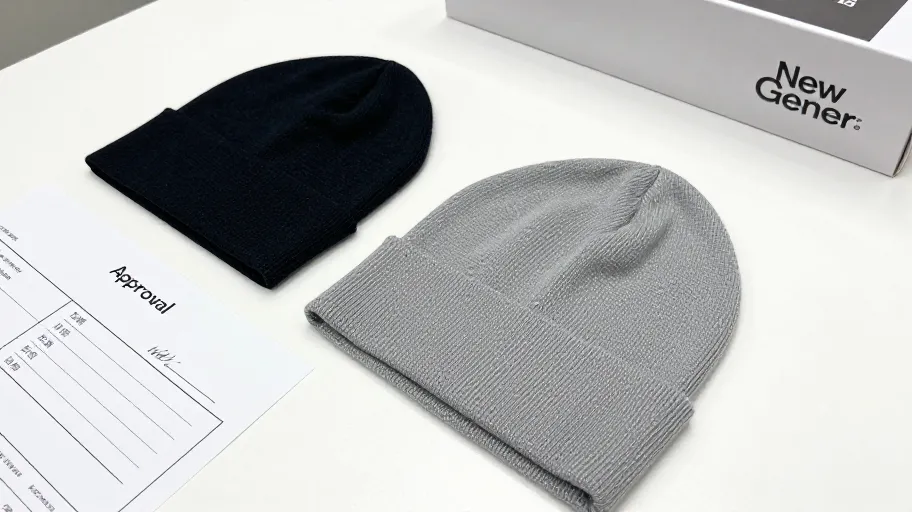
Shortlisting an acrylic cap supplier in China comes down to three verifiable steps: a written specification for the acrylic knit and construction, physical samples you inspect against that spec, and a documented sign-off that ties your production order to the approved reference. This guide gives you the framework, the comparison table and the approval questions to run that process with any supplier, including New Generation in Shenzhen.
The Spec–Sample–Sign-off Gate
When buyers lose money on custom headwear, the cause is rarely a single bad decision. It is the absence of gates. The Spec–Sample–Sign-off Gate framework installs three of them:
- Spec gate. Before quoting, both sides agree on a written specification — fibre content, knit structure, weight, construction, decoration method and packaging.
- Sample gate. The supplier produces samples against that spec, and you inspect and document deviations before approving.
- Sign-off gate. The approved, signed and dated sample becomes the binding reference for bulk production and final inspection.
Skipping the first gate is the most expensive mistake. If the spec is verbal or vague, every later disagreement becomes an argument about interpretation rather than evidence.
What a written acrylic cap specification should contain
Acrylic headwear is a knitted product, which means the yarn and the knitting decisions drive almost everything the end customer feels: softness, stretch, recovery, pilling behaviour and colour consistency. A usable spec sheet for an acrylic cap or beanie should document:
- Yarn: fibre content and acrylic grade, yarn count, and whether the buyer or the supplier nominates the yarn source.
- Knit structure: the stitch type, gauge and whether the crown is fully fashioned, linked or sewn.
- Fabric weight or density: stated in the units both parties agree to measure and inspect by.
- Construction details: crown panels, cuff style, seams, and finishing.
- Decoration: embroidery, woven label, leather patch, print or jacquard — with placement, size and colour references.
- Colour management: physical colour standards or swatches, not screen images, and an agreed method for judging colour under defined lighting.
- Sizes and fit: sizing logic and how fit will be measured and checked.
- Labelling and packaging: care labels, origin marking, tags and packing method, all confirmed against the buyer's destination-market requirements.
None of these items has a universal value. A supplier's answer on any line — what yarn grades they work with, how they control colour, what they can document — tells you more about their capability than any catalogue page.
Supplier comparison table
Use this table when comparing acrylic cap suppliers in China. Score each answer and, more importantly, note which questions each supplier answers in writing versus deflects to a call.
| Evaluation dimension | Question to ask | What a strong answer looks like |
|---|---|---|
| Spec discipline | "Will you confirm the full spec sheet in writing before quoting?" | Yes, with revisions tracked in the document |
| Sample process | "What is your current sample policy — cost, timing, and how many revision rounds?" | A clear, current statement you receive in writing; confirm directly, as policies vary by project |
| Reference sample | "Will the approved sample be sealed, signed and referenced in the purchase order?" | Yes, with the sample referenced as the inspection standard for bulk |
| Colour control | "How do you match and verify colour for acrylic knit?" | A defined method and physical standards, not screen approval |
| Decoration capability | "Which decoration methods can you produce in-house versus outsource?" | A direct, itemised answer |
| Quality documentation | "What inspection records will accompany the bulk order?" | Agreed inspection criteria tied to the approved sample |
| Commercial terms | "What are your current MOQ, pricing and lead time for this exact specification?" | Confirmed per project in writing — never assumed from a website |
| Communication | "Who is the named contact for approvals, and how are revisions versioned?" | One accountable contact and a documented revision trail |
Sample stage: approval questions that protect the order
When samples arrive, inspect them against the written spec, not against your memory of the design. Ask and document:
- Does the sample's knit structure, weight and hand-feel match the spec sheet line by line?
- Does the colour match the agreed physical standard under the agreed lighting?
- Is the decoration placement, size and stitching consistent with the approved artwork?
- Are seams, linking and finishing clean and consistent across all sample pieces?
- Are labels and packaging correct for the destination market?
- What deviations exist, and are they acceptable — or must they be corrected before a revised sample?
Approve in writing, and only approve the exact thing you want reproduced. If you approve a sample "with comments", the comments are not the order. Either approve the sample as-is or request a revision and restart the gate.
The sign-off gate: a pre-order checklist
Run this checklist before issuing a purchase order to any acrylic cap supplier:
- Written spec sheet completed and countersigned by both parties
- All commercial terms — MOQ, pricing, lead time, payment terms — confirmed in writing for this project
- Sample policy confirmed directly with the supplier (cost, shipping responsibility and revision terms are project-specific; confirm current policy, never assume)
- Approved sample sealed, signed and dated by both parties
- Purchase order explicitly references the approved sample as the inspection standard
- Inspection criteria and documentation agreed before production starts
- Named contact and revision-versioning process agreed
- Labelling and destination-market requirements documented
Why New Generation works with buyers this way
New Generation is a Shenzhen-based OEM/ODM manufacturer of custom caps and headwear serving overseas brands, importers and wholesalers. The buyer-side discipline in this guide — written specs, sealed samples, documented approvals — is the same process we ask our own partners to run. When a buyer arrives with a completed spec sheet and a clear approval trail, the entire project moves faster and with fewer disputes, because every question has a document behind it.
What we will not do on this page is quote commercial terms. MOQ, pricing, sample policy and lead times depend on the specification, order composition and production schedule at the time you ask. Confirm each of them directly with us — in writing — before making a comparison decision.
FAQ
Is acrylic a good material for custom caps and beanies? Acrylic knit is widely used for headwear because it holds colour well, knits into stretchy structures and can be produced in a wide colour range. Whether it suits your product depends on your positioning, target price and end use — evaluate it against wool blends and cotton on hand-feel, care behaviour and cost, all confirmed through samples rather than descriptions.
How do I verify an acrylic cap supplier in China before ordering? Use the three gates: demand a written specification, inspect physical samples against it, and make the approved sample the binding reference in your purchase order. Confirm every commercial term in writing for your specific project.
What should I ask about the sample policy?
Should I choose OEM or ODM for acrylic headwear? OEM means you supply the design and the supplier manufactures to your spec; ODM means you adapt a supplier-developed design. OEM suits brands with defined design systems and spec requirements; ODM suits buyers who need a faster route to a manufacturable product. Either way, the sample and sign-off gates apply equally.
How do I prevent the bulk order from differing from the approved sample? Reference the sealed, signed sample in the purchase order as the inspection standard, and agree on inspection criteria and documentation before production begins. Then inspect bulk against that sample, not against the order confirmation alone.
Get the sourcing brief (get the sourcing brief) — a working document covering the spec sheet, sample questions and approval checklist from this guide, ready to send to your supplier list.
Not ready to reach out? Run the pre-order checklist above against your current supplier shortlist first — it takes one sitting and will tell you where your documentation gaps are.
#cap manufacturers china, #headwear manufacturers china, #cap factory