


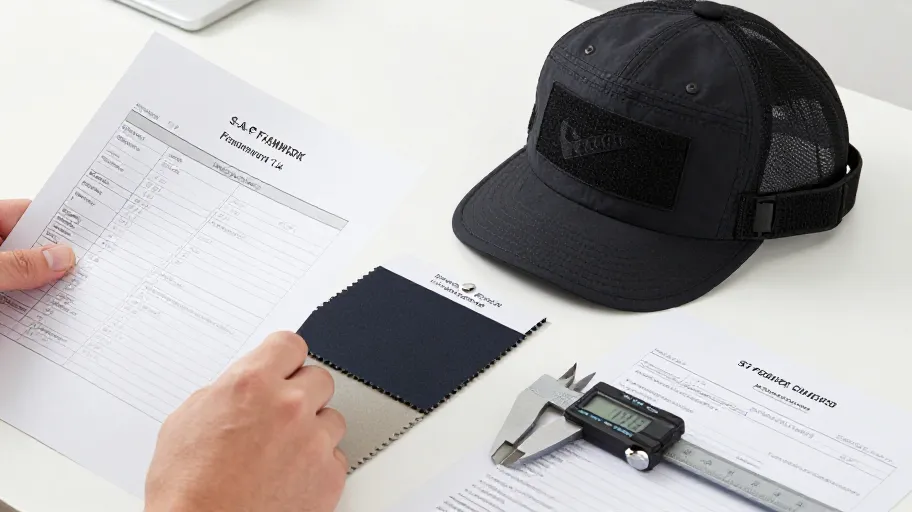
Sourcing captivity headwear from an OEM/ODM factory comes down to three verifiable steps: specify every technical detail in writing, control the sample approval chain, and protect the order with documentation at each gate. Compare suppliers on what they will document and confirm — not on what they claim. This guide gives you the framework.
The S-A-P framework: Specify, Approve, Protect
When you evaluate a custom headwear manufacturer in Shenzhen or anywhere in China, the fastest way to separate disciplined factories from optimistic ones is to ask for paperwork. The S-A-P framework works because every stage produces evidence you can file:
- Specify — convert your design intent into a written specification sheet the supplier must either confirm or dispute before sampling.
- Approve — move through defined sample stages, and sign off each one with dated photos and written comments.
- Protect — after final approval, freeze the spec. Any later change requires a documented change order, including who bears the consequence.
A supplier's willingness to operate inside this framework is itself a comparison signal. A factory that resists written specs or rushes you past sample approval is telling you something. Document that reaction in your supplier scorecard.
What a complete headwear specification contains
A spec sheet for custom caps and headwear should leave no room for interpretation. At minimum, send and require written confirmation of:
- Structure and panels: crown panel count, seam construction, closure type, eyelet treatment
- Materials: shell fabric, lining, sweatband material, visor material and stiffener
- Colour management: Pantone references for every component, plus how colour will be verified against the reference
- Decoration method: embroidery (stitch count and placement), printing, woven labels, patches, or combination
- Trims: buttons, buckles, sliders, labels, hangtags — material and finish for each
- Sizing and fit: sizing structure per market, and how fit will be checked on which measurement points
- Packing: folding method, inner packing, carton marking
For each line, ask the supplier to state the tolerance they will work to and how deviations are treated. Do not assume a default tolerance exists — make the supplier state theirs in writing, then decide whether it meets your quality requirement. This is a project-specific question, and the answer belongs in your comparison file.
Comparing sample stages: a decision table
Custom headwear programs move through sampling stages, but suppliers name them inconsistently. The table below reframes the decision around what each stage is for, so you can compare offers on purpose rather than label.
| Sample stage | What it decides | What you should receive | When to compare alternatives |
|---|---|---|---|
| Concept / mock-up | Feasibility of design and decoration method | Photos or physical rough sample | Before committing money — compare how each supplier interrogates your design |
| Pre-production sample | Confirmation of exact materials, colour, construction and decoration | Physical sample + written spec confirmation | Core comparison point: demand this before any bulk production |
| Shipment sample (if offered) | Verification that bulk matches the approved pre-production sample | Sample pulled from bulk, or third-party inspection report | Compare which suppliers offer pull-samples or accept your inspector |
Approval rule: production should begin only against a pre-production sample you have approved in writing, with dated photographs attached. Ask each candidate supplier whether they will work this way before you shortlist.
Approval questions to put in writing
Send these to every supplier you are comparing, and file the answers side by side:
- Will you confirm the full specification sheet in writing before sampling?
- What are your current MOQ requirements per style, colour and decoration method?
- What is your current production lead time from approved sample, and what factors can change it?
- How are deviations from the approved sample handled and documented?
- What inspection arrangements do you accept — in-line, final random inspection, or third-party?
- What happens if bulk differs from the approved pre-production sample? What is your remediation process?
- Which certifications or test reports can you provide current evidence for — and can we verify them?
None of these questions presumes an answer. Their value is comparative: the quality and specificity of the answers is your evaluation data.
Red flags that justify comparing another supplier
- Reluctance to confirm specs in writing
- Pressure to skip pre-production sample approval
- Vague answers on how deviations from the approved sample are treated
- Inability to show current — not historical or generic — certification evidence
- unwillingness to accept third-party inspection
Any one of these is a reason to keep another supplier in the comparison set, not necessarily to reject the first. Document, compare, decide.
FAQ
Does "captivity headwear" mean a different product category? Treat it as a sourcing term for custom, made-to-order headwear programs. Whatever the label, the buying discipline is identical: written specs, staged sample approval, and documented production gates.
How many suppliers should I compare before choosing a headwear factory? Enough to see a spread in how they answer the eight approval questions above. Two or three thorough written responses will reveal more than ten superficial quotes.
Should I insist on a pre-production sample for every order?
Can I use my own inspection or third-party QC provider? Whether a supplier accepts your inspector, and at which stages, is a project-specific policy you must confirm directly with them — and compare across candidates.
How do I compare quotes that look completely different? Normalise them against the same specification sheet. A quote is only comparable when it prices the same materials, decoration methods, trims, packing and tolerances. Where a quote is silent, ask.
Start your comparison the disciplined way
获取采购 Brief — download the sourcing brief and use it to structure your first contact with any custom headwear manufacturer: specification checklist, sample-stage decision table, and the eight approval questions, ready to send.
Low-friction option: copy the specification checklist above into your own document and send it to your current supplier today. One written answer will tell you a lot.
#cap manufacturers china, #headwear manufacturers china, #cap factory








