

Sustainable custom caps for sale are custom-branded headwear produced with verifiable eco-preferable materials — such as recycled or organic fibres — where every claim is documented on a spec sheet, confirmed in a physical sample, and locked in a written sign-off before mass production. For B2B buyers, the sourcing decision is less about the word "sustainable" and more about whether a supplier can evidence it at each gate.
This guide walks through a three-stage process we call the SPEC–SAMPLE–SIGN-OFF (3S) approval ladder. Use it to compare suppliers of sustainable custom caps for sale on equal terms, whether you are an importer building a seasonal range, a wholesaler refreshing a catalogue, or a corporate buyer outfitting a program.
What "sustainable" must mean on a B2B spec sheet
When a supplier describes caps as sustainable, your job is to translate that word into claims a spec sheet can carry. Sustainability in headwear can touch several distinct areas, and each one should be treated as a separate, verifiable line item:
- Fibre origin — recycled polyester, organic cotton, or other eco-preferable inputs, each described by grade and composition percentage.
- Trims and components — whether brims, sweatbands, buttons, eyelets and closures are also covered by the eco claim or only the shell fabric.
- Dyeing and finishing — what can be documented about dye processes and finishing treatments.
- Decoration method — how embroidery threads, patches, prints or transfers interact with the material claim.
- Packaging — whether individual polybags and cartons have any documented eco attributes.
A supplier who can only say "eco-friendly" without splitting the claim into these categories has not yet given you something comparable. One who can populate each line — even with "not applicable" or "not available for this program" — has given you a basis for comparison.
Important boundary: whether any specific certification, test result or sustainability credential applies to a given cap program depends on the materials and the production route chosen. Confirm the current policy directly with your supplier for each project, and ask for the documentation that backs each claim rather than the claim itself.
Stage 1 — SPEC: put the right questions to the supplier
Before any sample is cut, build a written spec sheet with your supplier. The questions below are deliberately concrete; each one forces a documented answer rather than an adjective.
Material questions:
- What is the exact fibre composition of the cap body, stated in percentages?
- For recycled content, what is the input source described on the documentation the supplier can share?
- Which trims (brim, sweatband, button, eyelets, closure) are covered by the same material claim, and which are not?
- What thread is used for the logo decoration, and does the eco claim extend to it?
Construction questions:
- Which cap structures are available for this material — for example six-panel, five-panel, structured or unstructured builds?
- What closure and sizing system options exist for the chosen fabric?
- Are there decoration methods this material cannot accept, so we can rule them out early?
Documentation questions:
- What documents can accompany the material claim for our records and our own downstream customers?
- If a compliance question arises in our market, what information will the supplier provide to support it?
- What does the supplier consider in scope versus out of scope for this program?
Do not treat any answer as final until it appears on a written spec sheet that both sides reference. Verbal assurances do not survive a comparison process, and they do not protect you if a question arises after delivery.
Stage 2 — SAMPLE: how to evaluate a cap sample fairly
A sample is not a promise; it is a reference point. The purpose of the sample stage is to freeze what "approved" means so mass production can be measured against something concrete.
When you receive a sample of a sustainable custom cap, evaluate it against the spec sheet you built in Stage 1, line by line:
- Material match — does the physical fabric correspond to the documented composition, and does the supplier's paperwork match the sample in hand?
- Colour and finish — compare against your approved colour reference under consistent lighting, and record any deviation in writing.
- Decoration quality — inspect stitching density, alignment, edge finish and placement against the artwork specification.
- Fit and assembly — check seams, brim attachment, sweatband and closure function as assembled, not as separate parts.
- Trims — confirm each trim matches what the spec sheet says, including any components not covered by the eco claim.
Confirm the current policy directly on sample logistics, costs, lead arrangements and how the sample relates to your order — these vary by supplier and program and must be settled in writing before you rely on them.
A disciplined practice is to keep one approved sample sealed and untouched, and use a second copy for handling, photography and internal circulation. When questions arise later, the sealed reference settles them.
Stage 3 — SIGN-OFF: the approval gate before mass production
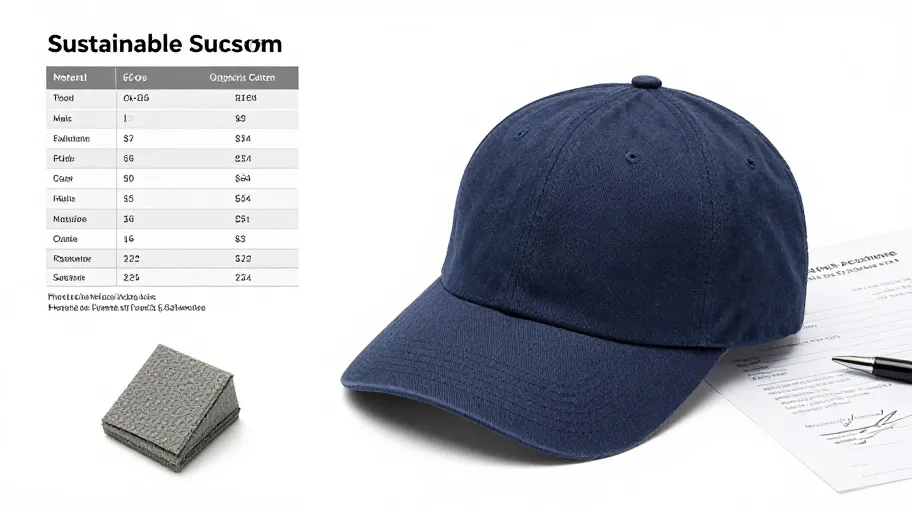
The sign-off is the moment the project becomes a contract reference. Use this decision table to structure the gate:
| Decision point | What to verify | Evidence to hold | Pass condition |
|---|---|---|---|
| Material claim | Spec sheet percentages match documentation shared by supplier | Written spec sheet + supporting documents | Every line confirmed or marked not applicable |
| Physical sample | Sample matches spec sheet on fabric, colour, construction, trims | Sealed approved sample + dated photos | Deviations documented and accepted in writing |
| Decoration | Logo execution matches artwork spec on placement, size, stitch quality | Approved decoration artwork + sample photo set | Buyer approval recorded in writing |
| Production reference | Supplier confirms mass production will follow the approved sample | Written confirmation referencing the approved sample | Both sides reference the same sample ID |
| Open items | Any unresolved question is listed, not forgotten | Open-items list with owner and status | No silent open items at sign-off |
Approval questions to settle at sign-off:
- Does this sign-off reference a specific sample identifier that both sides have recorded?
- Which deviations, if any, have we accepted in writing, and where are they logged?
- What is the agreed process if the production run differs from the approved sample?
- Who on each side is authorised to approve changes after this point?
- What documentation will accompany the shipment so our receiving team can check against the approved reference?
Once these are answered and dated, you have a defensible reference for the entire program — and a fair basis for comparing suppliers on how they handle the same gate.
Comparing suppliers of sustainable custom caps for sale
Run every candidate supplier through the same 3S ladder and score them on behaviour, not adjectives. A supplier worth working with will:
- Accept line-item spec questions without deflecting to marketing language.
- Distinguish clearly between what is documented and what is not.
- Welcome a written sign-off gate rather than resist it.
- Tell you what is out of scope instead of implying everything is possible.
When two suppliers both pass, the differentiator is documentation quality and responsiveness at each gate — not the strength of their sustainability vocabulary.
FAQ
1. What should I ask for first when comparing sustainable custom caps for sale? Start with a written spec sheet that splits the sustainability claim into fibre, trims, dye/finish, decoration and packaging. A supplier's willingness to populate that sheet line by line tells you more than any brochure.
2. How do I verify a sustainability claim on a custom cap? Ask what documentation supports each specific claim, match it to the physical sample, and keep both on file. Confirm the current policy directly on which documents apply to your specific program and materials, since this varies by project.
3. Should I approve a sample based on photos alone? Photos support the record but do not replace handling the sample. Evaluate fabric hand, decoration quality and assembly in person where possible, then keep a sealed approved physical sample as the production reference.
4. What belongs in the final approval before mass production? A dated sign-off that references a specific sample ID, records any accepted deviations in writing, names authorised approvers on both sides, and states the process if production differs from the approved reference.
5. How many suppliers should I compare for a custom headwear program? Enough to see real differences in documentation behaviour — a shortlist that all go through the same SPEC and SAMPLE stages gives you comparable evidence rather than competing promises.
Get the 采购 Brief
Turn this guide into a working document. 获取采购 Brief and use it to run every supplier of sustainable custom caps through the same spec, sample and sign-off gates — with the question sets, decision tables and approval checklist built in.
Prefer to start smaller? Copy the ten spec questions and five sign-off questions above into your next supplier email, and compare the answers you get back. That alone will separate the suppliers who document from the ones who describe.
#cap manufacturers china, #headwear manufacturers china, #cap factory