
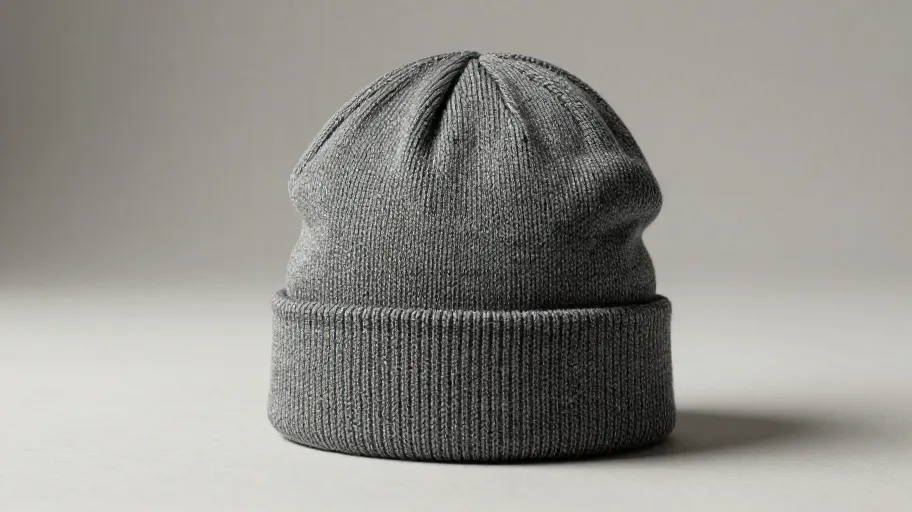
A missing tolerance spec can cost you $185K and a season. The Beanie Tech Pack Checklist fixes that. Here’s how to lock in fit, fabric, and compliance—so your factory delivers right the first time.
Why beanies go wrong in production
One U.S. brand lost $185,000 and 30 days of sales when its debut beanie arrived with inconsistent knit density. The cause? A tech pack that showed stitch type but not gauge tension per inch. That ambiguity meant the factory guessed—and guessed wrong. This isn’t rare: over 70% of headwear production errors come from incomplete specs, driving rework costs up 22% and adding nearly five weeks to lead times.
Tight crown height or brim roll within ±0.25” accounts for 45% of post-production defects. Without clear tolerances, factories fall back on standard practices that don’t match your brand’s intent. But fixing this doesn’t require new factories—it requires better documentation. Brands using complete tech packs see 60% faster approvals and 18% lower landed costs because they avoid air freight emergencies and high-remake cycles. Clear specs mean fewer mistakes, faster turns, and stronger margins—because precision prevents cost.
What a factory-ready beanie tech pack includes
A real beanie tech pack isn’t just drawings—it’s the first decision-maker on the production floor. When a Dominican cap maker expanded into beanies, their first run stalled over 'flat knit' instructions. Without clarifying flat vs. circular knit in relation to seam placement and stretch recovery, the factory defaulted to circular. Result: wrong grain alignment, wasted yardage, 11-day delay, and an 18% margin hit.
The fix is Spec Layering Architecture—organizing data into four clear layers. Base design covers silhouette and crown shape. Material callouts specify yarn weight and fiber blend. Construction logic defines stitch type and tension settings. Compliance tags include care codes and chemical restrictions. When each team sees only what they need, decision delays drop by up to 40%. And embedding terms like Pantone+ coated vs. uncoated matching means dye labs know whether to trust screens or swatches—cutting sampling rounds from five to two for one brand. This isn’t template hygiene—it’s operational leverage.
How to hand off smoothly to your manufacturer
A U.S. outdoor brand cut its go-to-market timeline by eight weeks—not by rushing, but by refusing to start until alignment was locked. Their Pre-Production Alignment Protocol stops guesswork before it begins. For beanie brands using Vietnam-based cap factories, unclear inputs cause 80% of so-called 'factory errors.' The real issue? Buyer-side gaps.
Their 5-step verification ensures zero-gap handoff. File Format Compatibility means design files render correctly—no distorted brim curves from broken vector layers. Measurement Traceability links every dimension to a physical prototype, cutting fit deviations by up to 90%. Labeling Standards Verification confirms care tags and regulatory marks meet destination rules upfront. Packaging Mockups are approved in 3D, slashing physical pre-ship samples by half. Change Log Integrity uses version control so no team acts on old specs. Together, these steps reduce post-submission queries dramatically. One brand hit a 94% first-batch yield—vs. the industry’s 68%—and redirected $18K in saved QA labor to holiday marketing. Error-free inventory at launch means full-margin sell-through and less discounting later. When your tech pack aligns, you outperform.