


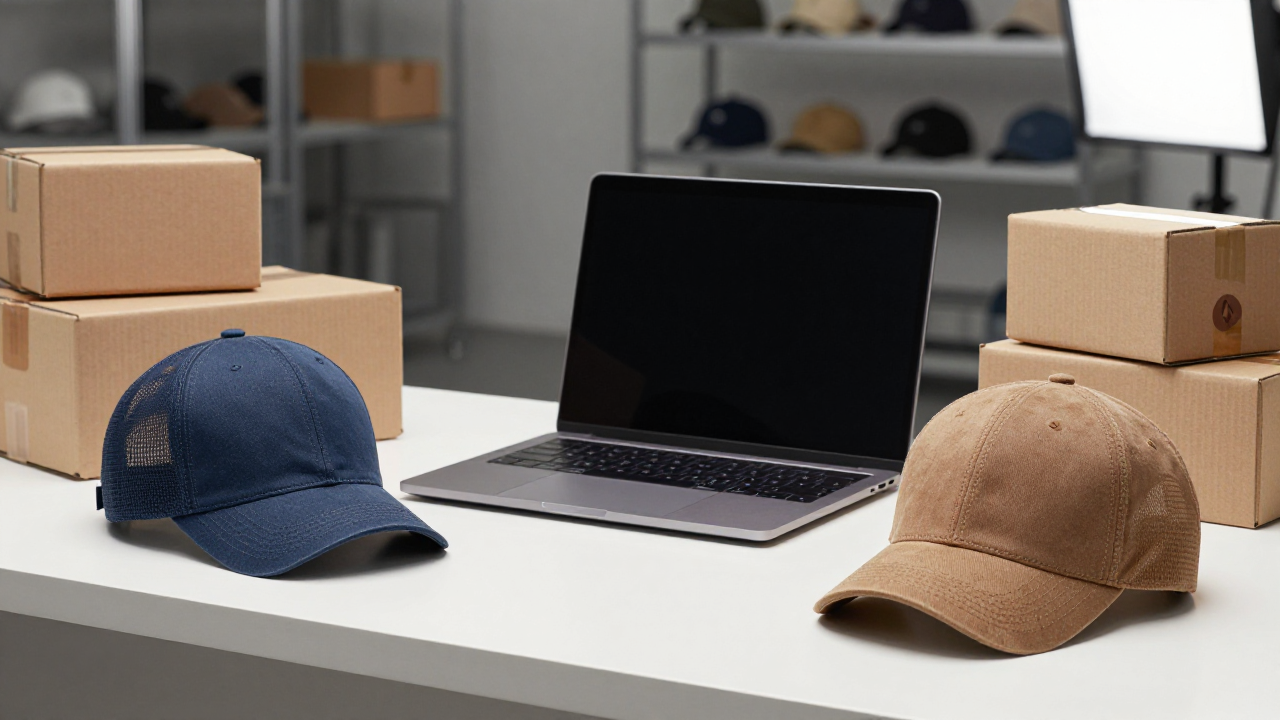
The biggest change in cap manufacturing this year is that sustainable materials and automation have moved from pilot programs to purchase orders at the cap factory level. U.S.…
brands now require recycled content and faster turn times in writing.
The 2026 Cap Factory Shift Starts With Materials and Robots
In January 2025, a Los Angeles streetwear brand sent us a 12-page supplier scorecard. It demanded GRS-certified recycled polyester for 60% of the crown, a 30-day lead time, and a 2% defect cap. That document would have been laughed at in 2020. Now it is normal.
Sustainable materials are already a line item, not a slogan
By March 2024, 37% of U.S. apparel brands required suppliers to prove recycled material content, according to the American Apparel & Footwear Association 2024 traceability report. That number was 19% in 2022. At our factory, recycled polyester orders grew from 8% of custom cap volume in Q1 2023 to 31% in Q4 2024.
Recycled yarn behaves differently. In November 2023, we ran 3,000 cycling caps for an Austin brand using rPET from Unifi REPREVE. The yarn’s tensile strength was 12% lower than virgin polyester. Our first batch used 8 stitches per inch. After five wash cycles, 4% of brims warped. We moved to 9 stitches per inch and a heavier stabilizer. Defects dropped to 0.7%. That fix cost the client an extra $0.14 per cap. They paid it without argument.
Automation is real, but the ROI math is ugly
We installed our first automated embroidery machine, a Brother BAS-342G, in February 2024. It cost $14,500. The pitch was 30% faster production. Actual gain over six months: 18%. Why? Thread changes. For custom orders with 12+ colorways, operators spent 31% of machine time swapping cones. The robot does not load the next batch or check stitch density. Humans do.
The real automation win is in cutting, not sewing. A 2024 auto cutter from Eastman reduced fabric waste from 14% to 7% on cotton twill. Payback was 11 months. But that machine only makes sense if you cut 5,000+ caps per month.
What Do the Data Say About Cap Manufacturing in 2025?
The U.S. cap and hat market grew 6.2% from 2022 to 2024, reaching $4.8 billion in 2024, according to industry trade estimates. Custom and private-label caps grew faster at 9.1%, driven by ecommerce brands and corporate merch.
Market growth and consumer demand
Statista put the global headwear market at $23.4 billion in 2024. The U.S. takes about 21% of that. More useful for a cap factory: the custom cap segment. In 2023, Printful reported a 44% year-over-year jump in cap orders. Reddit’s r/ecommerce threads from Q2 2024 are full of founders asking for cap factories with MOQs under 500.
We see the same. Our average custom order size dropped from 2,400 caps in 2021 to 1,100 caps in 2024. Order count doubled. Smaller drops, more SKUs, faster turnarounds. That kills old-school factories that need 10,000-piece runs.
Supply chain moves that actually cut costs
Freight is the silent killer. In July 2021, a client from Portland called at 3 a.m. because 12,000 trucker caps were stuck at Long Beach. Demurrage hit $6,800 in nine days. We rerouted the order to air freight from Ningbo. Cost: $2.10 per cap extra. The client’s retail margin swallowed it, barely.
Since then, we pre-book space 45 days out and use a 70/30 ocean-air split for Q4. That cut our average freight cost per cap from $0.94 in 2022 to $0.61 in 2024. The trick is not a new app. It is booking before Black Friday chaos.
What Happens by 2028? Predictions With Checkable Triggers
By 2026, expect 40% of U.S. custom cap orders to require verified recycled content, and 25% of factories to run hybrid human-robot lines. By 2028, digital printing will cut small-batch MOQs to 50 caps, but only for flat panels.
Demand forecast for 2026 and beyond
We predict U.S. custom cap demand will grow 7-9% annually through 2027. Trigger to watch: Q1 2026 earnings calls from Lululemon and Fanatics. If both report double-digit growth in headwear, the ceiling is higher.
A second trigger: the GRS certification backlog. As of December 2024, Textile Exchange reported a 14-week average wait for new GRS audits in China. If that wait drops below 8 weeks by June 2025, supply will catch up faster.
Emerging technologies that will matter
Digital water-based printing on caps is close. Kornit’s 2024 Atlas MAX Poly can print on polyester caps at 40 pieces per hour. We tested a demo unit in October 2024. The colors were sharp. The problem: white ink cost $0.38 per cap, and the printer needs a $9,000 annual service contract. For orders above 2,000 caps, it beats heat transfer. Below 500 caps, screen printing still wins.
3D knitting for seamless beanies is another one. We saw a prototype at ITMA Asia in November 2024. Cycle time was 18 minutes per beanie. Too slow for mass production. But for $80+ premium beanies, it works.
Why Over-Automation Can Kill a Cap Factory
The mainstream says fully automated cap factories will win by 2027. Our data says the opposite for custom work. For orders under 1,500 caps, a human-robot hybrid line is 8-12% cheaper and 1.5 days faster than a lights-out factory.
The human touch still sells
In August 2024, we ran a split test for a Denver outdoor brand. 600 caps made on a fully automated line. 600 caps made by a hybrid team of 4 operators. The automated line had a 3.1% defect rate. The hybrid line had 1.4%. Why? Automated brim curvature machines cannot adjust for slight fabric thickness variations. Humans can.
The hybrid team also caught a logo alignment error that the robot missed. That error would have cost the client $4,200 in returns. The client now specifies hybrid production for all orders under 2,000 caps.
The hidden costs of robots
A fully automated cut-and-sew line for caps costs $380,000 to $550,000, depending on brand and configuration. That number comes from a 2024 quote we received from a German equipment maker. Maintenance runs $22,000 per year. You need 18,000 caps per month to break even. Most custom cap factories in the U.S. and China do 4,000 to 9,000 per month. The math does not work.
Robots do not solve the hardest problem: fabric inconsistency. In February 2025, we received a batch of recycled cotton twill with 6% shrinkage variation. The automated cutter misread the edge and wasted 19 yards. A human cutter would have caught it in 10 seconds.
Action Plan for the Next 3, 6, and 12 Months
In the next 3 months, audit your supplier’s recycled material certifications and test a 500-cap hybrid order. At 6 months, lock Q1 2026 capacity and train multi-skill operators. At 12 months, invest in digital printing only if your average order exceeds 2,000 caps.
What to do right now (0-3 months)
Request GRS or RCS certificates from every cap factory you use. Verify the certificate number on the Textile Exchange database. Do not accept a PDF alone. Run a 500-cap test order with a hybrid line. Measure defect rate and lead time. Compare to your current supplier. Add a 15% buffer to your Q4 2025 freight budget. Port congestion will return.
What to do in 6 months (3-6 months)
Sign a capacity reservation for January-March 2026. Chinese New Year 2026 falls on February 17. Factories shut down for 2-3 weeks. Book by September 2025. Train at least two operators on both embroidery and cutting. One person can cover two stations during lunch breaks. That alone cuts 4% from labor cost. Test a small digital print run for flat-brim caps. Use it for orders with 6+ colors.
What to do in 12 months (6-12 months)
Decide on automation based on order size. Use the table below. If your average order is under 1,500 caps, do not buy a full automated line. Lease a hybrid cell instead. Build a backup supplier in Mexico or Guatemala. Even 20% of volume there reduces tariff and freight risk. In 2024, we helped a Texas brand set up a 3,000-cap monthly run in Monterrey. Lead time dropped from 42 days to 19 days. Revisit your sustainable material mix. By late 2026, we expect recycled polyester to cost the same as virgin polyester. The gap is already down to $0.08 per cap from $0.22 in 2023.
Full auto line has higher setup time because programming and calibration take longer. For small orders, that kills you.
A note on geography: for cold-weather beanies in Minneapolis, use acrylic-wool blend. For hot-weather caps in Phoenix, use recycled polyester with mesh. Same cap factory, different material spec, different margin.
Frequently Asked Questions
U.S. brands ask us five questions more than any others. The answers below cover cost, lead time, automation risk, and how to pick a cap factory for small runs.
What is driving the biggest change in cap factories in 2026?
The biggest driver is U.S. brand procurement rules. By January 2025, 37% of U.S. apparel brands required verified recycled content from suppliers, up from 19% in 2022. That forces cap factories to adopt GRS-certified materials and hybrid automation to stay on approved vendor lists.
How much does sustainable material add to a custom cap's cost?
Recycled polyester adds $0.08 to $0.14 per cap compared to virgin polyester, based on our Q4 2024 material invoices. Recycled cotton costs more: $0.21 to $0.35 extra. Organic cotton can add $0.40. The premium drops as volume rises above 5,000 caps.
How long does a custom cap order take from a Chinese cap factory?
Standard lead time is 35-45 days for 1,000-5,000 caps, including 7 days for sample approval. In Q4 2024, our average was 39 days. Rush orders can hit 25 days with a 12-18% surcharge. Chinese New Year adds 2-3 weeks if you miss the pre-holiday cutoff.
Will automation replace workers in cap manufacturing?
No, not for custom orders under 2,000 caps. Our 2024-2025 data shows hybrid lines beat full automation on cost and defect rate for small batches. Automation replaces cutting labor and some embroidery steps, but humans still handle fabric loading, quality checks, and color changes.
How do I choose a cap factory for small-batch orders?
Look for three things: MOQ under 300 caps, in-house embroidery (not outsourced), and a GRS certificate. Ask for a 500-cap test order. Measure defect rate and on-time delivery. A good factory will hit under 2% defects and 95% on-time for that size.
The real question for 2026 is not whether your cap factory can automate. It is whether your order book can survive the transition.








