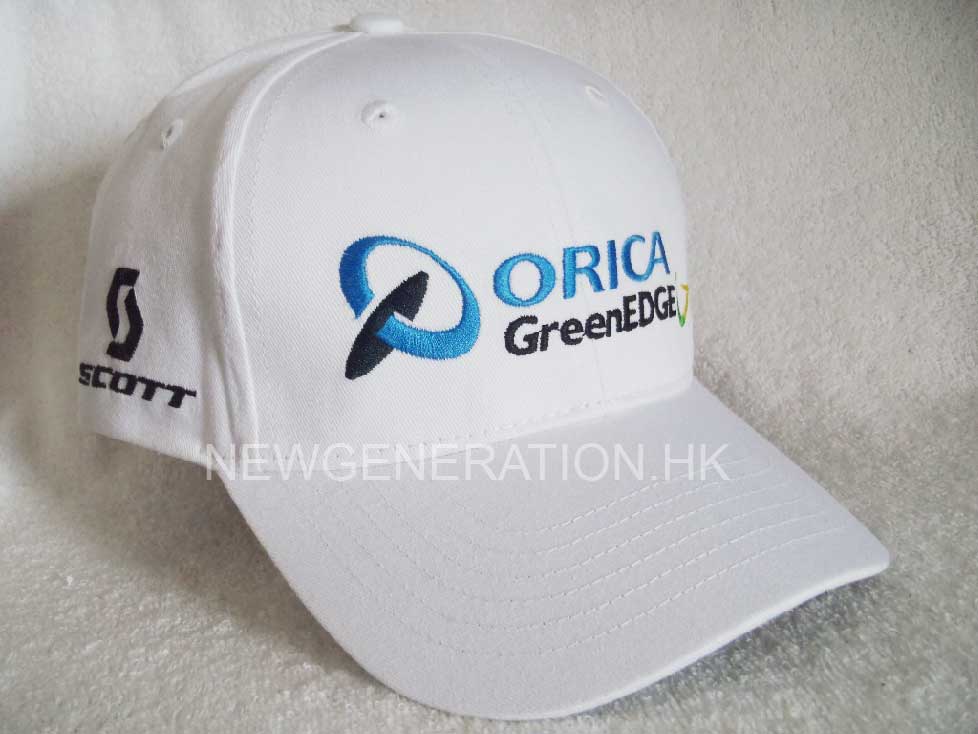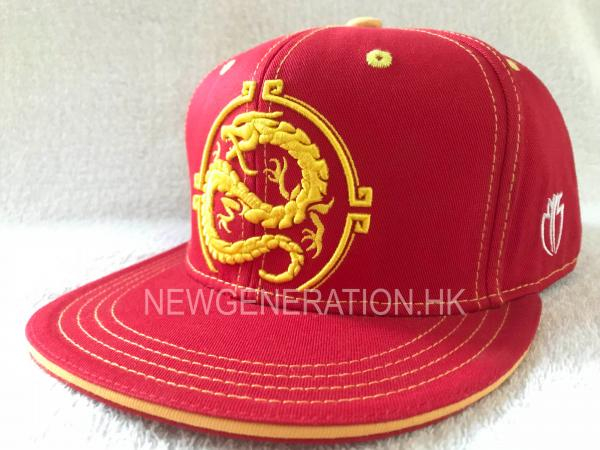


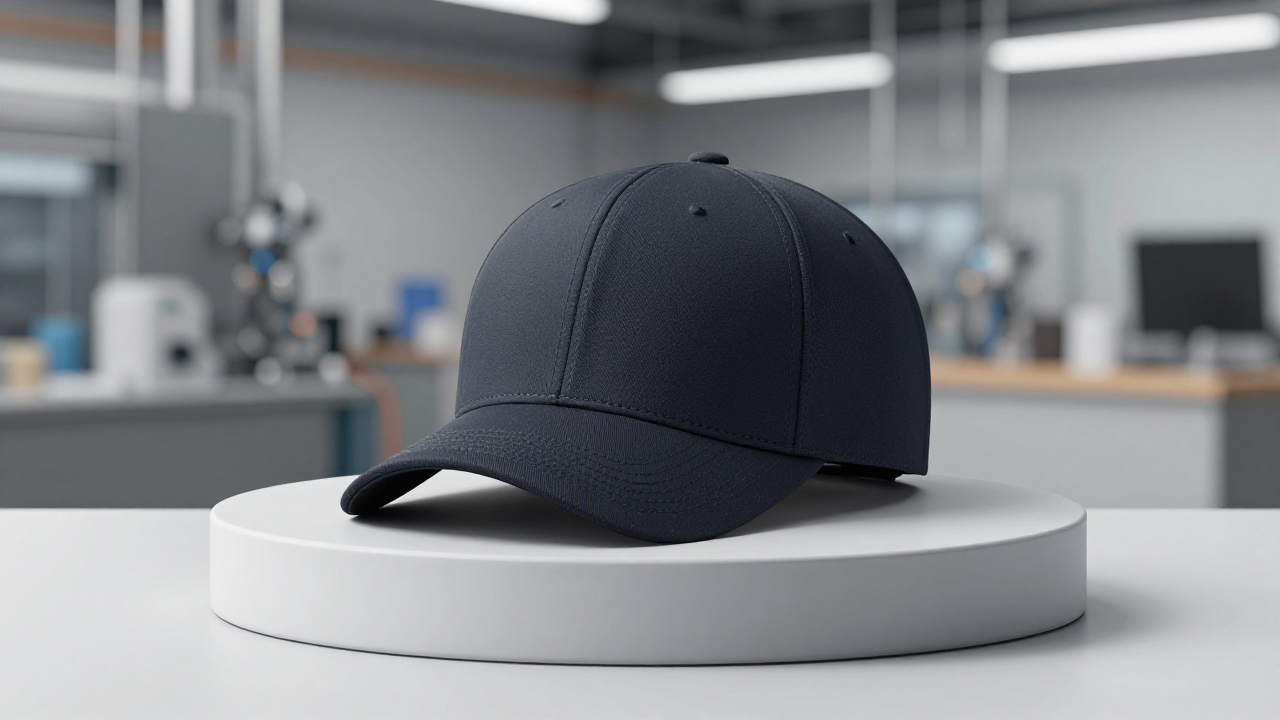
A baseball cap is a pre-stressed tension structure: five or six fabric panels are cut 3% to 5% smaller than the finished crown circumference, then held at target dimension by seam tension, buckram…
stiffening, and the visor assembly. Remove any one and the crown relaxes inside 20 washes.
The Core Mechanism Behind Cap Manufacturing
That definition is the whole game. Every parameter a cap factory argues about — stitch density, fuse temperature, grain direction, brim arc — sits downstream of it. Caps aren't assembled. They're loaded.
Walk a cutting floor in Zhejiang at 7 a.m. and you can watch the load being set. Twelve layers of 10 oz cotton twill spread across a 40-foot table. A straight-knife cutter running the front panel marker. A QC tech with a steel rule checking that the warp yarn sits within 1° of the panel's vertical centerline. Nobody is talking. That one degree is worth more than the fabric it's printed on.
Where the operating numbers come from
Fabric weight sets the ceiling on everything else. Cotton twill for a structured cap runs 8 to 12 oz/yd² (271 to 407 g/m²). Under 8 oz, the front panel needs heavier buckram to carry a 3D puff logo without dimpling. Over 12 oz, a 6 mm seam allowance can't form the crown curve without puckering the rear panels.
Tensile strength decides whether the cap survives embroidery at all. ASTM D5034 grab tests on 10 oz ring-spun twill typically return 90 to 140 lbf warp and 55 to 85 lbf fill. The fill number matters more. Embroidery hoops load across the fill direction, not the warp.
Then stitch density. Seam strength tracks it linearly until it stops:
Seam tensile (lbf/in) = SPI × thread_tenacity_lbf × K
SPI is stitches per inch. thread_tenacity_lbf is the single-thread breaking strength in pounds-force. K is the stitch efficiency factor — 0.55 to 0.70 for a lockstitch, lower for chainstitch, higher for a correctly tensioned double-needle. Push past 12 SPI on 10 oz twill and K collapses, because the needle perforates more yarn than the loop can recover around.
How Tensile Strength and Stitch Density Interact in Production
A 10 oz cotton twill at 110 lbf warp and 70 lbf fill, sewn at 9 SPI with bonded polyester core thread, holds a 4-inch 3D puff logo through 50 home launderings without measurable seam slippage. Drop to 7 SPI and slippage begins around wash 22.
ASTM D434 measures seam slippage as the opening width at a specified load. Apparel wovens commonly allow a 6 mm opening. Headwear needs tighter. The buyers we work with typically write 3 mm at 25 lbf into the spec, because a slipping crown seam sits in the middle of the customer's forehead where everyone can see it.
Here's the part that trips people up. Three variables move together on the front panel: fabric weight, buckram fuse parameters, and embroidery density. Change one and the other two shift underneath you.
A case from March 2023. A licensed collegiate program in Knoxville, Tennessee ordered 42,000 units for a spring drop. Front panels dimpled under a 3D puff logo that had run clean on the previous order. Nothing about the fabric changed. The buckram did. The laminating line ran 148°C for 10 seconds instead of 138°C for 16 seconds. Stiffness off the press measured within 4% of spec, which is why QC passed it. Flex fatigue came in roughly 40% lower at 5,000 cycles. The stiffener went brittle along the fold line and the embroidery force found every weak spot.
Heat input and time trade off against each other. For every 10°C you add above the adhesive's activation window, dwell time can roughly halve. That relationship holds until you cross the substrate's softening point, where the failure mode flips from under-bonded to heat-damaged. There is no alarm that tells you when you've crossed it.
How Do Cap Factories Hold Tolerance Across 40,000 Units?
Tolerance gets held at the two joints the eye reads first: the crown center seam against the visor center notch, and the panel-to-sweatband line. A 3 mm mismatch at the notch reads as a twisted cap, because viewers use the brim edge as their horizontal reference and skew detection kicks in near 1°.
Seam alignment. The center front seam is the datum. Every other panel grades off it. Walking — where top and bottom plies feed at different rates — shows up as 2 to 4 mm of drift across a 40-panel run. Compound feed or walking-foot machines pull that under 1 mm. That's why high-volume headwear lines run compound feed on the crown seams and lockstitch everywhere else. Visor lamination. A three-layer visor stacks shell fabric, an LDPE or HDPE board, and a lining bonded with a hot-melt web. HDPE board softens around 120 to 130°C. Most polyamide adhesive webs activate at 115 to 125°C with 15 to 25 seconds of dwell in a heated press, followed by 10 to 15 seconds cold-press to set. The margin is under 10°C. Run the press hot to shorten the cycle and the board deforms, the brim flattens, and re-curving never brings the arc back.The detail nobody writes into a spec sheet is grain direction. Panel patterns are symmetrical, so a cutter can rotate the marker and still produce a matching part. A front panel cut 10° off-grain shows almost nothing on the table, then drifts 6 to 8 mm laterally across five AATCC 135 home launderings.
We learned that one the expensive way in 2019. Eighteen thousand five-panel units, three weeks from ship date, and a client in Ontario measuring crown tilt with a machinist's level on a loading dock. Reworking the marker cost us about 4% in fabric utilization. Cheaper than the freight back, but not by much.
Mistakes That Surface Six Months After Delivery
Most cap defects aren't sewing defects. They're specification defects that appear after the first seasonal wash cycle, when returns climb and nobody can trace why.
1. Writing embroidery density without writing buckram weight. A 900-stitch-per-square-inch logo on soft 8 oz fabric pulls the crown out of round. Above 800 stitches/in², you need 10 oz minimum or a heavier stiffener.
2. Approving a sample after one wash. Standard pre-production approval uses a single cycle. Three AATCC 135 cycles catch the shrinkage interaction between twill, sweatband, and closure tape.
3. Treating the sweatband as decoration. The sweatband is a structural member holding crown tension. A 30 mm cotton band sewn at 6 SPI stretches; the same band at 10 SPI doesn't.
4. Cutting the cold press. Hot-melt that isn't cold-set under pressure creeps at 45°C. A car interior in Phoenix passes that before 11 a.m. in July.
5. Reading MOQ as the only cost lever. Per-unit pricing drops 8 to 12% moving from 500 to 5,000 pieces. Below 500, a 6-color embroidery head setup eats the entire difference.
Consistency comes from documenting parameters nobody asks about: fuse temperature, dwell, press pressure, grain tolerance, needle size, thread tex. Our production files at newgeneration carry 34 variables per style. About 11 of them are visible to the customer.
Reference Values for High-Quality Cap Production
Buyers who hold tolerance across large runs converge on a similar band. These ranges come from production files and third-party lab reports on structured baseball caps, and they mark where field defect rates fall below 1.5%.
In April 2021, a Portland, Oregon brand shipped 26,000 five-panels with bonded visors to hit a spring retail window. The laminate press ran at 132°C on a 12-second cycle, and the cold press was trimmed to 4 seconds. That summer's humidity in the Southeast pulled the brims flat in the field. The board had partially softened and never set. Rework quotes came back at $1.90 per unit, against a $0.35 saving on cycle time.
The reverse case: November 2023, an 18,000-unit run we produced for a Midwest retailer. Same fabric, same board, but the lamination window was locked at 121°C with a 22-second dwell and a full 14-second cold press. Return rate landed at 1.7%, against a category average near 9%.
Which raises the question worth sitting with. A machinist on a headwear line takes home $58,750 a year. The man who owns the building made $15 million. Same machines, same thread, same hands. The difference wasn't skill — it was who held the spec sheet. If you're buying caps, are you buying a product, or renting someone else's production file?
Frequently Asked Questions
What is the minimum order quantity for custom caps from a cap factory?
Most Chinese headwear manufacturers set MOQ between 100 and 500 pieces per style and color if you accept stock fabric. Custom-dyed twill typically pushes MOQ to 1,000 pieces. Below 500 pieces, per-unit pricing climbs 8–12% because embroidery head setup gets spread across fewer caps.
How long does production take for 10,000 custom caps?
After sample approval, 10,000 units typically run 25 to 35 days on the floor, plus 12–18 days of fabric lead time and 25–40 days of ocean freight to a US port. Air freight cuts transit to 5–8 days but adds roughly $1.20 to $1.80 per cap.
What stitch density should I specify for embroidered baseball caps?
Specify 650 to 900 stitches per square inch for flat embroidery, and 800 maximum for 3D puff on 10 oz cotton twill. Above 900 the panel pulls out of round. Below 650 the logo reads thin and the underlying fabric grain shows through the fill.
How much does a custom cap cost at factory-direct pricing?
Blank structured baseball caps land between $2.10 and $3.40 per unit at 1,000 pieces, before decoration. Six-color embroidery adds roughly $0.80 to $1.40. Freight, duties, and US customs clearance add another 18–30%, which most first-time buyers forget to budget for.
How do I choose between structured and unstructured crown construction?
Choose structured crowns with buckram-backed front panels for embroidered logos and retail-facing branding. Choose unstructured crowns for lightweight packable styles, screen printing, or patch decoration. Structured caps hold logo shape through 50 washes. Unstructured caps collapse into a pocket on purpose, which is the entire point.