


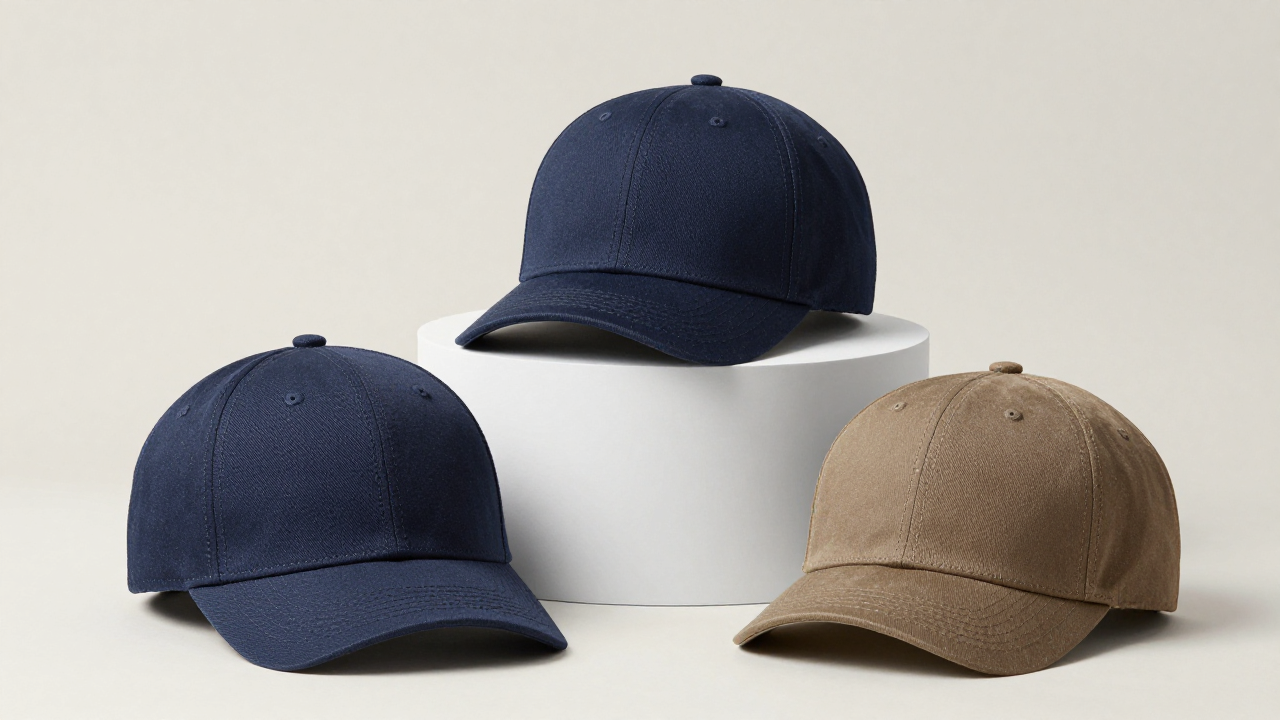
Buyers shopping for cap manufacturers usually open with price per unit and minimum order quantity. That is the last page of the story.…
The first page is a cutting table where a number nobody prints in the catalog — how far the fabric will travel after it is sewn — decides whether 20,000 hats fit properly or come back on a pallet.
Cap Manufacturers in 2026: How the Production System Actually Works
> Definition: Cap performance is set by four coupled variables — how the fabric behaves under heat and tension, the geometry of crown and visor, the throughput of the sewing and embroidery line, and the QC tolerance the factory is willing to hold. Change one variable, and the other three move.We have run custom headwear production out of southern China since 2008. Orders rarely fail because the factory was bad. They fail because the buyer specified a product without specifying the process that makes it.
From raw material to finished cap: the manufacturing flow buyers rarely see
A six-panel cap crosses eleven stations before it gets packed. Fabric inspection, relaxation, die cutting, flat-panel embroidery when decoration happens before assembly, panel joining, buckram insertion, visor sandwich, sweatband attach, closure attach, blocking, final QC. Every station carries a measurable yield loss.
The order of the decoration step matters more than most buyers realize. Embroidering flat panels before assembly holds tight registration and lets a Tajima or Barudan head run at 850 stitches per minute. Embroidering a finished cap forces the operator into a tubular hoop where the curved crown deflects the needle. On a structured crown we measure 0.3 to 0.6 mm of deflection, enough to open a visible gap in a dense fill or a satin border. Flat-first wins on quality. Finished-cap embroidery wins on flexibility, because one blank inventory serves twenty designs.
Why process choice changes cost, lead time, and failure rate
Three models price differently, and the gap is not small. Cut-and-sew from greige fabric gives full control over weight, hand feel, and color matching, and it costs the most per unit at low volume. Blank-and-decorate — buy Yupoong, OTTO, or Richardson blanks, embroider or print in-house — drops MOQ to 50 pieces and ships in 10 days, but you inherit someone else's crown height and sweatband. The hybrid model, custom shells with stock trims, is where most mid-market retail programs actually land.
Failure rate tracks the model. In our own shop, cut-and-sew runs at 1.8 to 3.2 percent first-pass reject on decorated goods. Blank-and-decorate runs under 1 percent, because the blank maker already absorbed the sewing risk.
The Technical Variables That Decide Quality, Fit, and Margin
Six parameters control fit and margin: fabric weight and shrink behavior, panel count and crown height, structure type, visor depth and curvature, sweatband material, and closure. Each has a defensible range. Outside that range, the return rate climbs and no amount of embroidery quality saves the program.
Material, panel count, structure, visor, sweatband, and closure as controllable parameters
Cotton twill at 6.5 to 8.0 oz/yd² covers most retail and promotional work. Below 6 oz the crown goes limp after two washes; above 9 oz the cap stops breathing and you get heat complaints from Texas and Florida accounts.
Panel count sets the visual language. Six panels with a button top reads as classic baseball. Five panels with a flat front reads as skate and streetwear. Four-panel camp caps and unstructured dad hats live in a separate mold category and cannot share tooling.
Structure is the parameter buyers most often leave blank on a spec sheet. Fused buckram gives a rigid front that holds a 3D puff logo. Sewn-in buckram gives a softer crown that survives folding and packing. Unstructured has no buckram at all, and it will collapse in a shipping carton unless you pack with tissue or a crown insert.
Visor depth runs 2.5 to 3.0 inches on adult retail. Pre-curved visors get their shape from the sandwich construction, not the die. If the factory skips the internal stiffener, the curve relaxes after three weeks on a shelf.
Reference ranges, boundary conditions, and plain-text formulas
Three formulas cover most buying decisions.
Fabric yield: Yards per cap = ((P × Ap) + Av + As) × W / (U × 36), where P is panel count, Ap is panel area in square inches, Av is visor area, As is sweatband area, W is the waste factor (1.10–1.18), and U is usable fabric width. A six-panel cotton twill cap lands at 0.30 to 0.35 yards.
Embroidery time: T = S / (R × E × 60), where S is stitch count, R is machine speed in stitches per minute, and E is operator efficiency (0.65–0.75 on finished caps, 0.85–0.92 on flat panels).
Landed cost: C = (Y × Pf) + (L × Rl) + (S / 1000 × Pd) + T, where Y is yards, Pf is fabric price per yard, L is labor minutes, Rl is minute rate, S is stitches, Pd is price per 1,000 stitches, and T is trims.
How to Evaluate a Cap Manufacturer Like an Engineer, Not a Catalog Shopper
Score a factory on four auditable artifacts: a graded spec sheet with numeric tolerances, a pre-production sample you have washed and measured yourself, a written QC checkpoint list, and the factory's real reject-rate log. Everything else on the website is decoration.
A useful weighting logic: material and construction first, decoration capability second, packaging third. Beauty buyers scoring Chinese eyeliner suppliers use the same order — formula performance before packaging — and it holds for headwear just as well.
Sampling, prototype approval, grading, QC checkpoints, and defect modes
Ask for a graded size set, not one sample. Request S/M and L/XL at minimum, then measure crown height, visor depth, and circumference flat and on a form. Tolerance on crown height should be ±2 mm. If a factory cannot state its tolerance, it does not measure.
Build the QC list around defect modes you can actually see: seam grin, needle holes along the sweatband, crooked front panel embroidery, uneven snapback spacing, visor curve mismatch between left and right. We photograph every checkpoint at the machine, not at final inspection, because a defect caught at station 6 costs 40 cents and the same defect caught at packing costs $4.
What US buyers should verify first: lead time, compliance, pricing tiers, and communication speed
Compliance paperwork comes before price. CPSIA testing applies to any cap marketed for children under 12. California Prop 65 warnings matter if you sell into California retail. OEKO-TEX Standard 100 is the baseline for textile safety claims, and WRAP or SMETA audits tell you whether the floor is socially compliant — not a moral nicety, but something Walmart, Target, and Costco vendor onboarding will ask you for by name.
Then test communication speed. Send a technical question at 9 a.m. Eastern and watch when the answer lands. A factory that replies in four hours with a number beats one that replies in two days with enthusiasm.
The Hidden Failure Points That Create Returns, Rework, and Brand Damage
Four failure points generate most cap returns: fit inconsistency across sizes, seam failure at the panel join, embroidery density that puckers the crown, and crown collapse after washing. Three of those four trace back to heat and fabric relaxation, not to sewing skill.
Common mistakes in fit, stitching, embroidery density, and crown shaping
The most expensive mistake is specifying a single size. US head circumference distribution is wider than the Asian average the pattern was built on. A 56–58 cm one-size cap fits maybe 70 percent of adult buyers. That remaining 30 percent writes the reviews.
Stitching errors cluster at stress points. The panel join at the rear and the visor-to-crown seam take the most load. Below 7 SPI those seams grin. Above 10 SPI on lightweight twill, the needle perforates the weave and you get tear-out at the first hard pull.
Embroidery density is the quiet one. A 16,000-stitch front fill on 6.5 oz twill will pucker, because the backing pushes more thread into less fabric. The fix is a lighter density with a water-soluble topping and a 2-layer cutaway backing, not more stitches.
The technical detail most guides miss: how heat, relaxation, and blocking affect final geometry
Here is what the trade manuals skip. A cap is not a cylinder — it is a heat-set shell, and the geometry you approve on a sample is the geometry after blocking, not before.
Blocking runs at 150 to 165 °C for 8 to 12 seconds, then a vacuum cool of 6 to 8 seconds. That steam cycle drives the fabric's residual shrinkage out. Cotton twill relaxes 2 to 3 percent in warp and 3 to 5 percent in weft. If the pattern was cut to finished spec without accounting for it, a 3.95-inch crown lands at 3.78 inches after the press — and the customer experiences that as "the hat sits too low."
Worse, fused buckram reactivates its adhesive above roughly 170 °C. Push the press too hot and the front panel delaminates from the shell. It looks fine leaving the factory. It separates after two weeks of wear.
In January 2024, a collegiate licensee in the Midwest took delivery of 18,000 caps and found 1,400 with crowns measuring under 3.8 inches. The blocking press on that line had drifted 9 °C hot and the cooling cycle was cut to 4 seconds to hit a ship date. Nothing about the sewing was wrong. The heat cycle ruined the run.
We started pre-shrinking shell fabric before cutting in 2016, after a 9,000-piece order out of Portland came back with two crown heights in the same case. It added 11 cents a cap and killed the problem. Buyers almost never ask about pre-shrinking. They should.
One more: blocking tolerance is a factory habit, not a machine setting. Ask for the press log. A factory that logs temperature and dwell time per batch is a different animal from one that does not.
Buying Cap Production in the United States: What Different Order Types Need
Order type dictates the spec. Promotional work optimizes for cost and speed at 500 to 5,000 pieces. Retail programs optimize for consistency and compliance across size grades. Team and workwear headwear optimize for durability and fit range. Buying all three from one supplier using one spec sheet is how brands end up with a promo-quality hat in a retail box.
Promotional, retail, team, workwear, and military-style headwear have different specs
Promotional: 5 oz poly-cotton, 3-panel or 6-panel, heat transfer or screen print, one size, 10 to 14 day domestic turnaround. Cost target under $6 landed.
Retail: 6.5 to 8 oz cotton twill or brushed cotton, graded S/M and L/XL, embroidery at 9,000 to 12,000 stitches, OEKO-TEX certified fabric, hangtag and barcode ready.
Team: moisture-wicking polyester, perforated side panels, 3D puff embroidery, structured with fused buckram, flexfit or 7-position snap closure.
Workwear and military-style: heavier shell, 1.5-inch sweatband, subdued or IR-compliant decoration where specified, blaze orange variants for safety programs, and a documented fit range rather than a single size.
When to choose domestic production versus offshore scale manufacturing
Domestic wins above 5,000 pieces inside a 30-day window, on Berry-compliant or made-in-USA programs, and whenever a design changes weekly. New Era in Buffalo, Richardson in San Diego, and Cap America in Fredericktown, Missouri, all run commercial programs with 3 to 5 week lead times and no ocean freight risk.
Offshore scale wins at 3,000 pieces and above with a stable design and a 60 to 90 day horizon. Total transit from a Chinese factory to a US 3PL runs 45 to 75 days door-to-door depending on whether you sail into Long Beach, Savannah, or Newark. Duty math hinges on the HTS line — 6505.00 covers most knit and crocheted headwear, and Section 301 exposure on Chinese-origin goods has been a moving target since 2018. Get a classification ruling before you sign a purchase order, not after.
Frequently Asked Questions
What does minimum order quantity really mean for cap manufacturers?
MOQ is the smallest run a factory will accept without retooling. Custom cut-and-sew typically starts at 300 to 500 pieces per colorway. Blank-and-decorate drops to 50. Always confirm whether the MOQ is per design, per color, or per size grade — the difference triples your real commitment.
How long does cap production take from sample approval to US delivery?
Budget 7 to 12 days for sampling, 20 to 30 days for bulk production, and 25 to 35 days for ocean freight plus customs. Air freight cuts transit to 5 to 7 days at roughly 4 to 6 times the cost. Domestic production compresses the whole cycle to 3 to 5 weeks.
Which specifications affect the final price of a custom cap the most?
Embroidery stitch count, fabric weight, and panel count drive cost hardest. Moving from 8,000 to 14,000 stitches adds roughly $0.35 to $0.60 per cap. Stepping from 6.5 oz to 8 oz cotton twill adds about 12 to 18 percent to the fabric line.
Why do finished caps come back with crown collapse or fit complaints?
Three causes: unaccounted fabric relaxation after blocking, single-size grading that ignores the US head circumference distribution, and insufficient buckram weight in structured styles. All three are pattern and process problems, and all three are detectable in a pre-production sample you wash before approving.
How do I choose a cap manufacturer for a retail program versus a promotional order?
Retail programs need a factory with graded sizing, OEKO-TEX certified fabric, and written QC checkpoints. Promotional orders need speed and low MOQ, which usually means a domestic decorator on stock blanks. Do not buy both from the same supplier unless that supplier runs two distinct production lines.








