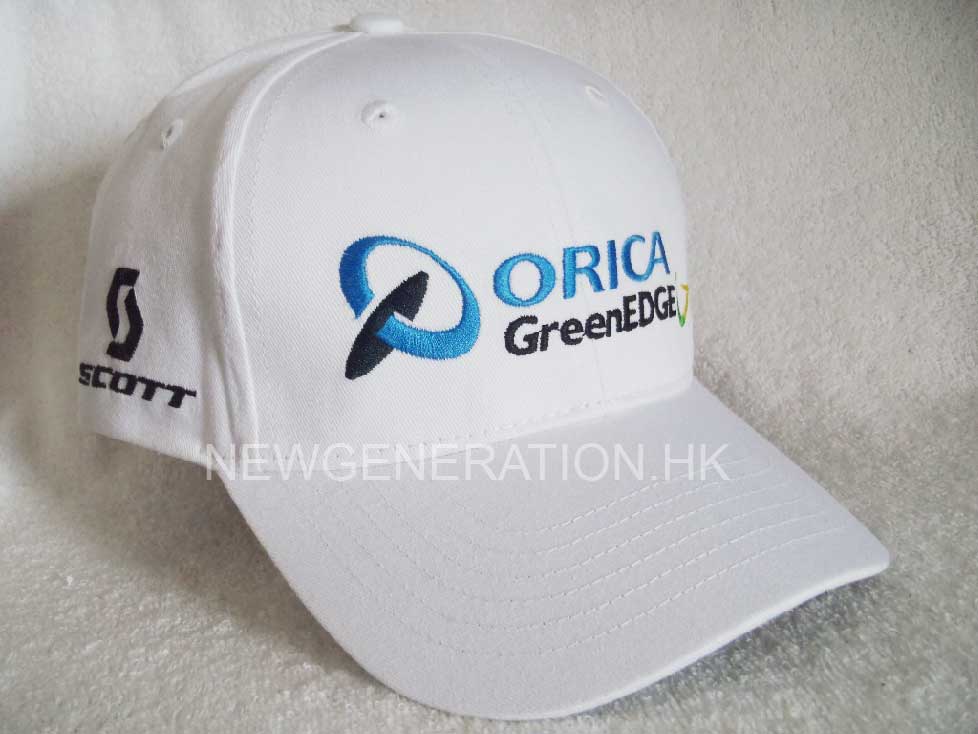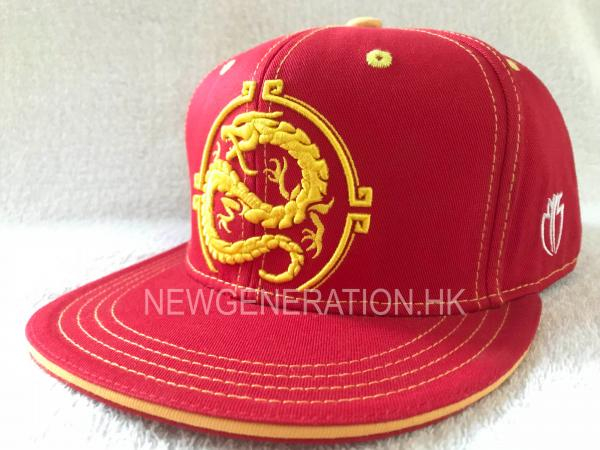


The most expensive mistake is choosing cap manufacturers on unit price alone. Buyers who do that usually discover crown shape, stitch quality, ship dates, and missing test documents after the deposit…
clears, when switching factories costs far more than the first quote ever saved.

6 Costly Mistakes Buyers Still Make With Cap Manufacturers
Mistake 1 — Chasing the lowest quote instead of the right manufacturing fit
In February 2023, a promotional-products distributor in Columbus, Ohio, sent the same spec sheet to four factories. Three quotes came back between $3.40 and $4.10 FOB. One came back at $2.85. You already know which one they took.
The $2.85 quote wasn’t a lie. It was a different cap. The fabric was 5.5 oz cotton twill where the spec called for 8 oz. The front panel had no buckram, so the structured crown in the spec sheet existed only in the spec sheet. Visor stitching was two rows instead of six. Undervisor taping was gone. Embroidery setup got billed separately, which the buyer found out about when the invoice landed.
None of that appeared in their comparison spreadsheet, because the spreadsheet had one column for price and fourteen rows of one-line descriptions.
Here’s what the savings actually bought. $0.55 a unit across 5,000 caps is $2,750. Then the end client — a regional bank running a branch-manager rollout — sent back 11% of the order over six weeks, because the crowns flattened in transit and the seam tape on two colorways didn’t match the mockup. Expedited replacement run plus air freight came to $12,300. A 4.5-to-1 loss on the “savings,” before anyone counted the account manager’s time.
What to do instead. Get a line-item breakdown from every factory before you compare anything: fabric weight in gsm or oz, panel count, buckram presence and weight, visor stitch rows, closure type, sweatband width, thread spec, packaging, and whether the price still holds at your smallest colorway. A factory that can’t produce that in writing is quoting a guess.One more thing that bites people: Section 301 duties still stack on Chinese-made textile headgear, and the treatment differs by HTS line — 6505.00.20 and 6505.00.30 do not land in the same bucket. Build a landed-cost model, not an FOB comparison.
Mistake 2 — Ignoring material specs, stitching quality, and sample approval
A signed sample is a document. Most buyers treat it as a vibe check. The gap shows up at embroidery: a 40wt thread at 9 stitches per inch holds a clean edge through 30 washes, while a cheaper 60wt thread at 6 stitches per inch turns fuzzy and pills after two.
Push your spec into numbers — crown height in inches, panel width at the base, visor length, sweatband width, stitch density, logo height, and Pantone numbers for every thread. Digital mockups also lie under real lighting. Thread color shifts 3% to 5% between a monitor and a finished cap, so approve a sewn sample, not a PDF.
Confirm the sample came off the production line rather than a sample room. Ask for that in writing. Both sides keep a sealed copy.
Mistake 3 — Underestimating MOQ, lead time, and reorder risk
For custom cut-and-sew, MOQ usually lands between 300 and 600 pieces per colorway; decorated blanks can start near 50. Lead time splits into 25–35 days sampling, 45–70 days production, roughly 25–35 days ocean transit into Los Angeles or Long Beach, then 7–12 days to the DC. Four to five months from PO to shelf is normal when nothing goes wrong.
Reorder risk is the part nobody prices. A reorder in a new dye lot won’t match run one exactly, thread lots drift, and your reorder sits behind a bigger account’s production slot. With the 10-year Treasury above 5.10% in early 2026, carrying five months of inventory costs U.S. buyers more than it did two years ago, which pushes order sizes down — and smaller orders are exactly where unit price and reorder priority both get worse.
Put the reorder terms in the PO: price hold period, dye lot retention, committed reorder window.
The Most Expensive Failure Points in Cap Manufacturing Projects
Fit, crown construction, and decoration errors cost the most because they surface after the customer is holding the product. Compliance failures cost more again, because a detained shipment at the port stops everything downstream of it.
Fit, crown shape, and panel construction mistakes that trigger returns
In April 2023, a Nashville golf apparel brand received 3,200 caps with a 4.5-inch crown where the approved sample measured 4.0 inches. Three-eighths of an inch doesn’t sound like much until it sits on a customer’s head. Their online return rate on that style went from 6% to 19% over 60 days, and the remaining stock got marked down 30%.
Crown height, crown depth, sweatband width, and closure type all change the fit. A snapback with a 1.25-inch sweatband wears differently than a strapback with 1.5 inches, even at the same crown height. Measure the sample with a tape and log every number on the approval sheet.
Decoration and branding errors in embroidery, patching, and logo placement
Most decoration quotes are priced per 1,000 stitches. A 2.5-inch front logo typically runs 8,000–12,000 stitches; 3D puff needs 6–8 mm foam and at least 2.5 inches of cap height to look intentional. Logos under 1 inch on a structured front panel pucker, because the buckram underneath doesn’t flex.
Heat transfer onto performance polyester needs a lower platen temperature, roughly 280–300°F for 15–20 seconds, than cotton. Run it hot and you’ll scorch a whole run faster than anyone catches it on the line.
Compliance and production oversight issues buyers often catch too late
Any cap marketed for children 12 and under requires third-party testing at a CPSC-accepted lab and a Children’s Product Certificate before U.S. retail sale. California’s Prop 65 triggers on lead and DEHP in some screen-print inks and PVC patches. Care labeling and fiber content fall under 16 CFR Part 423, and country-of-origin marking under 19 CFR 134.
Testing for one style typically adds 10–14 days and $400–$900. Find that out at the port instead of at the lab, and you’re paying storage on top.
How Experienced Buyers Vet Cap Manufacturers Before Placing an Order
Experienced buyers verify capability and process, not websites. Four things are worth checking before a deposit: the actual sewing floor, in-house embroidery capacity, current third-party test or audit records, and how fast the factory answers a technical question.
A manufacturer checklist for capabilities, certifications, and communication speed
Why asking for inspection records, materials, and reorder terms prevents expensive surprises
Request a recent third-party inspection report — Intertek, SGS, QIMA, and Bureau Veritas all run headwear inspections in China and Vietnam — and check the date. Anything older than 12 months tells you the last buyer who cared was a year ago.
Then ask for the fabric mill name and the weight in gsm. “Cotton twill” is not a material spec. And get the reorder clause in writing before the deposit, not after the first run sells out.
Our Own Cap Manufacturing Mistake and What It Actually Cost
In October 2021 we let a pre-production sample ship with an unflagged fabric substitution, and the buyer approved it in under four hours. The air freight alone came to $19,400. The account went quiet 14 months later.
Approving a sample too fast and missing a spec mismatch
The order was 9,600 six-panel caps for a Denver outdoor brand, targeting a January retail reset. Spec: 100% cotton twill at 8 oz, 80 gsm buckram in the front panel, six rows of visor stitching, 1.5-inch sweatband, 40wt thread.
Our fabric mill ran out of the 8 oz cotton in that dye lot in late September 2021. Our production planner swapped in a 7.2 oz poly-cotton blend and sent it through the sample room without a written deviation note. The buckram came in at 60 gsm.
The sample arrived at the buyer on Friday, October 8. They shot photos, checked the logo against Pantone 19-4052, and signed off Monday morning. Twenty minutes of handling on a 9,600-unit order. We didn’t flag the substitution either, which is the failure I’d put first if we’re being honest about it.
What broke: by late January the retailer reported collapsing crowns on the shelf peg within about three weeks, and the navy didn’t match a reorder from the previous season under fluorescent store lighting. Complaint rate hit 22%.
What it cost: 3,100 units replaced by air from Shenzhen through LAX — $19,400 in freight alone. The remaining 6,500 units went out at 30% off. The buyer’s total recovery cost landed near $41,000 on an order with a landed cost around $3.10 a unit. We covered the freight. We did not get the 2023 program.
Why one delayed order erases the savings from a cheaper supplier
Run the arithmetic that buyers usually skip. A $0.40-per-unit advantage on 9,600 caps is $3,840. The failure above cost the buyer roughly $41,000. That’s a 10-to-1 ratio, and it doesn’t include the retail shelf space they gave up in February.
We changed our sample process in November 2021. Any material substitution now requires a signed deviation form. Sample approval requires a 24-hour hold and a nine-point measurement sheet: crown height, crown depth, panel width at the base, visor length, visor stitch rows, sweatband width, closure type, fabric gsm, and total stitch count on the front logo. Slow, annoying, and cheaper than air freight.
When Your Brand Name Doesn’t Open Doors With Cap Manufacturers
Buyers without a recognizable brand get ranked by factories on order size and payment terms, not prestige. The workaround is to evaluate manufacturers on documented capability, then negotiate protections that matter before you’re anyone’s priority account.
Shortlisting factories when the market doesn’t recognize your brand
Start by asking whether you’re talking to a factory or a trading company. An easy tell: ask for the number of embroidery heads on the floor. A trading company will say “we work with several partners.” A factory will name the machine count.
Under roughly 1,000 units, most Chinese headwear factories will route you through a trading intermediary, and you’ll pay a 10–15% markup for it. That is not automatically bad at small volumes. It becomes bad when you scale to 20,000 units and the intermediary still owns the relationship.
Using capability-based evaluation instead of brand familiarity
A factory that’s run its own embroidery floor since 2008 doesn’t show up in a brand search the way a U.S. distributor does, and buyers read that silence as risk. It isn’t. Check three things instead: whether embroidery is in-house, whether the sample was sewn on the production line, and whether the factory will name its fabric mill. Those three answers separate real capacity from a reseller with a good website.
Cap Manufacturer Buyer Self-Check Checklist
Run this before you wire a deposit. If the first five rows can’t be answered with a document, the order isn’t ready to place, no matter how good the price looks.
Use this pre-order checklist to confirm fit, price, quality, and delivery risk
Red flags that mean you should walk away before paying a deposit
Frequently Asked Questions
What is the most common mistake buyers make with cap manufacturers?
Choosing on unit price before validating factory capability. The quote that saves $0.50 a cap often hides a lighter fabric, no buckram, fewer visor stitch rows, or outsourced embroidery, and those gaps cost 4 to 10 times the savings once the caps reach customers.
How much should custom caps cost in 2026?
For 300–600 piece runs, expect roughly $3.20–$5.50 FOB per cap depending on fabric weight, panel construction, decoration, and closure. Add duty, ocean freight, and brokerage, which typically push landed cost 25%–40% above FOB. Below $2.80, assume a spec substitution.
How long does a custom cap order take from deposit to delivery?
Plan on 25–35 days for sampling, 45–70 days for production, 25–35 days ocean transit into a U.S. port, then 7–12 days to the DC. Total is four to five months. Air freight cuts transit to 5–8 days and adds roughly $2.50–$4.00 per cap.
Why do cap manufacturers require a 300-piece minimum?
Custom cut-and-sew requires separate cutting, sewing, and embroidery setup per colorway, and fabric mills sell by the roll. Most Chinese headwear factories set MOQ at 300–600 pieces per color to cover that setup. Decorated blanks bought from U.S. distributors can start near 50 pieces.
How do I check a cap manufacturer before paying a deposit?
Request a line-item spec breakdown, a recent third-party inspection report, the fabric mill name, and a measured golden sample. Then ask two technical questions about stitch density and thread weight. Fast, specific answers with numbers signal a production floor. Vague answers signal a middleman.