


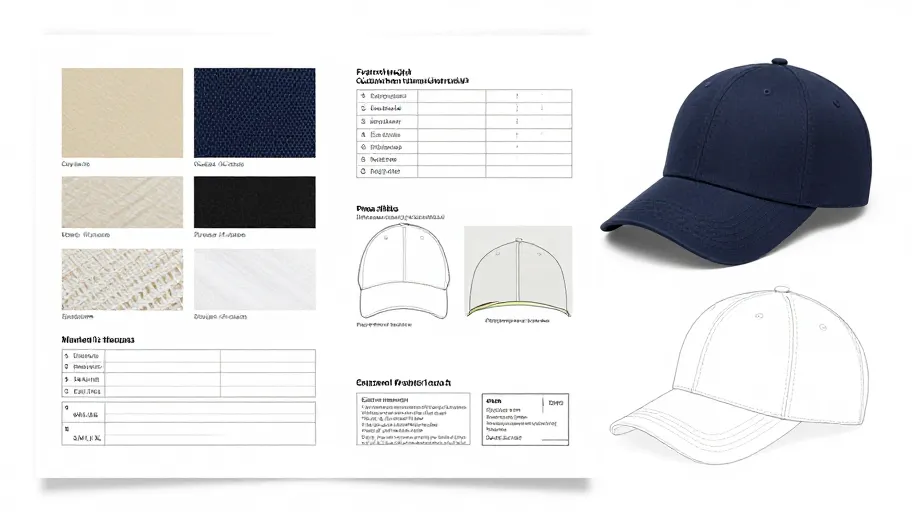
A comprehensive cap tech pack is your primary tool to prevent production errors and bridge geographical distance with your manufacturer. By documenting every specification, material, and compliance requirement before you commit, you force clarity, create an objective approval standard, and protect your investment. Defining these details eliminates guesswork and reduces the risk of unverified prototypes entering mass production.
When sourcing custom headwear, the disparity between a buyer's concept and the factory's output arises from undocumented variables. To eliminate ambiguity, apply the SPEC-Verify Framework. This framework directs sourcing teams to systematically document Structure, Properties, Expectations, and Compliance. By answering targeted questions across these four pillars, you construct a defensive barrier against production surprises.
Structural specifications to document
The physical architecture of headwear dictates its final appearance. Without exact structural documentation, the factory will rely on their internal base patterns, which may not align with your brand's vision. Document the following structural questions:
- Panel count and configuration: Are you sourcing a 5-panel, 6-panel, or 7-panel construction? Document how the panels align at the front crown.
- Crown height and profile: What is the exact height of the front panel? Specify whether the profile is high, mid, or low, and document how the panels are stitched to maintain this shape.
- Visor shape and curvature: Document the exact visor length and width. Specify the curvature—whether flat, pre-curved, or a specific custom bend—and note whether the visor requires a specific binding edge.
- Eyelet requirements: Document if the panels require ventilation eyelets. Specify the hole diameter, the stitch type, and the placement pattern.
- Seam construction: Define the stitching used on the panel seams. Document whether you require flat-felled seams, overlock stitches, or a specific thread color contrast.
Material properties to define
Material variance alters the weight, feel, and durability of the final product. You must specify the exact composition and finish of every component. Document these material questions:
- Shell fabric: What is the exact fiber composition? Document the weave structure and fabric weight. Specify the dyeing process and any required treatments, such as water resistance or anti-microbial applications.
- Sweatband material: Document the material used for the inner sweatband. Specify whether it requires a specific texture, moisture-wicking property, or a specific color.
- Closure mechanism: For adjustable headwear, document the exact closure type. Specify the material of the strap and the hardware, and define the shape and placement of the plastic or metal fasteners.
- Lining and taping: Document whether the seams require inner taping. Specify the material and color of the tape.
- Visor core material: Specify the material inserted into the visor to provide structure. Document the required rigidity.
Embellishment expectations to set
Logo application and decorative elements require exact parameters. Ambiguous embellishment instructions yield inconsistent branding. Document these embellishment questions:
- Embroidery parameters: Document the exact stitch count or density required. Specify the underlay type, the thread composition, and the exact thread color matches. Define the physical dimensions of the embroidery field.
- 3D puff embroidery: If utilizing 3D embroidery, document the foam thickness. Define the border stitch width and the fill stitch direction.
- Woven labels and patches: Document the dimensions, border type, and backing method (sew-on, heat-seal, or adhesive). Specify the exact placement coordinates on the cap.
- Screen printing and heat transfers: Document the exact ink type, the mesh count, and the color sequence. Specify whether the print requires a specific underbase.
- Brim labeling and interior tagging: Document the placement and content of interior woven tags, size markers, and country of origin labels.
Compliance verification to request
Regulatory requirements and testing protocols must be established before production begins. Document these compliance questions:
- Testing protocols: Document the specific physical and chemical tests the headwear must pass. Specify whether the materials require testing for colorfastness, dimensional stability, or specific restricted substances.
- Labeling laws: Define the legal labeling requirements for your destination market. Document the required fiber content disclosures, care instructions, and country of origin identifiers.
- Documentation requests: Request and document the necessary compliance certifications and test reports from the manufacturer. Confirm the current policy directly.
Pre-commitment decision table
Use this decision table to evaluate the readiness of your documentation before proceeding to the next stage of sourcing.
| Evaluation Area | Question to Answer | Action Required |
|---|---|---|
| Structure | Are all panel, crown, and visor dimensions documented? | Draft structural schematic and send for approval. |
| Properties | Are all fabric, sweatband, and closure materials specified? | Compile material data sheets and confirm. |
| Expectations | Are all embellishment placements and methods defined? | Approve technical flat sketches of artwork. |
| Compliance | Are all testing and labeling requirements stated? | Request compliance documentation from the supplier. |
Pre-approval checklist
Before you commit to mass production, ensure your documentation answers the following questions. This checklist serves as your final verification gate.
- Have you documented the exact panel configuration and seam placement?
- Have you defined the exact crown profile and structural dimensions?
- Have you specified the visor length, width, and curvature?
- Have you identified the shell fabric composition, weave, and weight?
- Have you documented the sweatband material and properties?
- Have you defined the closure mechanism and hardware specifications?
- Have you specified the embroidery parameters, including thread and density?
- Have you documented the dimensions and placement of all patches or labels?
- Have you defined the required physical and chemical testing protocols?
- Have you documented the labeling laws for your destination market?
Frequently Asked Questions
1. What happens if my cap tech pack lacks specific material weights? Omitting exact material weights leaves the factory to select the fabric based on their own discretion. This introduces the risk of receiving a final product that feels heavier, lighter, or less durable than your original concept. Document the exact specifications to force material alignment.
2. How specific should the embellishment placement be in the documentation? Embellishment placement requires exact coordinates. Do not use relative terms like "centered." Provide measurable distances from the seams, the crown, and the visor. Precise placement instructions prevent skewed logos and inconsistent branding across the production run.
3. Why must I document the visor core material? The visor core dictates the rigidity and structure of the brim. If you do not document the core material, the manufacturer may use a material that is too brittle or too flexible, altering the appearance and function of the headwear. Document the required density and rigidity.
4. What is the danger of leaving compliance testing ambiguous? Ambiguous compliance instructions can result in shipments that fail customs inspections or violate local regulations in your destination market. Document the exact restricted substance limits and testing protocols required before production begins to ensure market readiness.
5. Should the tech pack include the exact thread color for embroidery? Yes. Relying on "color matching" without a specified thread number introduces subjective interpretation. Document the exact thread manufacturer and color code to ensure the embroidered logo matches your brand guidelines precisely.
To finalize your preparation, download our comprehensive checklist to ensure every specification is documented before you begin sourcing. [下载核对清单]
If you need a structured guide to verify your technical documentation, download our pre-production checklist. [下载核对清单]
#cap manufacturers china, #headwear manufacturers china, #cap factory








