

Why fabric construction stops being invisible
Uncontrolled fabric behavior means delayed launches and damaged credibility because inconsistent shrinkage distorts logos and triggers mass rejections. One U.S. outdoor brand lost 42% of a 10,000-unit bucket hat shipment—not from bad embroidery, but from unchecked fiber blends that warped during washing. ASTM D5034-23 shows 68% of rejected headwear fails on fabric performance alone, proving that material quality isn’t a background detail—it’s the foundation of retail readiness.
Leading cap factories treat fabric as a precision component, not a commodity. They enforce verified fiber composition (like 100% solution-dyed polyester), minimum weave density (≥120 threads per inch), and documented pre-treatment such as sanforization. This means brands get predictable dimensional stability because every yard is tested for memory retention under stress. The result? Fewer post-wash surprises and fewer fire drills before seasonal rollouts.
The Bucket Hat Factory Checklist in action
The Bucket Hat Factory Checklist means faster approvals and fewer production loops because it aligns raw materials with brand standards before cutting begins. Instead of waiting for defects to appear, top-tier manufacturers simulate real-world conditions early—running accelerated wash cycles and humidity exposure tests to catch relaxation in twill weaves or brim distortion risks.
This proactive screening means logistics teams receive consistent units because fabric memory loss is eliminated at intake. One athleticwear client reduced post-delivery adjustments by 94% after adopting the protocol. For procurement leads, that translates into reliable time-to-market windows and less pressure during peak season. It’s not just quality control—it’s risk prevention built into the supply chain’s first mile.
How taxonomy replaces guesswork in distribution
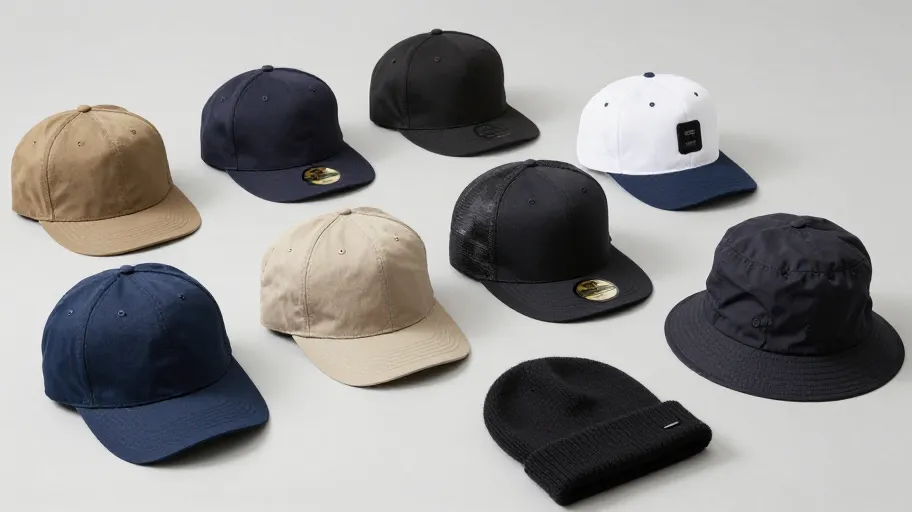
Modern baseball hat category taxonomy means automated sorting and accurate labeling because each SKU encodes construction DNA—fiber type, panel count, closure, and curvature. A 'structured 6-panel cotton-poplin snapback with medium profile' isn’t just descriptive; it’s machine-readable data that syncs with warehouse systems and customs databases.
This level of detail means distribution errors drop by 37% and time-to-retail improves by 11 days on average, according to Sourcing Journal’s 2024 benchmark. For global brands managing multi-region launches, this eliminates manual verification bottlenecks. No more photo comparisons or sample checks—just seamless flow from factory to fulfillment center, driven by structured naming logic.
When branding depends on the loom
Predictable fabric behavior means unified global campaigns because one embroidery file works across all regions without recalibration. When base cloth performs consistently, brands can centralize digitization and deploy designs worldwide—cutting artwork setup costs by $18,000 per collection in one lifestyle brand’s case.
This consistency means consumer trust stays intact because social media won’t amplify regional variations into credibility crises. In markets where authenticity is currency, having identical logo placement and stitch tension across continents isn’t cosmetic—it’s strategic. Top hat manufacturers in China now build this reliability into their process, turning fabric choice into a branding lever.
What comes next for compliant headwear
Full traceability from fiber to finished good means regulatory readiness because upcoming mandates like the EU’s Digital Product Passport will require verifiable material histories. Forward-thinking brands are already embedding fabric memory thresholds into supplier contracts and demanding third-party certifications per batch.
This shift means fewer rejections and stronger audit outcomes because compliance is designed in, not inspected in. As sustainability rules tighten and automation spreads, factories that master fabric engineering and classification won’t just survive—they’ll set the pace. The bottom line: your cap supplier isn’t just making hats. They’re safeguarding launch timelines, brand equity, and operational confidence.
See how your current sourcing stack measures up—audit your next fabric submission against the Bucket Hat Factory Checklist and track deviations before they reach production.
#cap manufacturers china, #headwear manufacturers china, #cap factory