


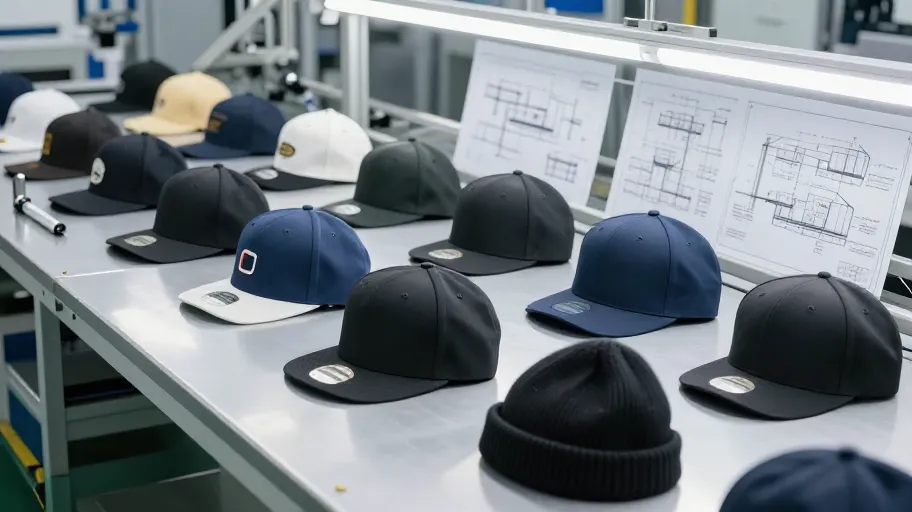
Choose a cap factory in China by testing how well it converts your brief into controlled specifications, samples and production records. Price and marketing claims are not enough. Compare suppliers using the same project brief and request evidence for the capabilities that matter to your cap style.
Define the private-label project first
State the cap style, target quantity, market, material, logo method, packaging, required date and approval process. A supplier cannot provide a comparable quotation when these decisions remain different across enquiries.
Check product-specific experience
Ask for examples relevant to the construction you need. A trucker cap, structured baseball cap, low-profile camp hat, flex cap and beanie use different patterns, materials and fit controls. Product relevance matters more than the size of a general sample gallery.
Review the factory's specification process
A capable supplier should identify gaps in the brief before sampling. Check how the team records panel construction, crown profile, visor, closure, sweatband, fabric, colour, logo files, measurements and packaging. Use the tech pack guide to prepare the same information for every candidate.
Evaluate the sample as evidence
Agree what the sample must prove and how revisions will be recorded. Review shape, fit, materials, colour, measurements and decoration against the written specification. Keep one approved physical reference and update the tech pack when a change is accepted.
Ask how materials and decoration are controlled
Confirm how fabric swatches, colour references, closures and trims are approved. Ask which embroidery, printing and patch processes are handled directly and which use specialist partners. Subcontracting is not automatically a problem; undocumented responsibility is.
Verify quality and production records
- Which checks occur before, during and after production?
- How are measurements and visual findings recorded?
- Who decides whether a deviation is accepted or corrected?
- How are approved materials and artwork communicated to production?
- What inspection or testing evidence is available for this project?
Review New Generation's current factory and production information as one input, then request project-specific evidence for any claim that affects your sourcing decision.
Compare quotations on the same scope
Check whether quotations include sampling, mould or setup charges, labels, packaging, testing, freight terms and payment milestones. Unit prices are not comparable when the included work differs.
Control bulk approval
Before production, confirm the final specification version, approved sample, material references, artwork files, packaging and inspection plan. Use the bulk cap production approval checklist for the final handoff.
Cap factory evaluation scorecard
| Area | Evidence to request |
|---|---|
| Product capability | Relevant construction examples and process explanation |
| Development | Tech pack review, sample scope and revision method |
| Materials | Swatch and component approval records |
| Decoration | Artwork requirements and process responsibility |
| Quality | Project checks, measurement records and issue handling |
| Commercial scope | Written inclusions, exclusions, terms and schedule |
Frequently asked questions
Should a buyer choose the lowest quotation?
Compare price only after the specification and included services match. A lower quotation may exclude materials, decoration, packaging or verification included elsewhere.
Does a factory certificate prove product quality?
A certificate may support a specific management or material claim when its issuer, scope and validity are verified. It does not replace project specifications, samples and inspection records.
When should a buyer visit or audit a factory?
Base the decision on project risk, order size, buyer policy and the evidence that cannot be verified remotely. Define the audit scope before arranging it.








