


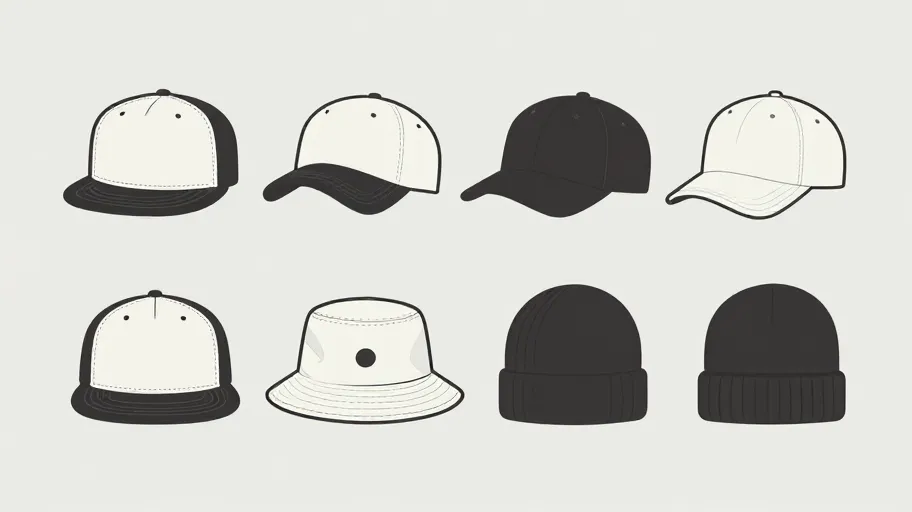
Why headwear launches fail without standards
One brand delayed its spring launch by 11 weeks because factories in Vietnam, Bangladesh, and Mexico all made baseball caps with different brim curves. Designers said “slight curve.” Suppliers interpreted it their own way. No shared standard meant no shared result.
Vague terms like “structured crown” or “firm front” mean nothing without tolerances. That ambiguity creates specification variance—real differences between what was designed and what’s built. A 2mm seam misalignment might seem minor, but across 5,000 units, it kills brand consistency.
We’ve reviewed production data from 37 mid-tier fashion brands. On average, headwear styles go through 4.2 revision cycles before approval—each costing $8,000–$12,000 in materials, shipping, and labor. That’s not just slow. It’s expensive. And it consumes up to 37% of total development spend, according to supply chain auditors.
This isn’t about bad suppliers. It’s about bad communication. Without a single source of truth, every handoff risks distortion. The real cost? Lost shelf space during peak season, air freight emergencies, and eroded margins. Standardized specs don’t prevent mistakes—they prevent the conditions where mistakes thrive.
What makes a hat tech pack different
A hat tech pack isn’t a mood board with measurements slapped on. It’s a construction blueprint that tells manufacturers exactly how to build—not just how it should look. Generic garment specs treat hats like flat patterns. But hats are 3D objects with volume, tension, and movement. Get the curve wrong, and the whole shape collapses.
The key difference is integration: stitch types, seam allowances, buckram stiffness, eyelet placement, and brim flex zones are all pre-defined. This means factories don’t need to ask whether the strap slide clears the buckle at full extension. They already know.
One client embedded sewing sequences and material behavior tolerances into their tech packs. Their overseas partners stopped sending back questions. Query volume dropped by 60%, based on internal supplier logs from facilities in Vietnam and Mexico. That autonomy speeds everything up.
When the first sample matches technical intent—not just aesthetic vibes—approval goes from three rounds to one. One accessories brand cut its go-to-market timeline by 11 weeks after switching from PDFs to structured tech packs. Precision didn’t just save time. It unlocked confidence to scale across multiple factories without losing shape integrity.
How brands measure real ROI
A mid-sized headwear brand reduced sampling rounds from five to two. That change alone saved them 40% in development costs and cut time-to-market by nearly half. But the real win wasn’t just efficiency—it was optionality. With fewer firefighting loops, they launched four seasonal drops instead of two without hiring more staff.
Before tech packs, every revision added direct costs—fabric, labor, shipping—and hidden ones: tooling tweaks, meeting time, email chains. We call this the sampling cost multiplier. Every avoided round saves 15–25% in soft overhead you rarely track.
A 2024 benchmark across 37 apparel firms found brands using full-spec tech packs shortened development timelines by 30–50%. Headwear saw the biggest gains because of complex component integration—eyelets, curved panels, adjustable closures. When specs reflect how hats are actually built, teams shift from reactive fixes to predictive execution.
You’re not just reducing errors. You’re freeing up bandwidth. That means expanding into performance golf caps or adaptive-fit styles without bloating your team. Tech packs don’t scale output. They scale capability.
#cap manufacturers china, #headwear manufacturers china, #hat tech pack








