


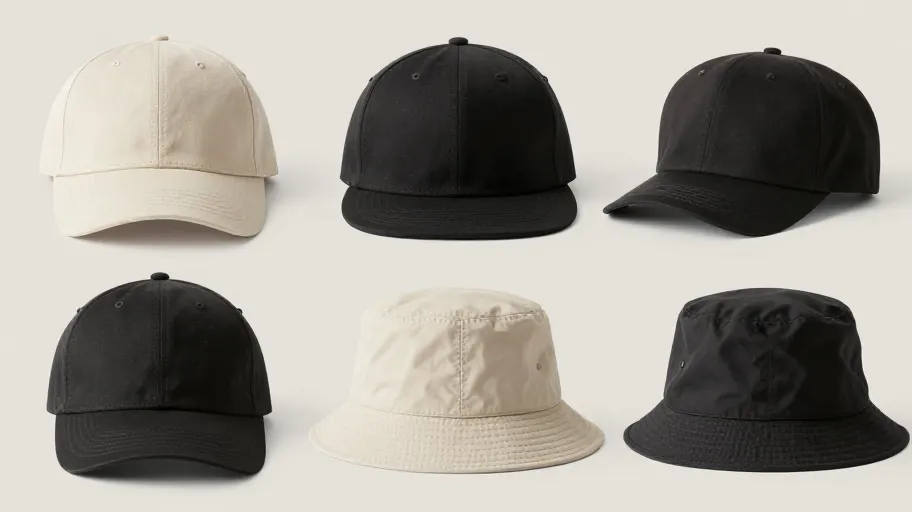
Over 60% of first hat samples from Chinese factories get rejected—not from poor quality, but unclear specs. A complete tech pack cuts rework by up to 70%. Here’s how to build one that works.
Why most brands fail at first sample approval
More than 60% of first hat samples from Chinese manufacturers are rejected—not because the factories lack skill, but because brands fail to communicate with precision. One revision cycle can add three weeks and inflate costs by up to 18%, according to a 2024 McKinsey & Co. apparel supply chain study. For emerging labels and established brands alike, this isn’t just a delay—it’s lost revenue during peak selling seasons and eroded trust with partners who expect clarity.
The root issue isn’t quality control—it’s specification control. Terms like “structured crown” or “standard stitching” mean different things in Guangzhou than they do in Los Angeles. Without a shared technical language, you’re not sourcing—you’re gambling. One brand we worked with delayed their summer linen cap launch by 11 weeks after three failed samples, all because crown height wasn’t measured at a defined point, and stitch density was left to the factory’s discretion. These aren’t manufacturing failures—they’re communication breakdowns.
A complete tech pack means fewer rejected samples because every measurement, material, and method is locked down before production starts. Clear specs don’t just prevent errors—they build supplier confidence. When factories receive unambiguous instructions, they shift from guesswork to execution, transforming your relationship from transactional to collaborative. The result? Faster approvals, lower landed costs, and a product that matches vision—every time.
What separates pro-level hat tech packs from amateur ones
Behind 68% of rejected hat prototypes lies an invisible culprit: the amateur tech pack, missing nearly 40% of mission-critical data points required for precision manufacturing in China. These omissions trigger cost overruns, unauthorized material substitutions, and irreversible quality drift before production even begins.
The difference between chaos and control? A professional-grade tech pack isn’t a mood board with hopes attached—it’s engineered documentation. At its core are two non-negotiable elements: a complete BOM (Bill of Materials) and a detailed construction diagram. The BOM acts as your financial blueprint, listing every thread, liner, and buckle with supplier IDs and swatch codes—this granularity slashes quote variances by up to 32%, according to a 2024 apparel sourcing audit. That means accurate pricing because nothing is left to interpretation.
Meanwhile, the construction diagram eliminates guesswork by mapping stitch types (e.g., 401 chainstitch on brim edge), seam allowances, and grading rules millimeter by millimeter. Callouts on flat sketches flag stress points; stitching specs define durability; grading matrices ensure size consistency across thousands of units. This level of detail transforms one-off samples into scalable, repeatable production. When manufacturers receive unambiguous instructions, rework drops, approval cycles shrink, and your team gains confidence that what’s made in Dongguan is exactly what was imagined in Brooklyn.
How to build your hat tech pack in 5 steps
You’re finalizing a premium baseball cap line in New York, but when samples arrive from Shenzhen, the embroidery is puckering, the brim curvature is off, and sizing inconsistencies trigger logistics flags—delays that push you past peak retail onboarding windows. This isn’t just a production misstep; it’s a $187,000 loss in non-recoverable engineering (NRE) and missed Q2 sell-in targets. The turning point? A structured tech pack system that transforms ambiguity into precision.
First, build a centralized materials library with swatches digitized and tagged—this prevents substitutions like using 16-singles instead of 20-singles cotton, which alters drape and durability. That means consistent fabric feel because every yard meets spec.
Second, create an annotated flat sketch where every seam, stitch type, and curve is labeled; without this, factories assume defaults, leading to unapproved structural changes. Clear visuals mean faster alignment because everyone sees the same design.
Third, lock the Bill of Materials (BOM) with supplier codes for each component—from sweatband foam density to buckle alloy—ensuring traceability and compliance. That means full cost control because every input is accounted for.
Fourth, define QC checkpoints at pre-production, during assembly, and pre-shipment, tied directly to measurable thresholds (e.g., embroidery density capped at 9,500–10,500 stitches per square inch). The size grading matrix becomes critical here: a single tolerance deviation in crown height across sizes cascades into fit complaints and returns. Measurable standards mean fewer defects because quality is verified at every stage.
Fifth, initiate a factory feedback loop before sign-off—Shenzhen partners flag tooling constraints early, avoiding rework. Embedding the approval sign-off sheet with digital timestamps ensures all parties validate each phase. Brands using this full workflow reduced sampling rounds by 40% and accelerated time-to-market by 30%, according to a 2024 supply chain benchmark. That means launching ahead of seasonal trends, not chasing them. With a validated tech pack, bulk production handoff shifts from high-risk negotiation to confident execution—where consistency, cost control, and quality aren’t hoped for, but guaranteed.
#cap manufacturers china, #headwear manufacturers china, #hat tech pack








