


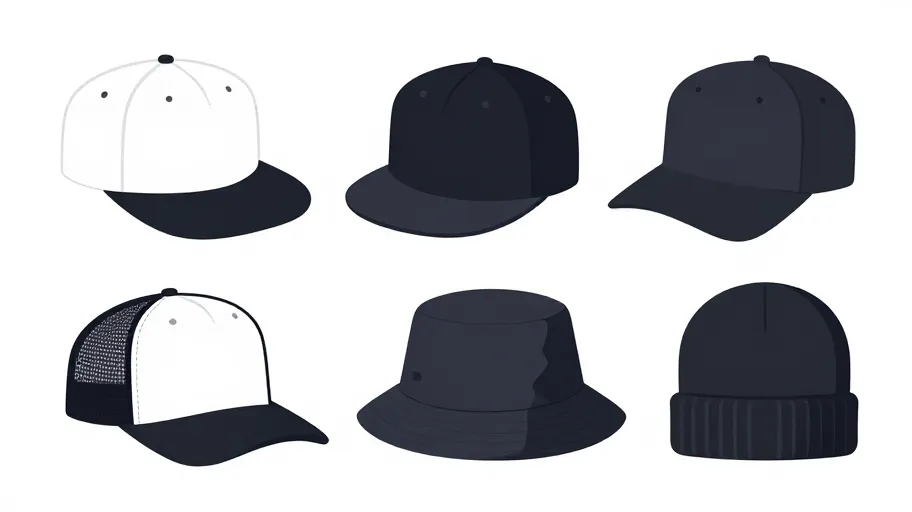
Why hat launches fail before sewing begins
A precise hat tech pack means fewer surprises, because every measurement is defined upfront. Most hat launches collapse not from factory failure but from miscommunication. Vague sketches and undefined tolerances turn "slightly curved" into six-week delays. That’s what happened to one mid-sized brand when three suppliers delivered wildly different brim shapes—all working from the same sketch.
This isn’t rare. A 2024 McKinsey analysis found up to 30% of pre-production effort in fashion is wasted on rework due to poor specs, with headwear among the worst-hit categories. The real issue? Design Intent Fidelity—how closely the first sample matches the original vision. Without it, every revision burns time and money.
We worked with a brand that spent $18,000 in air freight fixing a single misinterpreted crown height. Experience doesn’t fix ambiguity. But a tech pack does. By locking in angles, seam allowances, and material behavior, you replace guessing with execution. One client slashed sampling rounds from five to two—cutting time-to-market by 40%. More importantly, they hit first-sample approval rates above 90%, turning chaos into predictability.
What separates a real tech pack from a checklist
A true hat tech pack means aligned priorities, because it ranks what matters most. It’s not just a list of parts—it’s the central nervous system of production. Treat it like a checklist, and you risk quality failures that damage brand trust. Use it as a tiered system, and you focus teams on critical details first.
Seam strength on a stress point matters more than label placement. A 2024 supply chain study showed factories using tiered specs reduced QA rejections by 38%, simply by knowing where precision was non-negotiable. For a performance sun hat, that means airflow thresholds, UV resistance, and exact grommet alignment—not just “add mesh panel.”
One brand used a flat PDF. Grommets were misplaced. Sampling stalled for three weeks. Another used a structured tech pack with interactive annotations and Tier-1 flags for ventilation. They approved the first sample in 11 days, launched 30% faster, and avoided all cost overruns. Completeness isn’t about volume—it’s about clarity. When everyone knows what’s critical, back-and-forth disappears.
How one document cuts sampling costs and time
A validated hat tech pack means lower costs and faster launch, because errors are prevented before cutting begins. One brand facing margin pressure shifted to a structured workflow and cut sampling from five rounds to two. Each avoided cycle saved $1,200–$2,500 in materials, labor, and shipping—plus 8–12 days of lost momentum. Bulk production started three weeks early, securing prime retail space and driving 22% higher sell-through at peak season.
The difference? They started tracking their Pre-Production Alignment Score—a metric based on 17 technical checkpoints like stitch confirmation and brim curvature. Projects scoring above 90% saw first-sample approval rates over 88%. Those below 70%? Just 34%. High alignment means shared understanding across teams, which kills ambiguity and stops rework before it starts.
This isn’t just efficiency—it’s strategy. Fewer samples mean less waste and a smaller carbon footprint. A 2024 benchmark found brands using structured tech packs launched products 26 days faster—which means capturing early-season margins while competitors are still revising prototypes. The final step? Build and validate your pack with technical designers who speak both creative and factory fluently. With that expertise, you’re not reducing costs—you’re engineering certainty into every seam.
#cap manufacturers china, #headwear manufacturers china, #hat tech pack








