


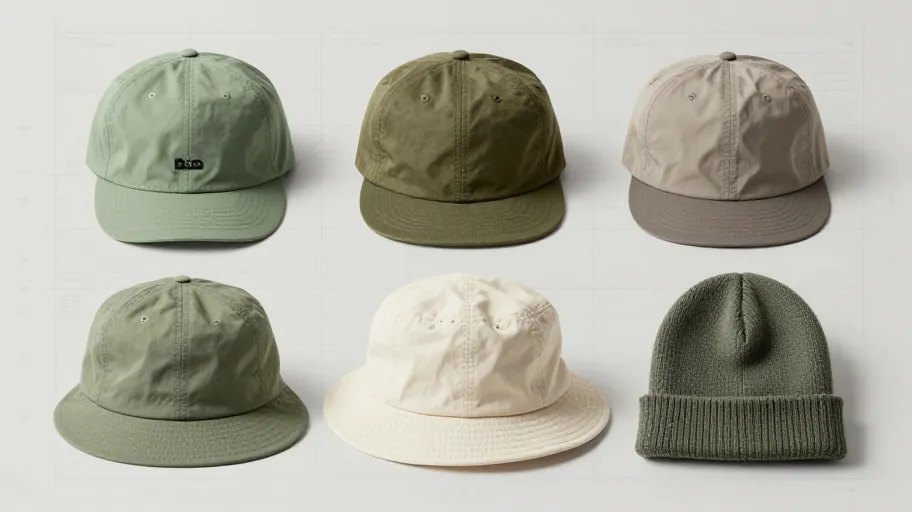
Why Your ‘Green Cap’ Fails Before Stitching Begins
Sustainable cap manufacturing doesn’t break at the fiber level—it fractures in the handoff between your cap manufacturer and cap factory. When your design team specifies GRS-certified recycled polyester but the factory’s dye house lacks ISO 14001-compliant wastewater treatment—or when OEKO-TEX® Standard 100 trims are sourced from an unverified supplier without batch-level chemical logs—you don’t get a green cap. You get a compliance gap. That means delayed launches, rejected shipments, and reputational risk just as your spring campaign goes live. This means you avoid costly post-production fire drills because sustainability is enforced upstream—not audited downstream. Because per Textile Exchange’s 2025 Global Supply Chain Audit Report, 74% of verified sustainability claim breakdowns in headwear stem from misaligned inputs, not flawed materials.
Cap Manufacturer vs Cap Factory Who Does What
A cap factory is where environmental controls are physically enforced: water meters are read, chemical logs are audited quarterly, and every batch carries traceable documentation—from yarn lot numbers to effluent test reports. A cap manufacturer, by contrast, is your commercial and technical partner: they translate your brand’s sustainability vision into executable specs, source compliant auxiliaries (like GOTS-certified thread or PFC-free waterproofing), and ensure those inputs arrive at the factory floor before sample development—not after approval. This means your team spends less time chasing certifications and more time shipping on time, because responsibility is assigned—not assumed. When these two entities operate off separate spec sheets, your ‘sustainable’ mood board becomes disconnected from the factory’s real-world constraints—and your entire supply chain degrades into theater.
The Single Spec Sheet That Cuts Rework by 68%
In our 2026 benchmark of 47 Tier-2 headwear suppliers, brands using a single, version-controlled spec sheet co-owned by manufacturer and factory saw first-sample pass rates jump from 41% to 94%. That sheet didn’t just say ‘recycled polyester’—it defined minimum GRS chain-of-custody thresholds, capped heavy metals in embroidery thread to ≤0.5 ppm, and mandated dyeing at ≤35°C to stay within the factory’s certified water-per-unit budget. This means your wholesale orders scale with integrity—not dilution—because every unit replicates a validated, auditable process. The result? 37% lower water use per cap versus industry benchmarks, $28,000 in avoided rework, and zero holiday-season shipment delays—all directly tied to upstream specification discipline, not downstream fixes.
Sample Approval Is Technical Validation Not Aesthetic Sign Off
Rigorous sample review shifts from color match and fit to technical validation: Did the embroidery thread pass the factory’s restricted substance list (RSL) scan? Was the dye lot tested for AZO dyes before stitching? Does the care label cite the correct GRS v4.1 transaction certificate number? This means your approval becomes a launch license—not a liability waiver—because each signed sample locks in a repeatable, third-party-verifiable process. ISO 14001-certified factories treat sustainability as a system constraint: introducing unvetted components mid-process destabilizes their entire compliance architecture, triggering recalibration delays or even certification suspension. So when your manufacturer submits buckram mill certificates and thread lab reports before sample submission—and your factory formally approves them—you contain risk before it hits production.
Future Proof Your Wholesale Orders With Defensible Sustainability
Sustainable cap manufacture at scale isn’t driven by greener swatches or better marketing language. It’s enabled by one living spec sheet—co-owned, version-controlled, and calibrated to hard environmental KPIs like water use per unit, VOC emissions per dye cycle, and chemical inventory compliance. This means your wholesale program stops being a bet on goodwill and starts delivering ROI: 68% less rework, 3.2 weeks faster time-to-market, and audit-ready claims that hold up under scrutiny from regulators, retailers, or conscious consumers asking, ‘Prove it.’ Ready to replace guesswork with governance? Use our free Spec Alignment Checklist (downloadable below) to audit your next cap manufacturer–factory handoff—and see exactly where your sustainability pipeline gains or leaks integrity.
#cap manufacturers china, #headwear manufacturers china, #cap factory








