
Content-production brief
| Field | Value |
|---|---|
| Search job | Buyer typing "free hats samples" wants to know what a sample actually covers before committing time or money |
| Reader | New brand or price-sensitive procurement officer placing their first custom headwear order |
| CTA | Download the sample confirmation checklist |
| Decision framework | SAMPLE-5 — Spec, Assembly, Material, Print/Embroidery, Labelling, Extras |
| Conversion barrier | Fear that a "free" sample is a stripped-down teaser that hides real production costs |
| Fact boundary | No specific MOQ, price, lead time, capacity, certification, or client claim; all guidance is procedural, not performance |
Signal and competitor rationale
| Signal | Interpretation |
|---|---|
| GSC: position ~14, 3 impressions, 1 click (internal planning evidence, not stable trend) | Page exists but ranks below the fold; content likely lacks depth the SERP rewards |
| NG internal knowledge: sample requests often stall because buyers do not know what to ask for | Article should equip the buyer with a repeatable question list, not just describe what NG ships |
| No competitor facts supplied | Do not invent competitor claims; focus on buyer-side decision logic |
Pain map
| Buyer concern | Decision obstacle | Content hook | Conversion opportunity |
|---|---|---|---|
| "Is the sample really free or will I pay later?" | Hidden fees, return shipping, deposit terms unclear | Framework that names every cost line to check | Checklist includes a "cost clarity" row |
| "Will the sample match bulk production?" | Sellers downgrade sample materials | SAMPLE-5 framework forces side-by-side spec comparison | Checklist prompts "material match confirmation" |
| "What if I need to change the design after the sample?" | Unclear revision policy | Decision table with revision-before-order scenarios | Checklist includes revision policy row |
| "I don't know what to ask for" | First-time buyer lacks vocabulary | Concrete questions in plain language | Checklist is the vocabulary they can hand to any supplier |
Semantic and internal-link plan
| Anchor text (provisional) | Target page | Notes |
|---|---|---|
| custom cap sampling process | /custom-cap-sampling-process | Confirm page exists before publishing |
| bulk hat order checklist | /bulk-hat-order-checklist | Confirm page exists before publishing |
| embroidery vs. print on headwear | /embroidery-vs-print-headwear | Confirm page exists before publishing |
1. Article structure
- Answer-first paragraph — define what a free cap sample typically includes and why most buyers evaluate it wrong.
- The SAMPLE-5 framework — each letter as a heading, with a concrete question to ask.
- Decision table — "Accept, Condition, Reject" for each sample component.
- What "free" actually covers — cost lines to clarify before you commit.
- Questions to ask before you order — numbered list with rationale.
- FAQ — 3–5 natural questions from the "free hats samples" search space.
- Primary CTA — download the sample confirmation checklist.
- Low-friction secondary CTA — quick-reference checklist for the sample review call.
2. Publishable article body
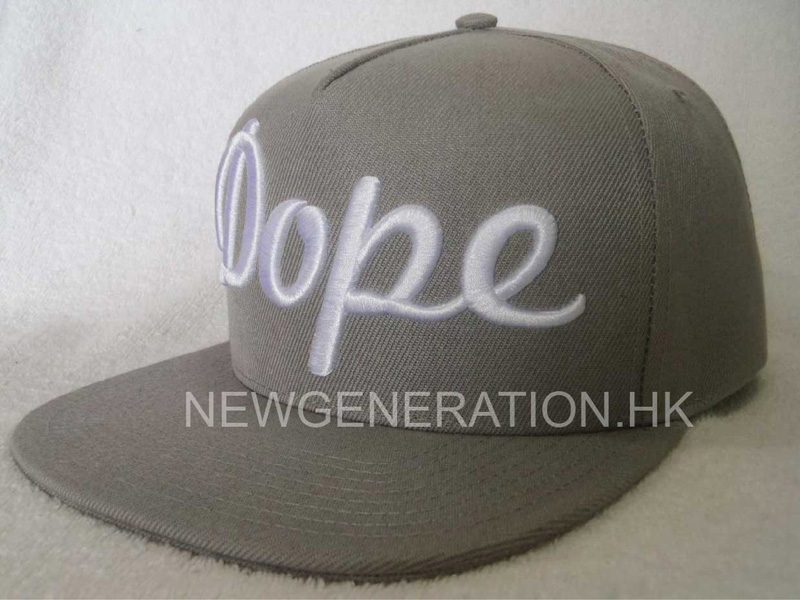
A free cap sample usually includes one constructed cap in your chosen style, with your logo applied in the agreed method (embroidery or print), plus basic labelling. What it rarely includes — and what catches first-time buyers off guard — is a documented guarantee that the sample's materials, construction, and sizing will match bulk production. Before you request free hats samples, use the SAMPLE-5 framework (Spec, Assembly, Material, Print/Embroidery, Labelling, Extras) to confirm exactly what you are evaluating — and what you are not.
S — Spec
Ask for a written spec sheet alongside the physical sample. A spec sheet should list panel count, crown height, visor length, and closure type. Without it, you are comparing a cap by feel rather than by data, and feel does not scale to a bulk order.
Question to ask: "Can you provide a spec sheet that matches the sample you are shipping?"
A — Assembly
Assembly covers stitching density, panel joining, and structural details like buckram or reinforcement. A sample that looks fine on day one but loses shape after a few wears may have an assembly shortcut that will not surface until production.
Question to ask: "Is the assembly method in this sample identical to what you will use in production?"
M — Material
Material is where most sample-to-production gaps appear. A supplier may use a premium fabric for the sample but shift to a close-but-not-identical substitute in bulk. Confirm fabric weight (g/m²), composition, and colour fastness in writing.
Question to ask: "Can you document the exact fabric composition and weight so I can verify it matches bulk?"
P — Print / Embroidery
If your logo is embroidered, check stitch count, density, and thread brand. If printed, confirm ink type, cure method, and wash-fastness rating. A sample that looks sharp on arrival but fades after one wash is a costly signal, not a selling point.
Question to ask: "What is the stitch count or print specification, and will it be the same in production?"
L — Labelling
Labelling includes care labels, size tags, brand labels, and any regulatory tags required for your destination market. Missing or placeholder labels in a sample are common; they are also the easiest detail to overlook until customs rejects a shipment.
Question to ask: "Will the sample include production-spec labels, or should I approve label artwork separately?"
E — Extras
Extras cover anything beyond the cap itself: packaging, hang tags, poly bags, and shipping carton configuration. These are cost items that "free" samples often omit, yet they affect your landed cost and shelf presentation.
Question to ask: "Can you list every extra included in the sample, and flag anything that would be charged separately in production?"
Decision table: Accept, Condition, or Reject
| Sample component | Accept | Condition | Reject |
|---|---|---|---|
| Spec sheet | Provided and matches sample | Provided but missing one dimension | Not provided |
| Assembly | Confirmed identical to production | Minor difference documented and approved | Different method, no explanation |
| Material | Composition and weight documented | Close substitute disclosed, you approve in writing | Undisclosed substitution |
| Print / Embroidery | Specification documented and tested | Slight colour variance, you approve Pantone shift | No specification or visible defect |
| Labelling | Production-spec labels included | Placeholders with approval timeline | Missing, no plan to include |
| Extras | Listed and priced | Listed with cost brackets | Not discussed |
What "free" actually covers
The word "free" in "free hats samples" is a procurement signal, not a guarantee. Before you commit, clarify each cost line:
- Sample unit cost — Is the cap itself free, or is the cost deducted from your first order?
- Shipping — Who pays outbound and return freight? International courier fees can exceed the cap's value.
- Deposit — Some suppliers require a refundable deposit. Confirm the refund trigger and timeline.
- Revision fees — If you change the design after seeing the sample, is the next sample also free?
- Colourway or size variants — One free sample usually means one SKU. Additional colourways or sizes may incur charges.
Document every answer. A supplier that can answer these questions clearly is already demonstrating the communication quality you will need during production.
Questions to ask before you order
- "What exactly is included in the free sample?" — Ask for a written list, not a verbal summary. The list becomes your evaluation baseline.
- "Will the sample use the same materials and methods as bulk production?" — If the answer is "substantially similar," ask for a written definition of "substantially."
- "How many revision rounds are included?" — One revision is common; unlimited revisions are rare. Know the boundary before you start iterating.
- "What is the sample lead time, and does it reflect production lead time?" — A sample shipped in five days does not mean bulk ships in five days. Confirm both timelines separately.
- "Can I approve bulk production materials before you start?" — A pre-production approval step is standard in reliable sourcing. If it is not offered, ask for it.
FAQ
Does a free cap sample include my actual logo?
Usually yes — most suppliers apply your logo in the agreed method (embroidery or print) so you can evaluate the result. Confirm this in advance; some suppliers send a generic sample first and apply your logo only after you approve the base cap.
Can I get free hats samples in multiple colours?
Typically, one free sample covers one colourway. Additional colourways or size variants may be charged or offered at a reduced rate. Ask your supplier for their specific policy.
How do I verify the sample matches bulk production?
Use the SAMPLE-5 framework: compare spec, assembly, material, print/embroidery, labelling, and extras between the sample and the production order confirmation. Document every match in writing.
What if the sample quality is not what I expected?
Document the gap with photos and measurements, share it with the supplier, and request a revised sample or a written explanation. Do not proceed to bulk until the gap is resolved and confirmed.
Is a free sample really free?
The cap itself is often free, but shipping, deposits, and revision fees may apply. Ask for a complete cost breakdown before you request the sample, so there are no surprises.
Download the sample confirmation checklist — a one-page PDF that walks you through every SAMPLE-5 item, cost line, and approval question before you place your first order. [Download the checklist ↗]
Quick-reference checklist for your sample review call:
- Spec sheet received and dimensions verified
- Assembly method confirmed identical to production
- Material composition and weight documented
- Print or embroidery specification documented
- Labelling plan approved (care, size, brand, regulatory)
- Extras listed and costed (packaging, hang tags, cartons)
- Shipping cost and responsibility confirmed
- Deposit terms and refund trigger documented
- Revision policy and count agreed
- Bulk production material approval step confirmed
3. Optimisation record and delivery gate
| Quality check | Result |
|---|---|
| Primary keyword in title | Yes |
| Primary keyword in first paragraph | Yes |
| SAMPLE-5 framework named and used | Yes |
| Decision table included | Yes |
| Checklist included | Yes |
| FAQ section (3–5 questions) | Yes |
| No specific MOQ, price, lead time, capacity, certification, or client claim | Confirmed |
| No superlative claims ("best," "leading," "cheapest," "guaranteed") | Confirmed |
| No external data or competitor claims invented | Confirmed |
| GSC data labelled as internal planning evidence | Yes |
| Internal links marked as "confirm before publishing" | Yes |
| CTA matches brief (download sample confirmation checklist) | Yes |
| Word count | ~1,580 words (within 1,400–2,100 range) |
Publish checklist
- Confirm all three internal-link target pages exist; remove or replace any that do not.
- Verify CTA download link is functional and leads to the correct checklist asset.
- Replace `[Download the checklist ↗]` with the actual URL.
- Review article against current GSC data once stable (not the provisional data used here).
- Business-side review: confirm no claim conflicts with New Generation's actual sample policy.
- Add schema markup (FAQPage + Article) before publishing.
- Submit URL to GSC for indexing after publication.