Start with the Panel–Purpose–Positioning (3P) Framework
Most sourcing confusion comes from mixing three separate questions. The 3P Framework pulls them apart so you can brief a manufacturer cleanly.
When the three P's agree, the construction choice is usually obvious. When they conflict, the framework tells you which trade-off you are actually making.
Decision Table: 5-Panel vs 6-Panel Cap
Use this as a discussion prompt with your manufacturer, not as a fixed spec sheet.
| Dimension | 5-panel cap | 6-panel cap |
|---|---|---|
| Panel layout | Five panels; typically one full front panel | Six panels; two front panels meet at a centre seam |
| Crown silhouette | Lower, flatter front; often reads as "lo-pro" or camp-style | Rounder, taller crown; classic baseball profile |
| Front branding surface | Single uninterrupted panel — good for large, single-placement artwork | Split by a centre seam — artwork must register across two panels or sit above/below the seam |
| Seam on forehead | No vertical front seam | Visible centre front seam from button to visor |
| Category fit | Streetwear, skate, lifestyle, workwear front-panel branding | Sport, heritage, corporate uniform, promotional, retail classic |
| Audience perception | Reads modern, casual, brand-forward | Reads familiar, sport-leaning, classic |
No row in this table is a verdict. The point is to walk into a supplier conversation knowing which rows matter most for your line.
Branding Surface: Where Most Buyers Get It Wrong
The front panel is the part of the cap your customer actually photographs. Treat it as the lead decision variable.
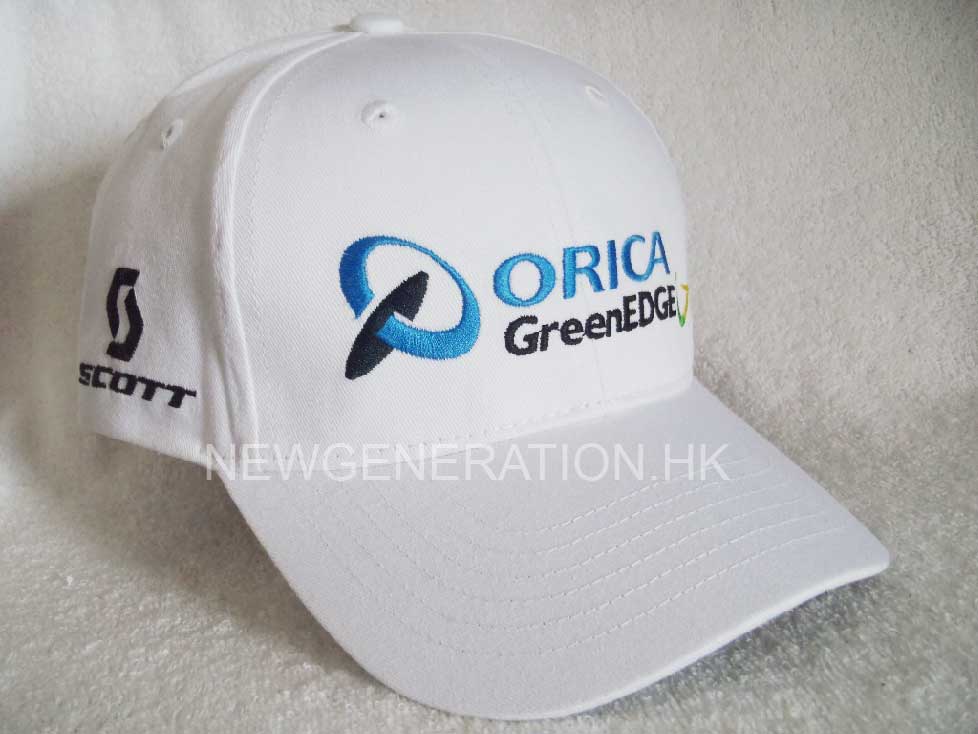
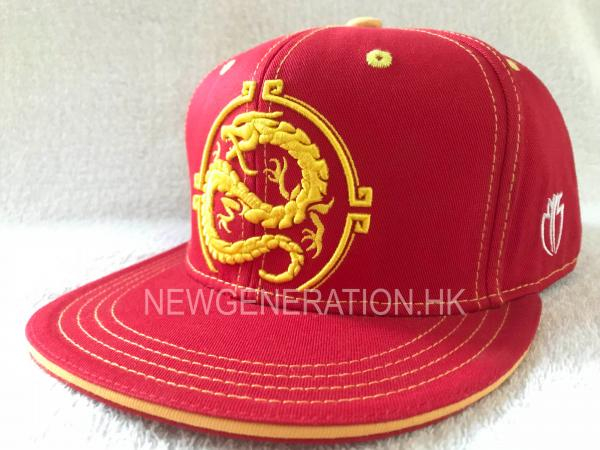
Embroidery. On a 5-panel cap, the single front panel gives you one flat hooping area, which is friendlier for large or full-bleed logos. On a 6-panel cap, the centre seam runs through the middle of the design space; your embroidery file needs to be digitised so the seam does not distort stitches or break a fine line. Ask your supplier whether the front panel is buckram-reinforced, because that affects how cleanly a dense logo sits.
Print. Screen print, heat transfer and HD print all behave better on a continuous surface. A 5-panel front lets the artwork live on one plane. A 6-panel front can still carry print, but the design either sits above the seam or has to be split and registered across two panels, which is a conversation to have before sampling.
Patches and labels. Rubber, PVC, leather and woven patches are usually sized to fit above or around the front seam on a 6-panel. On a 5-panel, you get a cleaner rectangle to work with. This is small until your patch supplier tells you the artwork has to shrink to clear a seam.
If branding is your lead variable and your logo is wide, horizontal or full-bleed, a 5-panel construction often reduces artwork compromises. If your logo is compact and centred and your market expects a baseball silhouette, a 6-panel is the lower-friction path.
Construction and Cost Drivers
Panel count is one of several cost inputs. Treat these as discussion topics with your supplier, not as fixed numbers.
- Cut-and-sew operations. More panels mean more cutting, more joining and more seam alignment. A 6-panel cap is not automatically more expensive — the process is standardised across most factories — but the operation count is higher than a comparable 5-panel.
- Reinforcement. Structured fronts (buckram or fused backing) add material and affect embroidery behaviour. Confirm whether the structure you want is included or an upgrade.
- Closure and trim. Snap, strap-and-buckle, strap-and-slide and fitted closures each carry different component and labour costs, and pair differently with each construction. Verify pairings per style rather than assuming.
- Fabric and bill of materials. The same construction in cotton twill, brushed canvas, mesh or recycled content will land at very different unit economics. Lock the BOM before comparing quotes between constructions.
The useful question is not "which is cheaper?" but "for the same BOM, closure and reinforcement, what is the cost difference between 5-panel and 6-panel?" That is a question your supplier can answer with a real quote.
Approval Questions to Bring to Your Manufacturer
Bring these to your first sampling conversation. The answers will short-circuit most of the back-and-forth.
- Can you confirm the front panel dimensions on each construction, so my artwork team can map the logo?
- What is the crown profile — low, mid or pro — and does it match my buyer's expectation?
- Is the front panel buckram-reinforced, or unstructured? How does that affect my embroidery weight?
- On a 6-panel, how do you handle the centre seam when artwork crosses it?
- Which closures pair with each construction in your line, and which are stock versus custom?
- Can you ship a side-by-side physical sample of the same fabric in 5-panel and 6-panel, so my team can approve in person?
A supplier that answers all six in writing is one you can brief against a spec sheet. That is the level of clarity worth asking for.
Frequently Asked Questions
Which is better for embroidery — 5-panel or 6-panel?
Neither is universally better. A 5-panel gives you one flat front panel, which is easier for large or full-bleed logos. A 6-panel has a centre seam that your embroidery file must account for, which is standard practice but needs to be specified at digitising. Confirm front-panel reinforcement with your supplier before committing.
Is a 5-panel cap cheaper than a 6-panel?
Not automatically. A 6-panel involves more cut-and-sew operations, but the process is standardised and the cost gap often comes from reinforcement, closure and fabric rather than panel count alone. Ask for a quote at the same BOM and closure to get a fair comparison.
Why do streetwear brands lean toward 5-panel caps?
The lower crown and uninterrupted front panel read as modern and casual, and the single front canvas is friendlier to bold front logos. That said, plenty of streetwear lines run 6-panel silhouettes — the right answer is driven by your buyer's expectation, not by category rules.
Are 5-panel caps the same as camp caps?
"Camp cap" usually refers to a specific unstructured 5-panel style, but the terms are not perfectly interchangeable. Confirm the exact silhouette, profile and reinforcement with your supplier rather than relying on the label.
Choose with a Spec Sheet, Not a Hunch
The 5-panel-vs-6-panel decision is reversible only at a cost — once a bulk run is cut, switching constructions means starting over. Use the 3P Framework to lock Panel, Purpose and Positioning before sampling, then verify every assumption with a side-by-side physical sample.
Download the Panel-Style Selection Sheet
Map your brand type, logo format and target margin to a recommended construction, closure and reinforcement combo you can hand to your supplier.
Download the Selection Sheet →Prefer to start smaller? Grab the one-page Artwork & Sample Approval Checklist — six questions that turn a sampling call into a written spec.