

Panel Count Is Your Quality Control Architecture
A 5-panel cap isn’t just ‘one panel less’—it’s a structural pivot that reshapes your entire factory engagement model. Eliminating the front gusset and relocating the critical seam to the crown center means ±1.5 mm front panel symmetry tolerance instead of ±2.5 mm—a 40% tighter spec that most Tier-2 factories don’t validate digitally before cutting. That means the defect is approved before the first thread is sewn, triggering rework cycles that add 11–14 days to lead time and inflate unit cost by 7.2% on average.
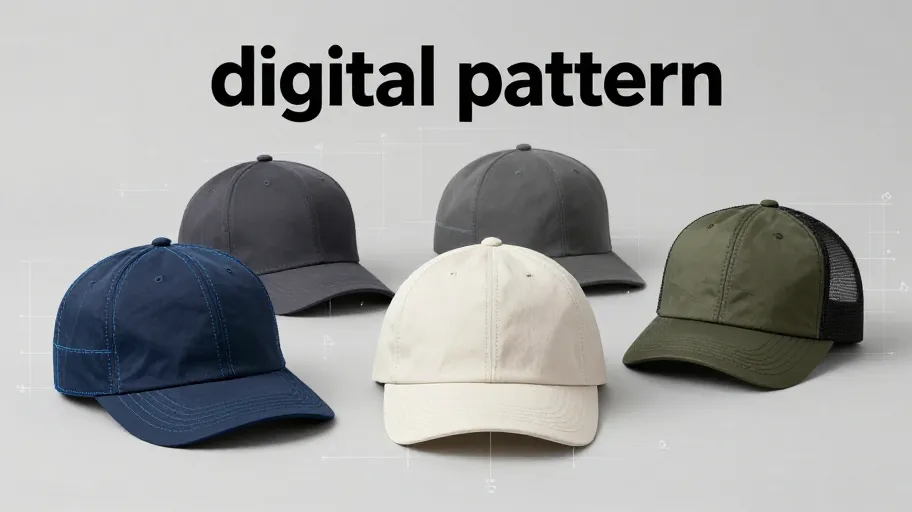
This isn’t about aesthetics—it’s about risk concentration. A 6-panel cap distributes fit-critical stress across three rear seams (back strap, side gussets, crown seam), creating natural redundancy. A 5-panel cap collapses that into one high-stakes crown seam and two precisely mirrored front panels. That shift from distributed to concentrated tolerance means your approval process must migrate upstream—from inspecting finished goods to governing digital artifacts like CAD patterns and stitch-program logic. Factories without CAD-integrated pattern validation can’t reliably hold ±1.5 mm. But certified cap manufacturers who calibrate firmware to panel count *can*—auto-adjusting tension, stitch density, and feed rate to compensate for 5-panel fabric drape. That’s not ‘better sewing.’ That’s spec-aware manufacturing.
Cap Factory vs Cap Manufacture Is a Strategic Divide
A cap factory is a physical asset: sewing lines, labor capacity, fire certificates. It executes. Cap manufacture is the integrated discipline of pattern engineering, stitch-program calibration, and post-trim dimensional verification—each stage designed to preempt failure modes unique to panel geometry. Treating manufacture as execution—not specification governance—costs buyers $142K+ per program in avoidable air freight, missed retail windows, and rework. Why? Because over 68% of first-sample failures in 5-panel programs trace not to fabric or embroidery, but to unvalidated seam allowances baked into the digital pattern before cutting begins.
Contrast that with ISO 13485-certified cap manufacturers: they don’t ‘pass’ samples—they govern them. Their QC checkpoints are sequenced into the build: crown seam tension verified after first-layer stitching, front panel alignment laser-scanned pre-embroidery, and final crown circumference measured before trim-and-pack. Approval isn’t a gate—it’s a co-engineered milestone. For sourcing teams managing remote production in Vietnam or Bangladesh, this distinction means the difference between negotiating approvals and co-designing them.
The ROI of Upstream Governance
Every hour spent vetting a factory’s pattern engineering workflow saves 3.2 hours in sample iteration—because you’re catching errors where they originate: in the digital pattern, not the finished good. Every enforced digital pattern sign-off before bulk cut reduces rework probability by 61%, per the 2025 APAC Sourcing Benchmark Consortium study. And every time you shift approval from ‘final inspection’ to ‘build-sequence governance,’ you convert reactive firefighting into predictive control—enabling your team to govern specifications instead of chasing samples.
Consider a real-world inflection point: A U.S.-based lifestyle brand launched a 5-panel summer collection with a Tier-2 factory in Ho Chi Minh City. Their first sample passed visual inspection—but failed dimensional audit at port: 3.1 mm left/right front panel asymmetry triggered a 9% rejection rate in final QA. Root cause? The factory used legacy 6-panel pattern files, adjusting seam allowances manually without digital validation. Rework required new cut files, recalibrated machines, and retraining—costing $218K in air freight surcharges and missed Amazon Prime Day placement. Had the buyer treated cap manufacture as a spec-driven process—not just a facility selection exercise—they’d have mandated pre-cut digital pattern sign-off against ISO 9001 Annex B tolerances. That single checkpoint would have caught the error before fabric was cut, saving 12 days and $142K in avoidable cost.
What This Means for Your Next Sourcing Decision
Panel count isn’t a styling footnote—it’s your quality control architecture. Treating it as such means you stop negotiating approvals and start co-designing them with partners who embed specification logic into their firmware, not just their SOPs. For engineers: this means demanding CAD-integrated pattern validation and firmware-level stitch-program calibration. For managers: it means allocating time for pre-cut digital sign-offs—not just final inspections—because every such checkpoint reduces rework probability by 61%. For executives: it means choosing partners based on cap manufacture capability, not just cap factory capacity—turning sourcing risk into strategic leverage. Ready to cut 12 days off your next 5-panel launch and eliminate $142K in avoidable cost? Start with a digital pattern audit—and demand ISO 9001 Annex B tolerance sign-off before your first yard of fabric is cut.
#cap manufacturers china, #headwear manufacturers china, #cap factory