

The alarm on Line 3 at a beverage co-packer in Modesto, California went off at 6:40 a.m. on 14 February 2023, with 11,400 bottles of cold-pressed juice already filled and capped.…
Every cap measured inside the drawing tolerance. The leak was at the seal anyway. Buyers auditing cap manufacturers in the U.S. usually get a drawing pack and a price. What they rarely get is the arithmetic that connects the two.
Definition: A production-ready closure specification is a controlled fit-and-seal system. Neck geometry sets thread engagement, liner compression creates the barrier, application torque supplies the sealing force, and resin, tooling plus shipping loads decide whether that barrier holds at line speed.What Cap Manufacturers Must Control Before Quoting Your Project
A closure quote only means something after nine variables are frozen: T, E, I, S and H/X dimensions, thread profile, liner construction, resin grade, tamper band geometry, and decoration method. Cap manufacturers who price before those are locked are pricing a guess, and the guess gets corrected on your line.
Most RFQs that land in a molder's inbox read something like "28-410, black, matte finish." That is a color, not a specification. It tells the tool shop nothing about thread start position, nothing about liner compression, nothing about the resin's shrinkage behavior in a 64-cavity mold. The molder fills the gaps with whatever runs well on their existing tooling. You inherit those choices 90 days later.
Build a complete closure spec before the RFQ goes out
Start with the bottle finish, not the cap. Pull the finish drawing from whoever blows or molds the container and confirm it is current — we have seen a 2021 PET bottle drawing still circulating in 2024 after the tool was re-cut with a 0.12 mm smaller T dimension. Then lock thread profile, liner material and thickness, resin, band design, and decoration in one document with revision control. Anything not on that document is a variable you have handed to the supplier.
Separate packaging closure suppliers from custom baseball cap manufacturers
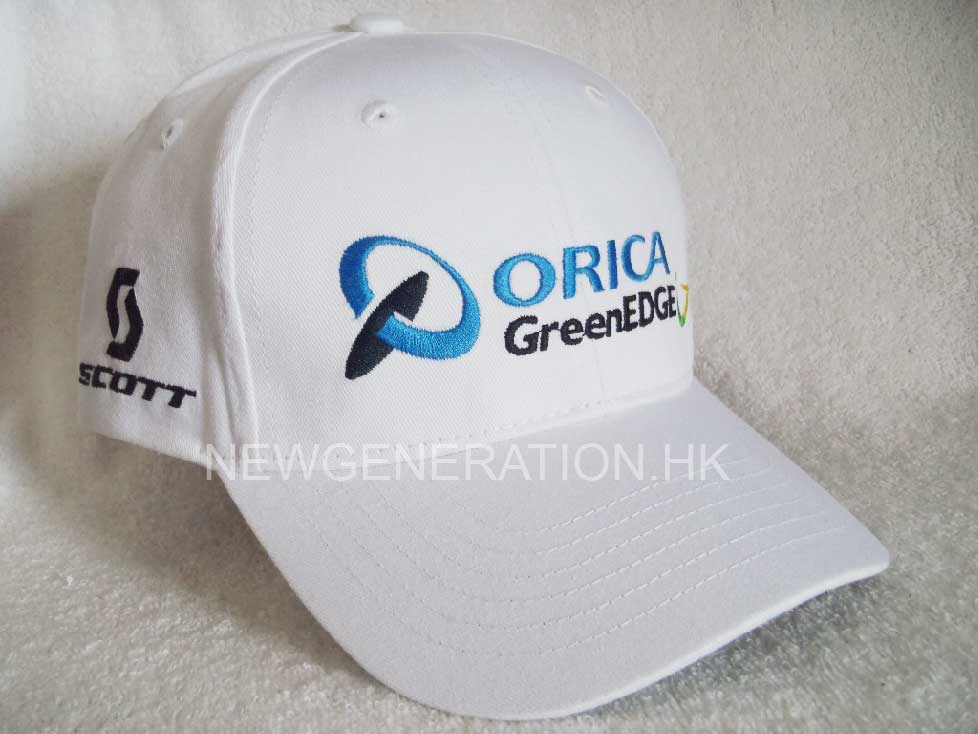
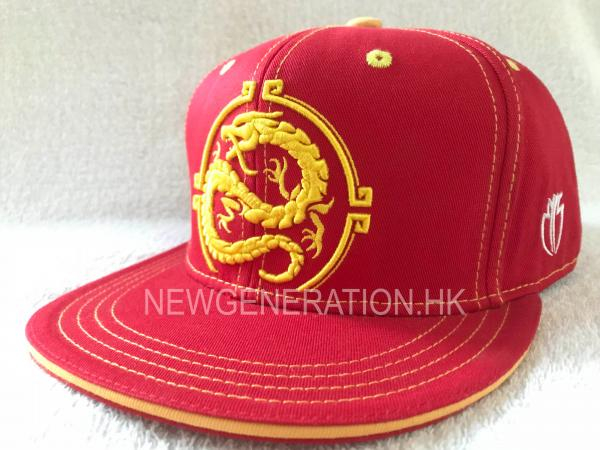
The search term "cap manufacturers" splits cleanly into two industries that share nothing but a word: plastic closure molders and headwear factories. Screen them on completely different evidence. For closures, ask for cavity-level Cpk data, resin certificates of analysis, in-house leak and torque test reports. For headwear, the equivalent proof is stitch density (7–9 stitches per inch on a structured crown), crown height tolerance, fabric shrinkage after three wash cycles, and embroidery stitch counts per logo. Our own shop, New Generation, has run headwear programs for U.S. brands since 2008, and the two categories fail for entirely different reasons.
The 7 Cap Manufacturer Specs That Prevent Costly Production Failures
Seven specification families separate a closure that runs at 300 bottles per minute from one that stops the line: neck finish geometry, liner compression, torque windows, resin and shrinkage, tamper band design, validation testing, and cavity-level capability. Each one has a number attached, and each number has a boundary.
Neck finish geometry decides whether the cap engages or cross-threads
T is the major thread diameter and it is the dimension everything else hangs off. On a 28-410 finish, T nominals at 28.00 mm with roughly ±0.13 mm allowed on glass and ±0.15 mm on PET. E is the thread root diameter and sets how deep the cap thread can bite. I is the bore, which controls where the sealing land sits and how wide it is. S is the thread start, measured from the sealing land down to the first thread — it decides how many turns the cap travels before contact. H is finish height, and X is the position of the tamper band catch bead, the undercut the band locks under.
The suffix matters as much as the number. A 410 cap threads onto a 400 finish and feels perfectly normal to a human hand. Engagement depth is wrong by a fraction of a millimeter, and the failure shows up as a slow seep three weeks into distribution, in the back of a trailer in Arizona.
The liner makes the seal, not the thread
Threads hold the cap down. The liner stops the leak. Compression is expressed as C = (t0 − tg) / t0 × 100, where t0 is free liner thickness and tg is the gap between the liner face and the bottle land at full application. Target 20–35 percent. Under 15 percent there is no continuous contact path; over 50 percent the foam takes a permanent set and never recovers on reclosure.
Density beats thickness, and almost nobody specifies it. A 1.5 mm coextruded PE foam at 6 lb/ft³ recovers differently from the same thickness at 4 lb/ft³ after 24 hours at 50°C — compression set runs 15–30 percent on the lighter foam. Two liners can pass a caliper check and behave nothing alike.
Torque windows set the force without cracking the skirt
The physics is a power screw. Sealing force follows F = T_app / [P/(2π) + (μ × r_t)/cos β], where T_app is application torque, P is thread pitch, μ is the cap-to-finish friction coefficient, r_t is effective thread radius, and β is thread half-angle. For a 28 mm closure at 15 in·lb (1.7 N·m), P = 3.18 mm, r_t = 13 mm, μ = 0.20, β = 30°, the seal force lands near 480 N — about 108 lbf.
That number tells you the window. Below 10 in·lb the cap backs off under vibration. Above 22 in·lb on a 28 mm HDPE skirt you get stress whitening at the thread root, then cracks six months into shelf life.
Resin grade and shrinkage control keep dimensions from drifting
HDPE shrinks 1.5–2.5 percent from mold to stable part. Polypropylene shrinks by a similar amount but anisotropically — flow direction and cross-flow direction differ by 0.5–1.0 percent, which is enough to make a 28 mm cap oval rather than round. Ovality above 0.25 mm cross-threads on a high-speed capper roughly once every 4,000 bottles. Melt flow index belongs in the spec too; 4–8 g/10 min suits thin-wall homopolymer, and a supplier swap to a higher-flow grade will change cycle time and shrinkage together.
Tamper band bridges balance break force against retention
Bridge count typically runs 6 to 12, with total break force between 35 N and 70 N. Below 25 N the band opens in a shipping carton. Above 90 N consumers call the 800 number. The band is molded folded-open and closed after demolding; that fold is a living hinge with memory, so if the folding station runs cold, the band stands proud and never seats under the X bead.
Testing has to match the shipping and chemical load
Vacuum leak testing follows ASTM D4991. Distribution validation runs to ASTM D4169 or ISTA 3A. Altitude simulation uses ASTM D6653 for brands shipping into Denver or air freight. Food contact status comes from 21 CFR 177.1520 for the polyolefins. Child-resistant packaging, if applicable, requires 16 CFR 1700.20 protocol testing with panels of children and adults. Water is not a valid test medium — run the actual product at the actual fill temperature.
Cavity level capability is the only inspection number that predicts leaks
Require Cpk of 1.33 minimum on seal-critical dimensions, 1.67 for pharmaceutical. Sample per cavity, not per shot. On a 64-cavity mold, pulling five caps from one shot may touch five cavities out of sixty-four, and the worst cavity hides. A normal cavity-to-cavity T spread is around 0.08 mm; 0.15 mm means the hot runner is unbalanced and somebody needs to pull the tool.
How to Calculate the Safe Operating Window From First Principles
The safe operating window is the overlap of three ranges — radial thread interference, liner compression percentage, and sealing force — expressed in consistent units and measured on the same physical parts. If your window exists only on paper, it does not exist.
Radial interference per side is Δr = (D_bottle,major − D_cap,minor) / 2. Aim for 0.10 to 0.25 mm. Under 0.05 mm the cap strips under torque. Over 0.30 mm the skirt splits at the gate weld line.
Stack the tolerances before you approve anything. Take the bottle T at its maximum and the cap T at its minimum, compute the interference, then repeat at the opposite extremes. If the window flips sign across the stack — loose on one end, cracked on the other — the drawing pack is unsolvable and no supplier will fix it with better molding.
Torque retention follows T_removal(t) = T_app × (1 − r), where r is the relaxation fraction over the interval. For 28 mm HDPE on PET, r typically runs 0.20 to 0.35 over the first 72 hours at 22°C.
The Supplier Selection Playbook for Cap Manufacturers in the United States
Screen cap manufacturers on evidence you can audit rather than claims you can read: tooling ownership and cavity count, resin certificates by lot, in-house leak and torque testing, documented Cpk by cavity, and a written change-control clause. Everything else is marketing.
Marketplace-style B2B channels, the kind GigaCloud has built for large-parcel goods, compress a supplier into a listing. That is useful for price discovery and useless for capability evidence.
Ask who owns the tool. If the molder owns it, switching suppliers costs you a new mold and eight to twelve weeks. Ask for the last three lot certificates and compare resin grades — a silent substitution from HDPE to a blended regrind shows up there first. Ask what happens when a cavity drifts out of tolerance; a supplier without a written corrective-action path will ship the drift.
Run pre-production approval in five gates: drawing review, dimensional samples from every cavity, a line trial at production speed, a validation run with the real product and real distribution simulation, and change control signed by both parties. Skipping the line trial is the expensive shortcut — a capper running at 60 bottles per minute will accept caps that a 300-per-minute capper rejects, because cross-threading is a function of speed as much as geometry.
Which Failures Do Cap Manufacturers Keep Missing?
Four failures survive standard incoming inspection: cold flow under sustained load, liner compression set after temperature cycling, cavity-to-cavity dimensional spread, and torque relaxation between the capper and the retail shelf. All four are invisible on the day the caps arrive.
Back to Modesto. The co-packer's investigation took nine days and found two variables, neither individually out of spec. The applicator clutch had been serviced in January 2023 and torque had drifted 3 in·lb low. Separately, the cap supplier had changed foam stock in November 2022 — same thickness, lower density. Compression dropped from 26 percent to 14 percent. The drawing was satisfied. The seal was not.
The cold-flow problem is the one buyers underestimate most. A cap under 480 N of sealing force sitting in a 45°C trailer for three weeks will creep. PE foam recovers; some blended foams do not. If your product ships through the Southwest in July, specify compression set data at 50°C for 24 hours, not 23°C.
Cavity variation is the quiet one. A 64-cavity tool with one starved cavity produces a T dimension 0.10 mm small on four caps per cycle — roughly 0.9 percent of output. That passes AQL every time. It also produces a leak on one bottle in a thousand, which is exactly the failure rate that gets blamed on the filling line for six months.
Brand rankings and voice-share data do not exist for industrial closures, so shortlists have to be built from audited evidence. Visit the plant if the volume justifies it. Watch a changeover. Ask to see a corrective-action report from the last 12 months — a supplier with none either has a perfect process or no system.
Frequently Asked Questions
What specs should I require from cap manufacturers before approving tooling?Freeze T, E, I, S, H and X dimensions, thread profile, liner material with density and thickness, resin grade with melt flow index, tamper band bridge count and break force, and cavity-level Cpk targets. Without those on one controlled document, tooling approval is premature.
How much application torque should a 28-410 cap get?Most U.S. beverage and OTC lines run 12–18 in·lb (1.4–2.0 N·m) on a 28 mm continuous-thread closure. Below 10 in·lb caps back off in transit. Above 22 in·lb HDPE skirts stress-crack at the thread root, often months after capping.
Why do caps leak even when every dimension measures in tolerance?Because fit and seal are separate systems. Thread interference can sit inside tolerance while liner compression falls to 14 percent after a foam density change, or while applicator torque drifts low. The tolerance stack, not any single dimension, produces the leak.
How long should I wait before measuring removal torque?Measure at 72 hours, not immediately. Freshly applied caps read 15–25 percent higher than stabilized ones, and a supplier reporting one-hour torque numbers is reporting a number that will not exist when the bottle reaches the shelf.
How do I tell a packaging closure manufacturer from a custom baseball cap manufacturer?Ask for capability evidence. Closure molders provide cavity-level Cpk, ASTM D4991 leak data, and resin certificates of analysis. Headwear factories provide stitch density, crown height tolerance, fabric weight, and wash-shrink results. Any supplier that cannot produce one of those two sets is not in your category.