


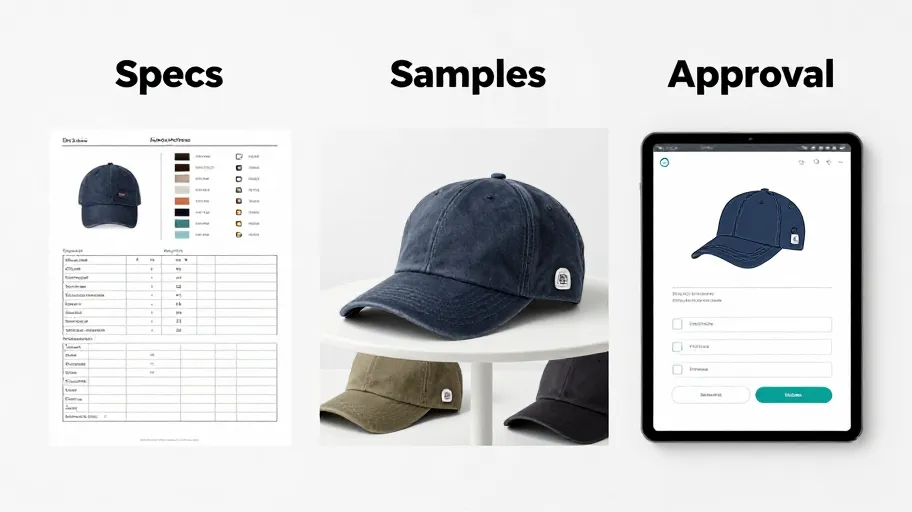
When comparing custom hat distributors, the safest path is to evaluate how each supplier manages specifications, samples and approvals — not just what they quote. Use the Spec–Sample–Approval (SSA) Loop in this guide to structure your enquiries, ask documented approval questions, and compare distributors on evidence rather than promises. Confirm the current policy directly with each supplier.
Why distributor comparisons fail
Most buyers comparing custom hat distributors collect quotes, compare prices, and pick a supplier. The problem: quotes from different distributors rarely rest on the same assumptions. One may be pricing a six-panel structured cap in one fabric weight; another may assume a different panel count, closure, or embroidery coverage. Without a written specification, you are comparing different products wearing the same label.
The second failure point is the transition from sample to bulk. A sample may look right, but if nobody documented what "right" means — stitch density, fabric composition, brim stiffness, closure type — the bulk order can drift. The buyer discovers the drift at goods receipt, when options are limited.
The fix is process, not luck. Evaluate each distributor on how they handle the three stages where quality is actually decided.
The Spec–Sample–Approval (SSA) Loop
The SSA Loop is a simple framework for structuring every conversation with a potential distributor:
- Spec. Define the product in writing before asking for a price. Fabric, construction, decoration method, closure, packaging, labelling.
- Sample. Validate the spec against physical samples at defined stages, and ask which stage each sample represents.
- Approval. Document what "approved" means: who signs off, against what reference, and what happens if bulk differs from the approved reference.
Then close the loop: any change in bulk triggers a re-check against the approved reference. A distributor who engages willingly with this loop is easier to work with than one who resists documentation — and that difference is worth more than a marginal price gap.
Decision table: comparing custom hat distributors side by side
Score each candidate distributor on the questions below. "Yes with documentation" scores higher than "yes verbally"; "we'll figure it out later" is a red flag.
| Evaluation point | Question to ask | Strong answer looks like |
|---|---|---|
| Spec ownership | Will you produce to my written tech pack, or do you propose the spec? | Distributor reviews the tech pack, flags ambiguities, and confirms each point in writing |
| Sample stages | Which sample stages do you offer, and what does each represent? | Clear distinction between prototype, pre-production and shipment reference samples, with the current policy stated for each — Confirm the current policy directly |
| Deviation handling | What happens if bulk material differs from the approved sample? | A documented change-approval step before production continues |
| Approval reference | Which physical sample is the contractual reference for bulk? | A sealed or retained reference sample identified by code and date |
| Communication | Who is my single point of contact during production? | A named contact with defined response expectations you agree together |
| Packaging and labelling | Are my packaging, hangtags and care labels included in the scope? | Written confirmation of what is in scope and what is not |
| Documentation | What production documents will I receive? | Spec confirmation, material confirmation and approval records you specify |
No single answer disqualifies a supplier, but a pattern of vague responses across several rows tells you where your project risk sits.
Specifications: what to define in writing
Before you request quotes, assemble a spec sheet. For custom headwear this should cover:
- Product type and construction: panel count, structured or unstructured crown, brim type and profile.
- Materials: shell fabric and weight, sweatband, undervisor, closure type — described by specification, not just by name.
- Decoration: method (embroidery, print, patch, woven label), placement, size, thread or ink colours by reference code, and artwork file format required.
- Fit and sizing: size range, adjustment method, and any measurement points you want verified.
- Branding elements: labels, tags, packaging, carton marking.
- Inspection expectation: what you want checked, and at which point.
You do not need to be a textile engineer. A capable distributor will translate your commercial intent into technical language and confirm it back to you — that translation step is itself a useful test of the supplier.
Samples: staged validation questions
Sampling is where a written spec becomes a physical object you can judge. Ask each distributor:
- Which sample stages do you provide for my project, and what does each one confirm?
- Which stage sample should I treat as the production reference?
- What materials and construction will this sample use, relative to bulk?
- What must I confirm on this sample before you proceed to the next stage?
- What is your current sample and courier arrangement for my market? Confirm the current policy directly.
Approval: criteria to lock before production
Approval is not a feeling; it is a documented act. Before authorising bulk production, put these questions to the distributor and record the answers:
- Which sample, identified how, is the reference for bulk goods?
- Who on my side has authority to approve, and how is approval recorded?
- Which attributes are checked against the reference, and by whom?
- If bulk differs from the reference in any attribute, what is the agreed procedure — pause, notify, re-approve?
- What inspection documentation will accompany the finished goods?
A distributor who answers these crisply is telling you how disputes will be avoided. A distributor who waves them away is telling you something too.
FAQ
How many distributors should I compare before choosing one?
Can I get a sample before committing to production? Distributors differ in what sampling they offer and on what terms. Ask each candidate which stages they provide and what each involves, and confirm the current policy directly before relying on any arrangement described in an email or on a website.
What should I send a distributor to get an accurate quote? Your written spec: product type, construction, materials, decoration with placement and size, closure, sizing, packaging and labelling. The more complete the spec, the more comparable the quotes — and the fewer surprises after production starts.
What is the difference between OEM and ODM for headwear? In an OEM arrangement you supply the design and the manufacturer produces to it. In an ODM arrangement the manufacturer proposes designs or existing bases that you customise. Both are legitimate paths; the key is clarity about who owns the spec at each stage of the SSA Loop.
How do I protect consistency across repeat orders? Retain your approved reference sample, keep your spec sheet version-controlled, and require that any material or construction change is flagged and re-approved before shipment. Re-issue the spec with each order so nothing depends on memory.
Request the sourcing brief
New Generation is a Shenzhen-based OEM/ODM manufacturer of custom caps and headwear serving overseas brands, importers, wholesalers and corporate buyers. If you are building a comparison shortlist, request the sourcing brief: it sets out the information we need from you to quote accurately, the specification points to prepare, and the questions this guide recommends you put to any distributor you evaluate — including us. Compare us on the SSA Loop, not on claims.
[Request the sourcing brief (获取采购 Brief)]
Low-friction option: before your next supplier call, work through the twelve-point sample-and-approval checklist in the sourcing brief — no commitment required, and it works with any distributor you are evaluating.
#cap manufacturers china, #headwear manufacturers china, #cap factory








