


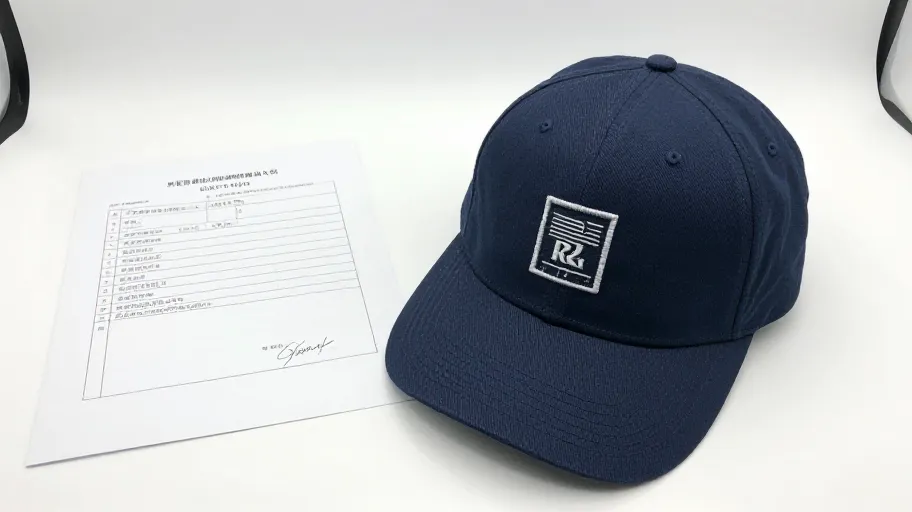
Sourcing small batch custom caps with no minimum is a documentation exercise, not a compromise on quality. Buyers who succeed treat a small run exactly like a large one: they write a complete specification, request and measure a sample against that specification, and sign off in writing before production begins. Use the 3S Approval Framework — SPEC, SAMPLE, SIGN-OFF — to keep every small order verifiable and repeatable.
Why small-batch sourcing changes the buyer's job
When a brand orders a large run, the stakes force careful documentation. Small batches invite shortcuts: a quick message, a logo file, and a hope that the result matches the vision. That is where small orders go wrong — not because small runs are inherently riskier, but because buyers document them less rigorously.
For importers, wholesalers and corporate buyers, the value of a small first batch is that it is a proof of process. If the supplier can follow your spec, hit your approval criteria and deliver what was signed off on a small order, you have evidence for scaling. If they cannot, you have learned it cheaply.
That is the real question behind the search for "small batch custom caps no minimum": not "who will accept my small order" but "who will treat my small order as a real production project". Frame every supplier conversation that way and the comparison becomes much clearer.
The 3S Approval Framework: SPEC, SAMPLE, SIGN-OFF
The framework has three gates, and none can be skipped:
- SPEC — write a complete technical and design specification before requesting anything physical.
- SAMPLE — obtain a physical sample and measure it against the written spec, not against memory or photos alone.
- SIGN-OFF — approve in writing against named criteria, so production is authorised against a documented baseline.
Small batches succeed when all three gates exist. They fail when any gate is replaced by verbal agreement. Below is how to run each gate.
Gate 1 — SPEC: document before you sample
A specification is your single source of truth. Without it, a sample cannot be approved or rejected objectively, because there is nothing objective to compare it to. Your spec should cover:
- Cap construction: panel count, closure type, crown shape, visor style, eyelets, sweatband and lining choices
- Materials: shell fabric, lining, visor reinforcement, embroidery backing, hardware finishes
- Decoration method: embroidery stitch count approach, patch vs direct embroidery, printing method, woven labels, placement measurements expressed as your own reference dimensions — ask the supplier what dimensional tolerances they work to and record their answer verbatim
- Colour control: Pantone references for every material and thread, plus how colour deviation will be judged
- Sizing and fit: which sizing system applies and how fit will be verified
- Packing and labelling: inner labels, hangtags, polybags, carton marking, and any destination-market labelling requirements
- Compliance questions to ask: which certifications the supplier can evidence for this specific product, which tests apply to your destination market, and what documentation they will provide. Confirm the current policy and evidence directly.
Every point above that you leave vague becomes a point of dispute later. A no-minimum supplier that answers these questions precisely is demonstrating process maturity; one that deflects them is giving you decision-relevant information.
One warning on numbers: do not accept general assurances about tolerances, capacities or lead times in chat. Ask for them in writing, per project, so they become enforceable references rather than impressions.
Gate 2 — SAMPLE: evaluate against the spec, not the vibe
When a sample arrives, structure your evaluation. An unstructured impression ("looks good") is not an approval; it is an opinion.
Sample evaluation checklist
- Cap construction matches the spec (panels, closure, crown, visor, sweatband)
- Materials match the nominated fabrics and finishes
- All colours compared against Pantone references under consistent lighting
- Decoration placement measured against your spec reference dimensions
- Stitching and finish inspected at seams, visor edge and closure
- Sizing and fit checked on real heads, not just flat
- Labels, tags and packing match the spec
- Photos taken of the sample beside the spec sheet, dated and filed
- Every deviation logged in writing, with severity noted
- Decision recorded: approve, request revision, or reject with reasons
Two practical rules make this gate robust. First, photograph the sample against the printed spec — this creates a shared visual record for both sides. Second, log deviations even if you intend to approve them; a "known deviation, accepted" note protects both parties if the deviation drifts in production.
Gate 3 — SIGN-OFF: approval questions you should ask in writing
Sign-off is a decision, and decisions deserve explicit questions. Put these to your supplier and require written answers:
- Is this sample the exact production baseline — same materials, same construction, same decoration?
- If production units differ from the approved sample, what is the agreed remedy process?
- Which deviations from the spec, if any, have been accepted, and where are they recorded?
- What inspection arrangement applies to this batch, and what does it check?
- What documentation accompanies the shipment — packing list, material documentation, and any compliance evidence requested?
- What is the agreed communication channel and escalation route if an issue arises mid-production?
- Has everything above been confirmed in writing by a named person on the supplier side?
The signature matters less than the record. An email thread that states "production approved against sample ref X, spec v Y, accepted deviations Z" is a far stronger baseline than a signed PDF nobody can interpret later.
Comparing no-minimum suppliers: a decision table
| Criterion | Strong signal | Weak signal | How to verify |
|---|---|---|---|
| Spec handling | Answers your full spec point by point | Asks you to "just send the logo" | Submit identical RFQs to each supplier |
| Sample quality | Sample matches spec with logged, explained deviations | Sample deviates from spec without acknowledgment | Use the evaluation checklist above |
| Documentation | Provides written confirmation of every agreed item | Verbal assurances, untraceable chat answers | Require email confirmation of key terms |
| Process clarity | Explains how small batches move through their workflow | Cannot describe the steps at all | Ask for the workflow in writing |
| Compliance transparency | States what can and cannot be evidenced | Vague claims without documents | Request evidence per product |
| Communication | Named contact, clear escalation path | Anonymous, rotating respondents | Test with a specific technical question |
Run every candidate supplier through the same table. The pattern that emerges is more reliable than any single answer.
FAQ
Does "no minimum" mean lower quality? No — quality is controlled by specification and approval discipline, not batch size. What varies between suppliers is how well small batches are documented and processed. Verify each supplier's process against the 3S gates.
How do I judge colour accuracy on a small order? Nominate Pantone references for every material and thread in your spec, then evaluate the physical sample under consistent lighting. Record any accepted deviation in writing so it does not drift in production.
Should I approve a sample from photos alone? Photo approval is weaker than physical approval because colour, weight and fit do not transmit reliably. For a first batch with a new supplier, request a physical sample and evaluate it against the checklist in this guide.
What documentation should I keep from a small batch? The spec, the sample evaluation record, all written confirmations of agreed terms, and shipping documents. This archive is what turns a small batch into a scalable sourcing relationship.
How do I scale from a small first order to larger runs? Approve against a documented baseline, then reference that baseline — spec version, sample reference, accepted deviations — in every subsequent order. Scaling is repetition of a documented process, not a leap of faith.
Start your small batch the right way
New Generation is a Shenzhen-based OEM/ODM manufacturer of custom caps and headwear working with overseas brands, importers, wholesalers and corporate buyers. Whether your project is a first small batch or a scaling programme, we work from your specification through sampling to written sign-off.
获取采购 Brief — download the sourcing brief and start your RFQ with a complete specification.
Not ready to enquire? Use the free sample evaluation checklist above for your next small-batch project — it works with any supplier, including ours.
#cap manufacturers china, #headwear manufacturers china, #cap factory








