


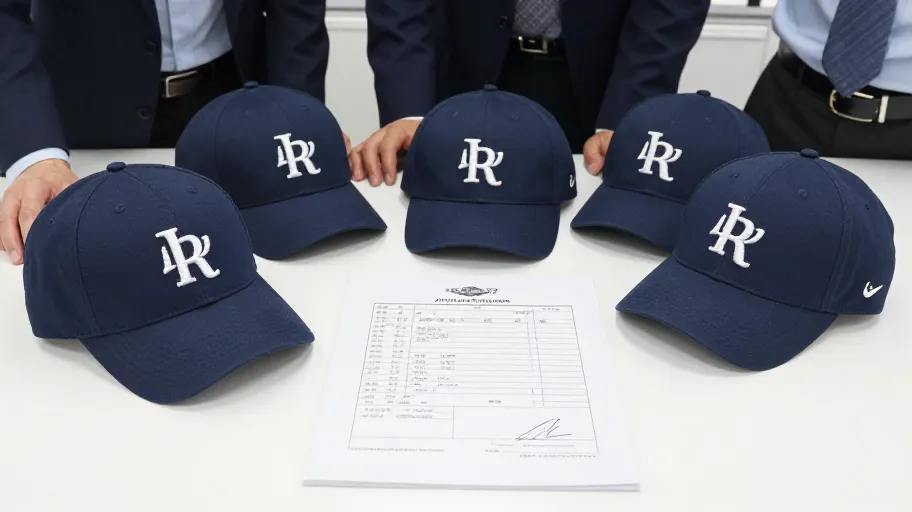
Sourcing small batch custom caps wholesale works best when three things are locked before production: a written specification, a physically approved sample, and a signed approval record that both parties reference. This guide walks through the SPEC–SAMPLE–SIGN-OFF (3-S) framework so importers, brands and corporate buyers can compare suppliers on process discipline rather than promises.
Why small-batch sourcing changes the conversation
When you order a small batch of custom caps, you are not just buying fewer units — you are buying a different risk profile. At low volumes, every unit represents a larger share of your order, so specification drift, colour mismatch or construction errors hit proportionally harder. At the same time, the commercial terms, sampling stages and approval processes that govern large production runs may be structured differently for small batches.
That means the buyer's job shifts from negotiating price toward documenting expectations. The suppliers worth comparing are the ones who welcome a written spec sheet, a staged sampling process and a formal sign-off — because those artifacts protect both sides. Whether a given manufacturer accommodates a particular batch size, and on what terms, is project-specific: confirm the current policy directly.
The rest of this guide applies the 3-S framework: SPEC (define), SAMPLE (verify), SIGN-OFF (approve).
The SPEC stage: define before you ask for a quote
Most sourcing failures trace back to an incomplete specification. A cap spec is not just "black snapback with logo." It is a layered set of decisions about materials, construction, decoration and fit. The table below converts the key decision areas into questions you should put to any supplier — including New Generation — before comparing quotes.
Spec decision table
| Decision area | Options to compare | Questions to ask the supplier |
|---|---|---|
| Crown construction | 5-panel, 6-panel, structured, unstructured | Which constructions can you produce at my batch size? What interlining options do you offer? |
| Closure | Snapback, strapback, fitted, elastic | Which closure hardware do you stock, and which require sourcing? |
| Material | Cotton twill, brushed cotton, wool blends, performance synthetics | Which fabric weights and colours are available from current stock lots? Can you provide fabric swatches? |
| Decoration method | Embroidery, 3D puff, screen print, patch, woven label, heat transfer | Which methods suit my artwork at my quantities? Can you show decoration samples on my chosen fabric? |
| Brim | Flat, pre-curved, sandwich trim | What brim options pair with this crown? |
| Sizing & fit | Adjustable, graded fitted sizes | How is fit verified before production? |
| Colour matching | Stock colour, Pantone match, custom dye | How do you document colour approval? Do you keep a swatch record? |
| Labelling & packaging | Woven label, heat-transfer label, hangtag, polybag, retail-ready packing | Can you handle private-label branding and export packaging to my market? |
Two rules make this table work. First, never compare quotes across suppliers until the spec sheet is identical for each — otherwise you are comparing different products. Second, ask each supplier to confirm in writing which line items they can execute themselves versus outsource, because that affects quality accountability.
Whether small-batch production affects material availability or decoration choices for your project: confirm the current policy directly.
The SAMPLE stage: verify before you approve
Sampling is where a specification becomes physical. Rather than assuming a fixed number of sample rounds, structure the process as a sequence of gates, each with a defined purpose.
Sample types to clarify with your supplier
- Concept/proto sample — to confirm construction, materials and general look.
- Pre-production sample (PPS) — the full specification executed as intended for production, including decoration, labels and packaging.
- Golden sample — the signed, retained reference that production is measured against.
Ask your supplier which of these stages they offer for small-batch orders, how each is charged, and how revisions are handled. Do not assume any of this: confirm the current policy directly.
What to check at each sample review
Use a consistent inspection checklist so every round produces comparable notes:
- Crown shape and panel alignment match the spec sheet
- Fabric weight, texture and colour match the approved swatch
- Decoration placement, size, stitch density or print quality match the artwork file
- Closure functions correctly and sits symmetrically
- Brim shape and stitching are consistent
- Internal finishing: lining, taping, seams, loose threads
- Labels, tags and packaging match the brief
- Photos taken under consistent lighting with a colour reference
Photograph everything and keep written notes per sample. If a second round is needed, reference the first round's photos in your feedback so the factory sees the exact defect, not a description of it.
Concrete approval questions
Before approving any sample, get written answers to these:
- "Is this sample identical to what bulk production will deliver, including fabric lot, decoration and labels?"
- "If the bulk run differs from this sample, what is the agreed correction process?"
- "Will you retain the approved sample as the reference standard, and for how long?"
- "Which spec line items, if any, cannot be guaranteed to match between sample and bulk?"
- "Who at the factory holds final responsibility for matching the golden sample?"
A supplier's willingness to answer question 4 honestly is one of the most useful comparison signals you will get in small-batch sourcing.
The SIGN-OFF stage: approve in writing
Approval is not a feeling — it is a document. At sign-off, three artifacts should exist:
- The frozen spec sheet, versioned and dated, referenced by both parties.
- The golden sample, physically retained and identified (e.g., signed tag with date and version).
- A written approval record stating that production must match the approved sample, and defining what happens if it does not.
Keep the spec sheet, sample photos, approval email or signed form, and any revision history in one folder. If a dispute arises during or after production, this folder is your entire case. If anything about corrections, replacements or recourse for your specific order is not documented, confirm the current policy directly.
Sign-off checklist
- Spec sheet version number recorded and shared
- Golden sample signed, tagged and retained by both parties
- Written approval sent and acknowledged by the supplier
- Any deviations from spec documented and accepted explicitly
- Inspection and acceptance criteria for bulk agreed in writing
- All policy questions (sampling, revisions, corrections) answered in writing
Comparing suppliers on process, not promises
When you evaluate several small-batch cap suppliers, score them on how they behave during the 3-S stages rather than on quotation documents alone. Does the supplier ask clarifying questions about your spec? Do they volunteer sample-stage options? Do they accept a golden-sample process? Do they answer the awkward question about what might not match between sample and bulk? A supplier who engages seriously with documentation is far easier to hold accountable than one who simply promises quality.
New Generation works with overseas brands, importers and corporate buyers as a Shenzhen-based OEM/ODM manufacturer of custom caps and headwear. For any specific project — batch sizes, sampling arrangements, materials, or terms — confirm the current policy directly with our team before making sourcing decisions.
FAQ
Is small batch custom caps wholesale more expensive per unit than large-batch production? Unit economics depend on your specification, decoration methods and the supplier's arrangement for your order. Rather than assuming, request itemised quotes against an identical spec sheet from each supplier and compare what drives differences. Confirm the current policy directly.
How do I judge cap quality from a sample when I can't visit the factory? Use the sample review checklist above: construction, materials, decoration, finishing and packaging, photographed under consistent lighting. Ask for photos or video of the sample being made if a visit isn't practical, and retain the approved sample as your reference.
What documents should I keep for customs and quality purposes? At minimum: the frozen spec sheet, golden-sample approval record, decoration artwork files, labelling requirements and commercial invoice details. Requirements vary by destination market, so verify import documentation rules for your country and confirm specifics with your supplier and freight partner.
Can I mix cap styles within one small-batch order? That depends on the supplier's production arrangement and your specification. Ask directly whether mixed styles affect sampling, decoration setup or quality control, and get the answer in writing.
What's the difference between OEM and ODM when ordering custom caps? OEM means manufacturing to your complete design and spec; ODM means starting from the manufacturer's existing designs and customising elements such as logos, colours and trims. Ask any supplier, including New Generation, which model applies to your project and how it affects the spec sheet you build.
Ready to run a disciplined small-batch sourcing process? 获取采购 Brief — get the Sourcing Brief with spec tables, sample checklists and approval questions you can send to any supplier today.
Not ready yet? Download the free one-page Sample Approval Checklist and use it on your next quotation round — no enquiry required.
#cap manufacturers china, #headwear manufacturers china, #cap factory








