
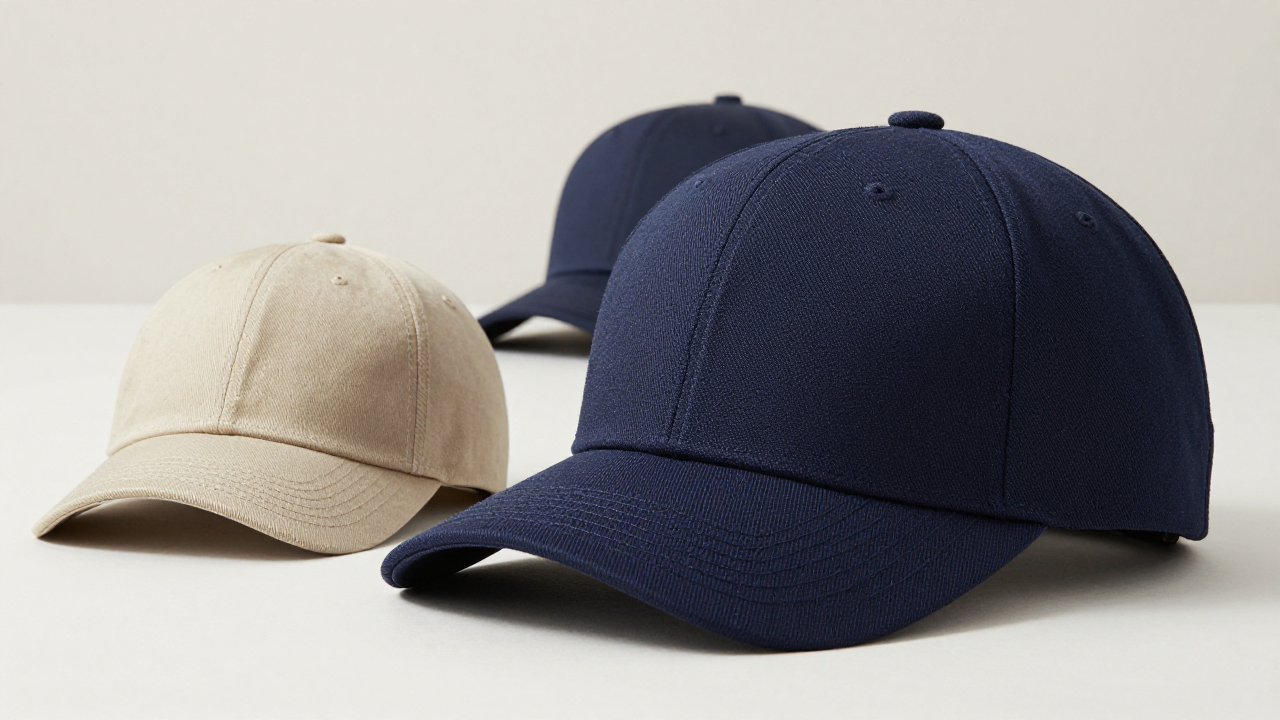
The most common mistake is trading quality for unit price. A cap factory that shaves fourteen cents off materials per hat loses far more on chargebacks, air freight, and cancellations than it ever…
saves. We learned that on 18,400 camper caps in February 2025, and the math still stings.
The Most Common Error in a Cap Factory Is Paying Twice for Cheap
Every buyer hears the same offer. "We can hit $2.88 if we change the backing." Or the thread. Or the buckram in the front panel, which nobody sees until the crown collapses in a warehouse in July. The quote goes down. The bill arrives sixty days later.
Four of these mistakes cost us money. One cost us an account.
The Costliest Blunder Is Buying Your Way to a Lower Unit Price
Cutting material spec is the most expensive mistake in headwear manufacturing, and it almost never surfaces at the sample stage. Saving $0.10–$0.20 per cap on thread, backing, or stabilization routinely pushes bulk defect rates past 3%. Samples get made on the best machine, by the senior operator, with the good thread. Bulk runs do not.
We made this trade ourselves. In February 2025, a promotional distributor in Columbus, Ohio, placed 18,400 five-panel camper caps with a 9,200-stitch front logo. Our costing sheet showed we could save $0.14 per cap by moving from 40-weight trilobal polyester to a cheaper 60/2 import and dropping the cutaway backing from 2.5 oz to 2.0 oz. Total savings: $2,576. It looked like a rounding decision.
It was not. Sixty-weight thread at 820 stitches per minute on an 8-head Tajima breaks, and ours broke constantly. The 2.0 oz backing could not anchor a 9,200-stitch fill, so front panels puckered around the perimeter. First-article inspection caught nothing because the first 40 pieces came off the slowest head. By piece 6,000 we had a 4.2% reject rate on front panels — 780 caps scrap.
We air-freighted 2,400 replacements to hit a March 14 in-store date. Freight ran $6,940. The late-balance chargeback was $11,200. The distributor's end client, a regional grocery chain, moved its fall reorder to a Vietnamese supplier.
Seven times the savings, gone, on a decision that took eleven minutes on a cost sheet.
Why does it keep happening? The savings are visible on the quote today and the failure is invisible until a customer photographs a puckered crown. The person approving the substitution is often not the person who eats the chargeback. And a 40-weight cone and a 60-weight cone look identical in the storeroom.
What actually holds: 40-weight polyester on anything above 6,000 stitches, 2.5 oz cutaway under 3D puff, 75/11 sharp needles, machine speed capped at 800 stitches per minute on structured fronts. We now run a ΔE check on every thread lot against the approved Pantone TCX and hold the tolerance at 1.0. A failing lot goes back, even when the ship date hurts.
We Ran the Embroidery Line Until It Quit on Us
Deferred maintenance shows up as downtime long before it shows up as defects. A worn rotary hook or a grooved needle plate costs three to six hours of machine time per incident. On an 8-head machine at 800 stitches per minute, that is 250 to 400 caps a shift, and nobody writes it into the quality report.
Bay 3 quit on a Tuesday in September 2025, mid-run on a 9,600-piece order of structured six-panels for a Texas uniform account. The hook had 2,300 hours on it. The manual says replace at 1,500–2,000. We had "planned" to swap it in the slow season, which is a sentence that means nothing in a plant running three shifts.
We lost 1,180 caps across three shifts. The rerun pushed the ship date four days, and the customer's forwarder charged a rollover fee we never recovered.
The schedule we run now is boring and it works: hook inspection every 500 hours, needle plate and feed dogs every six months, trimmer blades monthly, thread tension checked with a gauge at the start of each shift rather than by eye. Tension drifts between 25 and 35 grams on 40-weight, and operators cannot feel the difference until the bobbin side starts looping.
The same logic covers people. In 2023 we promoted our fastest operator to night-shift supervisor and lost 14% of that crew within five months. Speed on the machine does not transfer to running a floor.
Cheap Inventory Is Just Expensive Storage
Two dye lots of the same color will never match inside one carton, no matter what the lab dip says. That single fact drives more headwear returns than fit does. A ΔE above 1.0 between lots is visible in daylight, and customers photograph it for reviews.
The other half of the problem is calendar math. Greige fabric takes 25–30 days. Dyeing adds 12–15. Cut-and-sew runs 20–25 at volume. Ocean transit to Los Angeles or Long Beach is 28–35 days port to door when nothing goes wrong. Add those up before anyone promises a date.
In November 2024 a customer ordered 6,000 acrylic cuffed beanies for a January ski-event giveaway. The yarn dye lot landed December 22. We missed the vessel by six days and air-freighted the whole run at $14,000, and we ate it, because the order was ours to lose. Nobody had written the dye-house lead time into the quote.
Chinese New Year is the other trap. Most Zhejiang and Guangdong headwear plants stop for two to three weeks, and the practical ocean-freight cutoff is the first week of January. Anything confirmed after that ships air or ships late.
A cushion helps. We hold 90 days of the four highest-volume fabrics — cotton twill, brushed poly, acrylic yarn, camo print — at roughly 8% carrying cost. It has saved more accounts than any discount we have offered.
A Tech Pack With "Navy" in It Will Cost You Six Weeks
Vague specs are free to write and expensive to fix. A pack that lists a photo, the word "navy," and no crown height will produce samples that miss, and each miss costs a three-to-four-week round trip. We burned twelve samples on one in April 2024.
Nobody noticed the crown was half an inch short of the reference cap until the twelfth. The fix took one line: mid-profile, 6.5-inch crown, 3.5-inch visor, hook-and-loop closure, Pantone 19-4025 TCX. Say it in the spec sheet and the first sample usually lands.
(The brand still ordered. Most do. It is the schedule that never comes back.)
Trend Chasing Without Data Is Just Guessing With Inventory
Reading trend reports is not the same as reading your own returns. Factories that build inventory on trade-show enthusiasm rather than sell-through data end up paying storage on it. Campers and washed-black five-panels sold hard through 2025, and plenty of that production is still sitting in a 3PL in Ontario, California.
What we ask buyers for now is unglamorous: sell-through by style, plus the top three return reasons from the last 90 days. If returns say "crown too shallow," that is a spec problem. If they say "color different from photo," that is a photography problem. Neither gets fixed by ordering more of a hot silhouette.
What Should You Check Before You Sign With a Cap Factory?
Run this list against any headwear manufacturer before the purchase order goes out. Every line here maps to a failure we have either caused or paid for.
Seven checkpoints. None of them are hard. The question is whether the buyer signing the PO is the same person who eats the chargeback — because in most companies, they still are not.
Frequently Asked Questions
What is the biggest mistake to avoid when sourcing from a cap factory?
Substituting cheaper thread or backing to hit a target price. Savings of $0.10–$0.20 per cap routinely push bulk defect rates past 3%, and air freight plus chargebacks usually exceed the savings six or seven times over. Lock thread weight, backing weight, and needle size into the purchase order.
How much does a custom cap cost per unit?
A structured six-panel cotton twill cap with 8,000–10,000 embroidery stitches typically runs $2.90–$4.60 FOB at 1,000–5,000 units, depending on fabric weight, closure type, and decoration. Below 500 units, expect $4.50–$6.00 plus digitizing, usually $60–$120 per logo.
How long does a custom cap order take?
Plan on 45–60 days of production after sample approval, plus 28–35 days of ocean transit to a US port. Fabric dyeing alone adds 12–15 days. Orders confirmed after the first week of January usually miss the pre-Chinese New Year window and ship by air.
How do I verify a cap factory before a bulk order?
Request the pre-production sample from the bulk line rather than the sample room, and ask for machine maintenance logs. Commission an AQL 2.5 inspection across 10% of cartons with photos before shipment. Get the thread spec and lab dip tolerance confirmed in writing.
Why do two caps from the same order look different in color?
Mixed dye lots. Fabric or yarn dyed in separate batches can shift enough to be visible in daylight, even against an approved lab dip. Specify that no carton may contain more than one lot, and require a ΔE reading of 1.0 or lower on each incoming batch.