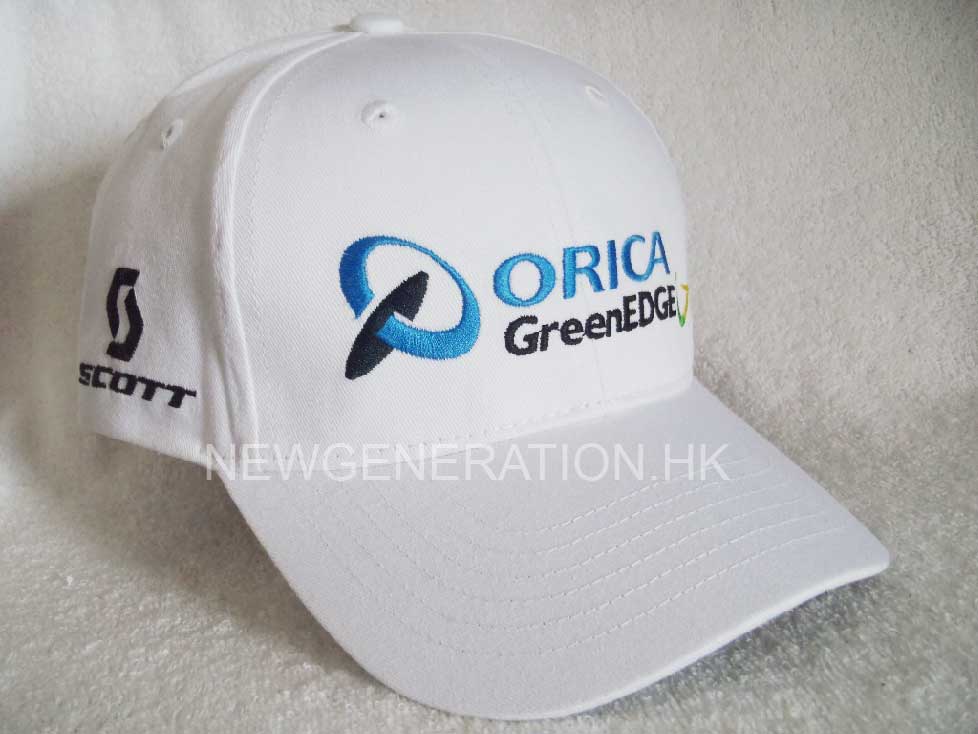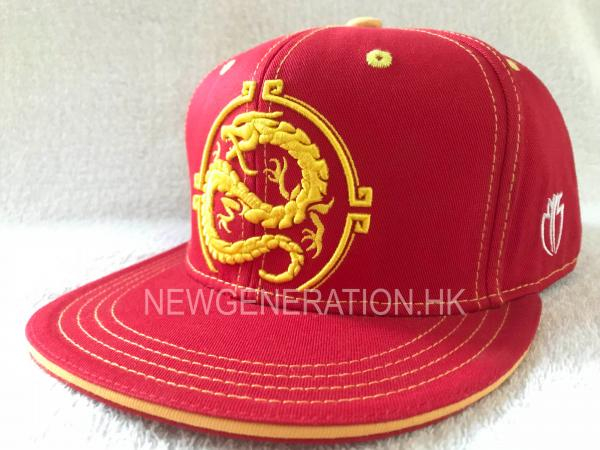

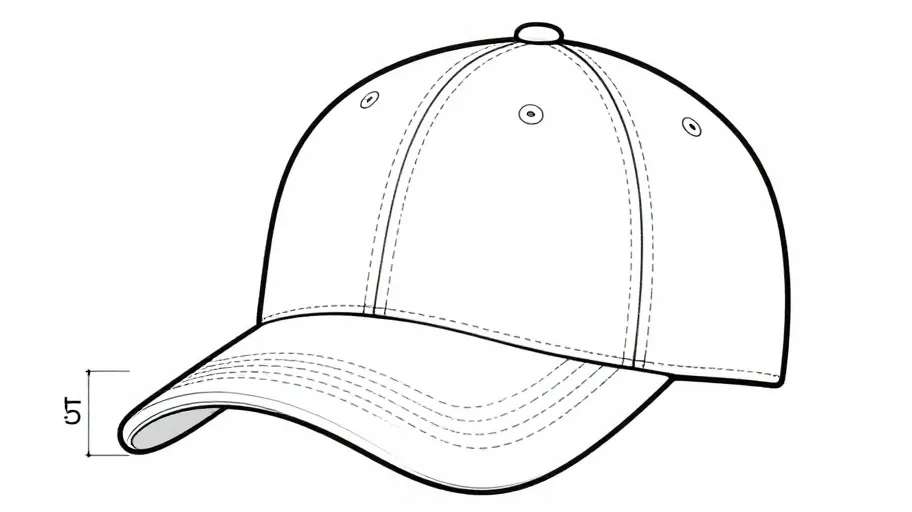
A baseball cap manufacturer should receive your requirements in three separate documents: the drawing (shape, construction and geometry), the BOM (every material, trim and consumable by name and specification), and the approval notes (written sign-offs, revisions and accepted deviations). Use the Draw–List–Approve (DLA) framework: every detail must live in exactly one of these three places, dated and versioned — never only in a chat thread.
What belongs in the drawing
The drawing is the geometry and construction document. It answers "what does this cap look like and how is it built?" — not "what is it made of." A cap drawing worth approving should communicate:
- Silhouette and profile: crown shape, panel count, crown height intent, visor shape and curvature direction.
- Panel layout: seam positions, whether panels are structured or unstructured, and any crossing or offset seam details.
- Closure and sizing intent: the type of closure (snapback, strapback, fitted-style, elastic) and the size range you are ordering.
- Visor construction: flat or pre-curved, stitched or unstitched edge, number of visor rows if you have a preference.
- Eyelet treatment: position, count and finish (metal, embroidered, matched thread).
- Decoration placement: embroidery, print, patch or woven-label positions with reference points — measured from defined landmarks such as the center front seam and visor seam, expressed as drawings rather than numerical tolerances on your side; ask the manufacturer how they control placement accuracy in production.
- Stitching intent: stitch type, thread colour and topstitch visibility on seams and visor.
Ask the manufacturer to return the drawing to you as a counter-drawing — their own version of your design. Differences between your drawing and their counter-drawing reveal misunderstandings before any material is cut. If a manufacturer cannot produce a clear technical drawing, treat that as a data point in your comparison, not a dealbreaker by itself; smaller workshops may be strong at sewing and weak at paperwork, and your job is to decide which risk you can manage.
Decision table: where each detail belongs
| Detail | Drawing | BOM | Approval notes |
|---|---|---|---|
| Crown shape, panel count, profile | ✅ Primary | — | Reference only |
| Visor shape and curvature | ✅ Primary | — | — |
| Material and fabric type (e.g., specified fabric weight class) | — | ✅ Primary | Confirm supplier substitution rules |
| Thread type and colour code | Placement in drawing | ✅ Primary | — |
| Closure type and brand | — | ✅ Primary | Approve physical sample of trim |
| Sweatband material and construction | Attachment method in drawing | ✅ Primary | — |
| Embroidery / print / patch artwork file | Placement in drawing | ✅ Primary (file version) | ✅ Approve sew-out / strike-off |
| Size range and closure adjustment span | ✅ | List per-size trims | ✅ Confirm fit approval |
| Label, hangtag, packaging | — | ✅ Primary | ✅ Approve pre-production mock |
| Accepted deviations and revisions | — | — | ✅ Primary |
| Colour standard (physical swatch reference) | — | ✅ Reference number | ✅ Approved swatch version |
The rule: geometry lives in the drawing, composition lives in the BOM, and any agreed exception lives in the approval notes with a date and a name attached.
What belongs in the BOM
The bill of materials is the composition document. For a custom cap, a complete BOM names every component that ends up in the box — and everything that touches the product before it ships:
- Shell fabric: fibre content, colour reference tied to a physical swatch (not a screen colour), and the fabric specification the supplier will procure against.
- Lining and sweatband materials.
- Visor insert material if you want control over stiffness.
- Thread: type and colour codes per seam group.
- Closure and trims: specified to a named product or an approved sub-sample.
- Decoration inputs: backing, patch substrate, print media.
- Labels and packaging: main label, care label if applicable, hangtags, polybags, carton marking.
- Consumables and finishes: any washing, coating or special treatment applied.
Two questions matter most on the BOM. First: "Which items in this BOM do you propose to source as substitutes, and by what process will I approve a substitute?" Second: "Can you attach the supplier item reference for each component so we both anchor to the same SKU?" Confirm the current policy directly on how component changes are handled.
Approval notes: the document that prevents disputes
Approval notes are your revision log. Each entry should contain: the date, the document version it modifies, the exact change or accepted deviation, and the name of the person on each side who approved it. Practical approval questions to put in writing:
- "Please confirm in writing which sample version is the binding reference for production."
- "If production identifies a need to change a BOM item, what is your documented change-request process, and what is the approval step before proceeding?"
- "How do you document deviations found during production, and how are they communicated?"
- "Who is the named person on your side with authority to approve changes, and who is ours?"
- "How are approval records attached to the order file so both parties reference the same version?"
This last question matters more than it sounds. Most sourcing disputes are not about bad workmanship — they are about two parties holding two different mental versions of what was approved.
Using documentation quality to compare baseball cap manufacturers
When you evaluate several baseball cap manufacturers, documentation behaviour is a comparable, low-cost signal. Observe:
- Does the supplier return a counter-drawing, or only confirm receipt of yours?
- Does their quotation reference BOM line items, or a single lump description?
- Do they volunteer a change-request process, or does every change happen in chat?
- Do they distinguish between a pre-production sample and a production reference?
These observations do not tell you who produces the best cap — that requires samples and trials you must arrange and verify. But they tell you who you can audit — and auditability is what makes a long-term OEM/ODM relationship workable. Build these observations into a structured comparison so that impressions become recorded evidence.
FAQ
Q: Should artwork files go in the drawing or the BOM? Placement goes in the drawing; the file version, format and any special threads or media go in the BOM; the approved sew-out or strike-off goes in the approval notes. One asset, three documentation touchpoints.
Q: What if the manufacturer says their own spec sheet replaces my drawing and BOM? Ask them to map every line of your drawing and BOM into their spec sheet, and to sign the mapping. If items disappear in translation, you have found the gap before production. Confirm the current policy directly on document ownership.
Q: How many sample rounds should I plan for? Do not anchor to a number. Define instead which decisions each sample must close: one round for construction and fit, one for decoration, one for full pre-production confirmation — and allow the supplier to propose the sequence. Document each approved sample in the approval notes.
Q: Can I reuse the same drawing and BOM across multiple suppliers? Yes, and you should. Identical documentation across suppliers is the only clean way to compare quotations, because differences then reflect the suppliers rather than your brief. Keep a master version and issue versioned copies.
Q: Who owns the tooling, embroidery files and patterns? Ownership and reuse rights of digitised embroidery files, blocks and patterns must be written into the approval notes or agreement before production starts. Ask each supplier to state their position in writing and compare answers.
Download the Supplier Scorecard
Compare baseball cap manufacturers on evidence, not impressions. The Supplier Scorecard gives you a structured rubric — including documentation quality, change control and approval discipline — so every supplier in your shortlist is rated the same way.
[Download the Supplier Scorecard]
Quick checklist: before you send your next cap RFQ
- Technical drawing sent, with placement references from defined landmarks
- Counter-drawing requested from the supplier
- BOM lists every material, trim, label and packaging item
- Colour standards tied to physical swatches, not screens
- Approval-note template ready with version and signature fields
- Change-request and deviation process asked about in writing
- Sample-role definitions agreed (construction, decoration, pre-production)
Save this checklist and attach it to your next RFQ.
#cap manufacturers china, #headwear manufacturers china, #cap factory