

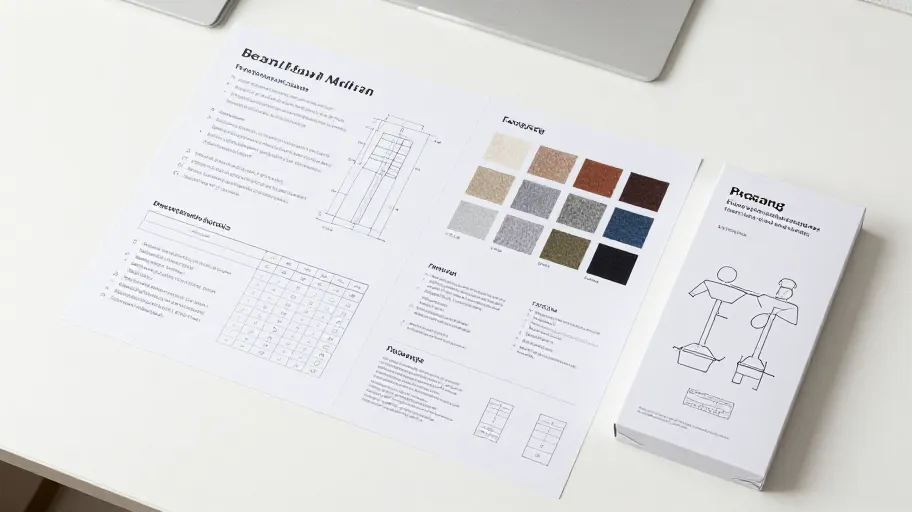
A beanie tech pack is the written agreement between your brand and your manufacturer covering knit construction, dimensions and tolerances, materials, finish, labelling and packaging. Before you request a quote from any custom headwear supplier — including New Generation — document these variables so every factory prices and samples against the same specification. A complete tech pack reduces interpretation errors, shortens sampling rounds and gives you a written reference if a delivered batch needs to be compared against what was approved.
Why beanies need their own tech pack logic
Caps have structured panels, closures and brims that force a certain level of specification. Beanies look simpler, and that simplicity is the trap. A knit tube has stretch, relax-back and rolling behaviour that a woven panel does not, and small changes in yarn, gauge or finishing can shift the worn result more than buyers expect. The tech pack is where you convert "a black ribbed beanie" into an approvable, measurable product.
The SPECS Gate framework
Work through five gates in order. Do not let a supplier quote past a gate that is still open.
- S — Specifications. Construction type (single-layer, double-layer/cuffed, slouch, fisherman), knit structure (rib, cable, jersey), target yarn composition and weight class, and the full dimension set: height, width laid flat, cuff height, fold style.
- P — Process. Knitting method, linking/finishing method, wash or blocking step, and how the crown is closed. Each process step should appear in the pack with an approval point.
- E — Evidence. What physical reference will govern: approved sample, swatch card, Pantone or lab-dip reference, label artwork file. State which document wins if sources disagree.
- C — Compliance and content. Fibre-content labelling, care symbols, country-of-origin marking and any market-specific labelling rules you are responsible for in your destination market. Confirm with your own compliance adviser which rules apply to you.
- S — Shipping and packaging. Polybag or not, fold method, hangtag, inner carton and master carton marks, carton dimension limits for your freight mode.
Tolerances: document, don't guess
This guide deliberately does not publish numeric tolerance values. A tolerance is only meaningful once you and the supplier agree on the measurement method — laid flat, relaxed or stretched, before or after finishing. Instead, use this tolerance protocol in your tech pack:
- Define the measurement condition for every dimension (flat, at rest, after a stated resting period post-finishing).
- Ask the supplier what tolerance they can hold for each dimension under the agreed method. Their answer becomes your baseline for comparison across factories.
- Record agreed values in the pack with a sign-off line, so the pre-shipment check has a written reference.
- Separate visual tolerances (pilling, seam twist, logo distortion after stretch) from dimensional tolerances, and define how each is inspected.
Questions to put to the supplier on tolerance:
- What measurement method do you use for beanie width and height, and can we align on one method in the tech pack?
- What dimensional tolerance can you commit to in writing under that method?
- How is stretch and recover-back assessed, and at what point in production?
- What happens if a shipped lot falls outside the agreed tolerance — what is your current correction policy?
Get the answers in writing before approving a production sample, because a verbal "no problem" is not comparable evidence.
Finish, trim and labelling
Finish decisions are where private-label identity lives, and where ambiguity costs the most. Your beanie tech pack should specify:
- Closure and linking: how the crown is closed and how the seam should look and feel when worn.
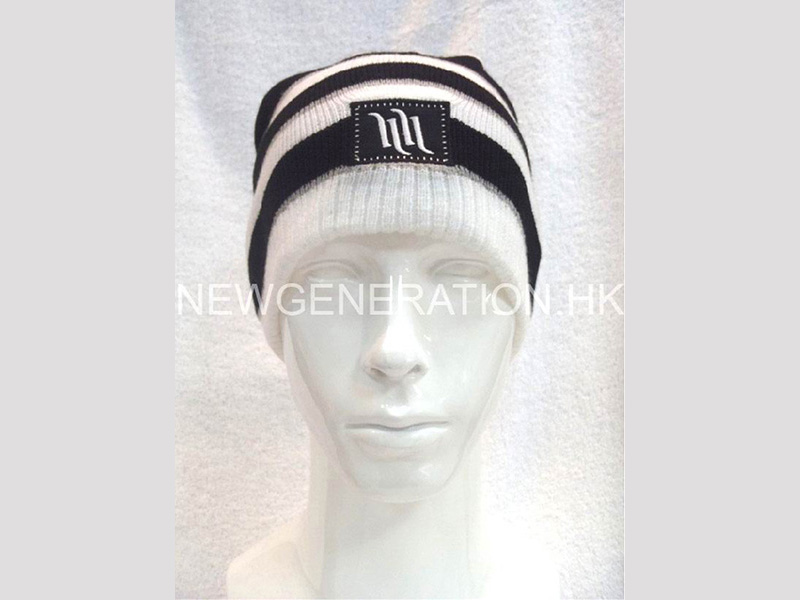
- Cuff construction: single-fold, double-fold or unfolded; whether the cuff is knit as one piece or attached.
- Surface finish: brushing, anti-pilling treatment or wash step — described as a requirement and an inspection point, not a brand name.
- Decoration: embroidery, woven label, patch, jacquard knit-in or print; placement marked on a flat sketch with measurement from a fixed reference point, not "centred on front".
- Labels and hangtags: artwork files, attachment method, placement, and who supplies them — you or the factory.
Sample policy varies and changes; confirm the current sample stage, cost and timeline handling directly with the supplier rather than assuming any prior arrangement still applies.
Packaging and delivery documentation
Packaging is part of the product specification, not an afterthought. Document:
- Polybag per unit or bulk packing, and any recyclability marking you require
- Fold method and whether the beanie is pressed or loosely packed
- Hangtag and barcoding, including who applies your SKU labels
- Inner and master carton marks, carton size and weight ceilings for your chosen freight mode
- Documentation set required with shipment (packing list detail level, dimension sheet of the shipped lot)
Ask the supplier how pre-shipment inspection reports are structured, what they measure, and whether photos are provided against the approved sample. Then decide what evidence you require before goods ship.
Decision table: tech pack completeness vs procurement risk
| Tech pack state | What the supplier must do | Risk to your programme | Recommended action |
|---|---|---|---|
| Concept sketch only ("make me a beanie like this") | Interpret every variable | Non-comparable quotes; remake disputes | Stop; complete Specifications gate first |
| Dimensions and yarn stated, no measurement method | Choose its own measuring method | Tolerance arguments without a reference | Agree measurement conditions in writing |
| Specs and finish defined, packaging open | Decide packing at shipment time | Destination handling and freight surprises | Close the shipping gate before PO |
| All five SPECS gates closed with written approval points | Execute against a documented standard | Lowest residual risk; deviations are traceable | Approve sample, then place PO |
Approval questions checklist
Before you sign off on any beanie programme, confirm each of these in writing:
- Measurement method agreed for every dimension in the tech pack
- Supplier's holdable tolerance stated in writing for that method
- Approved sample referenced as the governing physical standard
- Decoration placement defined from fixed reference points
- Label and hangtag artwork, supplier and attachment method documented
- Fibre content, care and origin marking confirmed for your destination market
- Packaging, carton marks and documentation set specified
- Current sample policy, pricing terms and lead time confirmed directly with the supplier
- Inspection evidence requirements agreed before shipment
- Correction process for out-of-tolerance goods agreed in writing
FAQ
Do I need a tech pack for a simple cuffed beanie? Yes. Simple constructions benefit most, because the variables that are unstated — yarn, gauge, measurement method, finish — are the ones that change the worn result. The tech pack is what makes two supplier quotes comparable.
Who defines the tolerances, me or the manufacturer? You define the method and the target; the manufacturer states what tolerance it can hold under that method. Treat the supplier's written answer as the baseline you compare across factories during sourcing.
Can the supplier work from a photo or a competitor beanie? A photo can set direction, but it cannot govern measurement, finish or labelling. Ask whether the supplier offers a development service to convert a reference item into a documented tech pack, and confirm the current terms for that service directly.
What documents should travel with the shipment? At minimum, a packing list aligned to your PO and the approved dimension sheet for the shipped lot. Agree the full documentation set — including inspection reports and photos against the approved sample — before production starts.
How do I handle sizing across a range (men's, women's, kids')? Document each size as its own dimension set with its own tolerance lines under the same measurement method, and require per-size approval samples where practical.
Next step
If you are preparing a beanie enquiry, [获取 Beanie Brief → Get the Beanie Brief] — our structured brief template that walks you through every SPECS Gate before you request a quote.
Prefer to move faster? Use the ten-point approval checklist above as your pre-RFQ review, and confirm each item with your supplier in writing.
#cap manufacturers china, #headwear manufacturers china, #cap factory