


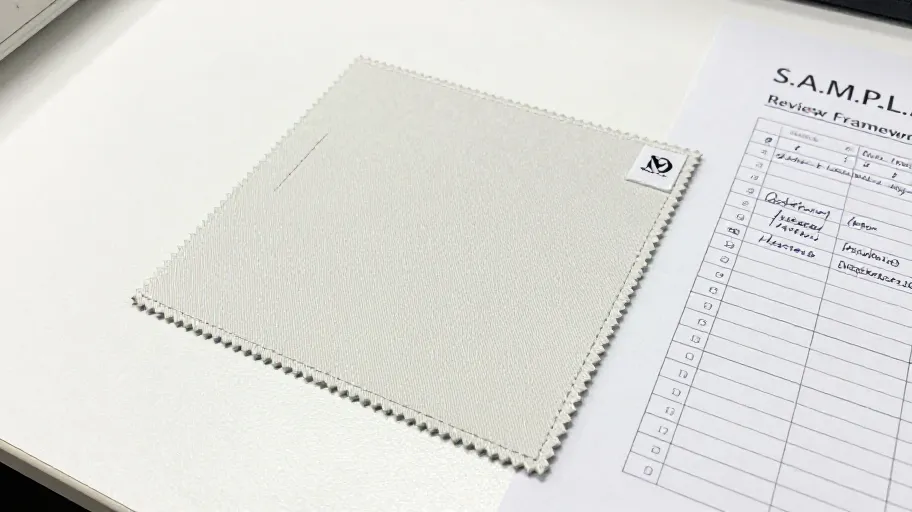
Shortlisting the best hat manufacturers in China is only half the sourcing job; the decision is actually made at the first sample review. This article gives procurement leads a repeatable method — the S.A.M.P.L.E. Review Framework (Stitching, Alignment, Materials, Proportions, Labelling, Execution) — a decision table for comparing suppliers fairly, and the exact questions to put in writing before you approve anything.
Why the first sample deserves a formal review
Most sourcing problems attributed to "the factory" are actually problems of an informal sample review. A sample arrives, someone in the office says it looks fine, and approval is given verbally. Weeks later, production goods arrive with different stitching density, a misaligned embroidery position, or a label nobody signed off on — and nobody can point to a document that defined what "approved" meant.
A written sample review does three things for a procurement lead:
- It converts opinion into evidence. "It feels cheap" becomes "the crown stitching density differs from the approved reference."
- It makes suppliers comparable. Two samples from two factories can be scored on the same six dimensions, not on whoever replies to emails faster.
- It protects the negotiation. When every deviation is documented before approval, corrections are requests against a record, not arguments from memory.
The S.A.M.P.L.E. Review Framework
Work through each dimension in order and record findings against a reference spec — your tech pack, a counter-sample, or a benchmark product you supplied.
S — Stitching. Inspect seam quality inside and out: stitch density consistency, thread tension, broken or skipped stitches, seam finishes at high-stress points such as the sweatband join and the adjuster. Photograph every finding.
A — Alignment. Check that logos, embroidery, patches and panels sit exactly where the spec says. Measure the position of each decorative element against your stated placement, and confirm front, side and rear elements match across the pair or the carton sample set.
M — Materials. Verify the fabric, closure hardware, brim material and sweatband against the specification. Record what you received versus what was quoted — material substitution is one of the most frequent silent deviations, so this check deserves its own line in your report.
L — Labelling. Confirm every label, tag, hangtag and care mark against your artwork. This is also where you confirm, in writing, which labels and packaging elements the supplier is responsible for and which you supply — do not assume; ask and record the answer.
E — Execution. Step back and judge overall workmanship as a buyer's customer would: cleanliness, finishing, symmetry, and whether the sample actually represents what was quoted. Then note any open questions the factory must answer before production.
Score each dimension, keep the completed sheet, and attach it to your approval record. This is the core of the Supplier Scorecard you can download below.
Decision table: weighing sample evidence across suppliers
| Dimension | Strong signal | Weak signal | Weight in decision |
|---|---|---|---|
| Stitching | Consistent density and clean finishes at stress points | Skipped stitches, loose tension, unfinished seams | High |
| Alignment | Elements match spec placement exactly | "Close enough" placement that varies between units | High |
| Materials | Everything matches the quoted spec in writing | Substitutions explained only verbally | High |
| Proportions | Silhouette matches your reference | Crown or brim deviates without a documented reason | Medium–high |
| Labelling | All labels match artwork and responsibility is confirmed in writing | Missing labels or unclear ownership of packaging | Medium |
| Execution | Sample looks like a sellable product | Sample needs explanations to excuse it | Medium |
| Communication | Deviations flagged proactively with proposed fixes | Silence until you raise each issue yourself | High — predictive of the production relationship |
The last row matters more than it looks. A supplier that documents its own deviations in the sampling stage is demonstrating the behaviour you will depend on during production. A supplier that waits to be asked is showing you something too.
Concrete approval questions to put in writing
Before you approve a sample or move toward a production order, send these questions and file the answers:
- "Please confirm in writing that production materials will match the sample we received, including fabric composition, closure hardware and sweatband specification."
- "What is your current minimum order quantity for this construction, and does it change if we modify materials or decoration methods?" — Do not accept a verbal answer; get the current figure documented.
- "What are the current sample charges, courier arrangements and payment terms for samples, and what is your policy on those charges if we proceed?" — Policies differ between suppliers and change over time, so confirm the current policy directly rather than assuming anything.
- "What is the current production lead time from order confirmation to shipment readiness for this specification?" — Ask for it stated against this specific construction and decoration combination.
- "Which quality control points do you apply during production, and may we define a pre-shipment inspection standard referencing the approved sample?"
- "Which labels, tags and packaging elements do you supply, and which do we supply?"
- "If a production batch deviates from the approved sample, what is your stated correction process?"
Every answer belongs in your approval file alongside the scored sample review. If a supplier resists answering in writing, that is decision-relevant information in itself.
Pre-approval checklist
Before you sign off on any first sample, confirm you have:
- A completed S.A.M.P.L.E. review sheet with photographs for every finding
- Material specification matched against the quotation, in writing
- Label and packaging responsibilities confirmed in writing
- Current MOQ, sample policy and lead time documented for this specific construction
- A named reference sample that both parties treat as the production standard
- The supplier's deviation and correction process on record
- Your approval communicated in a single written message that lists exactly what was approved
FAQ
How many samples should I request before choosing a manufacturer? Request a sample from every supplier on your shortlist and review each with the same framework. The value is comparability: one scored sheet per supplier turns a subjective choice into a documented comparison.
What if the sample is good but the price changes afterwards? Ask for the quotation to be tied to the approved sample and specification before you approve. If pricing depends on quantity or construction changes, ask the supplier to state the current pricing basis in writing at the sampling stage, and confirm how price revisions would be triggered.
Should I visit the factory before approving a sample? A visit can strengthen your evidence, but it is not a substitute for a documented sample review — and many buyers approve remotely. If a visit is not feasible, ask the supplier what remote verification options they offer, such as live video inspections or third-party inspection arrangements, and confirm current availability directly.
Who owns the approved sample? Clarify it. Ask that a designated sealed reference sample be retained by each party and stated as the production standard in the order documentation. Which party holds which copy, and how reference samples are preserved, should be confirmed with the supplier in writing.
What should I do if the sample fails on one dimension only? Record the failure, send photographs, and request a corrected sample referencing the same framework. Then re-score only the failed dimension plus a full execution pass. Approval should follow a documented correction, not a verbal assurance.
Download the Supplier Scorecard to apply the S.A.M.P.L.E. Review Framework to every sample on your desk — scoring sheets, the decision table and the seven written approval questions, ready to send.
Or start lighter: grab the one-page pre-approval checklist above and run your next sample review against it before committing to anything.
#cap manufacturers china, #headwear manufacturers china, #cap factory








