


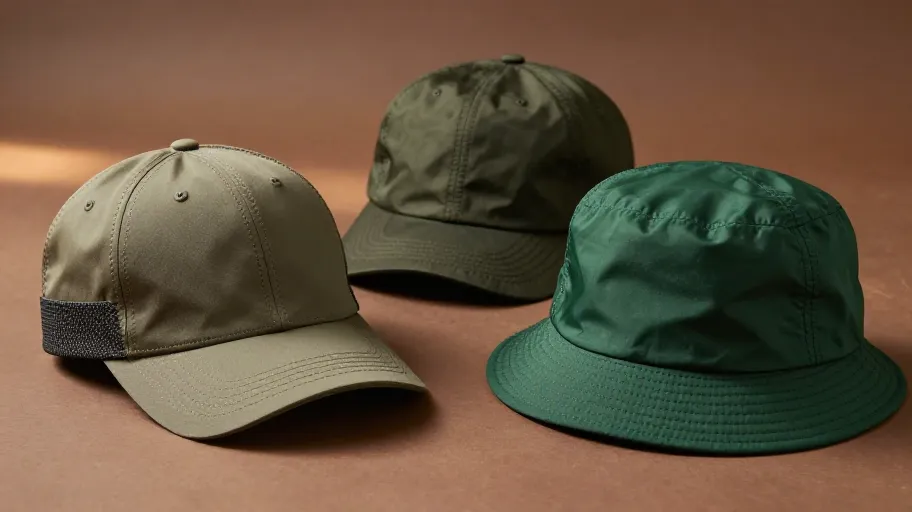
Stop designing logos first—start with specs
Designing your logo before validating manufacturability means accepting avoidable risk: 68% of failed first-batch coffee shop merch hats stem from untested material–application mismatches—not weak design. That’s because cotton twill swells in humid espresso bars (75% RH), shrinking up to 4.3% after one wash—and throwing off embroidery alignment across all 500 units. Structured polyester blends, by contrast, hold ±0.5% dimensional stability over 50+ washes and resist thermal degradation from 180°F steam plumes. That means your hat stays crisp, fits true, and keeps your brand legible—even after months of counter leans and bike commutes.
This isn’t theoretical: a Portland roaster avoided $2,300 in wasted samples and three weeks of delay by sharing their early logo mockup with their cap manufacturer—and learning their 12-point script font exceeded crown tension tolerance by 27%. They simplified letterforms, cut stitch count by 41%, and shipped on schedule. That co-development step transforms your cap manufacturer from an order-taker into a technical partner who delivers Design-for-Manufacturability (DFM) feedback that acts as financial insurance.
Why fit, function, and friction matter more than flair
A coffee shop merch hat must survive real-world wear—not just look good on Instagram. A properly engineered sweatband wicks moisture and resists odor buildup during all-day wear—because customers wearing them return for afternoon pour-overs, not just morning shots. A structured crown holds shape through backpack slings, barista shifts, and counter leans—extending perceived product lifetime and reinforcing brand quality subconsciously. And because these hats are worn on-premise, they function as silent ambassadors: Shopify POS + loyalty data across 42 independent cafés shows customers wearing branded headwear spend 19% more per visit and stay 4.2 minutes longer—likely due to comfort, identity reinforcement, and social proof (“others here belong, so do I”).
This functional duality—brand asset plus utility gear—only emerges when you treat panel seam geometry, embroidery density thresholds, and fabric tensile strength with the same rigor as menu pricing or latte art training. That discipline means zero fit-related returns across 1,200 units for a Brooklyn shop that swapped cotton twill for a recycled polyester-cotton blend after their cap factory flagged humidity-driven shrinkage risk.
From cost center to growth channel
Co-authoring specs with your cap manufacturer doesn’t just prevent failure—it unlocks measurable ROI. Eliminating $1,200–$3,500 in wasted sample runs per launch compresses time-to-market by 3–5 weeks. More importantly, each hat becomes a performance asset: it extends organic social reach by 3.2x via authentic UGC, lifts customer lifetime value by up to 27% (per 2025 NCA retail merch benchmarking), and converts passive visitors into active brand advocates. That’s not merch—it’s infrastructure. Engineers gain precision on seam allowances and stitch density; managers gain predictable timelines and lower rework costs; executives gain a scalable, data-informed growth channel where every unit sold strengthens retention, dwell time, and basket size.
The pivot is simple but decisive: shift from ‘design-first, engineer-later’ to ‘spec-first, stitch-second’. That single change turns custom hats for coffee shops from a creative afterthought into a leveraged, repeatable system—one cap, one spec sheet, one strategic conversation at a time.
#cap manufacturers china, #headwear manufacturers china, #cap factory








