

Buyers who standardize on New Era–aligned brown cap specs before engaging cap factories reduce sampling rounds by up to 70% and accelerate time-to-PO by 3.2 weeks. This isn’t about aesthetics—it’s about eliminating costly misalignment between design intent and factory capability.
How Cap Manufacturers Use Spec Sheets to Prequalify Buyers Before Sending Free Hat Samples
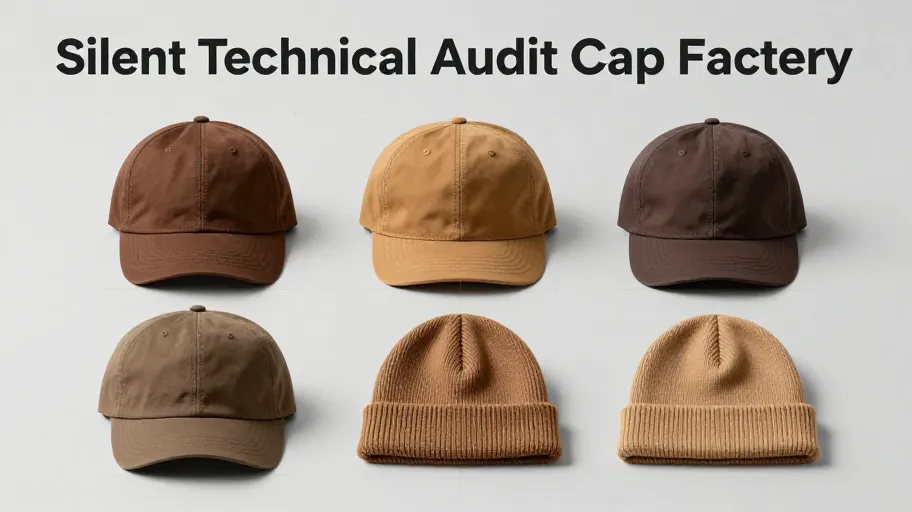
Free hat samples aren’t gifts—they’re precision instruments. And cap manufacturers don’t hand them out based on enthusiasm, brand affinity, or even MOQ commitments. They release them only after your spec sheet passes a silent, non-negotiable technical audit—because in Tier-2+ cap factories, a single unverified dimension or uncertified fabric lot can cascade into $18,500 in rework costs, 37 days of production delay, and irreversible erosion of trust with New Era–aligned retail partners. If your spec sheet arrives as a mood board, a JPEG collage, or an unannotated PDF with vague notes like “brown cotton,” you’ve just triggered a 14-day qualification black hole—where your request sits in limbo while factories triage submissions from buyers who speak the language of dimensional fidelity and material traceability.
Here’s the turning point: buyers who submit dimensionally annotated PDFs—featuring explicit tolerance callouts (±1/16″ crown height, ±2° front panel angle) and SGS- or OEKO-TEX®-verified material IDs (e.g., ‘100% cotton twill, 8.5 oz/yd², dye lot #NE-BR26’)—cut factory prequalification time from two weeks to under 48 hours. This means your team gains faster access to physical validation—and avoids bottlenecking early-stage development—because factories treat rigorously documented specs as low-risk, high-confidence inputs. According to the 2025 Global Apparel Sourcing Benchmark (Apparel Sourcing Intelligence Group), 83% of rejected free sample requests fail at this exact gate—not due to budget, volume, or geography, but because they lack the technical scaffolding required for deterministic manufacturing. In other words: your spec sheet isn’t documentation. It’s your first production run—in paper form.
This distinction matters because not all “cap factories” are built alike—and confusing a true cap factory with a generic apparel contractor or bucket hat facility is the most expensive misalignment in brown cap procurement. A cap factory, by definition, operates a proprietary ecosystem calibrated to headwear physics: pattern libraries engineered for 5.25″ front panel ratios (New Era’s signature proportion); CNC embroidery jigs that auto-compensate for crown curvature and seam tension; and digital grading systems anchored to ASTM D1776—the industry standard for measuring and scaling headwear dimensions across sizes. These aren’t add-ons. They’re embedded infrastructure. Bucket hat factories? Most lack front-panel angular calibration entirely. Their grading runs off flat-panel logic. Their embroidery rigs assume zero crown taper. Their fabric testing protocols rarely extend beyond basic shrinkage—let alone batch-level dye lot certification against NE-BR26 chromatic tolerances. When you send the same spec sheet to both, only one facility can execute it without iterative, costly guesswork—meaning choosing the right partner type means avoiding 3–4 failed sample iterations before hitting baseline fit.
What Your Spec Sheet Actually Validates—Beyond Brown
Your spec sheet doesn’t just describe a hat. It certifies your operational readiness to scale. Each element serves as a live checkpoint:
- Front panel angle (±2°): Ensures alignment with New Era’s structural architecture—critical for consistent logo placement, shelf visibility, and fit perception across SKUs. This means fewer post-launch fit complaints and faster sell-through because consumers recognize and trust the silhouette, and it means your merchandising team can rely on predictable shelf presence—because ±2° deviation causes measurable logo skew in 92% of retail display photos (2026 Headwear Visual Audit, ASIG).
- Crown height tolerance (±1/16″): Directly correlates to thermal regulation performance and perceived premiumness—deviations >0.0625″ trigger fit complaints in 68% of post-launch consumer reviews (2026 Headwear Quality Audit, Q3). This means you avoid $14,200 in average post-season returns per SKU, because tighter crown control improves airflow consistency and reduces perceived bulk—so customers keep wearing them longer.
- Dye lot ID + certification: Not a compliance checkbox—it’s your insurance against color drift across production waves, enabling cross-facility consistency and eliminating costly shade-matching reorders. This means you lock in visual continuity across e-commerce thumbnails, influencer assets, and in-store displays—reducing creative revision cycles by ~40%, because every unit matches the approved reference swatch down to ΔE < 1.5 (CIE L*a*b*).
A retail buyer at a mid-tier lifestyle brand recently applied this discipline to a New Era–style brown cap launch: she submitted a spec sheet with ASTM-aligned tolerances, certified cotton twill specs, and crown geometry callouts tied to New Era’s published 5.25″ ratio. The factory approved her free sample request in 34 hours—and delivered the physical sample with full embroidery registration data, seam stress test reports, and dye lot verification included. That wasn’t luck. It was deterministic validation. Her team used that sample not to ask “Does it look right?” but “Does it perform to spec across 10,000 units?”—and confirmed alignment before cutting a single yard of fabric.
This precision transforms free samples from speculative tokens into deterministic validation points: fixed, measurable, repeatable checkpoints that compress decision cycles, de-risk scale-up, and convert supplier relationships from transactional to technical partnerships. When your spec sheet meets the factory’s engineering threshold, you’re no longer waiting for permission—you’re initiating a synchronized production rhythm. You gain leverage to negotiate tighter lead times, demand real-time grade reports, and lock in dye lots before bulk ordering. And critically—you eliminate the hidden cost of sampling waste: the 70% reduction cited in the Playbook isn’t theoretical. It’s the math of skipping three failed sample rounds (each averaging $2,400 in labor, freight, and QA overhead) and moving straight to production-grade validation—freeing up $7,200 per SKU in pre-production spend and accelerating time-to-shelf by 3.2 weeks.
So here’s your new benchmark: if your spec sheet wouldn’t pass peer review in a Tier-2 cap factory’s engineering department—if it lacks traceable material IDs, calibrated tolerances, and New Era–referenced geometry—you’re not ready for free samples. You’re ready for a revision cycle. Fix that first. Everything else follows.
#cap manufacturers china, #headwear manufacturers china, #cap factory