


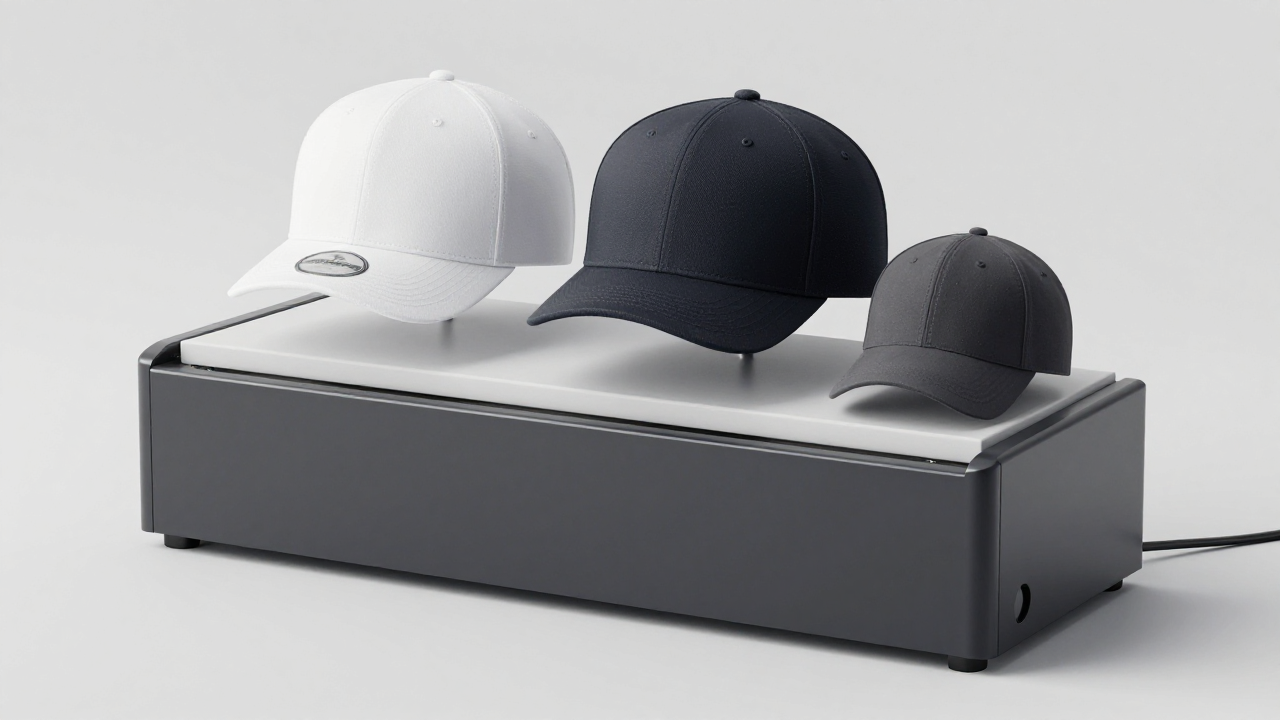
Order sizes collapsed and decoration got faster. The average custom headwear order placed through U.S.…
distributors in 2023 landed under 400 units, down from roughly 1,200 in 2019, while digital decoration pushed repeat-order lead times to about 7 working days. That combination, more than any fabric story, redrew the cost model of every cap factory.
What Actually Changed in 2023
Everything below splits into two buckets: what already happened (2022–2023, with receipts), and what we're betting on through 2026, with markers you can check against import data and your own price sheets.
The rPET Order That Cost a Columbus Distributor $46,000
Recycled fabric didn't fail because it was recycled. It failed because nobody tested shrinkage per lot before cutting 4,000 units.
In March 2023, a promotional products distributor in Columbus, Ohio, booked 4,000 six-panel caps in GRS-certified recycled poly-cotton twill for a corporate client's Earth Day program, deadline April 22. The first 400 units shipped fine. Then the client's QA team ran one industrial wash at 140°F and the crowns came back roughly 12% smaller — 4.5 inches down to just under 4. The structured front panels had also picked up visible dye-lot variance between the two fabric rolls the factory pulled.
Three thousand six hundred caps were re-cut in conventional cotton twill. Air freight to make the deadline: $18,400. Expedite charges and credits to the client: $46,000 total. The Earth Day tie-in shipped three weeks late.
How to avoid it: run a five-piece wash test at 140°F from every fabric lot against a cotton control before the cutter touches it. Demand a GRS scope certificate naming the specific factory, plus a transaction certificate per shipment — the certificate for the mill is not the certificate for the cap. Lock the blend ratio in the spec sheet, since 65/35 and 50/50 recycled poly shrink differently. And build one buffer week into any first-time recycled program, because the failures show up after washing, not before.Automation Moved the Bottleneck Inside the Cap Factory
Output per operator on our floor rose roughly 80% between 2021 and 2023, and small orders got relatively more expensive — the constraint simply moved from stitching to setup.
In 2021, our Dongguan floor averaged 34 finished caps per operator per shift on eight-head machines. By the second half of 2023, running 24-head Tajima machines with automatic thread trimmers and a barcode-driven job queue, the same floor does 61. Headcount didn't change.
Then the math got weird. A six-color front logo on 24 heads means 144 thread changes if you sequence the queue badly. A good scheduler groups by colorway and cuts that to around 40, but that only works when you have enough volume in one colorway to group. Automation pays off at 800 units and punishes you at 150.
The teardown: in April 2022, a peer factory outside Ho Chi Minh City spent $1.4 million on eight automated cutting and laser lines sized for batches of 800-plus. By spring 2023, six of those lines were running at about 60% utilization because the shop's average order had fallen to 310 units. Fixed cost per cap went up, not down. We made a smaller version of the same mistake in 2021 — we bought capacity for a program that shrank by half within two quarters.
How to avoid it: size automation to your median order, not your best month. Keep a manual cell alive for anything under 200 units. Track cost per setup hour, not cost per stitch.Customization Grew, and the Pricing Model Broke
Demand for low-volume custom caps is real, but the classic volume-discount price sheet no longer describes what it costs to make one.
At 100 units, decoration setup is 30–45% of unit cost. Most suppliers still quote as if it were 8%. Here is what our 2024 quotes actually look like on a structured six-panel crown, mid-complexity artwork:
Prices move with crown structure, fabric weight, and thread count, so treat these as ranges rather than quotes. The pattern holds regardless: setup cost is now the thing buyers negotiate, and unit price is almost a rounding error below 250 pieces.
AI Is in the Back Office, Not on the Sewing Floor
AI is cutting sample cycles roughly in half at headwear manufacturers, and it is not sewing a single seam.
We started running client mockups through a generative image tool in August 2023, before the artwork ever reaches digitizing. Sample rounds per order dropped from four to two. The full sampling cycle went from 14 days to 9. That is a real gain, and it happened in the sales and design office.
The trap is that AI mockups lie about stitch density. A twelve-color gradient rendered on screen looks continuous; embroidered on a curved front panel at 5,500 stitches, it bands visibly. 3D puff rendered at 12 millimeters looks clean until you run it on 65/35 poly-cotton and the foam collapses above 6,000 stitches. We now add a mandatory disclaimer line to every AI-generated mockup and digitize one physical sample before bulk approval. Clients complain about the extra step roughly one time in ten, and every one of those complaints evaporates when they see the physical proof.
Will Custom Cap Prices Fall by 2026?
No. Landed cost per custom cap will be flat to about 6% higher by 2026, because automation savings get eaten by smaller batches and by decoration labor, which is where the cost now sits.
The input that everyone assumes will save money has already saved it. Shanghai to Los Angeles container rates ran about $1,800 per 40-foot container in mid-2023 against roughly $20,000 in September 2021, per Drewry's World Container Index. There is no second round of that. Section 301 List 4A duties of 7.5% on Chinese headwear under HTS 6505 haven't moved, and freight is back to being a small line item.
Two predictions, with markers you can verify:
Nearshoring will happen at the decoration stage, not the sewing stage. By Q2 2026, I expect more than 15% of U.S.-bound custom headwear to be decorated in Mexico or Central America rather than Asia, up from roughly 8% in 2023 — blanks still cut and sewn in Asia, embroidery and heat transfer done north of the border to compress the last two weeks of lead time. Check this against U.S. Census import data under HTS 6505 paired with 6505.00.30 subcategories, and ask your vendors where the logo actually gets stitched. Sub-50-unit orders become a real channel. Brand-owned storefronts selling single custom caps at $38–$55 retail will pull a measurable share of volume away from promotional distributors by 2026. The marker to watch is the minimum order size your supplier will quote without a setup fee — when that hits 25 units with no digitizing charge, the channel has arrived.The Handcrafted Revival Is Real, and It's Happening in the Wrong Place
Premium handcrafted caps are growing at roughly 6–8% a year in the U.S., but the margin isn't in hand-sewing — it's in domestic decoration and small-batch finishing.
Retail prices of $85–$140 for American-made caps are genuine, and there are workshops in Portland, Los Angeles, and western Massachusetts charging them. The labor math, though, doesn't support the story people tell. Sewing a structured crown takes 6–8 minutes of machine time with hand-guided single-needle work; at $18 an hour loaded labor, that's $9–$14 per cap in direct labor. Real, but not the reason someone pays $120.
What buyers actually pay for is provenance plus a decoration they can't get offshore in 100 pieces. The craft premium lives in the embroidery and the finishing, not the seam. Suppliers who invest in a domestic single-head embroidery cell and a 50-unit minimum capture that premium at a fraction of the cost of building a sewing floor.
A second contrarian call: multi-country sourcing for cut-and-sew programs under 2,000 units is a bad trade. It doubles your setup cost, splits fabric into separate dye lots, and adds QC overhead faster than it removes risk. Single-source deeply with one factory and hold 90 days of blank inventory instead. That is a boring answer and it is the one that survives contact with a real calendar.
What to Do at 3, 6, and 12 Months
Next 3 months
Run a five-piece wash test at 140°F on every new fabric lot, and log the shrinkage figure next to the lot number. Rebuild your price sheet so setup cost is a separate line item the buyer can see. Pull your last 12 months of order sizes and calculate the median — not the mean, which is distorted by the two big programs.
At 6 months
Match your production plan to that median. If your median order is 280 units and your automation is sized for 800, you have a utilization problem that no sales push will fix. Start a domestic or nearshore decoration partner conversation now, even if you don't move volume yet, because the good ones book up first. Set a hard rule that no AI-generated mockup goes to a client without a physical sample behind it.
At 12 months
Review whether your single-source bet held up during peak season. If it did, deepen it with a capacity reservation rather than adding a second factory. Reserve blank inventory for your top three colorways at 90 days of cover. By this point you should be able to quote a 25-unit order without losing money on setup, which is the threshold that decides whether the small-order channel is open to you.
Frequently Asked Questions
How much does it cost to make a custom cap?
At 500 units, a six-panel cotton twill cap with a 6,000-stitch front embroidery typically runs $4.80–$6.20 FOB per unit in 2024, plus $0.30–$0.60 for 3D puff. Below 100 units, expect $9–$14 because digitizing and thread changes dominate the cost.
What is a typical MOQ for custom caps?
Most cap factories quote 500 units for cut-and-sew programs. Digital decoration such as DTF heat transfer has pulled practical minimums down to 50–100 units, at roughly 30–60% higher per-unit cost than a 1,000-unit run on the same cap.
How long does custom cap production take?
Sampling runs 7–14 days. Bulk production for 1,000 embroidered caps is typically 18–25 days after artwork approval, plus 5–8 days of ocean transit to the U.S. West Coast. Add about three weeks if the fabric is custom-dyed.
How do I verify recycled content in a cap supply chain?
Ask for a GRS scope certificate that names the specific factory, plus a transaction certificate for each shipment. Then run an independent wash-and-shrink test on five pieces from the bulk lot, since recycled poly blends commonly shrink 8–12% against 3–4% for cotton twill.
How do you choose a cap factory for small custom orders?
Choose on setup cost and decoration flexibility rather than headline unit price. Ask what the thread-change charge is, whether the floor runs 24-head or 8-head machines, and whether the factory waives digitizing on repeat orders of the same artwork.








