


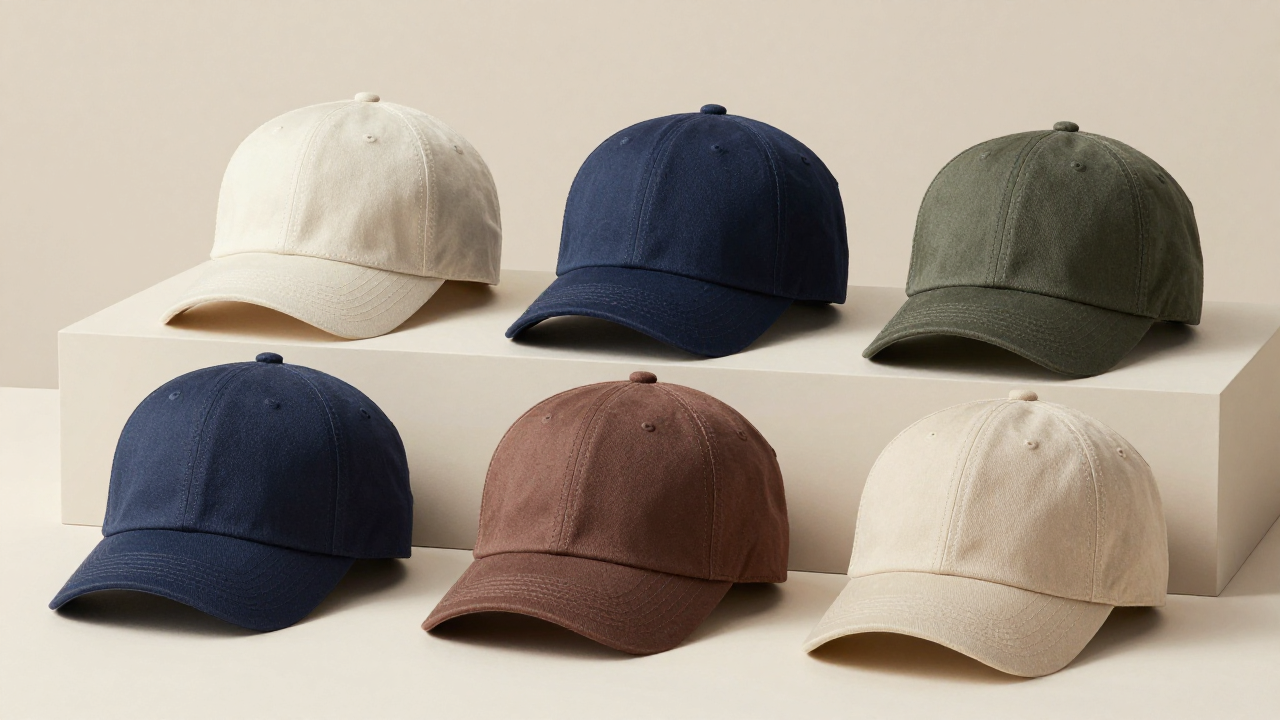
On November 28, 2025, Tanner & Field closed the books on a 12-week rebuild: net sales up 50.2%, stockout days down from 27 to 3, return rate cut from 6.8% to 2.1%.…
The Austin brand had cycled through four cap manufacturers in five years. None of the four were the problem.
A 50.2% Sales Jump in 12 Weeks, and What It Cost
We make custom caps at New Generation, and we've run Tanner & Field's production since March 2023. When founder Marcus Reyes called in early September 2025, he wasn't shopping for a new supplier. He was three weeks from cutting his ad budget in half.
His constraints were ugly and specific. A 3,200-square-foot unit outside Austin. $1.8M in 2024 revenue. Headwear at 46% of the mix. One person handling customer service and buying. No room for a container of anything.
The Bottleneck Wasn't Traffic
Tanner & Field's traffic was healthy. Its product pages were not. Mobile conversion sat at 0.9% while Meta CPMs had climbed from $14.20 in Q1 2024 to $23.80 in Q1 2025.
Reyes' first read was creative fatigue. Fair assumption. He spent $6,400 on a June 2025 shoot with new talent and a new backdrop. Click-through held at 2.4%, slightly above the 1.9% category benchmark. Mobile conversion moved from 0.9% to 1.0%. Six thousand dollars bought a tenth of a point.
Then we pulled session recordings. Microsoft Clarity showed 61% of mobile sessions leaving the product page inside 11 seconds. The photos were beautiful and useless. No back closure visible. No crown height. No indication whether the embroidery was flat or 3D puff. Buyers could not answer "what am I actually getting" without scrolling 4,000 pixels.
The ads were fine. The page was failing to close.The Sourcing Bet Most Cap Manufacturers Won't Recommend
The inventory model was the second wound. Tanner & Field carried 312 SKUs across caps, beanies and apparel, and 190 of them sold fewer than four units a month.
Here's the part that made our own sales team uncomfortable. A factory prefers the container order. 1,200 pieces per style, one production run, one dye lot, simple paperwork. We told Reyes to stop placing them.
The hybrid row is the one he took. Unit cost rose 11.1%, about 54 cents a cap. What he got back was $4,200 per style in freed working capital and a replenishment cycle that could react to a two-week sales trend instead of a two-month forecast.
We cut 312 SKUs to 74. Reyes fought it for a week, convinced the long tail was propping up wholesale. It wasn't. Those 190 dead SKUs were 8% of revenue and 34% of his carrying cost, and eleven of them had never reordered since 2023.
The Product Page Was Doing the Damage
Seven images replaced four. Macro shot of the embroidery at 8 stitches per inch. Back strap and buckle. Underside of the brim. A crown-height diagram. Three head sizes photographed on real people.
Copy moved from lifestyle adjectives to attributes: 100% cotton twill, 6-panel structured front, pre-curved visor, brass slider closure, 2.8 oz backing. A fit table with head circumference in inches and centimeters. Reyes wrote the fit table himself in an afternoon.
Mobile conversion went 0.9% to 2.3% in 19 days. Average order value moved from $34.10 to $41.30, mostly because the page finally showed a second colorway without requiring a scroll. Baymard Institute's 2024 roundup still puts average documented cart abandonment at 70.19%, and a good chunk of that is buyers who never got their question answered before the cart.
Everything That Broke in Week Six
On October 14, a 900-unit run of Slate came off the line at ΔE 3.2 against the master swatch. The purchase order said "match approved sample." It did not say a number. We held the run for nine days, re-dyed, and Reyes missed a wholesale drop.
We assumed the puckering on the navy 3D puff was embroidery machine tension. Tension was within spec. The real cause was a backing substitution: 2.0 oz instead of the 2.8 oz we'd specified, swapped in by a subcontractor trying to hit a deadline. Two thousand caps had already shipped. None of them puckered badly enough to justify a recall, and all of them are still out there. That one still bothers us.
TikTok Shop launched in week eight and drove 12% of revenue and 31% of returns, almost all sizing. The caps were correct. The listing had no size chart, because we treated a marketplace listing like a product page and assumed the platform would carry the details over. It doesn't.
The Day-90 Numbers, Unedited
Twelve weeks, September 8 to November 28, 2025: $412,000 in net sales against $274,300 in the same window of 2024. Return rate fell from 6.8% to 2.1%, which is the number Reyes cares about most, because returns on a $38 cap eat the entire margin.
Ad spend rose 6%. That's it. The lift came from conversion and from not running out of the three colorways that were doing 40% of volume. Stockout days dropped from 27 to 3.
What we can't claim: this was not a clean experiment. Q4 is Q4. Some of that 50.2% is seasonality and a competitor's August outage. Strip both out and we'd estimate 30–34% is attributable to the page and inventory changes. Reyes still took it.
What Do the Best Cap Manufacturers Do Differently?
Four things survived contact with this account, and they apply to both sides of the table.
Price per unit is the wrong scoreboard. Reyes paid 54 cents more per cap and saved $31,000 in stockout losses he'd eaten the prior year. Landed cost plus carrying cost plus lost-sale cost is the only number worth arguing about. Samples come from the sample room, production comes from the line. Ask for the backing weight, thread spec and dye tolerance in writing on the PO. "Match approved sample" is not a spec. Put ΔE 1.5 in the document or accept whatever ships. Cut SKUs before you cut prices. Discounting a 312-SKU catalog teaches your buyer to wait. Cutting to 74 taught Tanner & Field's buyers to check back. Marketplace listings need their own assets. Copying a product page into TikTok Shop or Amazon without a size chart will hand you a return rate three times your DTC number. Build the listing separately.Frequently Asked Questions
What is a typical MOQ for custom cap manufacturers in 2026?
Most overseas cap factories quote 500 to 1,200 pieces per style per color. Hybrid programs that combine a 300-unit minimum with split sea-air freight are now common for brands doing $1M to $5M, and domestic decorators will run as few as 48 pieces at roughly double the unit cost.
How long does custom cap production take from order to delivery?
Plan on 68 to 75 days door-to-door for a full container from Asia, including 25 to 30 days of production and 30 to 35 days of ocean transit. Split sea-air programs cut that to 21 to 26 days. Domestic blank plus local embroidery runs 5 to 7 days.
How much does it cost to switch cap manufacturers?
Budget $2,000 to $6,000 for sampling, new digitized embroidery files, fit approvals, and one dye lot of master swatches. The bigger cost is time: expect 6 to 10 weeks before the first sellable production run lands, which is why most brands switch during a slow quarter.
Why did Tanner & Field's sales increase 50% in three months?
Roughly two-thirds of the lift came from fixing a mobile product page that converted at 0.9%, and from reducing 312 SKUs to 74 so the top colorways stayed in stock. Ad spend rose only 6%. The remainder is Q4 seasonality and a competitor stockout.
Is 3D puff embroidery worth the upcharge on a custom cap?
3D puff adds $0.60 to $1.10 per cap and raises minimum stitch counts, so it only pays off on a structured 6-panel front. It also requires 2.8 oz backing; thinner backing puckers under the foam. Flat embroidery at 8 stitches per inch holds up better on unstructured and washed cotton styles.








