
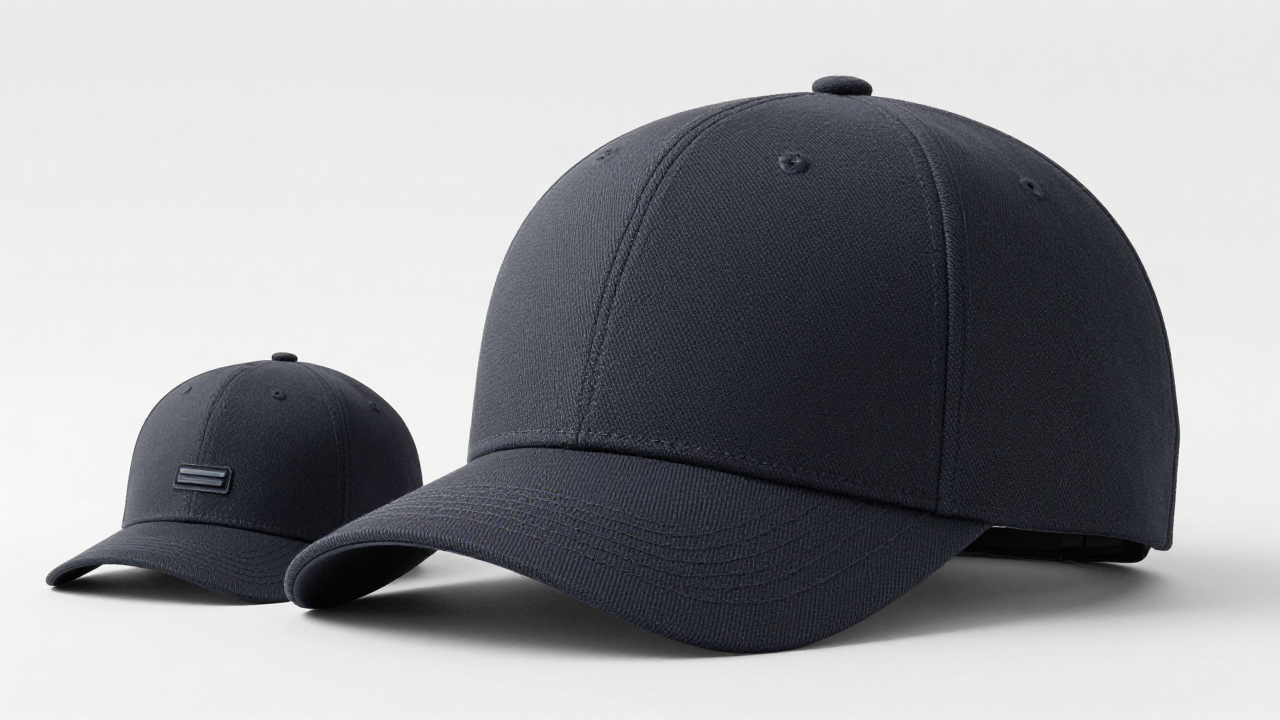
For US-facing cap manufacturers, typical landed investment runs $50,000 to $200,000. Break-even usually lands 18 to 24 months.…
Miss maintenance, freight, or rework, and payback stretches past 30 months. That range assumes 1,000 to 10,000 units, offshore production, and a repeatable design.
What Do Cap Manufacturers Really Cost in 2026?
The quotation you receive from most cap manufacturers is not your cost. It is the first 60% of your cost. The rest arrives as maintenance, downtime, rework, customs exams, and ERP migration. In 2026, with cotton twill prices moving quarter to quarter and US port labor talks creating delays, the gap between quoted cost and true cost is wider than it was in 2021.
The Invoices You Already Expect
Explicit costs are materials, labor, decoration, tooling, samples, freight, duty, and compliance testing. For a 3,000-piece order of six-panel cotton twill caps, a factory might quote $2.85 FOB per cap. Add $0.55 for embroidery at 7,500 stitches, $0.18 for polybag and hangtag, and $0.40 for ocean freight and duty. Landed cost lands near $3.98 per cap. That is before rework, storage, or a single customs exam.
Screen printing runs cheaper than embroidery at 500 units, but heat transfer holds color on polyester beanies better. We have seen brands switch decoration methods mid-order to save $0.22 per unit, then pay $1,800 in rework because the logo cracked after two washes.
The Invoices That Arrive Later
Implicit costs are the ones that kill ROI. Maintenance on a 6-head Tajima or Barudan embroidery machine runs $900 to $1,600 per year in needles, belts, and tension parts. Skip it, and a needle plate failure can misalign 1,800 logos in one shift. Downtime at a small cut-and-sew shop costs $600 to $1,200 per day in idle labor and missed shipping windows. ERP migration for bill-of-materials tracking, if you move off spreadsheets, often lands between $8,000 and $25,000. Rework and retailer chargebacks take another 2% to 5% of revenue.
When New Generation quoted a 3,000-piece order in March 2023 for a Portland skate brand, the first quote missed $8,400 in port demurrage and $5,100 in logo rework. The brand still hit break-even in 21 months, but only after switching from DDP to FOB and adding a receiving QC step.
How Do You Calculate ROI for Custom Caps?
ROI for custom caps = (Net Profit from Cap Program / Total Investment) x 100. Payback Months = Total Investment / Monthly Net Cash Flow. Use landed cost, not FOB. A $120,000 program with $6,500 monthly net cash flow pays back in 18.5 months.
The Formula Without Finance Jargon
Landed Cost = FOB Price + Freight + Duty + Insurance + Customs Fees.
Net Profit = Revenue - Landed Cost - Operating Costs - Taxes.
ROI = (Net Profit / Total Investment) x 100.
Payback Months = Total Investment / Monthly Net Cash Flow.
If monthly net cash flow is $6,500 and total investment is $120,000, payback is 18.5 months. If hidden costs cut monthly net cash flow by $2,500, payback moves from 13.3 months to 18.5 months. That $2,500 is not a rounding error. It is the difference between a strong program and a cash trap.
A $120,000 Example That Actually Happens
You invest $120,000 in a custom cap line. That covers $42,000 for first inventory, $18,000 for embroidery equipment and digitizing, $12,000 for sampling and tooling, $16,000 for freight and duty, $14,000 for ERP setup and BOM tracking, and $18,000 for working capital.
Monthly revenue is $38,000. Monthly landed cost, labor, marketing, and overhead total $31,500. Monthly net cash flow is $6,500. Payback = $120,000 / $6,500 = 18.5 months. First-year ROI = ($78,000 - $120,000) / $120,000 = -35%. Two-year ROI = ($156,000 - $120,000) / $120,000 = 30%. That is the honest curve. Year one looks ugly. Year two is where the program pays.
Where Do Most Cost Estimates Go Wrong?
Most cap manufacturing cost estimates miss 18% to 25% of true spend. The biggest gaps are maintenance, downtime, ERP migration, and rework. Owners usually budget for materials and freight, then treat machine upkeep and port delays as random events. They are not random. They are recurring line items.
Overlooking Maintenance and Upkeep
In September 2022, a Midwest promotional distributor ran 14 embroidery machines across two shifts. Maintenance was postponed for five months to save $1,800. A needle plate failed on a Tajima during a 12,000-piece order. The result was 1,800 misaligned logos on cotton twill, $4,100 in rework labor, and $3,100 in air freight to meet a trade show date. Total damage: $7,200. The $1,800 saved cost four times that amount.
I wrote "downtime" as a single line item earlier, but in practice it bleeds into overtime, air freight, and customer credits. One missed ship window can erase the margin on 2,000 caps.
Ignoring Migration and Downtime Costs
In January 2023, a Los Angeles headwear supplier moved from spreadsheets to NetSuite for bill-of-materials tracking. Migration cost $22,000. Order entry stopped for 11 business days. The company lost $18,000 in reorders because two key accounts went to a competitor with faster turnarounds. The software was not the problem. The lack of a parallel run was.
Port downtime is just as expensive. In July 2021, a Portland brand called at 5 a.m. because 12,000 unstructured caps sat at Long Beach. Demurrage was $325 per day per container. Twenty-eight days added $9,100. Air freight for 4,000 units added another $11,000. (That freight number came from a Black Friday-adjacent quarter, so it may run high.)
When Should You Walk Away From a Cap Manufacturing Deal?
Walk away when payback exceeds 30 months, when MOQ locks up more than 40% of working capital, or when monthly net cash flow stays below $4,000 for two quarters. Custom caps are a cash-flow game, not a branding hobby.
Market Saturation
If a Google search for "custom embroidered caps" returns 20 suppliers with 4.8-star ratings and sub-500 MOQs, the niche is crowded. Margin compression follows. We saw this in 2024 with blank beanies on Amazon: average selling price dropped from $14.99 to $11.50 in seven months. If you cannot differentiate on fit, fabric, or turnaround, paid ads become a tax on hope.
Insufficient Capital and Resources
If you have $60,000 for a $120,000 program, do not start. You need two inventory cycles of working capital. One cycle pays for production. The second covers reorders before the first invoice clears. If you cannot staff a QC person at receiving, skip the order. Rework detected after retail delivery costs 3x to 5x more than rework caught at the factory.
Do Digital Marketing Costs Belong in the ROI Math?
Yes, but only if customer acquisition cost stays below first-order gross margin. For custom cap manufacturers, budget 8% to 12% of projected revenue for SEO, content, and paid social. If CAC is $60 and first-order gross margin is $35, fix conversion before scaling ads.
SEO and Content Marketing
SEO for cap manufacturers is not about ranking for "caps." It is about "private label beanies no minimum," "custom embroidered caps for golf tournaments," and "blank cotton twill dad hats wholesale." Each page should answer a buyer question with specs, MOQs, and lead times. We have seen a single spec page on stitch density reduce sales calls by 30% because buyers arrived pre-qualified.
Social Media and Paid Advertising
Meta ads for custom caps run $0.80 to $1.60 CPC in the US. LinkedIn B2B campaigns for corporate orders run $8 to $14 CPC. The math only works if average order value is above $400 or if repeat purchase rate is above 25%. A $35 first-order margin cannot support a $60 CAC unless lifetime value exceeds $180. Measure that before you scale spend.
Frequently Asked Questions
What is the typical break-even period for cap manufacturers?
Most US-facing custom cap programs break even in 18 to 24 months. A $120,000 investment with $6,500 monthly net cash flow pays back in 18.5 months. Faster if freight and rework stay low; slower if MOQ, duties, or downtime rise.
How much does it cost to start a custom cap line?
Expect $50,000 to $200,000 for a serious custom cap line. That covers sampling, tooling, first inventory, embroidery setup, freight, duty, and working capital. Low-MOQ tests can start near $50,000; full private-label programs with multiple styles run higher.
What hidden costs do cap manufacturers miss most?
Maintenance, downtime, migration, and rework. Equipment upkeep runs 3%-5% of machine cost yearly. One day of downtime can cost $600-$1,200. ERP migration for bill-of-materials tracking often lands at $8,000-$25,000. Rework and chargebacks take another 2%-5% of revenue.
How do I choose a cap manufacturer for low MOQ?
Choose a cap manufacturer with clear sampling, in-house embroidery, and written rework terms. Ask for stitch density limits, cotton twill specs, and freight assumptions. Low MOQ means 500-1,000 units per style. If a factory quotes 100 units at $3.00 landed, verify the quote in writing.
Why do cap manufacturing ROI estimates fail?
They fail because owners use unit price instead of landed cost, ignore 18%-25% in hidden expenses, and treat downtime as free. ROI = (Net Profit / Total Investment) x 100. If monthly net cash flow drops by $2,500, payback can stretch from 13 to 18 months.