


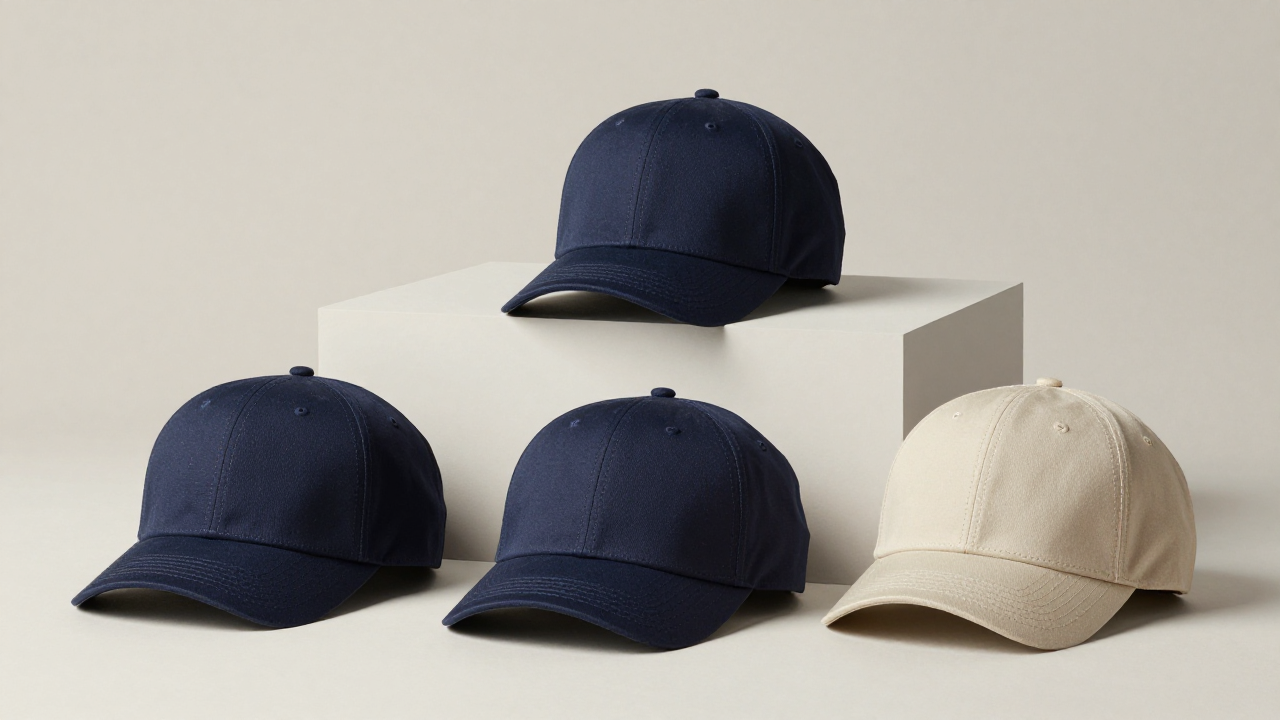
The most common mistake is buying on unit price. Brands compare FOB quotes, skip landed-cost math, approve a logo sample instead of a production sample, and never put crown specs or stitch standards…
in writing. The bill shows up three months later as rework, freight surcharges, and rejected embroidery, after the PO is already paid.
Five Mistakes U.S. Brands Make With Cap Manufacturers, Ranked by What They Cost
This is a postmortem, not a shopping list. It is written for founders, apparel buyers, merch leads, and DTC operators who are comparing custom cap manufacturers, private-label suppliers, and wholesale headwear factories right now — and who would rather learn from someone else's rework invoice. Finding a supplier is the easy part. Matching manufacturing capability, production model, quality controls, and brand requirements to your actual program is where the money is made or lost.
We made one of these mistakes ourselves in 2023, when a 500-unit run looked profitable until rework, freight, and rejected embroidery cut the margin by roughly 18 points. Details below, because the numbers are the useful part.
Mistake 1 — Comparing Unit Price Instead of Landed Cost
Three quotes land in your inbox. One is $6.10 FOB, one is $6.40, one is $6.85. Most buyers take the middle, feel sensible, and move on. That $6.40 cap actually costs about $10.67 by the time it's on a shelf in Ontario, California.
Here is a real 500-piece build from a Ningbo shipment we costed in March 2024. LCL, 8.6 CBM, cotton twill six-panel with 3D puff embroidery:
Two things fall out of that table. Freight and duty added 67% to the FOB number. And that quote assumed zero defects — which is the second half of the trap. A 4% defect allowance on embroidered headwear is not pessimistic; it's normal, and it belongs in the model before you set retail.
Why it happens. Suppliers quote FOB because that's the only number they control. Overseas factories can't quote your duty rate, your broker's fees, or your 3PL's inbound charges. So the comparison you're making isn't apples to oranges, it's apples to a completely different fruit. What it costs. On a 500-piece run, a 60-cent FOB gap is $300. A misjudged freight cycle is $600–$1,400. A missed duty classification is $800 and up. Buyers negotiate the $300 and ignore the $1,400. The 2023 run we got wrong. August 2023, a streetwear label out of Columbus, Ohio, 500 pieces, FOB $5.95, our quoted margin 34%. We built the model on FOB and a 1% defect assumption. Then 61 pieces came back from the embroidery subcontractor with puckered front panels — the backing wasn't matched to the fabric weight. We replaced them at our own cost, air-freighted 80 pieces at $6.90/kg to hit a September 15 drop, and closed the order at roughly 16% margin. The factory didn't lose money. We did, and the brand spent six weeks fielding "where's my order" emails. Do this instead. Ask every supplier for a DDP quote *and* an FOB quote, then build your own landed-cost worksheet from the FOB figure so you can see what each supplier is assuming. Compare at the same Incoterm, the same packing ratio, and the same defect reserve. Get the HS code in writing — most caps sit under 6505.00, and the subheading changes your duty rate.Mistake 2 — Approving a Logo Sample Instead of a Production Sample
A sample-room cap and a production cap are different objects made by different processes. If your approval photo came from a single-head machine run by a senior operator, you have approved nothing.
Why it happens. Sample rooms run one head at 600–700 stitches per minute with an operator watching every color change. Production runs 6 to 12 heads at 850–1,000 SPM. Multi-head machines pull fabric differently across the hoop, and the tension that looked perfect on piece one shows up as a 3–5mm shift on piece 240. What it costs. A 4mm shift on a 3-inch front logo is invisible in a sample photo and obvious on a human head. At 500 units with a $12 landed cost, a full re-embroidery run plus two-way freight lands around $2,800–$4,500. If the deadline is fixed, you eat air freight on top. Do this instead. Require a first-article sample pulled off the actual production line, on the actual fabric lot, using the actual digitized file, sewn onto a finished crown — not a flat panel. Get these in writing: logo width and height in millimeters, total stitch count, underlay spec, backing type, and thread brand. Seal a golden sample, sign it, date it, and keep a photo set on a head form from three angles. Anyone who resists putting stitch counts in writing is telling you something.Mistake 3 — Treating Fit, Crown Structure, and Closure Hardware as Details
Fit is the number one driver of headwear returns, and it is almost never specified in a purchase order. Adult cap circumference typically runs 56–58cm, but crown height, panel depth, and bill length do more to determine whether a cap reads as premium or promotional than the fabric does.
Why it happens. Fit doesn't photograph. Buyers approve what they can see, and crown structure is invisible in a flat-lay. What it costs. A mid-profile six-panel at 6.5 inches of crown height and a 2.75-inch bill fits a broad range of adult heads. Drop to a 5-panel camper shape with a shorter bill and you've narrowed your audience without meaning to. Fit complaints show up as 8–12% return rates on the DTC side and as one-star reviews that never mention the supplier. Do this instead. Write a fit spec sheet: circumference, crown height, panel count, bill length and curve, sweatband material and width, closure type. Ask for a fit set in at least two sizes and wear-test for 10 days before committing. On hardware, ask for the salt-spray hours on metal snaps and the pull-force spec on plastic ones — anything under 24 hours of salt spray will corrode in a coastal market.Mistake 4 — Misjudging MOQ, Lead Time, and Reorder Economics
Low-MOQ programs exist, but they are a different product than custom cut-and-sew. Expect roughly 50–100 units on decorated blanks from network-based suppliers, and 300–500 per colorway once you move into custom construction, custom fabric, or custom trim.
Why it happens. Buyers ask "what's your MOQ" and get a number for the easiest possible configuration. They don't ask what MOQ applies to *their* configuration — a custom jacquard knit or a custom metal badge adds a component MOQ that sits well above the cap MOQ. What it costs. Total door-to-door time is the number that matters: 12–18 days sampling, 25–35 days production, 30–38 days ocean transit, 7–10 days port and drayage. That's 65–90 days. A Q4 drop ordered in August arrives in late October with no room for a second run. And the reorder trap is worse than the first order: if the mill's dyelot minimum is 500 meters, your 300-piece reorder in month four will not match the original shade. Do this instead. Ask separately for first-order lead time and *repeat* lead time, and ask whether fabric can be held. Book production slots before you book the marketing calendar.Mistake 5 — Assuming "Made in USA" Means Every Step Is Domestic
Domestic cut-and-sew is real and worth paying for. Domestic *materials* are a different claim. Even U.S. factories like Unionwear in Newark, New Jersey, sew with imported fabric, imported snaps, imported thread, and often imported embroidery backing. That's normal. What isn't normal is a supplier implying otherwise.
The FTC's "all or virtually all" standard is the one that governs a Made in USA label, and Berry Amendment compliance is a separate requirement if you're selling to the Department of Defense. Also separate: a U.S.-*based* supplier that imports finished goods and warehouses them in California. That's a legitimate model, but it is not domestic manufacturing, and the lead time, duty exposure, and MOQ behave completely differently.
Do this instead. Ask for the physical address where the cut-and-sew happens, and the model of the embroidery machine doing your decoration. Two questions, no wiggle room.How to Vet Cap Manufacturers Without Flying to the Factory
Vet a headwear supplier on four things before you discuss price: production model, in-house decoration, QC documentation, and how they behave when volume triples. A factory that cuts and sews in-house but subcontracts embroidery will miss your decoration tolerances, and you'll find out on the reorder.
Build Your Shortlist by Production Model, Not by Search Ranking
There are three models, and they are not interchangeable. Domestic cut-and-sew shops own the sewing floor. Overseas factories own the sewing floor *and* the embroidery heads. U.S.-based private-label networks own neither — they own the account management, the sampling relationship, and often a warehouse. None of these is better in the abstract. Pick the model that matches your program, then negotiate.
Score Capability Before You Talk Price
Score each shortlisted supplier out of 100 across eight categories: construction capability (20), in-house decoration (15), QC documentation (15), MOQ flexibility (10), repeat lead time (10), compliance paperwork (CPSIA, Prop 65, fiber content) (10), sampling speed (10), and references from brands at your volume (10). A supplier scoring 55 won't become an 85 because you negotiated 40 cents off. We've watched brands switch factories three times to save 8% and lose two seasons doing it.
U.S. Cap Manufacturers and Supplier Types Worth Shortlisting
There is no single best cap manufacturer for a U.S. brand. Domestic cut-and-sew fits government and union programs; network-based private-label suppliers fit low-MOQ launches; direct overseas factories fit custom construction at 1,000+ units. Match the model to the program before you match the price.
Ranges are typical, not universal — fabric, decoration method, and trim move them significantly. We're a cap factory ourselves, cutting and sewing in Guangdong since 2008, so treat our column with the appropriate skepticism and verify with the others first.
Cap Manufacturer Vetting Checklist
A supplier passes vetting when it answers every pre-production question in writing and when a first-article sample from the production line matches the sealed golden sample within 2mm on decoration placement. Run this list before the PO, not after.
Fifteen boxes. Most suppliers clear eleven or twelve. The three or four that come back vague are the ones that will cost you a season.
Frequently Asked Questions
How much do custom caps cost from cap manufacturers?
Custom cap pricing typically runs $4.50–$11 per unit FOB for overseas production and $14–$28 for U.S. cut-and-sew, depending on fabric, construction, and decoration. Landed cost adds roughly 45–70% on small LCL shipments once duty, freight, brokerage, and drayage are included. Always compare landed cost, not FOB.
What is a typical MOQ for custom caps?
MOQ depends on configuration, not on the supplier's headline number. Decorated stock blanks often start at 50–100 units. Custom cut-and-sew usually requires 300–500 per colorway, and custom fabric or custom metal trim pushes higher because component minimums sit above the cap minimum.
How long does custom cap production take?
Plan on 65–90 days door to door: 12–18 days for sampling and approval, 25–35 days of production, and 30–38 days of ocean transit plus port and drayage time. Repeat orders can compress production to 18–25 days if fabric is held, but the transit window does not shrink.
How do I compare cap manufacturers before ordering samples?
Send the same tech pack to every supplier and compare four responses: whether they specify stitch counts and fabric GSM in writing, whether they quote FOB and DDP, whether they separate first-order and repeat lead times, and whether they name the address where cut-and-sew happens. Vague answers on any of these predict rework.








