


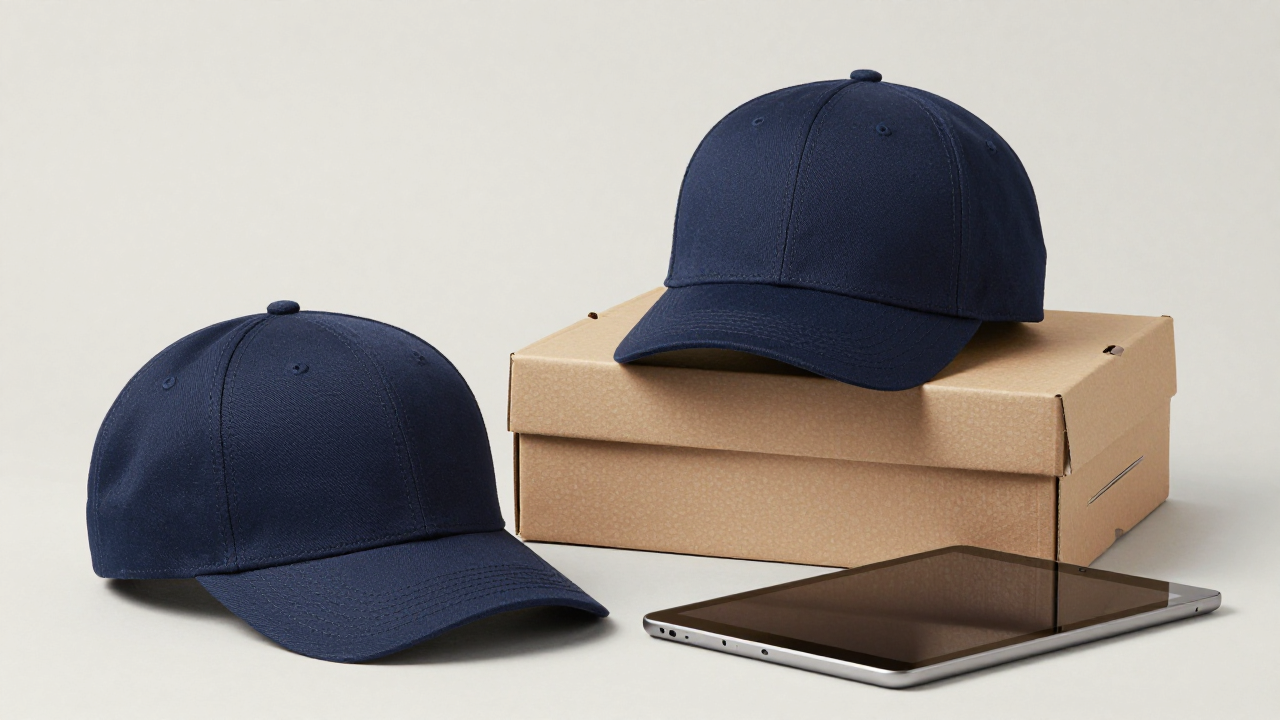
Check four things before you place a cap order: the factory's own panel cutting room, embroidery heads running in-house, a current Amfori BSCI or Sedex audit, and a written AQL 2.…
5 acceptance standard. Cap manufacturers that subcontract front panels to a third party cannot hold stitch density or shade consistency across a 5,000-piece run.
What Should You Check Before Choosing a Cap Manufacturer in 2026?
The most expensive myth in this business is that a cap is a simple product, so any sewing shop can make one. A six-panel cap has 14 separate pattern pieces and roughly 22 minutes of labor inside it. Crown height, brim curvature, and sweatband tension all interact. Get one wrong and the cap photographs fine but sits wrong on a head.
Ask for these specifics, and treat evasive answers as answers:
We've run our own cutting tables since 2008 for exactly this reason. When a buyer sends us a competitor's sample, the first thing our pattern room does is cut it apart and measure the panel geometry.
How Do Cap Manufacturers Control Quality, and How Do You Verify It?
Cap manufacturers control quality at three checkpoints: incoming fabric inspection, in-line checks every 50 pieces at the embroidery and sewing stations, and a final AQL 2.5 inspection under ANSI/ASQ Z1.4. Buyers verify quality by booking a third-party pre-shipment inspection through QIMA, SGS, or Bureau Veritas at roughly $250–$350 per inspector-day.
In-line checking is where the real money sits. Final inspection catches problems; in-line inspection prevents 50 more of them. A factory that only inspects at the end is telling you it plans to rework.
The verification part buyers get wrong: they inspect the whole order but never measure the things that fail later. Specify these in writing before production starts.
Embroidery placement tolerance of ±3 mm on a front logo sounds tight until you see a 12-piece retail display with logos visibly drifting. Color fastness should be tested to AATCC 61 (3 washes minimum) for any cap that will be machine washed. Shrinkage on cotton twill should stay under 3% — this is where cheap fabric bites hardest.In November 2022 a Midwest collegiate licensee shipped 18,000 caps to campus bookstores. Every cap passed final inspection. Four weeks later, returns started — front panels had shrunk about 4% after the first wash and the structured crown collapsed. Root cause was non-pre-shrunk twill from a fabric mill the factory had switched to that August to save $0.09 per cap. The reprint cost $61,000 and a season. Nobody inspected the fabric roll, only the finished cap.
Certifications worth asking for: OEKO-TEX Standard 100 (Class I if the cap touches an infant's head), GOTS for organic cotton, GRS for recycled polyester, and CPSIA test reports for anything sold as children's headwear. California Prop 65 labeling matters if your retail channel includes California — which it does.
Do Cap Manufacturers Really Have Fixed MOQs?
No. Minimum order quantities for custom caps are negotiable and typically land between 100 and 500 pieces per colorway at Chinese factories. The 1,000-piece MOQ most buyers hear quoted is a production scheduling number, not a physical limit. MOQ drops sharply when the buyer accepts stock fabric and stock thread colors instead of custom dye lots.
Here's the mechanism nobody explains. A factory's real constraint is fabric minimums from the mill, not the sewing line. Cotton twill typically has a 500–800 meter mill minimum, which yields roughly 600–900 caps. If you pick a fabric the factory already stocks, that constraint disappears and 100 pieces becomes a normal, profitable order.
What you'll pay for a low MOQ: a small-lot surcharge of $0.30–$0.50 per cap, a shorter window for changes, and less leverage on price. That trade is usually worth it for a first order you're testing.
Low MOQ does not automatically mean trading company. It means stock materials. Verify by asking which fabric the quote assumes and whether the factory holds it in inventory. A trading company has to go buy it.
Why Does Sustainability Matter for Cap Manufacturers in 2026?
Sustainability matters for cap manufacturers in 2026 because US buyers now treat it as a procurement condition rather than a marketing extra. GOTS organic cotton requires a transaction certificate matching each shipment, GRS recycled polyester requires a scope certificate, and California Prop 65 requires specific labeling. Accounts like REI and Patagonia will not open a line without the paperwork.
The material cost premium is smaller than most buyers assume. GOTS-certified cotton yarn runs 20–35% above conventional on the fabric line, which translates to roughly $0.25–$0.60 added to the FOB price of a finished cap. Recycled polyester knit beanies carry about a 15% yarn premium.
The expensive part is the paper trail. Certified material has to be stored segregated from conventional stock, and every shipment needs a transaction certificate issued against the actual volume. A factory handling four certified programs simultaneously is running a documentation department, and it charges for that.
In March 2024 a West Coast brand got hit with a $40,000 chargeback from a retail account because the GOTS transaction certificate on a 9,000-piece organic cotton order listed a fabric lot number that didn't match the mill's records. The caps were genuinely organic. The paperwork wasn't. Retail compliance teams audit documents, not intentions.
Reverse conclusion worth sitting with: the sustainability claim that gets buyers in trouble is not "our cotton is organic." It's "our factory says the cotton is organic." Only the transaction certificate counts.
How Much Does It Cost to Work With a Cap Manufacturer?
A custom six-panel embroidered cap costs $2.40 to $4.80 FOB from a Chinese cap manufacturer in 2026 at volumes of 1,000 to 5,000 pieces, before US duties of roughly 10% to 30% and ocean freight of $0.12 to $0.25 per cap. Standard terms are 30% deposit, 70% before shipment, with sampling at $50 to $150 per round.
Inside that FOB number: shell fabric $0.60–$1.10, embroidery $0.25–$0.90 depending on stitch count (a typical front logo is 8,000–10,000 stitches), trim and hardware $0.15–$0.40, labor $0.45–$0.80, packaging $0.08–$0.20.
Costs that hit the budget after the FOB quote lands:
And this is the comparison that matters, because FOB price is the number buyers negotiate and landed cost is the number that decides whether the program made money.
Factory A looked 19% cheaper on the quote. Factory A was more expensive.
When Should You Switch Cap Manufacturers?
Switch cap manufacturers when three consecutive production runs miss the agreed AQL 2.5 threshold, when quoted lead time slips more than 15 days twice within 12 months, or when the factory cannot produce a transaction certificate for certified material. One bad run is a data point. Three is a pattern.
Lead time for caps from a Chinese factory runs 25–35 days in production, on top of 7–10 days for sampling and 30–40 days of ocean transit to Los Angeles or Long Beach. From mid-2025 onward, the suspended de minimis exemption means small parcels from China clear through formal entry, which added roughly 5–9 days to the door-to-door cycle for DTC brands. If your factory's quoted lead time still assumes the old parcel math, the quote is stale.
Warning signs we see buyers ignore: the factory's answers start coming through a salesperson who has to check with someone else; the same order gets re-quoted higher mid-production; quality passes on size small and slips on XL, which means the grading was never right.
Transitioning without getting burned: run parallel production for one 300–500 piece order before you cut ties. Move your pattern assets, and that list is longer than most buyers expect — graded size specs, embroidery DST files, Pantone thread standards, label artwork, and the seam allowance sheet. Keep 6–8 weeks of safety stock at your 3PL while the new factory proves out two runs. We've onboarded brands on this schedule and it usually takes 90 days from first sample to steady state.
Frequently Asked Questions
How long does it take to manufacture custom caps?
Custom cap production takes 25 to 35 days after sample approval, plus 7 to 10 days for sampling and 30 to 40 days ocean freight to the US West Coast. First orders run 10 to 14 days longer because pattern grading and logo digitizing happen up front.
What is the difference between a cap manufacturer and a trading company?
A cap manufacturer owns cutting tables, sewing lines, and embroidery machines. A trading company coordinates between you and that factory while taking a margin of 8% to 20%. Ask for the factory's business license scope and a live video walkthrough of the cutting room.
Can you order custom caps with a low MOQ?
Yes. Custom caps can be produced at 100 to 300 pieces per colorway when the buyer accepts the factory's stock fabric and stock thread colors. Expect a small-lot surcharge of $0.30 to $0.50 per cap instead of a hard minimum.
Are Chinese cap manufacturers reliable in 2026?
Chinese cap manufacturers with current BSCI or Sedex audits and named US retail accounts are reliable in 2026; the industry runs on standardized QC language like AQL 2.5 and ANSI/ASQ Z1.4. Reliability depends on the specific factory's audit history, not the country.








