


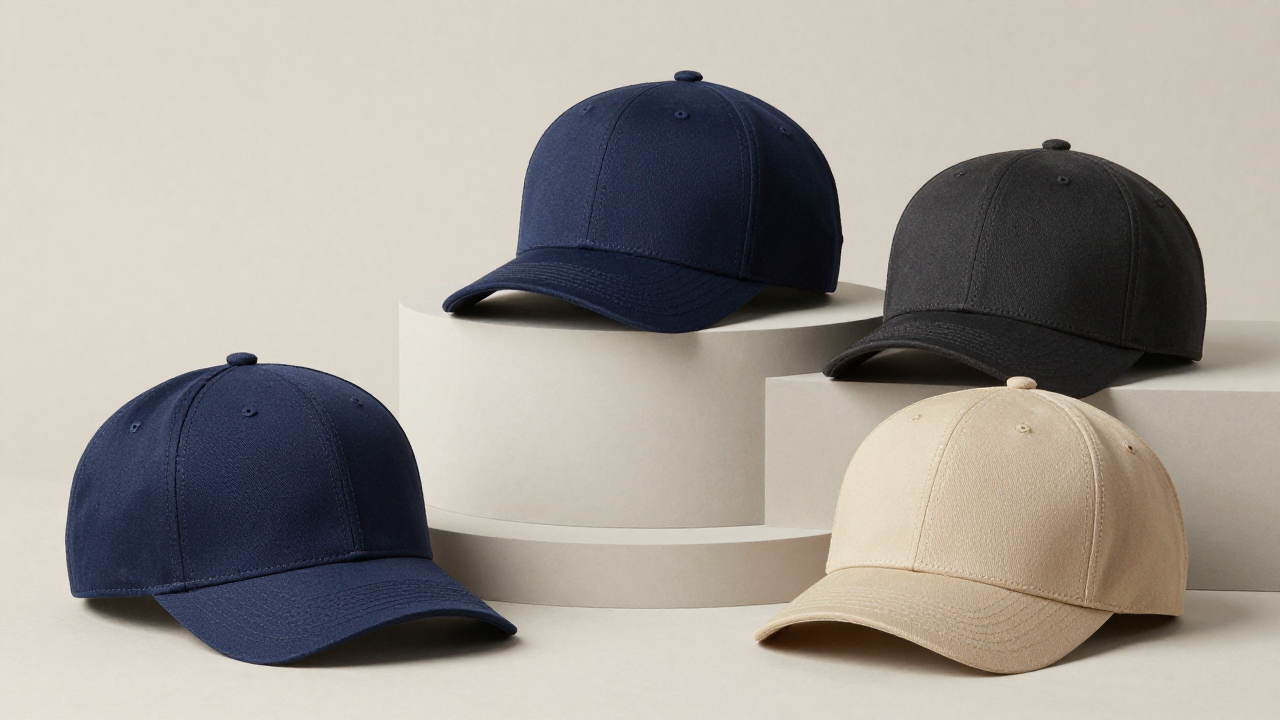
Verdict first: pick a U.S. domestic cap manufacturer for faster replenishment, tighter quality control, and a made-in-America claim.…
Pick an overseas factory or sourcing platform for lower unit cost and larger runs. Pick a decorator or wholesale supplier for branded blanks, promo orders, and low-risk first drops.
Which Type of Cap Manufacturer Actually Fits Your Brand?
That is the answer at 30,000 feet. The useful version shows up when your launch date is 11 weeks out and your co-founder wants to know why the same 6-panel cap quotes at $5.40 from one vendor and $12.80 from another.
We are comparing three production models here, not three companies. The criteria are the ones that actually land on a purchase order: MOQ, landed unit cost, lead time, customization depth, compliance, scalability, quality control, and reordering risk. Benchmarks move with construction and design. Custom programs can start near 30 units per style and color, or climb to 720 pieces. Domestic production commonly finishes 3 to 5 weeks after approval. Overseas programs run 60 to 90 days door to door once logistics is counted.
What Really Separates Cap Manufacturers on Cost, MOQ, Lead Time, and Quality
Four numbers do most of the separating: minimum order quantity, landed unit cost, days from approval to delivery, and defect rate on repeat orders. On a 6-panel cotton twill cap with a 3D puff front logo, overseas FOB quotes commonly land between $4.80 and $6.20, while U.S. cut-and-sew runs $9.00 to $14.00. Freight and duty close part of that gap. They never close all of it.
Run the landed-cost math before you celebrate a cheap quote. On a $5.40 FOB cap, freight, duty, and port fees added $1.60 to $2.30 per unit at 2024 rate cards in our own worksheets. That puts a $5.40 quote within $2 of a domestic program once you factor in the 40 extra days of cash sitting in inventory.
The factor most buyers skip until order three
Consistency across repeat orders decides whether a cap program survives past its second season. Nobody puts it in a comparison table because it does not show up in a first sample. It shows up in month seven.
Five things drift. Fabric lots shift shade between dye batches. Crown blocks get swapped on the press and nobody logs it. Embroidery registration creeps 1.5 to 2 millimeters when a hoop is re-tensioned. Color matching fails when a factory matches to a screen instead of a physical swatch. Trim availability breaks when your brushed-nickel slide buckle goes out of stock and a substitute appears unannounced.
In August 2023, a run of 4,800 caps for a Nashville streetwear label left our floor with crowns roughly 4 millimeters taller than the approved sample. A block swap on the crown press had gone unrecorded. The brand found it at retail, not in QC. We now stamp the block ID on every work ticket and shoot a first-article photo for each lot. The photo takes four minutes. The recall cost five figures.
A second case sits closer to home. In November 2022, a Columbus, Ohio brand reordered 2,400 caps in Pantone 19-4052 and received a navy that read noticeably bluer next to the first run. Both lots were technically in tolerance. The fix was procedural: we started holding a retained production swatch from every approved lot and matching new dye batches against it, not against the digital spec.
If a supplier cannot tell you how they track block IDs, dye lots, and trim substitutions, price is the only thing you are comparing.
Which Named Cap Manufacturers Belong on Your Shortlist
Shortlist four to six suppliers whose order size and decoration model match yours, then verify each claim on a call. Flexfit (Yupoong), Cap America, Outdoor Cap, Unionwear, MFG Merch, and THE/STUDIO cover most U.S. brand scenarios, from promo blanks to fully domestic cut-and-sew. Treat the table as a starting screen, because terms shift.
Compare claims on six points: factory location versus decoration location, MOQ per colorway, sample policy and whether the fee is credited to bulk, certifications (WRAP, BSCI, Sedex, ISO 9001), references from brands ordering at your volume, and Incoterms. A quote written FOB Shenzhen and a quote written DDP Los Angeles are not comparable numbers, and vendors know it.
Does Brand Visibility Tell You Anything About a Cap Manufacturer's Reliability
Partly. Search visibility is a weak proxy for stitching quality and a reasonable proxy for operational maturity, since a supplier ranking for "custom cap manufacturer USA" has usually built account management and reorder systems to protect that position. Use visibility as a screen, then test the factory itself.
Build a scorecard you can rerun every year. Weight it roughly 25% branded search demand, 20% verifiable case studies with named brands, 15% review volume and recency on Google and Trustpilot, 15% retailer or team-dealer presence, 15% share of voice on terms like private label hats and blank 5-panel caps wholesale, and 10% pricing transparency on the site. Keyword tools such as Ahrefs or Semrush give you the first and sixth inputs in an afternoon.
Here is where the scorecard misleads. Ad spend inflates visibility without improving production. A supplier can rank first for custom cap manufacturer USA and still subcontract every stitch. In March 2023, a Denver brand moved its program to a heavily advertised supplier, then returned to us nine months later after reorders slipped an average of 19 days against quoted dates. The visibility was real. The capacity behind it was not.
For context on our own position: newgeneration does not buy U.S. paid search, and most of our American volume arrives through referrals and repeat buyers. That makes us a low score on the demand side of this scorecard and a strong one on repeat-order consistency. Read the scorecard as a set of separate signals, not a single ranking.
How Do You Vet, Sample, and Scale Without Costly Rework
Send one identical tech pack to every candidate, request DDP quotes at two volumes, order a single pre-production sample, approve a golden sample, and write reorder tolerances into the PO. That sequence costs $300 to $900 and removes most of the rework risk that shows up at scale.
The tech pack needs real numbers, not adjectives. Specify fabric weight in ounces per square yard (10.5 oz cotton twill behaves nothing like 8 oz), crown height and profile, closure type, eyelet finish, sweatband material, decoration type, stitch count, and thread color codes. "Cotton twill, good quality" is how brands end up with a cap that photographs well and feels thin in hand.
These are the failure points we see most, roughly in order of cost:
1. Size grading left entirely to the factory, producing a Large that fits like a Medium at the seam.
2. Fabric described by name only, with no weight or mill reference.
3. Embroidery artwork containing text under 6 points, which turns into a blur at any stitch density.
4. Trim substitutions approved verbally and never documented.
5. Setup and digitizing fees that appear after the PO is signed.
6. Freight quoted at spot rates that expire before your ship date.
7. Launch dates that ignore Chinese New Year, when most Asian factories lose two to three weeks between late January and mid-February.
Approving a golden sample is the step brands skip when they are in a hurry. Keep the signed sample, photograph it under neutral light, and attach the photos to the PO with a note that bulk must match within a stated tolerance (we use ±2 millimeters on crown height and a Delta-E of 1.5 or better on color). Then the argument about "close enough" has a reference point.
Which Cap Manufacturer Fits Your Situation?
Match the model to your constraint, not to someone else's success story.
If you are testing a first drop under 150 units, choose a low-MOQ decorator or a flexible domestic partner. If you need 500-plus units with predictable repeat demand, compare a scaled custom factory on landed cost and consistency, not sticker price. If speed and a made-in-USA claim carry your brand story, choose a domestic manufacturer and price the premium into retail. If lowest landed unit cost dominates and you can plan 90 days ahead, evaluate overseas production with a documented golden sample.
Two hybrid setups work well and get overlooked. Split your line: run your hero silhouette offshore at volume, and keep a domestic partner for restocks and limited colorways. Or start with a decorator on stock blanks to validate demand for two quarters, then move the winner into custom cut-and-sew once you have real sell-through data. We have watched brands save six figures in dead inventory with that second path.
Our own bias is clear enough. As a Chinese headwear manufacturer operating since 2008, we compete for the offshore volume in this comparison, and we lose plenty of deals to domestic factories when a brand needs caps on a shelf in four weeks. Both outcomes are correct for the buyer who knows which constraint binds.
Frequently Asked Questions
What is a normal MOQ for custom caps?
Flexible programs start at 30 to 72 units per style and color. Mainstream overseas factories quote 144 to 720 pieces per colorway, and per-unit pricing drops sharply between 300 and 500 units. Below 100 units, expect decorated blanks rather than true cut-and-sew.
How long does sampling take for custom caps?
A pre-production sample typically takes 7 to 10 days domestically and 12 to 18 days from an overseas factory, plus shipping. Add one revision round and budget three weeks before approval. Never release bulk production against an unapproved sample.
Are domestically made caps worth the premium?
Only when the made-in-USA claim converts. Domestic cut-and-sew runs about $9 to $14 per cap against $4.80 to $6.20 FOB overseas, so the premium settles near $4 to $8 after freight and duty. Brands retailing above $40 with a strong domestic story usually recover it.
How do you protect embroidery quality on a bulk order?
Fix the stitch count in the tech pack, typically 8,000 to 12,000 per front logo. Avoid text under 6 points. Approve a sew-out on the actual production fabric, not a digital mockup. For 3D puff, specify foam height of 8 millimeters or more and simplify the artwork.
When should a brand switch cap manufacturers?
Switch when repeat-order variance exceeds your stated tolerance twice in a row, when delivery slips past 30% of the quoted window three times, or when your volume outgrows the factory's pricing tiers. One late shipment is weather. A pattern is a system.








