


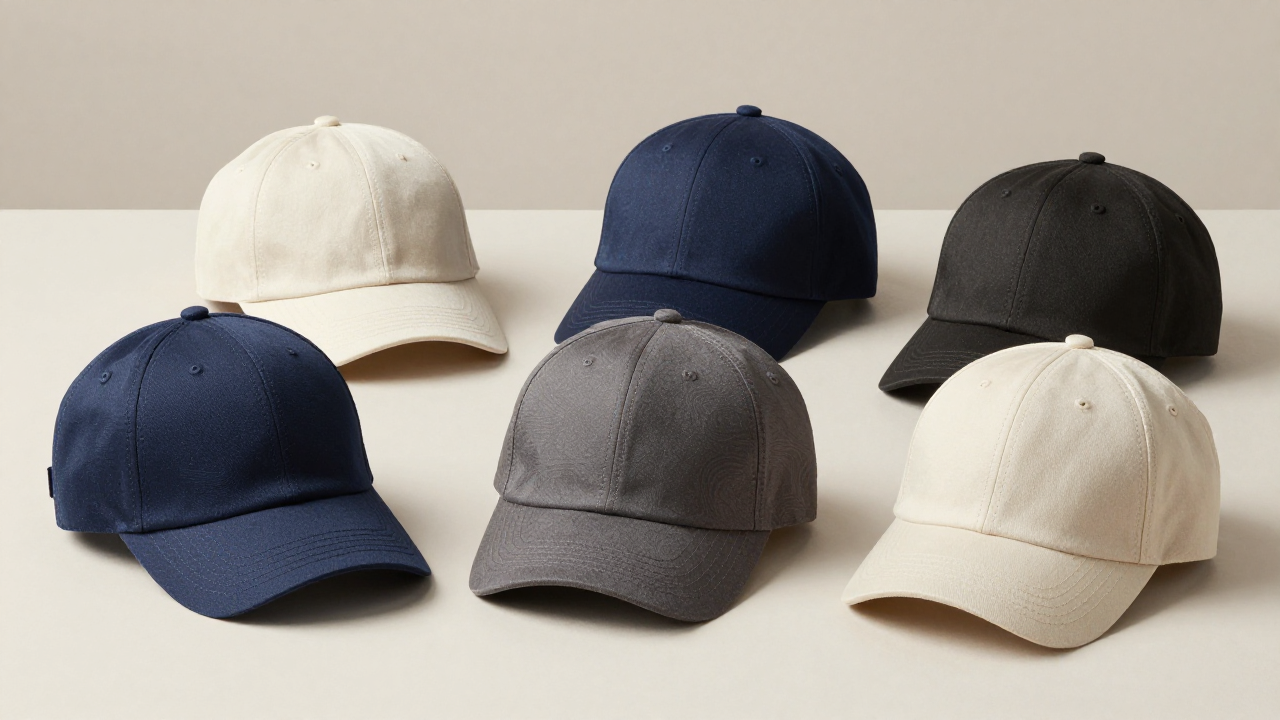
Cap manufacturers serving U.S. buyers now compete on compliance, functional performance, and supply reliability before unit price.…
Recycled-content fabrics, PFAS-free finishes, cotton traceability, backup capacity, and decoration testing determine whether a program advances.
What Changed in U.S. Cap Manufacturing in 2026?
The U.S. cap market reportedly reached approximately $1.63 billion in 2025, while North America represented about 33.66% of global demand. Those figures help explain the sourcing shift: as category growth becomes less dramatic, buyers protect margin through tighter specifications and fewer production surprises.
This review separates confirmed regulatory changes from forecasts. It also compares supply models, identifies common qualification failures, and provides a practical 3-, 6-, and 12-month sourcing plan.
How Are Lightweighting and Recycled Content Changing Cap Programs?
Recycled content is now a purchasing requirement in many U.S. RFQs, but lighter fabric creates structural and decoration risks. Recycled polyester fabric in the 4.0–4.5 oz range is available from mills in China and Vietnam; the harder task is maintaining crown shape, documentation, and decoration performance after washing.
GRS or RCS transaction certificates should follow the material from the mill through the cut-and-sew facility and connect to the purchase order. Request the scope certificate during the RFQ stage rather than after shipment. Supplier documentation quality varies, so unverified claims should remain an open compliance risk.
The September 2023 case. A promotional distributor in Columbus, Ohio, booked 40,000 six-panel caps for a Q1 2024 corporate program. The buyer replaced 5.6 oz cotton twill with a 4.1 oz recycled poly blend while retaining the structured front panel and buckram interlining.An AATCC 135 wash test at 12 cycles showed crown-height loss of approximately 6 mm. The front panel also creased near the embroidery edge. Three decoration methods—3D puff embroidery, heat transfer, and a silicone patch—failed adhesion or shape checks on the lighter face fabric.
The corrective action changed the construction rather than abandoning recycled content. The supplier used heavier buckram, increased front-panel height slightly, and raised puff-element stitch density from 8 to 10 stitches per inch. Revalidation required six weeks. The program reworked 11,000 units, air-freighted about 4,000, and increased estimated landed cost from $6.15 to $7.90 per cap.
Specify fabric weight, wash performance, and decoration compatibility together. Require AATCC 135 results from the actual production lot and test every decoration method on the new face fabric before bulk approval.
Which Compliance Documents Should U.S. Buyers Require?
U.S. cap programs should treat PFAS declarations and cotton traceability packets as qualification documents, not post-shipment paperwork. California’s AB 1817 prohibits the sale or distribution of most new textile articles containing regulated PFAS beginning January 1, 2025, and requires a certificate of compliance.[1][2]
PFAS exposure often comes from a water-repellent or stain-release finish rather than the base fabric. A C0 fluorocarbon-free finish can reduce regulatory risk, but oil resistance and durability may differ from the original treatment. Those performance trade-offs belong in the product specification.
The November 2024 case. A West Coast outdoor brand shipped 18,000 water-repellent performance caps from Shenzhen in late October 2024 for spring 2025 retail. A total-fluorine screening test at the Port of Long Beach returned a positive result. The trading company had supplied a PFAS-free declaration, but the mill had not provided supporting test documentation.Resolution required a new finish, retesting, and relabeling. The process took seven weeks, the spring allocation arrived in February 2025, and two retail doors dropped the SKU. The case does not prove that every total-fluorine result indicates a legal violation, but it shows why mill-level evidence matters.
Cotton traceability creates a second qualification gate. Under U.S. forced-labor enforcement, buyers may need records covering the farm, gin, spinner, and mill. Request the packet during the first supplier conversation. A promise to “send it later” should be recorded as a sourcing risk.
Where Is U.S. Cap Demand Moving?
U.S. demand is shifting toward caps with a defined use case, including UPF 50+ sun protection, cooling liners, FR-compatible liners for hard-hat programs, medical and cleanroom headwear, and age-graded youth sizing. Commodity blanks remain important, but function-specific products generally support higher selling prices.
A basic blank cap commonly falls in the $2.50–$4.50 FOB range, while a verified UPF 50+ performance cap with a moisture-management band may cost two to three times as much. AATCC 183 testing for ultraviolet transmission can appear in performance RFQs.
Decoration capacity is also part of the offer. Tajima and Barudan multi-head embroidery equipment can operate with 15–18 heads per unit, while U.S. decorators working with imported blanks may turn a 144-piece order in 7–10 days during ordinary periods.
Peak-season capacity is less predictable. A 10-day July turnaround can become a 25-day October turnaround when U.S. decorators are fully booked. Buyers should reserve capacity rather than rely on a standard lead-time promise.
Who Supplies Caps to U.S. Buyers?
No dependable public market-share table covers the entire U.S. cap industry. A practical supplier map can combine distributor catalogs, trade-show exhibitor lists, search visibility, and trade-publication coverage.
New Generation, for example, has operated custom programs from China since 2008 and represents the less visible factory layer behind many private-label imports.
To compare supplier visibility, score each company from 0 to 3 across four signals:
A total score from 0 to 12 provides a directional market-presence index. Scores above 10 suggest strong category visibility; scores from 6 to 9 indicate a credible regional position. The index does not measure production quality or available capacity.
How Should Buyers Compare Cap Supply Models?
Buyers should compare tooling ownership, fiber and resin sourcing, quality certifications, fit data, minimum order quantity, written lead-time buffers, decoration capability, and backup-factory access. Unit price alone does not capture qualification, freight, rework, or peak-season risk.
Three recurring failures deserve special attention. The September 2023 lightweight-cap program skipped decoration requalification. Another supplier saved $0.22 per cap but required three approval rounds over approximately 11 weeks. In December 2023, Red Sea diversions added 10–14 days to some Asia-to-U.S. East Coast routes, forcing one brand to air-freight 4,000 caps at $3.10 each for a March 2024 event.
The lesson is measurable: qualify the construction, reserve capacity, and maintain a second source before the primary supplier reaches a deadline.
Will Tariffs Bring Cap Production Back to the United States?
Tariff changes may encourage regional diversification, but they are unlikely to move most U.S. cap cut-and-sew volume domestically by 2027. Cap assembly remains labor-intensive in crown setting, panel joining, sweatband attachment, and closure finishing.
The article’s original forecast—less than 5% of U.S. cap volume being cut and sewn domestically by the end of 2027—should be treated as a hypothesis rather than a verified market statistic. A comparable domestic six-panel cap may carry a landed cost roughly 2.5 to 3 times the FOB Asia cost, but actual results vary by construction, order size, labor model, and duty treatment.
The United States ended China’s de minimis treatment on May 2, 2025, and suspended duty-free de minimis treatment for other countries on August 29, 2025.[9] These policy changes affect low-value shipments and customs handling, but they do not by themselves establish a domestic manufacturing share.
The forecast can be tested through USITC import values under HS 6505, domestic cut-and-sew capacity announcements, and the number of U.S. decoration businesses exhibiting at major trade shows. Imported blanks paired with domestic decoration may expand faster than full domestic manufacturing.
What Should Buyers Do Over the Next 12 Months?
Next 3 months: Request comparable quotes from four suppliers in at least two countries. Audit PFAS certificates, cotton traceability packets, current quality certifications, and written lead-time buffers. Apply the 0–12 visibility index to separate public brand recognition from actual manufacturing capability. Months 4–6: Run dual-source trials on the two highest-volume SKUs. Order 500–1,000 units from a second supplier and repeat wash, colorfastness, fit, and decoration-adhesion tests. Validate one recycled or PFAS-free construction from material purchase through final documentation. Months 7–12: Reserve capacity for U.S. Q3 and Q4 decoration queues and the Chinese New Year shutdown. Secure written capacity commitments for spring volume. A $0.15 per-unit premium for a guaranteed second factory may be justified when the alternative is emergency air freight or a missed launch.Programs disrupted in 2021, 2024, and 2025 often shared the same structural weakness: one low-cost source and no practical alternative.
Frequently Asked Questions
What is the biggest change in U.S. cap manufacturing in 2026?
U.S. buyers increasingly qualify caps as regulated, function-specific components. Recycled-content fabric, PFAS documentation, cotton traceability, decoration testing, and backup capacity can determine program approval before unit price becomes decisive.
How much does it cost to make custom caps in 2026?
Basic blank caps commonly cost about $2.50–$4.50 FOB from Asia. Verified performance caps may cost two to three times more, while comparable U.S. cut-and-sew production may carry a landed cost 2.5–3 times the FOB Asia price.
How long does it take to receive caps from a supplier?
China-direct programs commonly require 90–120 days door to door, while Vietnam and Cambodia may require 100–130 days. U.S. cut-and-sew takes about 8–12 weeks, and domestic decoration of imported blanks may take 3–5 weeks outside peak season.
How should a buyer qualify a cap supplier?
A buyer should verify tooling ownership, fiber sourcing, quality certifications, fit and wash data, MOQ, written lead-time buffers, decoration capability, and backup-factory access. Bulk approval should follow successful decoration and wash testing, not unit-price comparison alone.








