


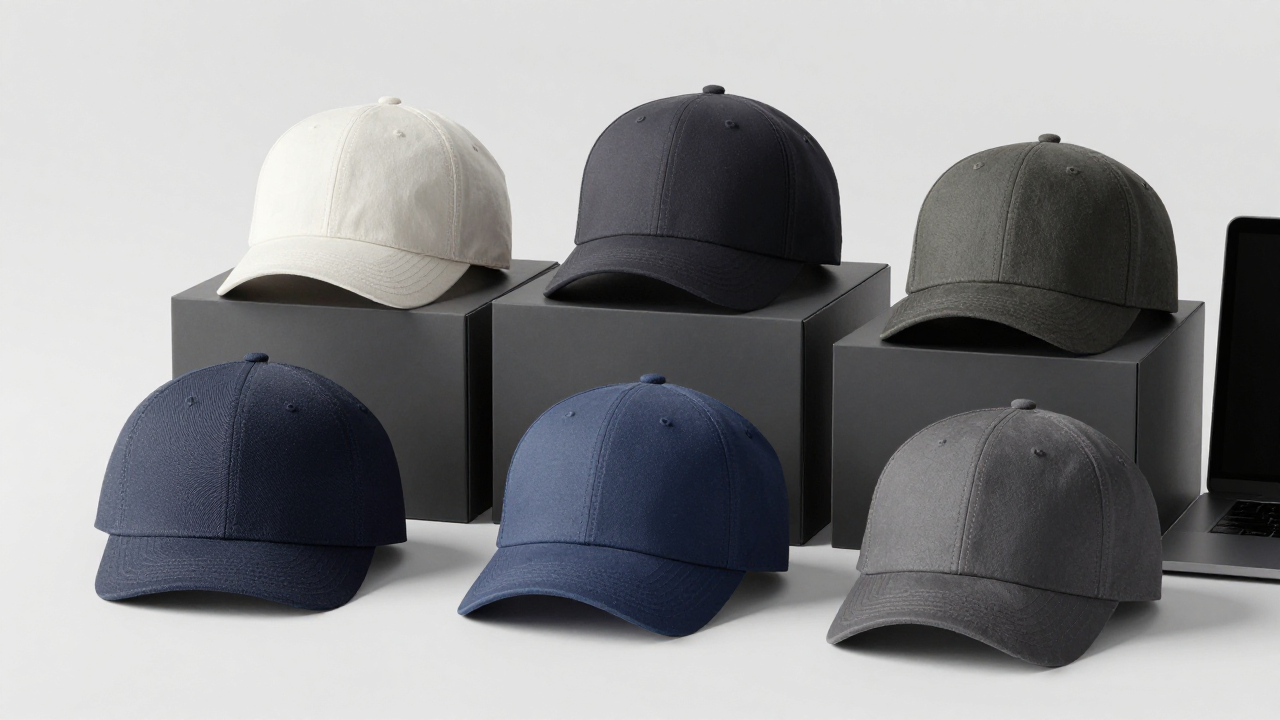
A small-scale cap manufacturing operation in the US runs $200,000 to $500,000 to launch, and most cap manufacturers see payback between year three and year five.…
That range assumes 30,000 to 60,000 units a year. Roughly one dollar in five goes to line items that never appear in a business plan.
What a Cap Manufacturing Operation Actually Costs in 2026
The equipment quote is the easy part. Two 12-head embroidery machines, a sewing floor (or a contract sewing partner), digitizing, and a first blank buy are all things you can price on a Tuesday afternoon. What kills budgets sits underneath: the building's electrical service, the compressed air loop, freight and rigging, and the 60-to-90-day cash gap between paying for blanks and getting paid by a wholesale account.
Add the hidden column up and you get 18% to 34% on top of the quoted figure. That spread is wide because it depends on one thing: whether the building was already wired for industrial load. A leased space in an industrial park in Ohio often clears it. A converted retail unit in Southern California usually doesn't.
A $380,000 Budget That Ran Out at $512,000
In September 2023, a contract headwear shop in Montebello, California approved a $380,000 launch budget and closed its first fiscal year at $512,000. The overrun wasn't equipment. It was the building and the calendar.
The owners signed a lease on a 9,000-square-foot space and ordered eight embroidery machines. The landlord said the panel was "fine." It wasn't. The electrical service upgrade came in at $29,400, and it took the utility six weeks to schedule the disconnect. Compressed air and a chiller added $21,000 because eight heads running in an unventilated room in August will cook thread and jam bobbins. Rigging and freight, which the machine vendor quoted as "buyer arranges," landed at $13,700.
Then the city planning office put a conditional-use permit on hold for 11 weeks. During those 11 weeks the shop paid $34,000 in rent and a guaranteed salary to two machine operators it had already hired.
How to avoid it: before signing any lease, pay a licensed electrician $600 to run a load calculation against the exact machine spec sheet. Ask every vendor for a "dock-to-first-stitch" quote in writing, including rigging. And phase the equipment buy — two machines now, two more after your first repeat order — instead of filling a floor with capacity you can't feed.How to Calculate ROI for Cap Manufacturers Without Cheating
ROI = (Annual Net Contribution − Total Investment) / Total Investment × 100.
Net Annual Contribution = (Average Selling Price − Landed Unit Cost) × Annual Units − Fixed Operating Costs.
Here's the uncomfortable version. Total investment $310,000: equipment $96,000, tooling and digitizing $22,000, first inventory $58,000, facility buildout $46,000, working capital reserve $88,000. Selling price $14.20 per cap wholesale, landed unit cost $9.10, so each unit contributes $5.10. At 42,000 units a year that's $214,200. Fixed operating costs — rent, two operators, software, insurance — run $118,000. Net annual contribution is $96,200.
Year-one ROI: ($96,200 − $310,000) / $310,000 × 100 = −69%. Payback on paper is 310,000 / 96,200 = 3.2 years. In practice, with a four-month ramp before the first wholesale account repeats, it's closer to 4.5.
That negative first-year number is normal. Anyone showing you a positive year-one ROI on a cut-and-sew launch is either counting pre-orders as revenue or leaving working capital out of the denominator.
The Line Items Most Cost Estimates Get Wrong
The cost most people undercount isn't the machines. It's idle machine time and dead inventory, and both are invisible in a spreadsheet built on unit economics.
Downtime. A 12-head machine at 70% utilization produces roughly 2,500 caps a week. At $5.10 contribution that's $12,800 a week you lose when a needle bar breaks and the replacement ships from a distributor with no local stock. Keep a spare cylinder arm and a thread-drive motor on the shelf. It's $3,400 that pays for itself the first time. Stitch density. A three-color logo at 8,000 stitches takes about six minutes of machine time. The same logo at 14,000 stitches — which is what a 3.5-inch left-chest patch on heavyweight cotton twill actually needs to look crisp — takes nearly ten. Quoting a flat $4.50 per decoration loses money on every order heavier than 10,000 stitches. When we quote custom caps out of our own facility, stitch count, backing type, and panel construction are listed as separate lines, because merging them into one number is how shops discover in month seven that their best-selling SKU is their least profitable. MOQ math. A 144-piece minimum looks safe. Sell 106 and you've got 38 caps in a colorway nobody reorders, plus $260 tied up. Multiply across 14 colorways and you're carrying four figures of dead stock. Heat damage. Blanks stored in a non-climate-controlled warehouse in Phoenix in July will show sweatband adhesive failure by October. That's not a manufacturing defect you can claim against a supplier.When Cap Manufacturing Is the Wrong Investment
Three conditions should stop the project before the first machine is ordered.
If your realistic annual volume is under 18,000 units, contract production through an established headwear manufacturer beats owning equipment. Below that number, fixed costs per unit climb past what a factory in Asia or a domestic contract shop charges you per piece.
If your advantage is design, brand, or distribution rather than production, buy capacity instead of building it. Running a sewing floor is a manufacturing business with manufacturing problems, and it will eat the hours you meant to spend on product.
If more than 50% of forecast revenue sits with one seasonal account, the payback math collapses. One lost back-to-school order can push a 3.2-year payback past year seven.
Does a Custom Cap Operation Still Need Digital Marketing in 2026?
Yes, and it belongs in the cost model as a fixed line, not a growth experiment. Buyers now shortlist suppliers before they ever send an email.
A cap supplier outside Dallas learned this the expensive way in spring 2024. A licensed apparel buyer needed 30,000 units for a June program and could not find current capacity, MOQ, or decoration specs on the supplier's site — only a contact form. The buyer moved to a competitor with a public spec sheet. That's a $180,000 order lost to a missing PDF. Budget $1,800 to $4,000 a month for a functioning catalog page, spec sheets, and a real capacity statement.
Frequently Asked Questions
How much does it cost to start cap manufacturing in the US?
Launch costs run $200,000 to $500,000 for a small operation producing 30,000 to 60,000 caps a year. Equipment accounts for roughly a third. Electrical upgrades, freight, permits, and working capital make up the rest and are frequently left out of initial budgets.
What is a realistic payback period for cap manufacturing?
Payback typically lands between three and five years, with 4.5 years more common than 3.2 once ramp-up and a 90-day cash cycle are included. Payback under two years usually means working capital was excluded from the investment figure.
Why do cap manufacturing budgets run over?
Overruns come from the building and the calendar, not the machines. Electrical service upgrades, compressed air, rigging, and permit delays add 18% to 34% to quoted costs. An 11-week permit hold can cost $30,000 or more in idle rent and payroll.
How do cap manufacturers calculate ROI correctly?
ROI = (Annual Net Contribution − Total Investment) / Total Investment × 100, where contribution equals price minus landed unit cost times units, minus fixed operating costs. Total investment must include working capital and facility buildout, or the result flatters the project.








