

Expect cap manufacturers to quote $180,000 to $520,000 for a turnkey launch in 2026, with payback landing between 3.5 and 5 years.…
Most first-time buyers settle near $340,000 once tooling, first inventory and a working-capital cushion are counted. Anything pitched under $120,000 is a decoration shop with a heat press, not a factory.
What Cap Manufacturers Actually Spend to Start in 2026
That spread is wide because "cap manufacturing" covers three very different businesses. Cutting and sewing panels from scratch, buying blanks and decorating them, or running a full cut-and-sew plus embroidery floor each carry a different cost structure. The numbers below assume the third option, since that's what most people mean when they say they want to get into headwear.
The explicit costs, line by line
Cash you hand over before the first sale. These are the items a supplier will happily quote you.
The costs nobody puts in the deck
Maintenance, migration, downtime and the human side are where the real money goes. A 12-head machine burns through needle plates, rotary hooks and tension springs constantly; budget $4,200 per machine per year in parts and technician time. Downtime on a single needle bar can idle four operators for half a shift — we plan 8% to 12% capacity loss on every production calendar, and that number has never been wrong.
Then there's the cash conversion cycle. You pay a 30% deposit on materials, wait 35 to 45 days for production, sit 28 to 32 days on the water from Ningbo to Los Angeles, clear customs in 4 to 9 days, and then wait 45 to 60 days for your distributor to pay. That's roughly 165 days of cash locked up before a dollar comes back. Most first-time operators model 60.
How to Calculate ROI for Cap Manufacturing in 2026
ROI for a cap manufacturing operation is annual net operating profit divided by total invested capital. A $340,000 launch returning $97,000 pre-tax in year one is a 28.5% ROI, which works out to a 3.5-year payback — but that's the optimistic version before cost of capital and depreciation get involved.
The plain formulas:
ROI = (Annual Net Operating Profit ÷ Total Invested Capital) × 100
Payback in years = Total Invested Capital ÷ Annual Net Operating Profit
Now the one that actually matters, because it accounts for the 165-day cash cycle:
Adjusted ROI = (Net Operating Profit − (Cost of Capital × Average Capital Tied Up)) ÷ Total Invested Capital × 100
Here's a real walkthrough. A 12-machine shop producing 8,000 caps a month, selling to promotional distributors and small D2C brands at an average $6.40 per unit:
Annual revenue: 96,000 units × $6.40 = $614,400
Direct cost per unit: $3.05 materials + $0.55 embroidery labor + $0.30 packaging and outbound freight = $3.90. Total direct = $374,400.
Annual fixed: rent $54,000, indirect labor $58,000, insurance and software $16,000, marketing $15,000 = $143,000.
Net operating profit: $614,400 − $374,400 − $143,000 = $97,000.
Straight ROI: $97,000 ÷ $340,000 = 28.5%. Payback: 3.5 years.
Now the honest version. Annual operating cost is $517,400, which is $1,417 per day. At 165 days of tied-up cash, average capital in play is $233,800. At a 9% cost of capital, that's $21,042. Adjusted ROI = ($97,000 − $21,042) ÷ $340,000 = 22.3%, and payback stretches to 4.5 years. Depreciation on $118,000 of equipment over seven years pulls another $16,900 out, and you land near 4.9 years. That gap between 3.5 and 4.9 is the entire article, condensed.
Where Most People Get the Cost Math Wrong
The single biggest error is amortizing digitizing and tooling across production units instead of across designs. A front-logo digitizing file costs $85 to $250 one time. Adding a fourth thread color to that same design costs almost nothing until you cross the machine's thread-change time threshold, at which point it adds $0.11 to $0.19 per cap on a 2,500-unit run. Buyers who treat color changes as free get surprised on the invoice; buyers who treat them as a fixed fee overpay.
The second error is the sampling tax. We've watched buyers burn $4,000 to $9,000 on sample rounds before a single production PO. Four rounds, $140 per sample with air freight, and suddenly the "cheap" factory isn't cheap. Cap the loop at two rounds and get the fit right on paper first.
Third: counting gross margin as ROI. Gross margin ignores the 165-day cycle, ignores the 8% downtime, and ignores returns on D2C channels, which on headwear run 9% to 14% because sizing is guesswork for online shoppers.
When we opened newgeneration's second embroidery floor in Dongguan in 2019, we budgeted $96,000 for six machines and spent $118,000. The overage was electrical work, freight, and three months of a technician we hadn't planned to hire. Nobody's spreadsheet has a line for that. (We build it in now, at 18% of equipment cost.)
Do Specialty Caps and Materials Change the Math?
Specialty headwear moves the unit economics in both directions, and the material choice usually decides which way.
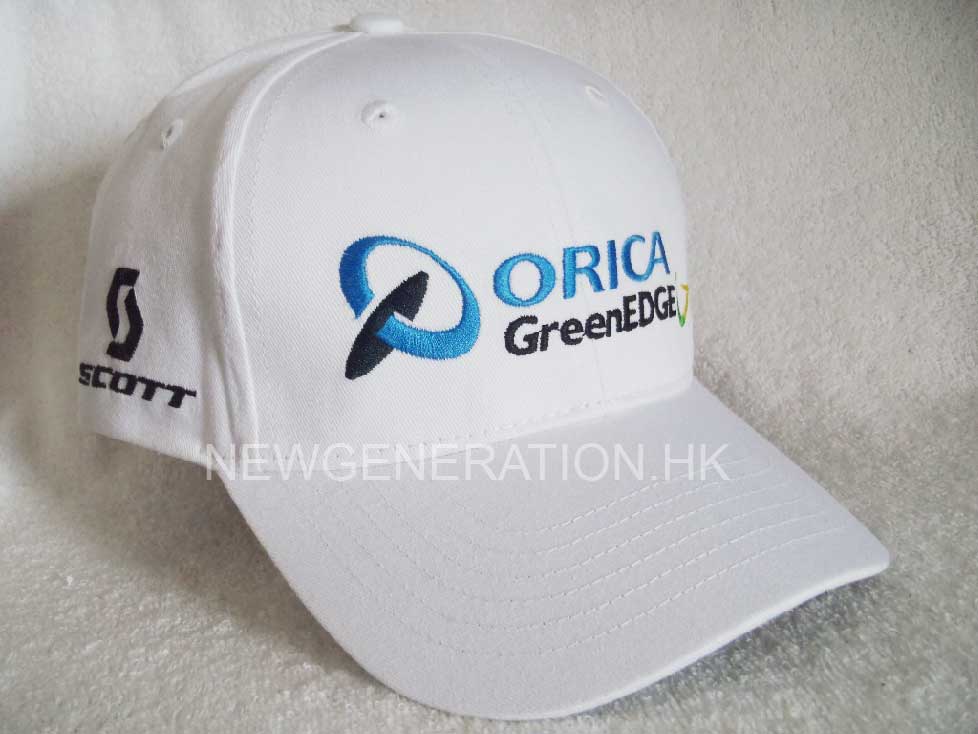
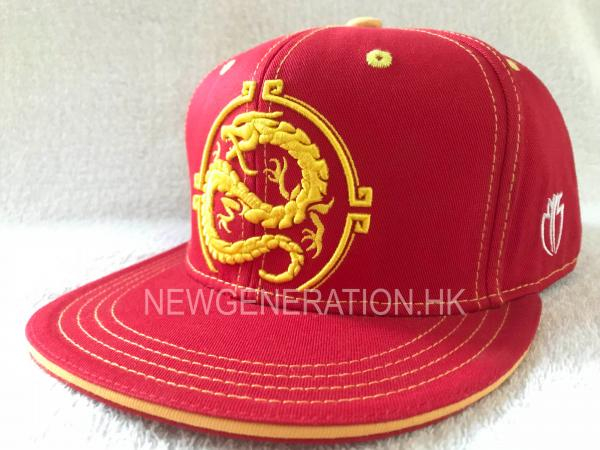
A basic 6-panel cotton twill cap in 10 oz fabric lands around $3.85 all-in at 2,500 units. Swap to performance polyester with a laser-cut back panel and you're at $5.10 to $6.30, mostly because the fabric costs 2.4× more and the laser step adds a second operation. Flat-brim snapbacks with a 3D puff embroidery run $1.10 to $1.80 higher than flat embroidery because puff foam and denser underlay slow the heads down by 20% to 30%.
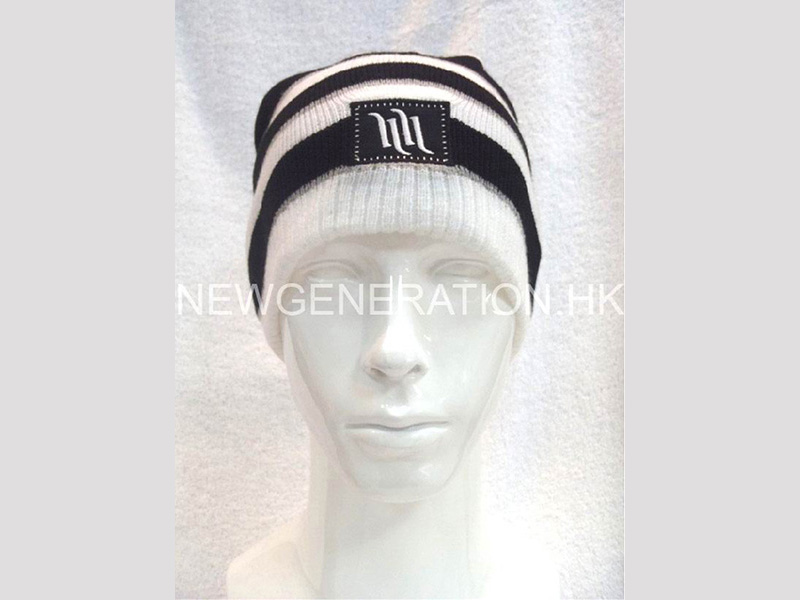
Jacquard knit beanies are their own animal. MOQ jumps to 500 per colorway because the knit programs are expensive to change, and a 12-gauge jacquard machine runs $18,000 to $34,000 on its own.
Trends that actually pay right now: trucker caps with laser-perforated backs for the outdoor and logistics market, and unconstructed 5-panel camper caps in recycled poly for the DTC sustainability crowd. Both let you charge $18 to $26 retail on a $4.20 landed cost. Water-repellent finishes are worth the $0.35 upcharge only if your buyer sells into the trades — for fashion accounts, that money disappears into the margin.
When a Cap Manufacturing Investment Isn't Worth It
Walk away if any of these are true.
You can't commit to 25,000 units a year. Below that, you're a broker with extra steps. Buy blanks, decorate, keep your cash free.
Your cost of capital is above 12% and the honest payback is over 4 years. The spread between adjusted and straight ROI is roughly the spread between a good business and a slow one.
More than 70% of revenue sits with one account. A single logo change in the buyer's marketing department wipes out your year.
You can't fund 165 days of working capital without a credit line. Imported headwear carries Section 301 List 4A duties at 7.5% on most HS 6505 codes, and the de minimis exemption for China-origin shipments closed in May 2025 — landed cost math has gotten less forgiving, not more.
Anyone who watched small caps swing through 2025 knows volatility cuts both ways; short-run cap production behaves the same way, and a 2,500-unit run that misses the season is dead inventory.
One more, and this is the one people argue with us about: if your plan depends on beating Vietnamese or Bangladeshi FOB pricing, don't build. You won't. Build on speed, small-batch flexibility and decoration quality instead.
In July 2021 a client in Portland, Oregon called us at 3 a.m. because 9,400 trucker caps were stuck at Long Beach with no chassis available and a college football season starting in six weeks. We air-freighted 2,000 of them at $6.10 per cap and ate the margin on that batch. The lesson wasn't about freight. It was that his cost model had no line for "the season starts whether your container arrives or not." Add that line.
Frequently Asked Questions
What is a realistic ROI for cap manufacturers in the US?
A well-run cut-and-sew operation with embroidery returns 22% to 29% adjusted ROI in year one, per our own modeling. Straight ROI looks better at 28% to 35%, but that figure ignores the 165-day cash conversion cycle and equipment depreciation.
How much does it cost to start a custom cap manufacturing business?
Plan on $180,000 at the low end for a decoration-focused shop and $520,000 for a full cut-and-sew floor with embroidery. The realistic midpoint is $340,000, including equipment, first inventory, facility buildout and a working-capital reserve.
How long until a cap manufacturing investment pays for itself?
Three and a half to five years under normal conditions, selling at $6.40 per unit at 8,000 units monthly. If your cost of capital exceeds 12% or you're relying on one large account, add 12 to 18 months to that estimate.
How do I choose a cap manufacturer for low-volume orders?
Look for MOQs of 300 units per style per color, in-house embroidery rather than subcontracting, and a factory that quotes digitizing separately. Ask for two physical samples with the same artwork before committing — thread color drift between rounds is the most common quality failure.
Why do cap manufacturing cost estimates usually run over?
Electrical and facility work, freight, and unplanned technician hires are the three biggest overages, typically adding 15% to 22% above the initial equipment budget. Sampling rounds and tariff changes account for most of the rest.