


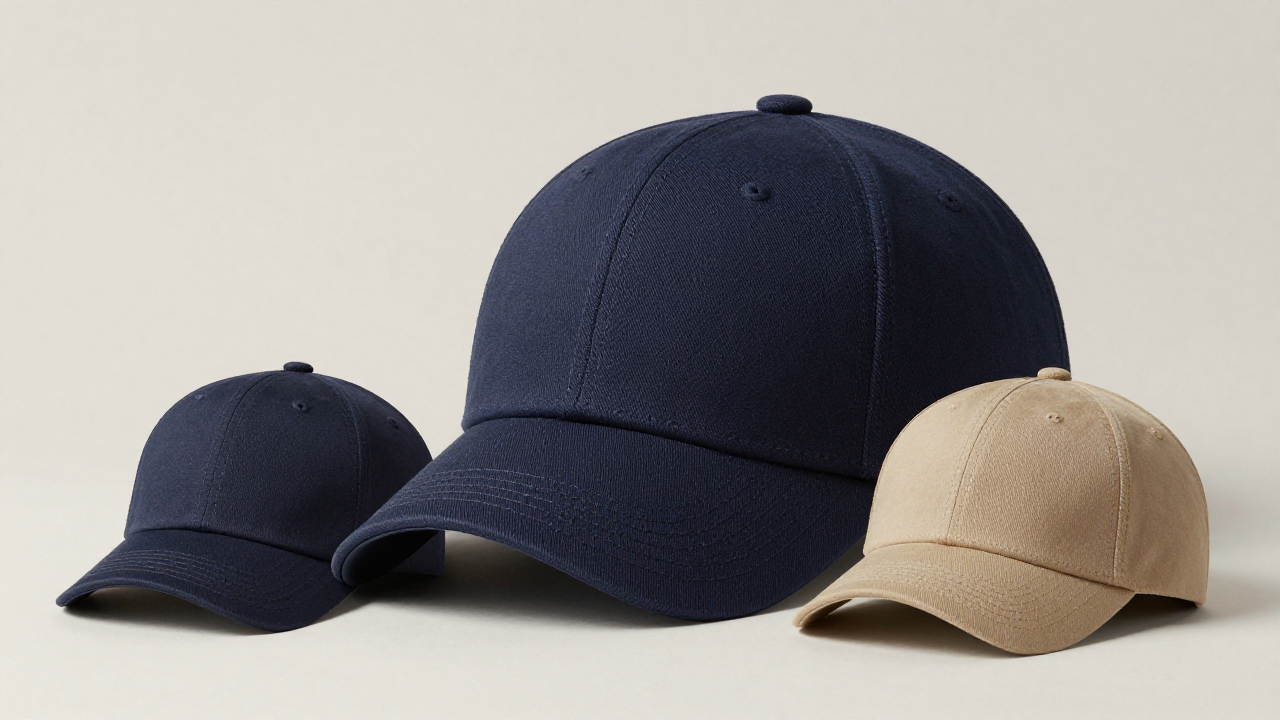
What follows is built from programs that went wrong: a missed Black Friday, a navy that came back warmer than the first run, and a quote that grew 56% on the water.…
Each failure has a written-down fix.
The Short Answer on Cap Manufacturers in 2026
Under 500 pieces, buy from a domestic decorator. From 500 to 5,000 pieces with your own woven label, a Chinese cut-and-sew factory is the only route that pays. Past 5,000 pieces with a fixed delivery date, split the order across two factories and pay for a second sample set. Three lines, and they settle most cap sourcing programs before price enters the conversation.The 2026 Supply Chain, Sorted by What It Can Actually Do
Four supplier types serve US cap buyers in 2026, and they compete on different things. Blank-and-decorate shops work from SanMar, S&S Activewear or Richardson stock and sell speed. Regional cut-and-sew houses sell mid-run flexibility. Chinese OEM factories sell unit cost and decoration range. Vietnam and Bangladesh plants sell volume plus tariff diversification.
The brand-name factories are not on that list for most buyers. New Era's plants run New Era and licensed league product; outside brands do not get onto that calendar. Cap America in Fredericktown, Missouri and Otto Cap in Los Angeles do take outside work, and both quote in the 144–1,000 unit band. Yupoong supplies plenty of private-label headwear through Flexfit, which is why so many "custom" caps share a silhouette.
Comparing Cap Manufacturers Across Four Sourcing Routes
At 500 units, a Chinese OEM cap lands around $4.10–5.60 duty-paid against $11–14 from a US decorator. At 5,000 units the spread passes $5 per cap. Those two numbers plus your delivery date decide the route, usually before quality gets discussed.
Migration difficulty is the row buyers skip at RFP stage and regret at reorder. Leaving a Chinese factory means a new digitized file, a new sample set and a 4–6 week gap in supply, and the new supplier's first run rarely matches the old one on crown height or brim curve.
One climate note. 10.5 oz cotton twill, the default for a structured six-panel, is miserable in Phoenix in July — Southwest buyers usually move to a 7.5 oz poly-cotton blend with a UPF rating, while Pacific Northwest accounts stay on heavy cotton because the cap doubles as rain gear. Same product, two specs, two sets of quotes.
The Dimension Nobody Puts in the RFP
Ownership of the digitized embroidery file and the signed pre-production sample decides whether your second order looks like your first. Neither line appears on a standard quote sheet. Factories hold both by default because nobody asks.The pattern repeats. A brand approves a photo of a sample, the factory ships bulk, the reorder arrives with a logo 3 mm narrower and an outline that reads thinner. Stitch count on the first front-crown logo was 10,400; the redo ran 7,200 because a new digitizer worked from a JPEG instead of the original vector. Nothing in the contract was violated, because the contract never named a stitch count.
Three things to own, in writing:
We learned the third one the hard way in 2020, when a customer's heathered knit beanies shrank 4% after the first domestic wash and the factory's position was that the PO said "100% acrylic" and nothing about shrinkage.
Three Programs That Broke, and What Each Cost
Case one: ordered in August, delivered December 12
In August 2022, a merch agency in Nashville placed 6,000 five-panel camper caps with a factory in Guangdong. The quote said 30 days. The factory's actual calendar had the order behind two licensed sportswear programs, and the clock started when bulk fabric landed — not when the PO was signed. Fabric arrived September 27. Caps shipped November 4, cleared the Port of Long Beach on December 2, and reached the Nashville warehouse December 12.
Black Friday was November 25. The agency had pre-sold 4,100 units against a promised in-stock date, paid $2.10 per cap to air-freight 1,200 of them, and dumped the remainder at 40% off in January.
What to do instead: get the production calendar in writing with "fabric in-house" as day zero. For Q4, book the slot with a 30% deposit by June. If the date is immovable, split 60/40 across two factories — it costs more per unit and less than a missed season.Case two: the navy that came back two shades warm
March 2023, a Columbus, Ohio brand restocked 1,500 six-panel caps at the same factory, same Pantone reference on the PO, 19-4028 TCX. The reorder arrived noticeably warmer. The mill had run a fresh dye lot of twill, and no retained sample from run one existed to compare against, so nobody caught it before the container loaded.
The two runs could not be merchandised side by side. The brand reshot the drop for $1,800, marked 600 units down 15% (about $2,700 of margin), and reordered a third time in a different color entirely.
What to do instead: require lab-dip approval before bulk on every reorder, not just the first, and treat the dye lot code as a line item on the packing list.Case three: a $3.10 quote that landed at $4.85
A promotional distributor in Ohio approved 3,000 caps at $3.10 FOB in February 2023 — $9,300 of product against an MSRP already locked in. The landed worksheet came later: ocean LCL freight $840, Section 301 and standard duty on the headwear HTS line, customs brokerage $150, ISF filing $35, drayage $280, plus a $420 mold fee for a custom metal slide buckle that the factory had quoted as "included."
Landed cost was $4.85. Contribution margin fell from the modeled 58% to 34%, and the drop shipped anyway because the marketing calendar had already run.
What to do instead: ask for a landed-cost worksheet with the HTS code printed on it, not an FOB number. Confirm Incoterms in writing and list every excluded charge. Section 301 treatment of Chinese headwear has moved several times since 2019, so re-check the rate before you price retail, not after.How to Vet Cap Manufacturers in Two Weeks
A cap manufacturer can be vetted in 14 days with four artifacts: a pre-production sample made on the production line, a spec sheet with tolerances, a landed-cost worksheet, and a written production calendar. A factory that cannot produce all four inside a week will not hit a ship date either.
Skip the factory tour video. Ask instead what percentage of the floor is running your cap style in the month you ship — the honest answer tells you whether you are a filler order or a priority.
Where Chinese Factories Fit, and Where They Don't
Chinese cut-and-sew factories own the 500–10,000 unit band for decorated caps, and they are the wrong choice below 200 units or inside 30 days. Embroidery lines, blank inventory and sampling all amortize across that volume, which is why a 150-piece order carries the same setup cost as a 1,500-piece one.
Roughly one in five inquiries that reaches us at New Generation, which has run headwear production in China since 2008, is a 150-piece order needed in three weeks. Both numbers disqualify the order before quality comes up, and saying so on the first call has saved more relationships than any quote we've sent. Guangdong covers structured twill and embroidery-heavy work; Zhejiang handles promotional volume; Qingdao runs knit beanies and jacquard.
Frequently Asked Questions
How much does it cost to manufacture a custom cap in 2026?
Custom caps run $2.90–5.60 per unit landed from a Chinese factory at 500–5,000 pieces, and $11–14 from a US decorator at the same quantity. Embroidery, woven labels and custom closures add $0.35–0.90 per cap. Freight and duty represent 18–28% of landed cost.
What is the minimum order quantity for custom caps?
US decorators start at 12–24 pieces on stock blanks. US cut-and-sew shops typically require 144–500 pieces. Chinese cap manufacturers usually set 300–500 pieces per colorway, though some accept 100–200 with a sampling surcharge. Vietnam plants rarely quote below 1,200 pieces.
How long does custom cap manufacturing take?
Plan 7–12 days for sampling, 25–35 days for production at a Chinese factory, and 18–30 days of ocean transit to a US port. Add about two weeks for customs clearance and drayage. Domestic decorators turn stock blanks in 5–10 business days.
How do I choose a cap manufacturer for a small brand?
Match the factory's minimum to your first order, request a pre-production sample made from bulk fabric, and confirm in writing who owns the embroidery file. For a first run under 500 caps, a domestic decorator or a small factory charging a sampling fee is safer than chasing the lowest quote.
Do US tariffs apply to caps made in China?
Yes. Caps made in China carry the standard HTS duty plus any active Section 301 surcharge, and that treatment has changed several times since 2019. Request a landed-cost worksheet with the HTS code printed on it, and re-verify the rate before setting retail.
Which Route Fits Your Situation
If you're testing a design on Shopify with 24–72 units, use a US decorator and eat the $12 unit cost. The sell-through data is worth more than the margin you'd save.
If you're a brand doing 800–3,000 units a season with a woven label and a hangtag, use a Chinese factory, budget 75 days door to door, and keep a second factory sampled and on file before you need it.
If you distribute promotional product on three-week turnarounds, stay domestic and buy blanks deeper than you think you need.
If you're a retailer with a locked Q4 date and 8,000+ units, split the order across two countries and pay for the second sample set. The duplicate tooling costs less than one late container.
The quote that looks 40% cheaper is usually a different cap. Ask what changed before you sign.








