


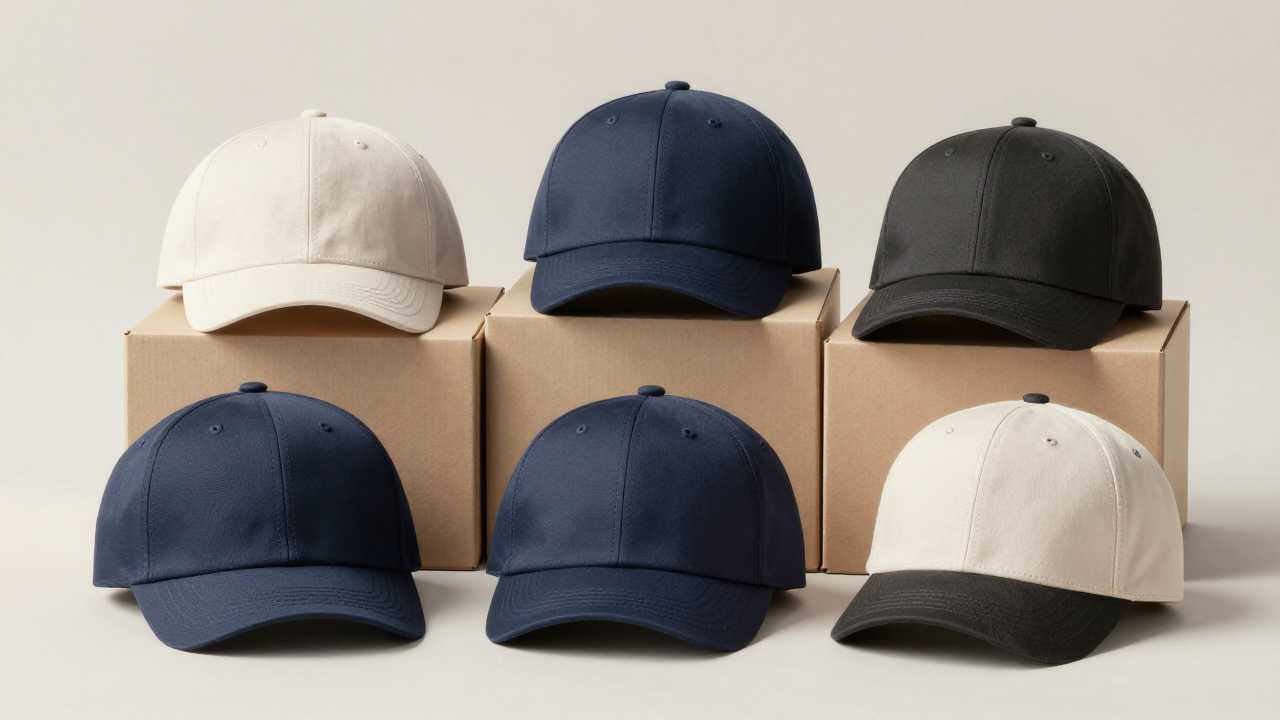
A small branded run in the U.S. typically lands at $8–$14 per cap at 50 units, and private-label or small-batch programs reach $12–$28 per unit before launch costs.…
The lowest quote from cap manufacturers rarely includes sampling, freight, duty, inspection, rework, delays, or inventory risk, and those line items commonly add 40% to 90% to the invoice you thought you'd negotiated.
Why the Cheapest Quote From Cap Manufacturers Usually Becomes the Most Expensive Option
Here's what that looked like in practice. In March 2022, a two-person outdoor brand in Austin, Texas, placed 600 six-panel structured caps in cotton twill with a 3D puff front logo and a leather strap closure. The winning quote was $7.10 FOB. Freight, duty, broker fees, and drayage pushed landed cost to $10.07. Then the shipment arrived: 63 units had the front logo sitting roughly 6mm off center, and the leather strap punch was misaligned on the same batch. Rework at a local embroiderer ran $480. A rushed 120-unit replacement by air added $390. The launch moved from April 15 to May 6 and missed a regional festival slot entirely.
Effective cost per sellable cap: $12.87. The $7.10 never existed.
The pattern repeats because buyers compare the wrong number. Unit price is a manufacturing input. Landed cost is an accounting output. Total cost of ownership is what actually hits your P&L, and it includes everything the quote was designed to exclude.
What Custom Caps Actually Cost Once You Stop Comparing Unit Prices
Visible costs are the ones printed on the quote. Hidden costs are the ones that show up 90 days later in a spreadsheet nobody built. Both belong in the same model before you sign anything.
Verify the HTS classification and current tariff exposure with a customs broker before you model anything. Headwear classifications have moved between lists more than once since 2018, and a 7.5% swing on a $30,000 order is $2,250.
The hidden side runs deeper than freight. Excess inventory is a hidden cost. So is the cash you can't deploy into ads because it's sitting in 340 unsold caps. So is a three-week delay that pushes your drop past the buying window. So is supplier migration — the four to six weeks it takes to onboard a replacement factory, re-approve a sample, and re-run compliance paperwork.
September 2023, a promotional distributor in Columbus, Ohio, learned the freight version of this. He bid a 2,400-unit employee-appreciation order at $9.85 landed and won against two competitors. Then the client pulled the event forward three weeks. Rush production added $0.85 per cap; air freight replaced ocean at $1,940 versus $610. He honored the bid and ate $3,370 against a projected margin of about $5,400. The job that looked like a 23% win closed at 8%.
The embroidery comparison trap
Comparing "embroidery included" quotes without a stitch count on the tech pack is the single most common apples-to-oranges error we see. A 5,500-stitch flat front logo and a 14,000-stitch 3D puff with a two-color outline are not the same product, and the spread runs $1.10 to $2.40 per cap offshore and $2.50 to $4.00 domestically at 2025 pricing. Two quotes $1.80 apart may be identical in real cost. Two quotes that look identical may be $3 apart.
The Line Item Almost Every Buyer Calculates Wrong
Most buyers compare landed cost per unit. The number that matters is landed cost per *sellable* unit, adjusted for defects and returns.
True cost per sellable unit = landed cost per unit / (1 − defect rate)
A $10.11 landed cap from a factory running 6% defects costs $10.76 per sellable unit. A $14.80 landed cap at 2% defects costs $15.10. The gap narrows from $4.69 to $4.34 — meaningful, but it doesn't flip the decision on its own. I ran this with a 12% defect rate first and the math looked more dramatic than reality; 6% is closer to what a mid-tier factory actually delivers on a first run with a new logo and an unfamiliar trim.
Three other miscalculations matter more than the defect adjustment.
Dimensional weight. Caps are low-density freight. A 100-piece carton measures roughly 24 × 16 × 16 inches and weighs about 11 kg, but bills at a volumetric equivalent near 16.8 kg. On air, you pay for the box, not the caps. Buyers who budget air freight at $4/kg discover it's closer to $6. Payment terms. A 30/70 T/T structure means 30% of your cash leaves four to six weeks before anything ships. A domestic supplier on net-30 costs more per unit and less in working capital. At a 12% cost of capital, a $6,000 deposit held for 60 days costs about $118 — small, but it belongs in the model. Free samples. A supplier who won't charge $80–$150 for a pre-production sample usually won't invest in making one properly either. The sample is the cheapest part of the program and your only cheap chance to catch a $5,000 mistake. Pay for it. Approve it against measured tolerances, not a photo.How to Calculate ROI on a Custom Cap Program Before You Wire a Deposit
ROI = (net profit generated by the cap project − total project investment) / total project investment × 100
Break-even units = total project investment / contribution per unit
Run it with two real supplier structures. A brand we'll call Halden Supply is launching a $32 cap with a $10 variable fulfillment cost, so contribution is $22 per unit.
Option A — low quote, 500 MOQ. $6.80 FOB, $3,400 product, $940 freight/duty/broker, $160 samples, $250 defect allowance, $700 content. Total cash committed: $5,450. Sellable units after defects: 470. Option B — higher landed, 150 MOQ. $12.50 landed, $1,875 product, $260 samples, $40 defect allowance, $700 content. Total cash committed: $2,875. Sellable units: 147.Conservative case: 140 caps sell. Contribution is $3,080. Option A returns −$2,370, or −43.5% ROI, and leaves 330 caps of dead stock. Option B returns +$205, or +7.1%, and sells out.
Expected case: 300 caps sell. Contribution $6,600. Option A returns +$1,150, or 21% ROI, with payback at 248 units. Option B needs a reorder to reach 300, adding $1,875 with no sample cost, so total investment is $4,750 and the return is +$1,850, or 39%.
The crossover sits somewhere around 450 to 600 units on a validated design. Past that, Option A's landed cost per sellable cap drops to roughly $8.40 and the higher-priced supplier stops being the better deal. Below it, the cheap quote is a leveraged bet on sell-through you probably can't defend. Model three scenarios — conservative, expected, best case — and make the investment decision on the conservative one.
How to Compare Cap Manufacturers in the United States Without Comparing Apples to Oranges
Standardize the request before you talk to anyone. A tech pack that specifies silhouette, fabric weight and composition, closure type, brim material, buckram, PMS colors, stitch count per logo position, label construction, packaging, quantity, delivery date, and destination turns a negotiation into a comparison.
Then score every supplier on the same weighted rubric.
Directory listings prove nothing. In January 2023, a Los Angeles brand shortlisted three "U.S. cap manufacturers" from an online directory. Two shared a fulfillment address in City of Industry and turned out to be trading companies reselling from the same offshore factory. That isn't fraud — plenty of trading companies are competent — but the buyer thought she was comparing three factories and was actually comparing one factory twice.
Verification that actually works: request a live video walkthrough with the embroidery machine running and the day's work order visible, cross-check the facility address against property records, and ask for two references from brands that placed orders in the last six months. Reference lists older than a year tell you about a factory that may no longer exist. We've been cutting and sewing headwear in Guangdong since 2008, and we still expect to send that walkthrough before a first order. The instinct is correct.
When Is Custom Cap Manufacturing Not Worth the Money?
Custom production stops making sense when the cash at risk exceeds what your validated demand can absorb. In practice that means fewer than 150 units with no reorder path, unvalidated designs, launch dates under 75 days, or a program that consumes more than 15% of quarterly operating cash.
In January 2024, a brand with roughly 900 Instagram followers ordered 1,000 custom caps. They sold 140 in eight months and liquidated the rest at $11. The product was fine. The demand assumption was not.
Boundary conditions where we tell people to walk away:
The failure patterns are consistent across a decade of orders: choosing on unit price, skipping a physical pre-production sample, accepting "standard" as a tolerance on logo placement and visor curve, changing artwork after the strike-off, and never writing down what happens when defects arrive.
The sequence that works is boring. Validate with blanks or low-MOQ embroidery. Approve a measured sample — logo position within 2mm, visor curve within 3mm. Pilot 150–250 units and inspect at AQL 2.5 before scaling. Negotiate volume pricing only after the pilot clears. In 2022 we talked a client down from 1,000 units to 180 blank caps with embroidery because her design had never touched a customer. She reordered 1,400 nine months later at a landed cost 31% below her original quote.
Frequently Asked Questions
How much do custom caps cost at 50 units in the U.S.?
A small branded run typically lands at $8–$14 per cap at 50 units once decoration, inbound freight, and setup are included. Complex private-label or small-batch programs with custom trims and packaging reach $12–$28 per unit before content and launch spending.
Why is the cheapest cap manufacturer quote usually more expensive?
Low quotes usually exclude sampling, freight, duty, inspection, defect replacement, and delay costs, which commonly add 40% to 90% to the invoice. Buyers comparing unit price instead of landed cost per sellable unit routinely commit more cash to more inventory at higher risk.
How long does custom cap production take?
Overseas cut-and-sew runs take 14–21 days for sampling, 30–45 days for production, and 25–35 days for ocean freight, so plan on 75–100 days door to door. Domestic decoration on blanks runs 7–14 days. Rush timelines typically add $0.55–$1.20 per cap plus air freight.
How do I calculate ROI on a custom cap order?
ROI = (net profit from the project − total project investment) / total project investment × 100. Use total project investment including samples, freight, duty, content, and defect allowance. Break-even units = total project investment / contribution per unit. Model conservative sell-through, not full sell-through.








