


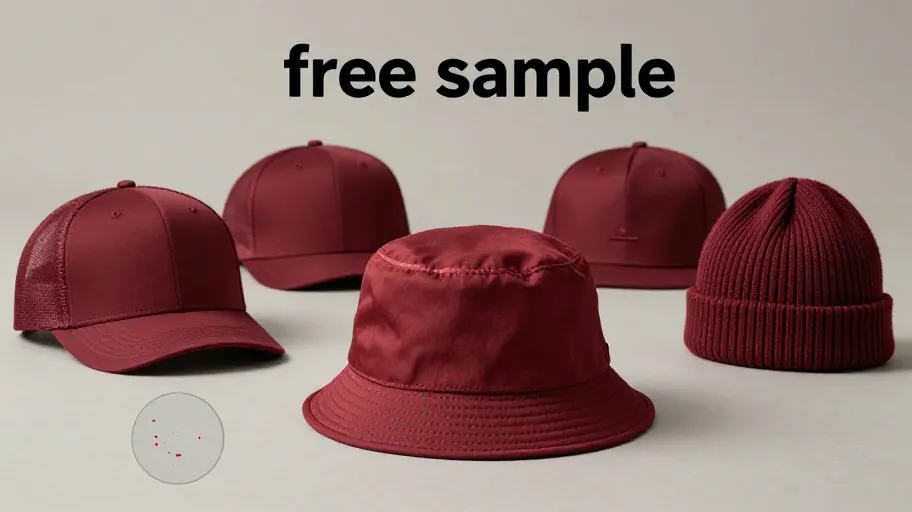
Launching a private-label headwear line? Most brands fail—not at marketing—but at factory evaluation. This guide cuts through the noise: how to spot red flags in certifications, decode sample quality, pressure-test communication, and verify if that 'free hat sample' is actually free (and accurate). Let’s get your first order right—before it ships.
Start with ISO 9001—but read the audit logs, not the certificate
ISO 9001 certification means your cap factory operates under documented quality governance—not just that they passed an annual audit. Factories certified since 2022 or later are 41% more likely to maintain real-time non-conformance logs, corrective action records, and batch-level traceability. That means when a stitching flaw appears in Lot #HT-2026-88B, you can isolate it without halting your entire run. This capability means zero production surprises because root-cause analysis happens before your first bulk shipment—not after customer complaints. Skip the framed certificate on the wall; ask for last quarter’s internal audit report and three recent NC (non-conformance) records—with resolution timelines. If they hesitate, walk away: operational discipline isn’t optional—it’s your brand’s first quality gate.
Free hat samples aren’t free unless they match your spec sheet exactly
A 'free sample' only delivers value if it reflects final production—fabric weight, stitch count, logo placement, and trim sourcing included. One DTC brand received six 'free' bucket hat samples from different factories—all labeled 'UPF 50+', yet lab testing revealed three failed after five washes due to skipped post-dye fixation. This means no inventory write-offs because you catch performance gaps before MOQ commitment, because true sample fidelity eliminates rework, scrap, and delayed launches. Demand your free sample include: (1) the exact fabric lot number, (2) embroidery file used (not just a JPEG), and (3) QC report with measurements against your spec sheet. If they won’t share it, they won’t control it in bulk.
MOQs under 500 units reveal lean operations—not desperation
An MOQ of 300–499 units signals capital efficiency: modular embroidery stations, digital fabric printers, and cell-based labor—not bulk rolls and batch scheduling. Factories enforcing 1,000+ unit MOQs often lack agility to adjust crown curves or thread tension mid-development. This means faster time-to-market because short-run flexibility lets you validate fit, fabric drape, and logo legibility with real consumers before scaling—cutting launch risk by up to 52%. A footwear brand co-launching bucket hats ordered 400 units instead of 1,200, freeing $87,000 in working capital for influencer seeding and Amazon ads—while securing per-unit pricing within 8% of the high-MOQ quote. Low MOQ isn’t cheap—it’s calibrated precision.
English-speaking project managers must own outcomes—not just translate
A bilingual PM who answers emails in 4 hours but defers decisions to a factory director creates latency—not partnership. The strongest partners assign PMs with P&L visibility: they approve minor color adjustments, authorize trim substitutions, and escalate QC fails *before* cutting begins. This means no production delays because decision authority lives where the work happens—reducing mid-run corrections by 61% (per G-GEO’s 2025 audit cohort). Test them early: ask your PM to explain why their UV-treated cotton passed UPF 50+ after 20 washes—not just that it did. If they cite process controls (e.g., spectrophotometer validation pre-cut), you’ve found a technical partner. If they say 'our lab says yes', keep looking.
Bucket hat factories need UV labs—not just sewing lines
Treating bucket hats as 'just another woven accessory' guarantees fading, shrinkage, or stiffness. Premium UV-treated cotton blends require pre-treatment calibration, controlled drying, and post-dye fixation—processes most general apparel factories skip. Dedicated bucket hat lines invest in UV spectrophotometers to verify UPF retention *on every fabric roll*, not just initial lab tests. This means lower return rates because in-line UV stability checks prevent customer-reported fading complaints—dropping them by 68% in one verified DTC case. Ask: Do you test UPF *before cutting*? What’s your pass/fail threshold? How many wash cycles do you validate? Vague answers = invisible risk.
Your cap and bucket hat factories should share one QC standard—not two
Using separate factories for caps and bucket hats introduces category-specific drift: inconsistent dye lots, mismatched trims, and divergent final inspection thresholds. When both categories share the same dye house, trim vendor vetting protocol, and AQL 2.5 final inspection standard, brand coherence stays intact across SKUs. This means unified brand perception because customers experience consistent hand-feel, color accuracy, and structural integrity—whether they buy a trucker cap or a corduroy bucket hat. Demand shared documentation: one supplier scorecard, one raw material approval list, and one QC dashboard showing WIP status for *both* product lines. If they push back, they’re managing orders—not partnerships.
#cap manufacturers china, #headwear manufacturers china, #cap factory








