


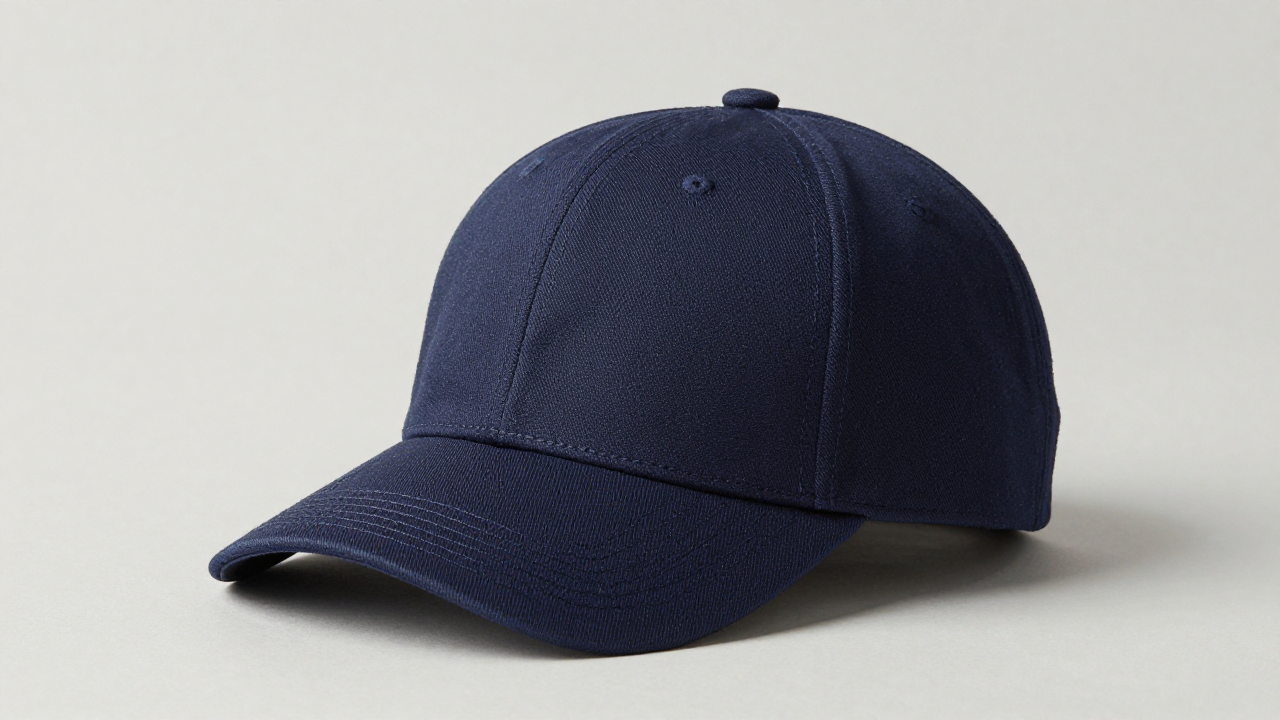
A leak-proof package results when a cap manufacturer converts application torque into sustained liner compression that exceeds the product’s internal pressure and remains stable through filling,…
shipping, storage, and consumer use. The cap, liner, bottle neck finish, product chemistry, and application equipment must be specified as one sealing system.
How Cap Manufacturers Turn Torque into a Leak-Proof Seal
The basic design requirement is:
Contact pressure must exceed internal pressure by a defined safety margin.Contact pressure, \(P_c\), equals axial sealing force divided by sealing area:
P_c = \frac{F}{A}
Torque creates axial force, but torque is not the same as force. The conversion depends on thread geometry, friction, cap stiffness, and liner behavior. A high-friction thread consumes more torque as heat and sliding resistance, leaving less force to compress the liner. Two closures tightened to the same inch-pounds can therefore produce very different sealing pressures.
A simplified relationship is:
F = \frac{T}{r \times \mu}
Here, \(F\) is axial force in pounds, \(T\) is application torque in inch-pounds, \(r\) is the effective thread radius in inches, and \(\mu\) is the friction coefficient between the bottle and closure threads. For polypropylene on PET, the working friction range is often estimated at 0.15 to 0.25, but production testing should replace assumptions.
The pressure margin is:
PM = P_c - P_i
where \(P_i\) is internal package pressure. A design target of at least 5 psi above internal pressure may suit some ambient applications, while carbonated beverages, hot-fill products, and chemicals usually require a larger validated margin.
Neck-finish dimensions are equally important. A 0.005-inch change in the neck finish’s T dimension can shift contact pressure by roughly 12% to 18% in some closure designs. A closure with excellent geometry can still leak when paired with a neck finish at the wrong tolerance limit. The supplier should review the bottle drawing, including T, E, S, and thread dimensions, before finalizing the closure.
The Engineering Parameters That Decide Whether a Cap Seals
Seal integrity depends on the interaction of cap resin, liner, sealing land, thread engagement, and tamper-evident geometry. Each parameter needs a validated operating range for the product, temperature profile, and distribution route.
Cap material: Polypropylene homopolymer is common in U.S. closures because it combines chemical resistance, low density, and useful thread stiffness. A typical high-volume cap may cost approximately $0.02 to $0.05, although resin grade, tooling, decoration, and order volume change the final figure. Carbonated beverages generally require a grade with better creep resistance. HDPE can suit low-torque applications but may deform under sustained heat above 120°F. Liner material: The liner acts as the sealing spring. EPE foam can suit water products at approximately $0.003 per liner. EVA foam provides broader chemical resistance and may cost about $0.005. Plastisol is widely used for pressure-sensitive beverage applications at roughly $0.008. Silicone can support hot-fill conditions above 180°F but may cost around $0.02. Compression set should be validated against the product and shelf-life target; a 20% limit is a common engineering threshold for a 12-month target, not a universal guarantee. Sealing land width: The sealing land is the flat ring where the liner contacts the bottle finish. A land below 0.030 inches can increase liner extrusion risk. A land above 0.090 inches may require excessive torque because the force is distributed across a larger area. Practical starting ranges are 0.040 to 0.060 inches for water and 0.060 to 0.080 inches for carbonated products. Thread engagement: Pressurized products generally need at least 2.5 engaged turns to distribute load and limit cap cocking. A 28 mm closure with a 0.125-inch pitch and three turns provides 0.375 inches of thread travel. Tamper-evident band: A polypropylene breakaway band commonly falls near 0.020 to 0.030 inches in thickness. A thinner band can break during transit; a thicker band may resist consumer opening. Bridge count, score depth, bottle bead geometry, and application speed must be evaluated together.Reference Operating Windows for U.S. Packaging Applications
U.S. packaging programs often begin with application torque ranges of 8-12 in-lb for water, 15-25 in-lb for carbonated beverages, and 12-20 in-lb for hot-fill products, followed by line validation and torque-retention testing. These figures are starting points rather than release specifications.
Boundary conditions often control performance more than nominal settings. Thermal expansion can add approximately 1 to 2 psi of pressure per 10°F for some carbonated products. A 500-mile truck route can reduce applied torque through vibration, while a 3-foot drop can create short-duration pressure spikes. Long-term creep at 100°F may reduce contact pressure by 15% to 25% over 12 months in some polypropylene systems.
A U.S. distribution plan should therefore test the actual filled package after temperature exposure, vibration, and drop impact. The release limit should be based on the lowest measured seal margin, not the average result from a room-temperature sample.
How Cap Manufacturers Validate Leak-Proof Performance Before Mass Production
A practical qualification program starts with neck-finish matching, continues through pilot tooling and production-line trials, and ends with aging and product-compatibility testing. In August 2019, an Ohio client found 2% leakage during a pilot run because the neck finish was near the low end of tolerance and the liner was too stiff.
A controlled workflow includes these gates:
1. Neck-finish matching: Measure 30 bottles from three production lots. Record T, E, S, thread, and bead dimensions. Establish the actual distribution before approving closure geometry.
2. Pilot tooling: Produce 500 closures and measure torque-to-force conversion. A 90% theoretical-force target can serve as an initial benchmark, subject to engineering review.
3. Line trials: Run 1,000 filled containers at production speed. Check cap cocking, application torque, torque loss, liner placement, and leakage.
4. Leak testing: ASTM D3078 is used for bubble-emission testing of flexible packages, while ASTM F2096 covers gross-leak detection by internal pressurization. The method must match the package construction and defect size being investigated.[4]
5. Accelerated aging: Store samples at 100°F for 4 weeks when that condition has been correlated with the intended shelf-life model. Test torque retention and leak rate before and after exposure.
6. Product compatibility: Use the actual formula, including surfactants, acids, alcohol, oils, or salts. Water-only testing can miss liner swelling, embrittlement, and chemical attack.
Three failure mechanisms deserve specific checks. Induction sealing can relax the liner; one production observation showed a 20% to 30% torque reduction after heating. PP cap settling can reduce torque by 10% to 15% after 48 hours, which supports checks at 24 and 72 hours. A narrow sealing land can also allow foam extrusion under pressure near 90 psi.
In July 2021, an Oregon client reported 12,000 leaking vitamin-water closures at the Port of Long Beach. The product contained 2% citric acid, and the EPE liner swelled and lost compression. Switching to EVA resolved the reported issue at an added cost of $0.008 per closure. The practical lesson is direct: qualify the complete package with the actual formula.
How to Choose and Audit Cap Manufacturers Without Buying a Failure
A closure supplier should be audited for process capability, tooling control, resin traceability, inspection practices, and U.S. regulatory documentation before commercial approval. Supplier claims should be supported by records from the specific tool, resin grade, liner, and production line.
Molding process: Request capability data for critical dimensions, especially the T dimension and sealing features. Cpk above 1.33 is a common production benchmark; Cpk above 1.67 may be appropriate for critical neck-finish interfaces. The acceptance threshold should be written into the quality agreement. Tooling maintenance: Ask for mold-cleaning, cavity-repair, and preventive-maintenance records. A 50,000-cycle cleaning interval may be used by some shops, but the correct interval depends on resin, tool design, contamination, and cycle conditions. Material traceability: The supplier should connect finished-closure lots to resin and liner lots. A 2022 resin shortage reportedly forced some buyers to accept less certain material origins, making lot traceability and change notification especially important. AQL inspection: ANSI/ASQ Z1.4 is an acceptance-sampling system indexed by lot size, inspection level, and AQL; it does not replace process control or 100% inspection where a defect creates a serious safety risk.[1][2] A buyer may specify AQL 0.1 for critical defects, 1.0 for major defects, and 2.5 for minor defects, but the sampling plan must be agreed in writing. Compliance: Food-contact polyolefins may require documentation under FDA 21 CFR 177.1520. Child-resistant packaging may require 16 CFR 1700.20 testing, and tamper-evident packaging may require 21 CFR 211.132, depending on the product and regulatory category.Questions to ask before approval:
At newgeneration, we've manufactured custom caps since 2008. Although the company's primary focus is headwear, the same production principles apply to closure projects: controlled tooling, documented materials, and measured tolerance stack-up. A closure that fails in distribution can cost more than the unit price suggests because it creates returns, damaged inventory, and lost retail confidence.
Frequently Asked Questions
What is the most common cause of cap leaks?
The most common causes are inadequate liner compression, torque loss, neck-finish variation, and chemical incompatibility. A closure should be evaluated after application, aging, vibration, and exposure to the actual product rather than judged from a water-filled sample alone.
How much torque should I apply to a bottle cap?
A 28 mm water closure may start near 8-12 in-lb, carbonated beverages near 15-25 in-lb, and hot-fill products near 12-20 in-lb. Final torque must be confirmed with a calibrated tester and checked again after 24 and 72 hours.
How do I test whether a cap is leak-proof?
Use a package-appropriate leak method, such as ASTM D3078 for bubble-emission testing or ASTM F2096 for gross leaks detected by internal pressurization.[4] Repeat testing after drop impact, temperature exposure, and product contact to identify failures that appear later.
Which liner material works best for carbonated beverages?
Plastisol is a common starting point for carbonated beverages because it can maintain sealing contact through pressure cycles. The correct choice still depends on acidity, temperature, closure geometry, and shelf life; EVA or another liner may be better for an aggressive formula.
How long does it take to qualify a new closure supplier?
A complete qualification commonly takes 8-12 weeks when pilot tooling, line trials, accelerated aging, and compatibility testing are required. Neck-finish matching may take 2-3 weeks, while aging alone can require 4 weeks under the selected protocol.








