


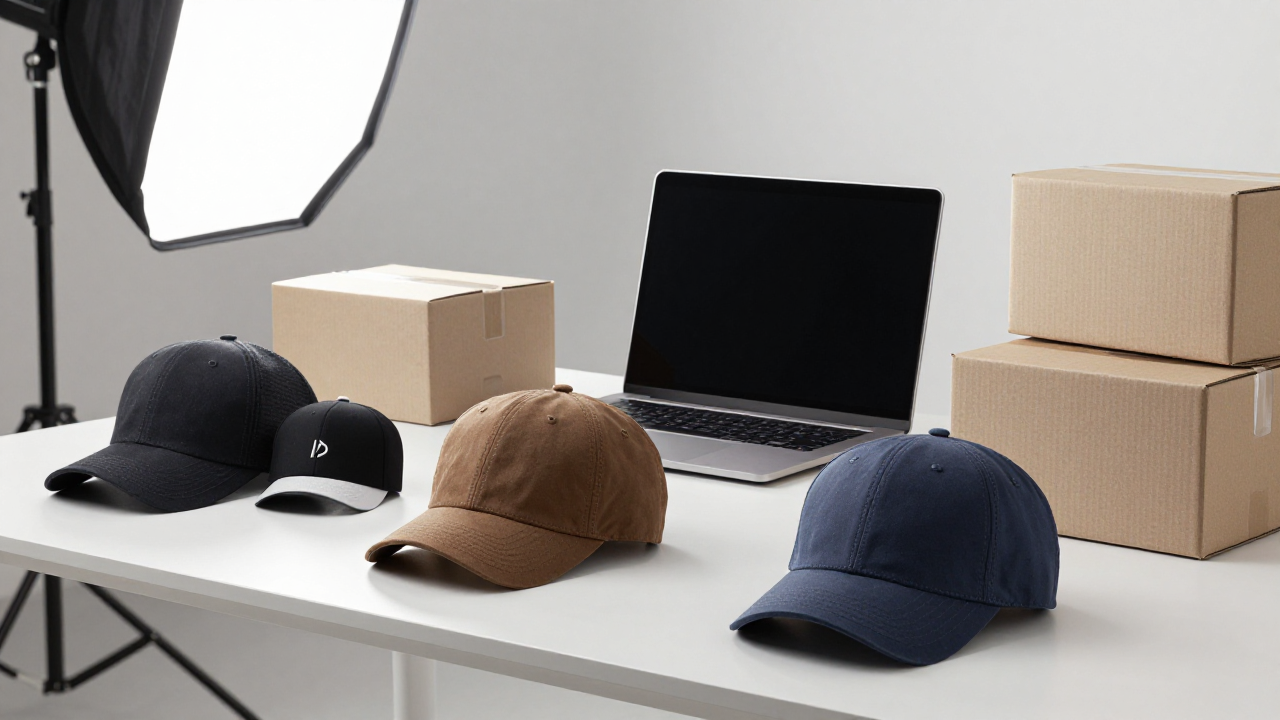
The most common mistakes US brands make when sourcing custom caps are choosing a factory before the product specification exists, comparing quotes with different bills of materials, approving an…
attractive sample without measurable standards, and shipping without inspection. Cap manufacturers should be evaluated before price because each mistake is inexpensive to prevent and expensive to discover.
A cap supplier should be scored on construction experience, decoration capability, compliance, communication, quality systems, MOQ, lead time, and total landed cost. Unit price belongs near the bottom of that list. The guidance below reflects custom, private-label, wholesale, and promotional headwear sourcing for US brands—including failures I have watched and a few we caused ourselves.
Verify the Supplier Before Comparing Prices
A supplier should pass a four-part verification process before a US buyer compares quotations: construction history, live facility evidence, comparable production samples, and written quality procedures.
An inquiry goes to eight suppliers. Seven ask about fabric weight, panel count, and delivery date. One replies in 90 minutes with a price 20% below the others and no questions.
That fast response may come from a trading company without its own sewing floor. The company brokers the order to a subcontractor, adds 12–15%, and becomes difficult to reach when the visor curve is wrong. In June 2022, I reviewed one such order for a Denver brand: 15,000 units at $2.41 FOB arrived with a 4 mm crown-height variance across the run. Two retail accounts rejected the shipment. The brand absorbed $18,000 in markdowns and permanently lost one account.
Use these verification steps:
Check the paperwork as well. The business license, export license, and country-of-origin declaration should match the entity named on the invoice. Verify the current HTS classification and duty rate with a customs broker before quoting landed cost; a supplier’s inability to provide ordinary export and entry documents is a serious warning sign.
Lock the Product Specification Before Production
A complete tech pack and measurable golden sample prevent most disputes involving cap construction, decoration, color, packaging, and fit.
Error 2 — Sending artwork instead of a tech pack
A JPG cannot define production tolerances. Design teams work in vector on a screen; production teams sew in millimeters. Three sample rounds at $85 each and six weeks later, the peak-season production slot may belong to another buyer.
Create one page per SKU. Include panel count, crown height in centimeters, visor length and curve radius, shell fabric and weight, closure type, sweatband material, stitch density in stitches per inch, thread color codes, embroidery stitch count, label placement, and poly bag size. A concise specification is easier to approve and harder to misinterpret than a seven-page document filled with repeated notes.
Error 3 — Approving a sample without locking the specifications
A buyer opens the DHL box, likes the cap, and replies “approved.” That sample represents one unit from one machine. Bulk production may use different thread, backing, settings, and packaging.
Define approval with measurable limits:
Sign and date two reference samples—one for the supplier and one for the buyer—and photograph both under D65 lighting. Office fluorescent lighting can make a color dispute harder to resolve.
Compare Landed Cost, Not FOB Alone
The lowest FOB quote can produce the highest delivered cost after tooling, freight, duty, rework, and defect allowances are included.
Two quotes arrive at $2.72 and $3.15 FOB. Procurement selects $2.72, but duty, freight, defect rates, and repacking charges sit in separate spreadsheets.
The following 2025 example shows how a 16% FOB saving became a higher total cost on a 12,000-unit order. Adjust the assumptions for 2026 freight, tariff, and brokerage conditions.
The lower FOB quote became a 1.5% landed-cost loss and added nine weeks because the second sample round failed after production capacity had been reserved.
Ask every supplier to quote the same Incoterm and bill of materials. Use FOB Ningbo or Shenzhen when your team controls freight; use DDP when you need one delivered figure and accept less cost visibility. Include digitizing, sample fees, freight, insurance, duty, tariff layers, drayage, 3PL intake, and a defect allowance based on the supplier’s actual history.
Inspect Production and Confirm US Compliance
A documented 40% in-line inspection and a pre-shipment inspection reduce quality risk, while product-specific labeling and children’s-product requirements should be confirmed before cutting begins.
Error 5 — Skipping in-line and final inspection
Three phone photos of a finished cap do not prove that a 40-foot container meets specification. Inspection is a production control, not a personal criticism of the supplier.
Run two checkpoints: one at 40% completion, while machine settings can still be changed, and one final inspection before cartons are sealed. For the final inspection, use a documented sampling plan such as ISO 2859-1, with the selected AQL levels recorded in the purchase order. A budget of $250–$350 was used for the final inspection on the 12,000-unit example.
Check crown symmetry, bill shape and curve, seam alignment, colorfastness with a crock test, loose threads, label placement, barcode scanning, and carton condition.
Error 6 — Treating US compliance as paperwork for later
Most textile products must identify fiber content, country of origin, and the responsible business under FTC textile-labeling guidance.[2][6] The country of origin generally appears on the front of the label, while fiber content and the responsible business may appear on the reverse.[2]
The FTC’s Care Labeling Rule generally excludes hats used exclusively to cover the head, so do not automatically copy apparel-label assumptions; verify the product’s classification and retailer requirements. Hats that cover the neck, face, or shoulders may fall outside common exemptions.[5]
For children’s products, CPSIA generally requires testing by a CPSC-accepted third-party laboratory, a Children’s Product Certificate, and permanent tracking information where practicable.[3][9] Accessible components generally face a 100 ppm total-lead limit, while applicable phthalate restrictions depend on the product and component.[3][4]
Request a material traceability file for shell fabric, trims, snaps, zippers, prints, and packaging before cutting begins. California Proposition 65 may also apply when products are sold in California.
Learn From the 2025 Production Failure
A missing stitch-density specification and an incomplete packaging specification caused an approximately $8,900 loss and an 11-day delay on a 9,600-unit order in March 2025.
We produced 9,600 six-panel snapbacks for a New Jersey streetwear brand. The approved sample used 10 SPI, but production came off the line at 7 SPI. The brand discovered the difference on a retail shelf rather than at the dock.
The tech pack said “contrast stitching on the visor” but gave no stitch-density number. The sample room used a single-needle machine set to 10 SPI for a clean visual line. Production used another line set to 7 SPI because the order was eight days behind, and 7 SPI ran about 20% faster. Both versions looked identical in a phone photo; under store lighting, one looked dense and the other loose.
I initially blamed a thread-batch difference. The actual cause was machine speed, combined with a missing specification.
Our QC lead flagged the issue at the 40% checkpoint. We chose to keep the line running instead of stopping for a two-day reset. That decision created the larger loss.
Packaging caused a separate problem. Nobody specified the poly bag, so the factory used 0.03 mm film without a suffocation warning. The brand’s 3PL in Edison, New Jersey rejected the inbound shipment under its vendor-compliance manual. Repacking 9,600 units, arranging a second LTL move, and paying a $2,500 retail chargeback left the brand approximately $8,900 out of pocket and 11 days behind schedule.
After that order, we made five changes:
Production speed no longer justifies changing a specification. If the specification cannot be met by the ship date, the ship date moves. That conversation is cheaper in week three than in month three.
Score Suppliers With a Weighted Buyer Model
A weighted scorecard gives product fit, sample accuracy, quality systems, and compliance more influence than unit price.
Score suppliers on a 100-point sheet. Product fit, sample accuracy, and quality systems should carry 50 points; unit price should carry fewer than 10.
A workable weighting for a mid-size US brand is:
Before awarding the order, compare three competitors in the same price band. Review crown profile, decoration method, shell fabric and weight, fit and shrinkage feedback, price positioning, and retail presence. Decoration options may include flat embroidery, 3D puff, laser-cut twill patches, or heat transfer.
Check claims on the supplier’s own site against the product label. If a company advertises domestic production while the cap carries a “Made in China” label, investigate the discrepancy under the FTC Made in USA Labeling Rule, which took effect in August 2021.
Use a Controlled Workflow From Quote to Inventory
A six-step workflow keeps quotes comparable, assigns approval responsibility, and creates inspection points before inventory reaches a US warehouse.
Step 1 — Write the brief. Define style, crown profile and height, visor length and curve, shell fabric, closure, sweatband, decoration, label set, quantity by colorway, destination port or 3PL, and in-hand date. Step 2 — Request comparable samples. Ask for recent-production examples that match the intended construction and decoration. Step 3 — Normalize quotes. Require the same Incoterm, bill of materials, order quantity, packaging assumptions, and delivery point. Step 4 — Approve a golden sample. Seal duplicate reference samples, record measurements, and assign one approval owner. Step 5 — Monitor production. Request weekly work-in-progress photos and inspect at 40% completion. Step 6 — Inspect before shipment. Complete the final sampling inspection before carton sealing and require a written corrective-action report for every failed requirement.Buyer Checklist
Use this checklist before placing a bulk order. An unchecked box represents a risk that remains with the buyer.
Frequently Asked Questions
How do I choose a supplier for a US cap brand?
Verify the supplier’s 6-panel and trucker production history, live facility evidence, recent-production samples, and written inspection plan. Convert every quote to landed cost before comparing price, MOQ, lead time, compliance documents, and communication quality.
How much does a custom cap order cost in 2026?
The supplied 2026 planning range is $2.60–$4.20 FOB per cap for 5,000–15,000 units, with landed costs often adding $0.60–$0.90 per unit. Sampling is estimated at $60–$120 per round; confirm current freight and duty separately.
What MOQ do overseas headwear suppliers require?
The supplied planning range is 500–1,000 units per colorway for a basic embroidered cap and 300–500 for an undecorated solid-color blank. Orders below 300 units may require heat transfer or screen printing instead of embroidery.
How long does custom cap production take?
Sampling is estimated at 7–14 days per round, bulk production at 25–40 days after approval, and ocean transit to a US port at 22–35 days. A practical planning window is 10–14 weeks from brief to warehouse, with peak season adding time.
What compliance documents should a cap supplier provide?
For general products, request fiber, origin, material, and test documentation appropriate to the item and retailer. Children’s products may require CPSC-accepted laboratory testing, a Children’s Product Certificate, tracking information, and evidence covering lead and applicable phthalate limits.[3][4][9]








