


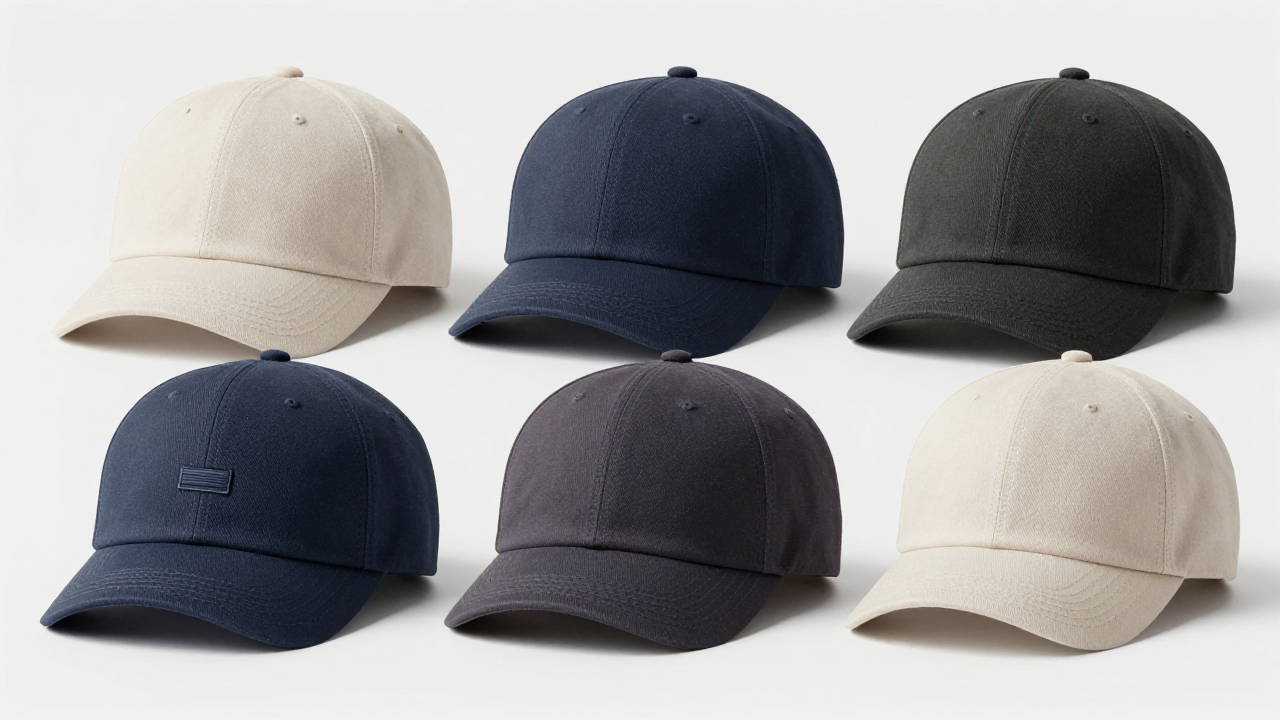
Choosing a cap manufacturer in the United States in 2026 means matching the production route to the brief first, then scoring candidates on seven weighted factors: construction quality (25%), landed…
unit cost (20%), MOQ (15%), lead time (15%), domestic content (10%), customization depth (10%), and reorder reliability (5%).
How Do You Choose the Best Cap Manufacturer in the United States in 2026?
That weighting is not arbitrary. We have run production for U.S. brands since 2008, and almost every sourcing failure we have watched from the factory side traced back to a mismatch in that list rather than a bad price. Note what is missing from the top of the list: quoted unit price. A $4.80 FOB quote with a 9% defect rate, a 32% duty stack, and a three-week customs hold is more expensive than a $6.10 quote that ships clean.
The March 2023 Portland case still stings. A Pacific Northwest promo distributor ordered 4,800 five-panel camper caps for a trail race series, and the approved sample measured 3.4 inches at the crown — measured flat on a table. The bulk production came back at the same flat measurement but with a shallower head form, and roughly 900 caps sat visibly high on the wearer's forehead. Nobody lied. Nobody measured on a head form, either. That is a $3,000 problem that a line on a sample checklist would have prevented.
Before comparing cap manufacturers, decide what you are actually buying. Buyers who sort quotes before sorting production routes end up comparing a decorator's embroidery price to a factory's cut-and-sew price, which is like comparing a printing press to a paper mill.
What Types of Cap Manufacturers Can U.S. Brands Hire for Custom Headwear?
U.S. brands can hire four distinct types of cap manufacturers in 2026: blank-cap wholesalers, domestic decorators, private-label assemblers, and full cut-and-sew factories. Each type controls different production steps, so the right pick depends on decoration method, order size, and delivery date — not on who answers the phone fastest.
Blank-cap wholesalers sell finished headwear with no decoration. Useful when your entire value-add is a logo on a Richardson or Flexfit silhouette and you need 144 units by Friday. Domestic decorators buy blanks and run embroidery, patches, screen print, or heat transfer in-house. Cap America in Fredericktown, Missouri built a business on this model. Speed is the product. Private-label assemblers take an existing block, swap the fabric, labels, and trims, and deliver something that carries your brand. The block is not yours; the label is. Full cut-and-sew factories develop the pattern, source the fabric and trims, build the crown, and control the finish. This is where a custom back panel, a specific sweatband, or a proprietary visor curve actually happens.The phrase "factory direct" is the most abused term in this category. Plenty of U.S. suppliers describe themselves as factories while importing sewn crowns and attaching decoration domestically. Neither model is dishonest — but the buyer deserves to know which one is being quoted, because the MOQ, the tooling cost, and the failure modes are completely different. Ask for a process map naming who cuts, sews, decorates, and inspects.
Domestic versus overseas is a real trade-off, not a moral one. Domestic gives you 45-day turnarounds, easy oversight, and a clean origin story. Overseas gives you fabric freedom, custom construction, and unit costs that domestic suppliers cannot reach below about 1,500 units. One 2025 change reshaped the math for small importers: the $800 de minimis window closed for China-origin shipments in May 2025, which killed the "import 60 samples and sell them on Shopify" playbook overnight.
Which Cap Manufacturers Have the Strongest U.S. Market Presence in 2026?
Unionwear, Cali Headwear, Graffiti, Flexfit/Yupoong, Cap America, Outdoor Cap, and Direct Caps USA are the names that surface most often in U.S. headwear sourcing conversations in 2026, and each sits in a different position in the supply chain. Treat the table below as a map of who does what, not as a ranking.
We are a Chinese cut-and-sew manufacturer, so read that table knowing where our bias sits. The honest framing: none of these companies is better in the abstract. Unionwear wins on origin and labor story. Cap America wins on speed. A factory in Guangdong or Fujian wins when you need a 12-panel, custom-jacquard, three-color-tape cap that no domestic decorator will touch under 2,000 units.
Verification is where buyers get lazy. A directory listing, a distributor page, and a manufacturer website all carry the same visual authority and wildly different evidentiary value. Ask for five things: the facility address with a photo dated this quarter, the number of embroidery heads on the floor, current certifications (WRAP, Sedex, or an ISO 9001 certificate with a live expiry date), two customer references in your product category, and a written statement of which steps are subcontracted. Suppliers who cannot produce those five items in 48 hours usually cannot produce your order in 12 weeks either.
How Much Do Custom Caps Cost, and What MOQ and Lead Time Should Buyers Expect?
In 2026, decorated blank caps commonly start at 144 units with a 2–4 week turnaround, while full custom cut-and-sew programs typically start at 300–500 units and run 8–14 weeks from pre-production sample approval. Landed cost usually lands at $6–$9 per cap for decorated blanks and $9–$18 for full custom at those volumes.
Those ranges move with four variables: fabric (10 oz cotton twill versus a 320 gsm brushed poly fleece), decoration (a 3-inch front logo runs 7,000–9,000 stitches; add a woven label, a leather patch, and a back embroidery and the decoration cost nearly doubles), trim selection, and origin. Section 301 duties on Chinese headwear under HTS 6505 have stacked on the MFN rate since 2018, and landed duty can run north of 30% depending on the classification and the current exclusion list. Budget for it explicitly instead of discovering it at the broker.
Total landed cost = (unit price × quantity + setup + sampling + decoration tooling + packaging + freight + duty + brokerage) ÷ good units delivered.
Divide by *good* units, not ordered units. A quote with a 5% defect allowance is effectively 5% more expensive per sellable cap than a quote at 2%.
The number almost nobody negotiates is the reorder MOQ. Buyers fight hard over the first order's minimum and then discover that the reorder minimum on a custom Pantone-matched fabric is 1,500 units, because the mill dyes in lot sizes. If your brand plans to run the same cap for three seasons, ask about reorder MOQ and dye-lot tolerance before you sign. We have seen a 400-unit launch program become a 1,500-unit commitment 14 months later, and the brand was not happy about it.
Calendar traps matter more than most buyers expect. Chinese New Year falls on February 17, 2026, and most factories in our region go quiet from roughly February 10 through early March. A program with a May 1 shelf date needs fabric booked by late December 2025, not January.
What Should You Ask a Cap Manufacturer Before Placing a Purchase Order?
Before a purchase order, ask a cap manufacturer for the pre-production sample specification, written MOQ and reorder terms, defect allowance, inspection standard, payment schedule, late-delivery remedies, and IP protection. Get all seven in writing, because verbal answers from a sales rep do not survive a change of account manager.
The sample checklist is where the money hides. Crown height measured on a head form, not flat. Panel symmetry across the front seam. Visor curve and board stiffness. Sweatband material and stitch attachment. Closure type and hardware finish. Embroidery density and backing. Color accuracy against a physical Pantone chip under daylight. Seam strength at the stress points. Fit on an actual human head, size 7 1/4 and 7 1/2.
Commercially, three terms are worth arguing over. Defect allowance should be stated as an AQL level — AQL 2.5 under ANSI/ASQ Z1.4 is the common general-inspection standard, and a supplier who will not name a level is telling you something. Late-delivery remedies should include a discount schedule, not a promise. Payment terms on a first order usually run 30% deposit and 70% before shipment; asking for the balance against a copy of the bill of lading is a reasonable request that separates confident suppliers from fragile ones.
Four mistakes account for most of the disasters we have cleaned up. Choosing the lowest quote without normalizing freight and duty. Skipping the pre-production sample because "the photo looked right." Accepting "MOQ is flexible" without a number and a written price break. And confusing a decorator with a factory, which means discovering in week six that the custom visor you designed was never going to be possible.
One more, from our own side of the table: buyers over-index on the sample and under-index on the second order. A perfect first sample from a factory running at 60% capacity in July tells you very little about the same factory in October. Ask what the current order backlog is in weeks, and ask it in writing.
Frequently Asked Questions
What is a cap manufacturer?
A cap manufacturer is a company that produces headwear through blank sourcing, decoration, private-label assembly, or full cut-and-sew construction. Buyers should confirm which production steps the company performs in-house, because a supplier that only decorates imported crowns cannot change a pattern, a fabric, or a visor curve.
How much does it cost to manufacture custom caps?
Custom cap pricing depends on quantity, fabric, construction, decoration, trims, packaging, freight, and country of origin. In 2026, decorated blanks commonly start near 144 units at roughly $6–$9 landed per cap, while full custom cut-and-sew runs usually begin around 300–500 units at roughly $9–$18 landed per cap.
How long does custom cap manufacturing take?
A decorated blank-cap order typically ships in about 2–4 weeks, while a full custom cut-and-sew program needs roughly 8–14 weeks after artwork, materials, and the pre-production sample are approved. Add two to four weeks if the production window overlaps Chinese New Year in February 2026 or the U.S. peak retail build in August.
What is the difference between a cap supplier and a cap manufacturer?
A cap supplier may resell blanks or coordinate production across third parties, while a cap manufacturer controls some or all of the production steps directly. Buyers should request a written process map identifying who cuts, sews, decorates, inspects, and ships each order before signing anything.
Are made-in-USA caps better for U.S. brands?
Made-in-USA caps deliver shorter domestic logistics, closer production oversight, and a stronger origin story, and they win outright when a deadline sits inside 45 days. U.S. buyers should still compare construction, materials, price, capacity, and documented origin claims rather than assuming domestic production guarantees better quality.








