
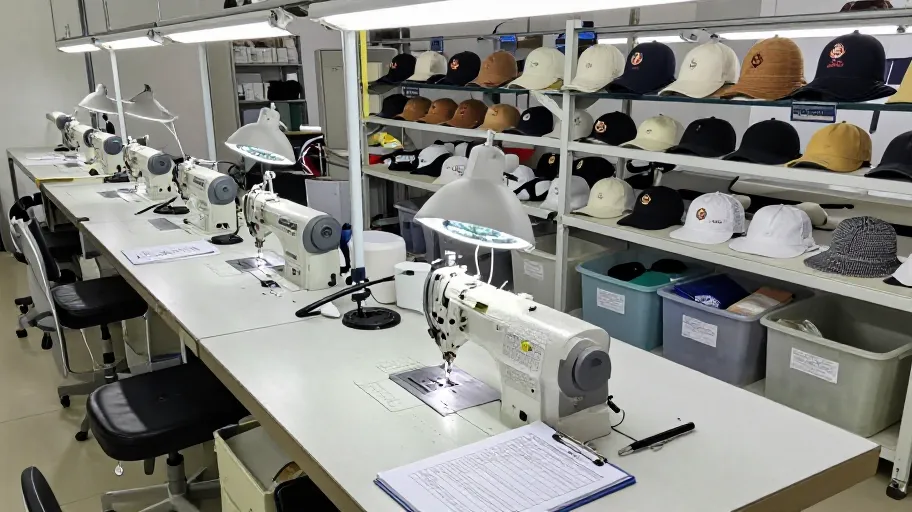
For procurement professionals, identifying the best hat manufacturers in China requires looking past polished websites and sales brochures. To truly assess a supplier’s capability, you must implement a verification strategy that validates infrastructure, quality control processes, and supply chain traceability. This article introduces the "Factory Reality Audit Framework," a methodology designed to help you compare manufacturers based on verifiable operational evidence rather than marketing assertions.
The Problem with Marketing-First Sourcing
When sourcing custom headwear, relying solely on marketing materials creates significant risk. A website may showcase state-of-the-art machinery, but that does not guarantee the equipment is owned by the supplier or is currently operational. Similarly, claims of "premium quality" are subjective without defined standards and testing protocols. For overseas buyers, the distance prevents physical spot checks, making it essential to develop a remote auditing process that pierces through the sales layer to the shop floor reality.
The Factory Reality Audit Framework
To compare manufacturers effectively, we utilize a five-pillar framework. This approach shifts the conversation from what the supplier says they do, to what they can prove they do.
1. Entity Verification: Factory vs. Trading Company
The first step in any comparison is determining who you are actually talking to. Many "manufacturers" are actually trading companies that outsource production to third-party factories. While trading companies offer convenience, they often lack direct control over production schedules and quality intervention.
When evaluating a supplier, request their business license and verify the scope of business. Does the license explicitly list manufacturing or garment production? Ask for photos of the factory entrance with their company signage. During a video call, ask the camera to pan to the surroundings. Are you seeing a production floor, or are you in a general office building?
2. Infrastructure and Equipment Capability
Marketing claims often include broad statements about capacity. To compare manufacturers meaningfully, you must understand the age and origin of their key equipment.
Older machinery may lead to inconsistent embroidery or higher defect rates. Ask specific questions regarding their equipment inventory:
- "What is the average age of your embroidery and sewing machines?"
- "Do you have in-house cutting equipment, or is this outsourced?"
- "How do you handle equipment maintenance, and can you share a maintenance log?"
A manufacturer that can immediately discuss their maintenance schedule and specific machine brands (e.g., Tajima or Barudan for embroidery) demonstrates a higher level of operational control than one who offers vague assurances.
3. Material Sourcing and Traceability
Quality headwear relies on quality fabrics. A critical differentiator among manufacturers is their approach to material sourcing. Some manufacturers purchase fabrics spot on the open market, leading to potential color variations between batches. Others have long-term agreements with yarn and fabric mills, ensuring consistency.
To audit this, ask the supplier to walk you through their material intake process.
- "Do you conduct in-house lab testing for fabric colorfastness and shrinkage?"
- "Can you provide a sample of your bulk fabric for third-party testing before production starts?"
- "How do you manage dye lot consistency for repeat orders?"
The best hat manufacturers in China will have a documented procedure for material inspection (IQC) and will be willing to share test reports for current stock.
4. In-House Quality Control (QC) Processes
A supplier’s claim of "strict QC" is meaningless without a defined process. You need to know when and how inspections happen.
Ask for a copy of their Quality Control Manual or Flowchart. A robust process typically includes:
- IQC (Incoming Quality Control): Inspecting fabrics and accessories upon arrival.
- IPQC (In-Process Quality Control): Checks during the cutting, sewing, and embroidery phases.
- FQC (Final Quality Control): A final audit of finished goods before packing.
Request specific defect rates. A transparent supplier will discuss their AQL (Acceptable Quality Limit) standards and how they handle defective units. Ask, "What is your procedure if a batch fails the final inspection?" The answer should involve re-work or specific remediation steps, not simply shipping the goods and hoping for the best.
5. Project Management and Communication
The lowest price is irrelevant if the communication breaks down. Compare suppliers by their technical understanding and project management structure.
Assign a small test task during the negotiation phase. For example, ask for a specific tech pack review or a digital mock-up of a complex logo. Evaluate the response time and the technical depth of the feedback. Are they simply agreeing, or are they pointing out potential production issues (e.g., "This logo size is too small for this fabric type")? Value-add manufacturers act as technical partners, helping you avoid design errors before production begins.
Decision Matrix: Marketing Claims vs. Audit Reality
To simplify the comparison process, use the table below to translate common sales claims into actionable audit questions.
| Typical Marketing Claim | The "Factory Reality" Audit Question | What to Look For in the Answer |
|---|---|---|
| "We have the best quality." | "What is your AQL standard for final inspection, and can you share a recent inspection report?" | Specific AQL numbers (e.g., 2.5/4.0) and willingness to share data. |
| "We offer the lowest prices." | "How do you control raw material costs, and what standard fabric is included in this quote?" | Transparency about fabric weight and potential surcharges for premium materials. |
| "Fast delivery guaranteed." | "What is your production scheduling workflow, and what is your buffer time for unexpected delays?" | A realistic Gantt chart or production timeline, not just a promise of a date. |
| "We work with big brands." | "Can you provide references or contact information for current clients in my market?" | Specific references (client confidentiality permitting) or case studies detailing the work done. |
| "We are a vertical factory." | "Do you perform embroidery, sewing, and packing all in the same building?" | Confirmation that key processes are not subcontracted to other vendors. |
Approval Checklist for Procurement Managers
Before issuing a Purchase Order, use this checklist to validate your choice. Do not rely on a "gut feeling"; ensure each box is checked with documented evidence.
- Business License Verified: Confirmed the entity is a manufacturer, not solely a trading agency.
- Equipment Audit: Confirmed the age and capacity of key machinery via video or photos.
- Material Traceability: Reviewed fabric testing reports (colorfastness, shrinkage).
- QC Protocol: Reviewed the supplier's QC flowchart and AQL standards.
- Sample Consistency: Compared the pre-production sample against the bulk production sample (if available).
- Communication Test: Validated response time and technical competence during the quoting phase.
FAQ
1. How can I tell if a Chinese hat manufacturer is a factory or a trading company? Request their business license and ask for a video tour of their production floor. Trading companies often hesitate to show the factory floor or may display generic stock photos. Additionally, ask about their raw material sourcing; factories typically purchase yarn or fabric directly, while traders may buy finished fabrics.
2. What is the most important factor when comparing two seemingly similar suppliers? The most critical factor is often the robustness of their Quality Control process. Two suppliers may use the same machines and fabrics, but the one with a documented, enforced QC protocol will deliver consistent results, whereas the other may have high variance.
3. How do I verify quality without visiting the factory? Utilize third-party inspection agencies based in China to conduct a "During Production" inspection and a "Pre-Shipment" inspection. Additionally, request real-time photos or videos of specific production stages (e.g., the embroidery line running) from the supplier.
4. Why do quotes vary so much between manufacturers for the same hat specification? Price variance usually stems from fabric quality (e.g., yarn count), the weight of the fabric (GSM), the complexity of the branding, and the manufacturer's overhead. A lower price may indicate lighter fabric or less rigorous quality control. Always ask for a physical sample of the fabric to compare.
5. How can I protect my IP when sharing designs with new manufacturers? Before sharing detailed tech packs, have the supplier sign a Non-Disclosure Agreement (NDA). Ensure the agreement is governed by a jurisdiction where you can enforce legal recourse. Start the conversation with general specifications before sending final design files.
Download the Supplier Scorecard
To streamline your evaluation process, we have compiled the "Factory Reality Audit" questions into a comprehensive scorecard. Use this tool to grade suppliers objectively and compare their capabilities side-by-side.
[Download Supplier Scorecard]
- Rate Infrastructure: Grade equipment and facility standards.
- Assess QC: Verify quality control protocols.
- Compare Costs: Analyze quotes beyond the unit price.
#cap manufacturers china, #headwear manufacturers china, #cap factory