


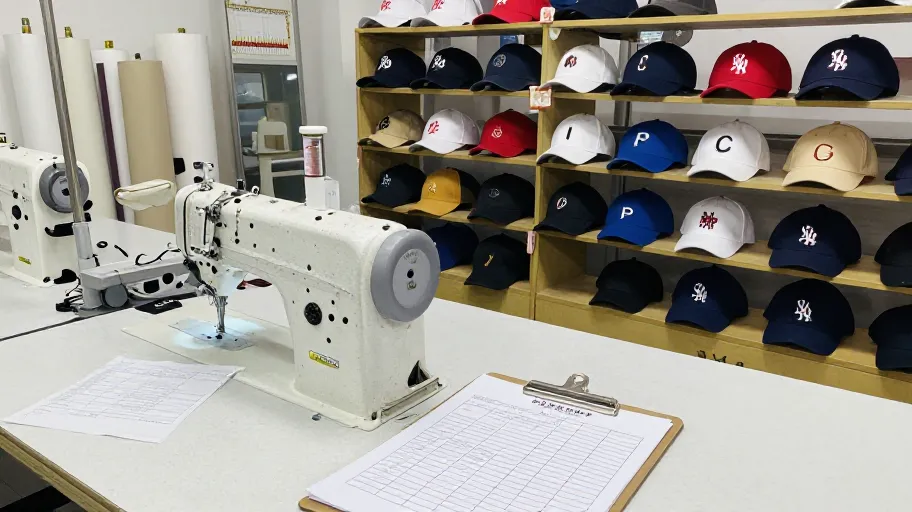
Comparing baseball hat manufacturers in China for a private-label project comes down to a disciplined, evidence-based process: verify each candidate's credentials, confirm manufacturing capability against your product spec, test communication responsiveness, demand cost transparency, and lock every agreement into written confirmation. This article walks you through those five gates — a framework you can apply to any shortlist, including ours.
Why a structured comparison matters
Sourcing managers who evaluate headwear suppliers conversation by conversation tend to make decisions based on charm, fastest email replies or the lowest first quote. That is an uncomfortable way to commit a private-label programme — your brand name will sit on every unit — because none of those signals tells you how a factory behaves once your order is in production.
A structured comparison changes the dynamic. You stop asking suppliers "are you good?" and start asking each one the same specific, verifiable questions, then scoring the answers. The framework below — the Five-Gate Supplier Evaluation — is designed to be used exactly that way. It does not replace due diligence, but it organises it so you can compare candidates like for like.
The Five-Gate Supplier Evaluation
| Gate | What you verify | What good evidence looks like | Red flags to score against |
|---|---|---|---|
| 1. Credentials | Legal entity, export experience with your market, documented quality process | Registered business information you can verify; documented internal inspection steps the supplier will describe in writing | Unverifiable company details; refusal to identify who legally supplies you |
| 2. Capability | Ability to produce your construction, materials, embroidery/patch placement and labelling to your spec | A written response to your tech pack, referencing your specific details rather than generic catalogue claims | Generic replies that ignore your specification; reluctance to discuss your construction details |
| 3. Communication | A named project owner, response discipline, willingness to confirm things in writing | One accountable contact who answers your question list point by point | Answers that shift between people; verbal promises without written follow-up |
| 4. Cost transparency | A quotation broken into components — product, decoration, labelling, packaging — and the conditions attached to each | Itemised quote with the terms stated in writing; any condition (order quantity, sample terms, timeline) stated explicitly | A single lump-sum number with conditions that only appear later |
| 5. Confirmation | Written agreement on spec, inspection approach, packaging and responsibilities before any deposit | A document both parties approve covering what will be checked, by whom, and against which standard | Pressure to proceed before the specification and inspection approach are confirmed |
Work through the gates in order. A supplier who fails Gate 1 makes the rest of the evaluation irrelevant; a supplier who passes Gates 1–3 but cannot give you itemised pricing at Gate 4 leaves you exposed when the order is real.
Turning the framework into a supplier question list
The scorecard is most useful when you convert each gate into specific questions. Below are approval questions suited to a private-label baseball cap project. Ask every shortlisted supplier the same list, and score written answers, not verbal reassurances.
Credentials questions
- What is your registered legal entity name, and which person will sign the supply agreement for my project?
- Which export markets have you supplied private-label headwear to, and can you describe the documentation you prepare for my destination market?
- Can you walk me through your internal quality process — who inspects, at which stages, and against which standard I approve?
Capability questions
- Here is my tech pack: please confirm in writing which elements you can produce as specified and which you would propose changing, with reasons.
- For the decoration I need, will you confirm the construction method and the material sources in writing before sampling?
- What is your process if a production unit does not match the approved reference — who decides, and what happens next?
Communication questions
- Who is my single point of contact, and who covers for them during their absence?
- Will you confirm each milestone for my project in writing as it is reached?
- If my question spans two departments (e.g. production and documentation), who owns getting me one consolidated answer?
Cost and terms questions
- Please provide a quotation broken down by component: product, decoration, labelling, packaging.
- What are your current terms for: minimum order quantity, sample provision, sample timelines, production timelines and shipping arrangements? Please state each in writing so I can file it with the evaluation.
- Which conditions would change your quotation, and how much notice would I receive?
Note what this question list does deliberately: it does not assume any answer. Every supplier — including any factory you have worked with before — should confirm its current policies directly, in writing. Policies change, and a private-label commitment deserves current documentation rather than remembered terms.
A pre-commitment checklist
Before you award the order, confirm every line below is documented:
- Supplier's legal entity and signatory identified and verified
- Tech pack acknowledged in writing, element by element
- Approved reference sample documented, with the approval criteria written down
- Itemised quotation filed, with the conditions attached to it
- Current MOQ, sample, timeline and shipping policies confirmed in writing as of this month
- Named project owner and communication escalation path agreed
- Inspection approach agreed: what is checked, when, against which standard, and who signs off
- Packaging and labelling specification approved and attached to the order
- The process for handling units that do not match the approved reference, agreed in writing
Frequently asked questions from private-label buyers
How many baseball hat manufacturers in China should I evaluate before choosing one?
Enough to make a genuine comparison — in practice, buyers we speak with shortlist a handful and score each against the same question list. The exact number matters less than using identical criteria for every candidate, so your comparison is defensible. Keep the completed scorecards on file; they become your baseline for future orders.
What should I send a supplier first: a design, or a question list?
Send both, but the question list matters more at the start. A design alone invites a generic reply; a question list forces the supplier to show how it handles specifics. Send your tech pack with a request for a written, element-by-element response — Gate 2 of the framework — and you will learn a great deal from the quality of the reply.
How do I verify a supplier's claims about capability?
Ask for claims to be tied to your spec, not to general statements. "We make caps" is unverifiable; a written response confirming each element of your construction is checkable. Where a claim is material to your order, ask the supplier to describe how it will demonstrate that capability to you — through the sampling and approval process you agree in writing.
Are sample policies, MOQs and lead times the same across suppliers?
No, and you should not assume any figure without confirmation. Terms differ from supplier to supplier and can change over time, which is why the framework treats them as questions to be confirmed in writing during the evaluation — not as assumptions to be baked into your planning. Ask each shortlisted supplier for its current policy and file the answer.
What is the biggest mistake first-time private-label buyers make?
Proceeding on verbal agreement. The most common failure we hear about is not a bad factory but an undocumented one: terms discussed in messages, spec agreed in conversation, and nothing filed that either party can point to later. The Five-Gate framework ends with Confirmation as its own gate for exactly this reason — get the agreements in writing before any deposit moves.
Applying the framework to your shortlist
You now have a repeatable method: score every candidate against the five gates, put every approval question in writing, and hold the completed checklists side by side. Whether your shortlist contains two factories or twenty, the comparison stays objective — and the documentation you build during the evaluation becomes the foundation of your production agreement.
If you would like to run this process against New Generation as one candidate on your list, we are glad to receive your question list and respond in writing. As a Shenzhen-based OEM/ODM manufacturer of custom caps and headwear, we work with overseas brands, importers, wholesalers and corporate buyers on private-label projects — and we encourage every buyer to evaluate us the same rigorous way they evaluate anyone else on the list.
Primary CTA — Download the Supplier Scorecard: Get the Five-Gate evaluation as a ready-to-use scorecard, with the question list, gates and checklist pre-formatted so you can score each supplier side by side. Download the Supplier Scorecard →
Low-friction checklist CTA: Prefer to start smaller? Copy the pre-commitment checklist above into your own sourcing file and tick it off before any deposit. No download needed — and when you want the full version, the scorecard is one click away.
#cap manufacturers china, #headwear manufacturers china, #cap factory








