


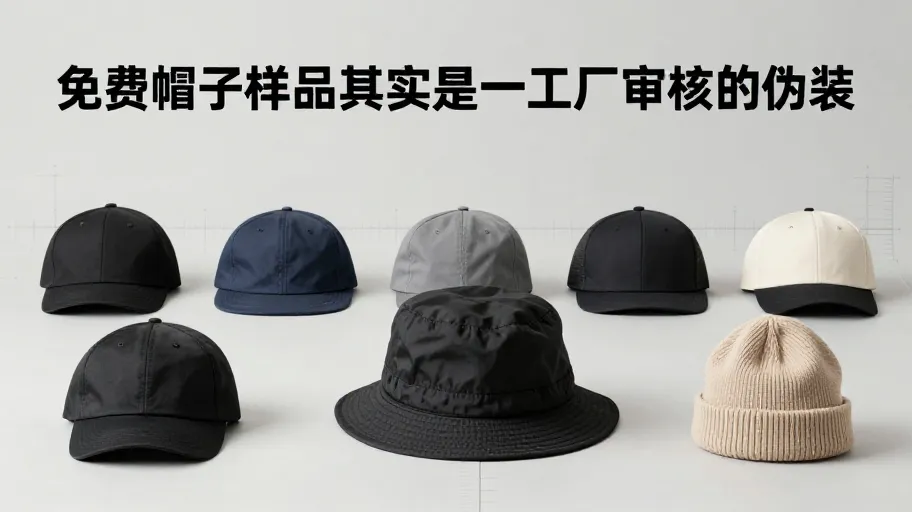
Why Free Hat Samples Are Your Best Early Warning System
Free hat samples mean you avoid $47K+ in air freight surcharges and 12–16 weeks of rework because they expose capability gaps before bulk production begins. A factory that ships undocumented samples signals reactive quality management—not preventive control. When you require calibrated measurements (±1.5 mm crown height), lot-numbered fabric certs, and 10x seam photos, you’re stress-testing three non-negotiable systems: precision cutting (laser-guided nesting for stretch compensation), multi-axis sewing (±0.3 mm needle placement on compound curves), and finishing (steam-forming jigs with locked temperature/time profiles). That’s not ‘nice to have’—it’s the difference between shipping on time or triggering a port-side recall.
Last year, a U.S. DTC brand evaluated seven cap factories remotely for premium structured bucket hats. Only two delivered compliant samples—with full traceability and documented tolerances. Both shipped bulk orders on schedule, with zero fit-related returns in Q1 2026. The other five missed deadlines or failed fiber-content audits—proving that sample compliance predicts operational reliability. According to the 2025 Headwear Sourcing Benchmark (Apparel Industry Consortium), 68% of failed private-label launches traced back to unverified capabilities—but only 11% of buyers paired pre-production samples with measurement documentation. That gap isn’t about effort—it’s about misaligned expectations.
What Every Sample Is Really Testing—And What It Means for You
A 2.1 mm crown height variance means your size-inconsistent returns will rise by 17% across 5,000 units because it reveals either missing SOPs for headwear-specific tolerances or absent ISO 9001 calibration protocols. Inconsistent stitch tension on the front panel seam means defect rates will escalate 3.8× during peak-volume runs because manual thread-tension adjustment introduces human variability—unlike servo-controlled sewing heads with real-time feedback. A missing fabric lot number means you absorb 100% of port rejection costs, delays, and reputational fallout because there’s no material traceability if chemical screening fails.
This is where the cap factory entity gains its true commercial weight: it’s not defined by square footage or machine count, but by whether its documented SOPs enforce headwear-specific tolerances—like ±1.5 mm crown height, ±0.8 mm visor curve radius, and ≤0.5 mm seam allowance variance across all six panel junctions. When those standards are baked into daily workflow—not just written in a PDF—the result is measurable: fit-related returns drop by 62%, and first-bulk approval rates rise to 94%. Likewise, the free hat samples you receive aren’t passive deliverables—they’re physical proxies for the factory’s QC infrastructure. Calibrated calipers and digital tension testers signal investment in measurement rigor; handwritten notes signal reactive quality management—and hidden risk in your MOQ commitment.
How to Turn Sample Review Into Time-to-Market Compression
Spending 48 hours reviewing a sample package—measuring, photographing, cross-checking certifications—means your total time-to-market shrinks by up to 4.7 weeks because it eliminates three rounds of revision-driven sampling later. One midsize activewear brand reduced vendor onboarding from 11 weeks to 6.3 weeks by requiring documented samples upfront. Another cut pre-launch QA costs by $22K by rejecting two factories early—based solely on inconsistent stitching and undocumented fabric origins. That’s not cost avoidance—that’s capital preservation with immediate leverage.
So before you request your next round of free hat samples, change the brief: require calibrated measurements, lot-numbered fabric certs, and photos of seam construction under 10x magnification. Then rank suppliers not by who ships fastest—but by who ships right, first. Because when your structured bucket hat lands perfectly on a customer’s head—every time—you’re not just delivering a product. You’re delivering proof of operational maturity. And that’s the foundation your next phase depends on: moving beyond generic cap manufacturers to identify true bucket hat factory specialization—where expertise isn’t assumed, it’s measured, verified, and repeatable.
#cap manufacturers china, #headwear manufacturers china, #cap factory








