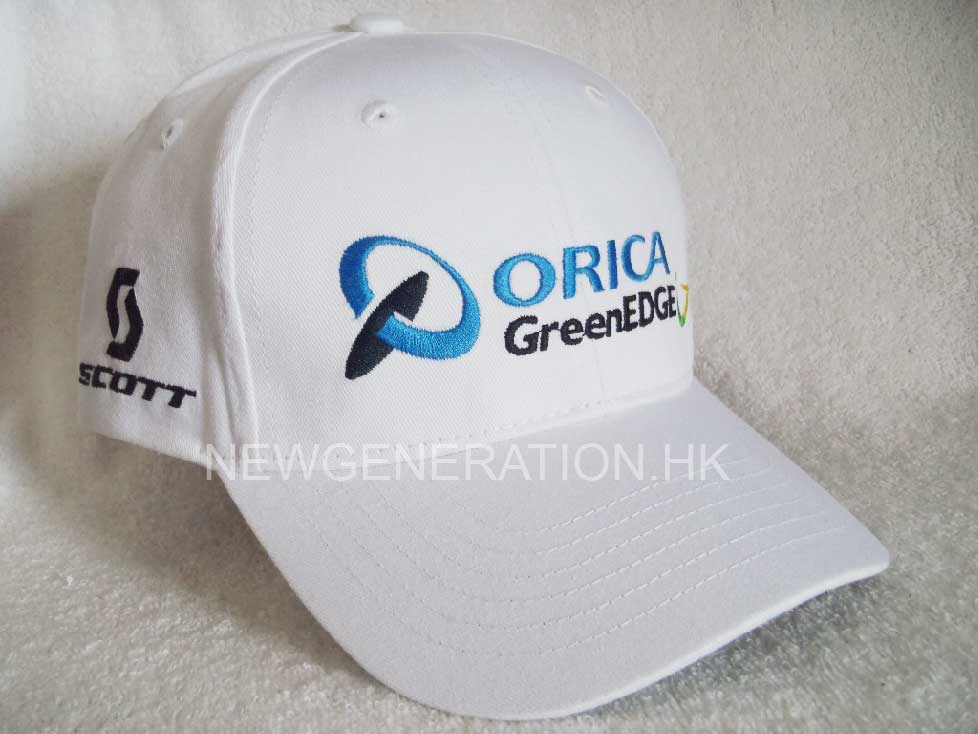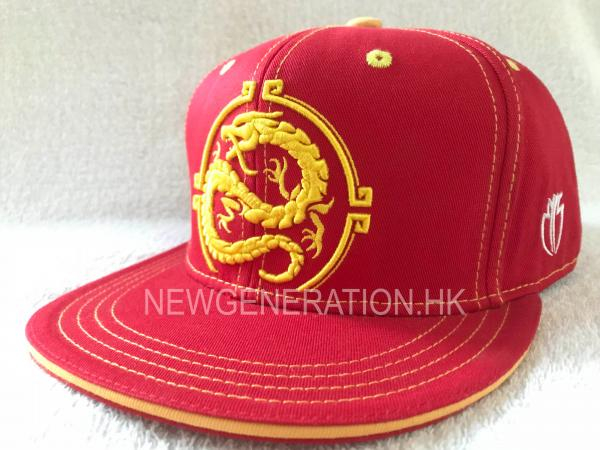


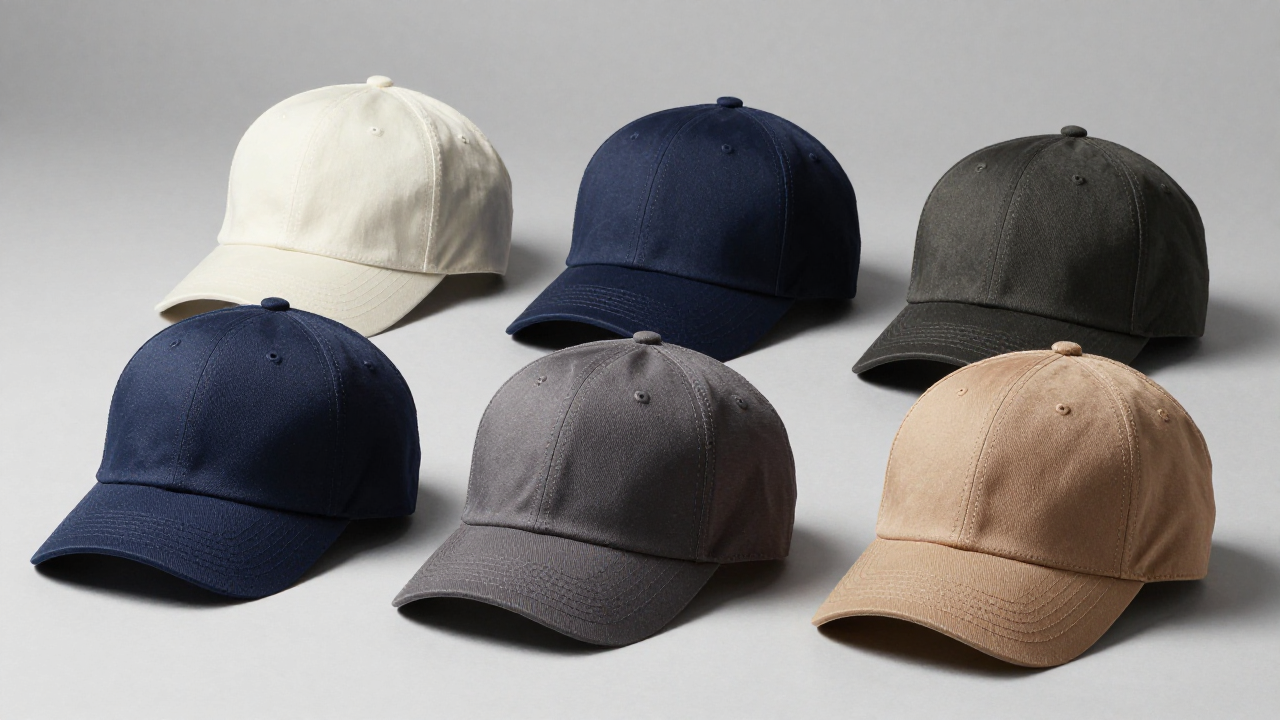
A six-panel cap consumes about 0.35 m² of shell fabric and 22 minutes of direct labor across roughly 18 operations.…
The 3D shape comes from seam geometry at the crown apex and the sweatband circumference, not from a mold. That single fact explains why caps cannot be finished flat like T-shirts: the crown has to be pressed and set on a block before decoration, or the front panel will sit crooked on the embroidery frame and every downstream measurement drifts.
What Is the Core Mechanism of a Cap Factory, in First-Principles Terms?
> Cap factory (working definition): A cap factory converts flat fabric into a three-dimensional crown through four coupled steps — cutting, joining, blocking, and decorating. Total output is capped by whichever step is slowest. In most plants we audit, that step is not the embroidery machines the owner bought first.Three parameters dominate everything downstream of the cutting table. Shell fabric weight sets machine tension and needle size. Panel count sets seam time. Stitch count sets embroidery cycle time. Get those three wrong at the sampling stage and no amount of floor management recovers it — we've watched plants spend six figures on new Tajima heads to fix a problem that started with a 20 gsm fabric substitution.
Why Does a Cap Factory Hit a Wall at 800 Stitches Per Minute?
A cap factory's embroidery capacity per head equals 3,600 divided by (60 × S / SPM + H), and the practical ceiling sits near 800 SPM because thread breaks above that threshold eat more time than the extra speed creates.
In plain text:
Caps per hour per head = 3,600 / (60 × S / SPM + H)Run the numbers on a 12-head Barudan with a 9,200-stitch front logo. At 780 SPM, embroidery time is 60 × 9,200 / 780 = 708 seconds. Add 90 seconds of batch handling plus roughly 270 seconds of thread-break recovery across three color changes, and the batch cycle lands at 1,068 seconds. That is 12 × 3,600 / 1,068 = 40 caps per hour, or about 3.4 per head. Utilization is 66%, not the 95% the purchase order implied.
Now push to 850 SPM. On paper you save 58 seconds per batch. What actually happens on polyester thread over a fused buckram panel is that break frequency jumps from roughly 1 per 2,500 stitches to 1 per 900. Recovery time doubles, and net output falls to about 33 caps per hour. We learned this the expensive way in April 2019, when we ran a full shift at 900 SPM to clear a rush order and finished with 71 breaks and a visibly glazed thread cone. The dial on the machine is not a throughput lever. It's a quality lever with a hard stop.
The pull-compensation number most digitizers get backwards
Standard digitizing practice says thick, structured fabric needs more pull compensation — 0.3 to 0.5 mm. On a structured cap with fused buckram, the opposite is true. Buckram doesn't stretch and doesn't return, so actual stitch displacement is closer to 0.1–0.2 mm. Compensate at 0.4 mm and a 90 mm logo comes out roughly 2 mm wide, which is enough to fail a licensor's brand-guideline check.
We get artwork from US distributors redigitized at 0.4 mm every week. We quietly reset it to 0.2 mm before it touches a frame. Nobody has ever complained about the resulting cap being too narrow.
One more thing textbooks skip: the sew-out center must sit within 2 mm of the frame's curved apex. Miss that and the design doesn't look "off" — it looks sheared on one side only, which reads to a buyer as sloppy work rather than a setup error.
What Are the Typical Operating Ranges for a Cap Factory?
These are the ranges we run against at New Generation, cross-checked with two partner plants in Guangdong and one in Vietnam. Treat them as starting points, not gospel — a 5-panel camper cap and a structured pro-fit sit at opposite ends of several of these.
The shrinkage row matters more than it looks. In October 2025 we ran a 26,000-piece collegiate order for a team dealer in Knoxville, Tennessee — cotton twill crown, polyester visor. Four weeks after delivery, 3% of the run came back with curled visors. Differential shrinkage hit 3 mm across a 190 mm visor. The fix was matching the visor substrate to the same twill lot and running the crown through a compacting range before cutting. It added $0.14 per unit. Cheap, once you know.
What Do Most Cap Factory Upgrades Get Wrong?
Most cap factory capital spending goes to decoration capacity, but the binding constraint is usually cut-and-sew flow — specifically the join step, where 6 panels, a visor, a sweatband, and a closure converge.
We've audited plants with 40 embroidery heads running at 55% utilization because the sewing line could only feed 900 crowns a day. The embroidery machines sat idle waiting for crowns, and the owner kept buying heads.
The failure pattern repeats. Someone measures the embroidery floor, sees the highest cycle time there, and concludes that's the bottleneck. But embroidery runs in parallel across 12 heads while joining runs serially through single operators. Parallel capacity hides itself; serial capacity doesn't. Measure the serial step first.
In March 2022, a Columbus, Ohio distributor sent back 4,800 caps because the visor stitching puckered after one home wash. Our first read was thread tension. It wasn't. The real cause was that the visor was stitched onto a crown that hadn't been blocked long enough — the crown was still holding residual moisture, and it relaxed after the first wash cycle, dragging the visor seam with it. We added a 40-minute dwell after blocking and never saw the defect again. Two years of blaming tension, one afternoon of blaming the drying rack.
The counterintuitive conclusion: on a cap, the visor seam is a moisture problem disguised as a tension problem. If your defect rate on visor puckering sits above 1.5%, pull the blocking room data before you touch a tension dial.
How Do You Take a Custom Cap Program to US Buyers in 2026?
US buyers in 2026 shop by lead time and minimum quantity first, decoration method second, and price third — which is the reverse of how most Chinese suppliers pitch them.
The practical shift: the $800 de minimis window for China-origin shipments closed in 2025, so DDP air programs that used to clear customs untouched now carry the same Section 301 duty burden (7.5% on HS 6505 headwear) as container freight. Distributors responded by consolidating orders and pushing MOQs up, not down. A 100-piece custom run with embroidery is still viable, but at 100 pieces the landed cost math only works on stock fabric and stock colorways.
Where the demand actually sits: low-profile unstructured six-panels now outsell structured pro-fits in on-demand custom volume from what we see in our own order book, driven by DTC brands on Shopify and the promotional products channel through ASI and SAGE distributors. Those buyers ask three questions in the first email — sample turnaround, Pantone TCX match on the crown, and whether you can hold 6 weeks of inventory against a blanket PO.
Seasonality is sharper than most suppliers plan for. Orders for Q4 holiday ship in August. Spring team sports peak in February. Back-to-school lands in June and dies by July 10. Miss the June window and the buyer isn't late, they're out.
Our own lesson from 2023: we spent two quarters marketing full-custom dye programs to US distributors who mostly wanted stock-fabric speed. The pitch was right for the wrong buyer. Repositioning the same catalog around 5-day samples and 100-piece minimums tripled inbound quote requests in one quarter without changing a single production process.
Frequently Asked Questions
How long does it take to produce a custom cap order?
Sampling takes 5–7 business days with stock fabric. Bulk production runs 25–40 days ex-factory depending on whether fabric is in stock, plus 18–28 days ocean freight to a US port or 5–8 days air. Plan 8–11 weeks door to door.
What is the minimum order quantity for custom caps?
Stock fabric and stock colorways start at 100 pieces per design. Custom-dyed fabric pushes the minimum to 500 per colorway because dye lots below that are not economical to run. Embroidered logos have no separate minimum beyond the cap quantity itself.
Why do embroidered caps wrinkle or pucker after washing?
Usually a moisture problem, not a tension problem. Crowns blocked and packed before fully drying relax on the first wash cycle and drag the visor or front-panel seams with them. A 40-minute dwell after blocking eliminates most of it. Cotton twill also shrinks 3–5% on the first wash.
How much does a custom embroidered cap cost landed in the US?
Structured cotton twill with a 9,000-stitch front logo runs roughly $3.20–$6.80 FOB depending on fabric weight and trim. Landed cost adds $0.60–$1.40 per unit for freight plus 7.5% Section 301 duty on HS 6505 headwear.