


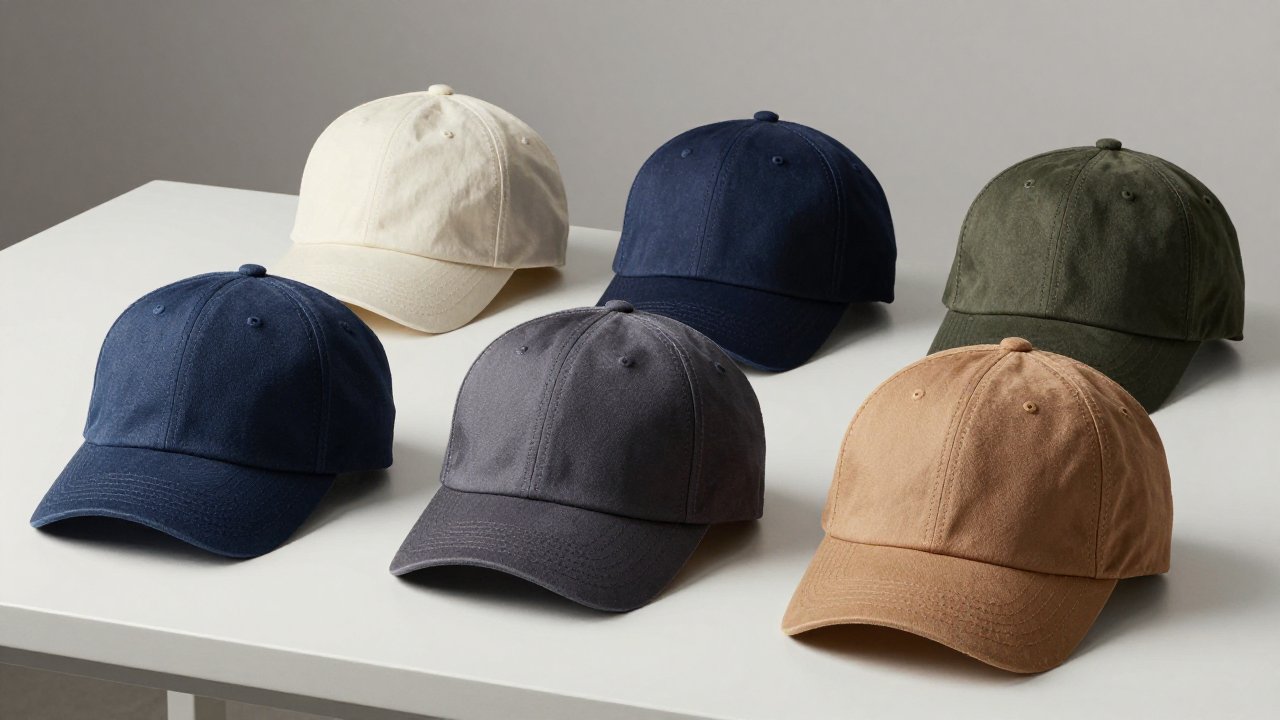
Prioritize proven construction quality, transparent landed cost, realistic MOQ and lead times, decoration consistency, and verifiable compliance over the lowest quoted unit price.…
Request a production-ready spec sheet, approve a physical sample, compare like-for-like quotes, and confirm inspection rights before placing a bulk order.
What to Prioritize When You Vet Cap Manufacturers in 2026
In September 2023, a sourcing manager in Columbus, Ohio, emailed me photos of 4,800 six-panel caps. The crowns sat a quarter-inch lower than the approved sample. Nothing on the quote sheet explained why. Her vendor had swapped 12 oz cotton twill for an 11 oz blend to hit the price — legal under the contract, fatal at retail. She ate $19,000 in markdowns and a reorder delay that pushed her spring drop into June.
That story repeats every quarter. The gap between a cap factory and a *good* cap factory is rarely the unit price. It's what sits in the paperwork nobody reads until something breaks.
The Four-Part Vetting Framework: Quality, Landed Cost, Operational Reliability, Compliance
Score every cap manufacturer on four axes, and refuse to award a PO until each one has written evidence behind it. Most buyers over-weight price and under-weight the three items that actually determine margin.
Construction quality. Ask for fabric weight in oz/yd² or GSM, panel count, crown height, visor construction (plastic, buckram, or laminated), sweatband material, and closure type. A standard 6-panel cotton twill cap runs 10–12 oz; performance poly typically lands at 5.5–6.5 oz. Vague answers like "heavy cotton" mean the factory will use whatever's cheapest that month. Landed cost. The number that matters:Landed cost per unit = FOB unit price + freight per unit + duty + brokerage and port fees + inspection cost + rework/scrap allowance
A $3.40 FOB quote from one factory can beat a $2.95 quote from another by 40 cents once you add ocean freight, Section 301 duty stacking, and a 4% defect rate. Duty on Chinese headwear has moved repeatedly since 2018 — assume the rate you modeled in January is not the rate you'll pay in June, and build a 3–5% buffer into the model.
Operational reliability. Response time to a technical question tells you more than any factory brochure. Send the same spec question to three vendors: "What thread weight and backing do you use on 3D puff embroidery, and what's your stitch-count tolerance?" Replies within 12 hours with specifics = a functioning merchandising team. Replies in four days with "we can do any logo" = a trading company. Compliance. For US import, you need CPSIA documentation if the caps are youth-sized, California Prop 65 statements for dyes and metal hardware, and Oeko-Tex Standard 100 certification if the fabric touches skin for extended periods. Ask for the certificate number and verify it. In February 2022, a Nashville brand learned its "Oeko-Tex certified" supplier had a certificate covering yarn, not finished fabric. Different scope, different claim.Cap Manufacturer Pricing, MOQ, and Lead Times by Budget Tier
Match your order profile to the right production program before you collect a single quote. Pitching a 300-piece test run to a 50,000-unit factory wastes six weeks; pitching 20,000 units to a low-MOQ specialist burns 35 cents a hat.
Domestic wins on speed and visibility. Overseas wins on unit economics — but only after freight clears. At 500 units, ocean freight and brokerage can add $1.80–$2.60 per cap; at 5,000 units that drops under 60 cents. That crossover point, not the FOB price, is where most small brands get hurt.
The Spec Sheet You Lock Before Requesting Quotes
Lock nine specifications in writing before a quote is valid, or you are not comparing prices — you are comparing guesses. Our own production team at newgeneration won't quote without them, and every time a buyer arrives with a complete sheet, the conversation shrinks from three weeks to three days.
The nine: fabric and weight, panel count and shape, crown height, visor material and stitch rows, sweatband type, closure and hardware, label placement, decoration method with stitch count or print area, and size grading with tolerances.
Decoration drives cost more than fabric. Embroidery on a front panel runs 8,000–12,000 stitches for a typical logo; anything past 12,000 triggers per-1,000-stitch upcharges that rarely appear on a quote sheet. Woven patches and chenille patches need a separate mold or weave charge. Screen printing on caps requires plastisol plus a catalyst and a tunnel dryer — many small factories don't have one and will quietly subcontract.
Write tolerances into the spec: ±0.25 inch on crown and circumference, 3% shrinkage allowance on cotton, and color matching to AATCC Gray Scale 4.5 or better. "Same fabric" without a shade standard means a 5% variance is technically compliant.
How Do You Vet a Cap Factory Before Signing a Purchase Order?
Vet a cap factory through a five-stage sample chain — prototype, size set, pre-production sample, pilot run, final inspection — with written sign-off at each gate. Skipping any gate transfers the risk from the factory's balance sheet to yours.
The gates:
1. Prototype — confirms design intent. Pay for it. A free sample is usually a sample made from stock parts.
2. Size set — confirms grading across S/M/L/XL. Most fit complaints trace back to a skipped size set.
3. Pre-production sample — built on the actual production line with the actual fabric lot. This is the legal standard for the order.
4. Pilot run — 50–100 units pulled mid-line. Catches embroidery registration drift that samples never show.
5. Final inspection — ANSI/ASQ Z1.4, AQL 2.5 for major defects, 4.0 for minor. Book it with a third party, not the factory's own QC.
Evidence to demand: dated production floor photos, QC records from the last three orders, two references you can call, stated monthly capacity in units, and written disclosure of any subcontractor handling embroidery or washing. In April 2024, an Austin, Texas, buyer discovered his "one factory" order had gone through three subcontractors after the embroidery house quoted a metal buckle die charge of $1,850 that never appeared on his PO.
Hidden Traps Sales Teams Don't Volunteer
Two conventions cost buyers more than any price negotiation: MOQ is defined per style-color-fabric-decoration combination, and defect allowances are baked into the price you were quoted.
MOQ is not a total. A "500-piece MOQ" usually means 500 per color, per fabric, per logo method, per production batch. Order 500 caps across four colorways and you may have just placed four separate minimums — or paid a 15–25% surcharge for split runs. Always ask the follow-up question: "500 of what, exactly?" The defect allowance is already priced in. Contracts commonly allow 2–3% defective units with no remedy. On 10,000 units, that's 200–300 caps you paid for and cannot sell. Push for a defect remedy clause: replacement on the next order, or credit at the landed cost. Factories that refuse usually know their rate runs high.Also watch the hidden line items — embroidery digitizing ($25–$75 per logo, often creditable), custom hardware molds ($300–$1,800), polybag and hangtag charges, and the shipping term. FOB means your risk starts at the port. DDP means the factory eats the duty surprise, and prices accordingly.
The Scorecard and the Final Call
Weight your scorecard before you talk to vendors, or the most charming sales rep wins. A workable split: construction quality 25, landed price 25, MOQ flexibility 15, speed 15, communication 10, compliance 10. Require a minimum score of 7 out of 10 on compliance — a disqualifier, not a trade-off.
Contract terms that actually protect you: the approved pre-production sample as the binding standard, third-party inspection rights before shipment, defect remedy language, liquidated delivery dates, IP ownership of your logo files and digitized embroidery files, and payment milestones (30/70 standard; 50/50 for a first order with a new factory).
Choose a low-MOQ specialist if you're validating demand, testing a new silhouette, or running a limited drop — you'll pay $3–$5 more per unit and cut 40 days off the calendar. Choose a scalable high-volume factory if your design has already sold through twice, your size curve is stable, and unit economics decide whether the SKU survives.One question to leave with: when your supplier's quote is 22% below the other three, is that efficiency — or is it a fabric substitution you won't catch until the crowns arrive?
Frequently Asked Questions
How much should custom caps cost from a manufacturer?
Expect $2.10–$3.60 FOB per cap for 10,000+ units from an overseas factory, $3.20–$5.80 for 1,200–5,000 units, and $6.50–$11.00 for runs under 600. Add $0.60–$2.60 per unit for freight and duty depending on volume.
What is a realistic MOQ for custom caps?
Low-MOQ specialists run 50–100 pieces per colorway. Most overseas cap factories set 300–500 per color, fabric, and logo method. A "500-piece MOQ" almost never means 500 total across mixed colors — confirm the definition in writing before you commit.
How long does custom cap production take?
Domestic and nearshore production runs 10–15 business days. Overseas production takes 45–75 days plus 30–35 days of ocean transit to a US port. Add 2–3 weeks for sampling and approval on a first order with any new supplier.
How do you check if a cap manufacturer is legitimate?
Ask for dated production floor photos, QC records from the last three orders, two callable references, monthly capacity figures, and written subcontractor disclosure. Send a technical spec question and time the reply. Fast, specific answers indicate a real factory; vague, slow answers indicate a broker.
What is the difference between FOB and landed cost?
FOB covers the goods loaded at the origin port. Landed cost adds freight, duty, brokerage, port fees, inspection, and defect allowance. A $2.95 FOB quote can exceed a $3.40 quote in landed cost once freight minimums and duty stacking apply.








